端砚:一块石头,为什么要先看它的眼睛
韵和鸣 · 韵和鸣公众号 · 2026/11/4 12:00:00 · 1 阅读
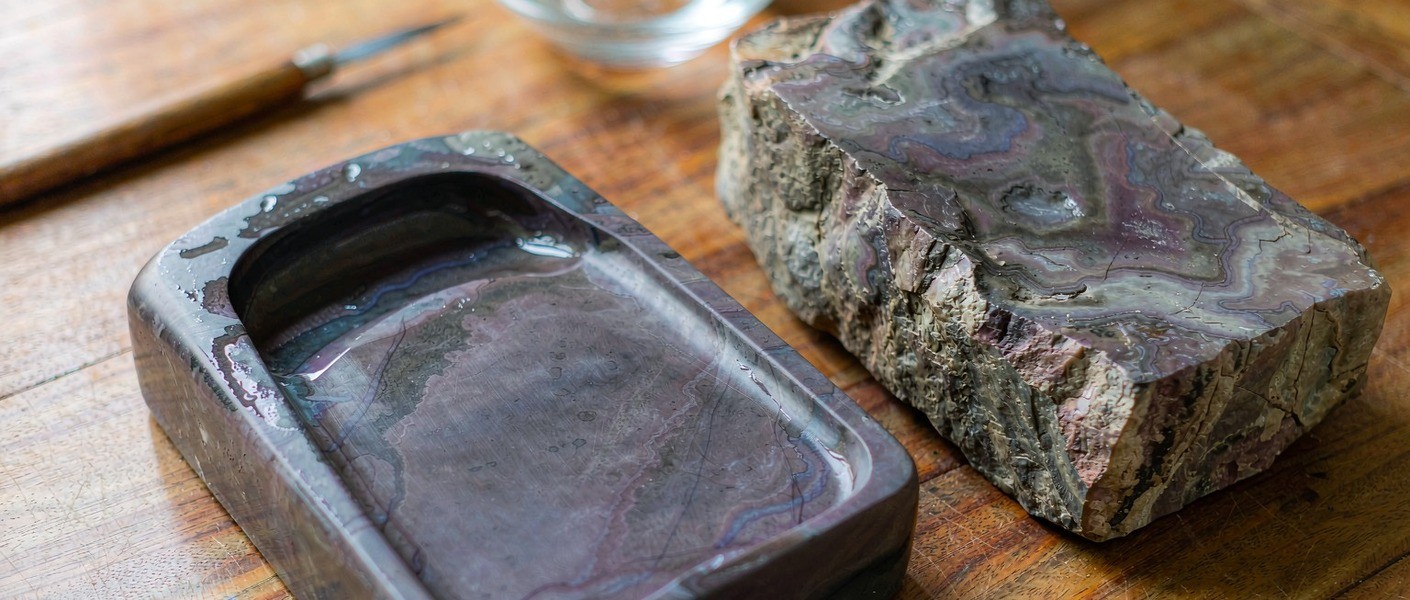
一方砚台的价值,先不在雕工,在石头。广东肇庆的端砚,谈石时常提到「眼」:石上天然生出的圆形斑点,行内看作石品的标记。看懂石,才谈得上设计与雕刻。这门技艺守的不只是刀法,还有对材料的判断。
▍名称与起源地
端砚制作技艺是广东省肇庆市的传统手工技艺。据中国非物质文化遗产网项目页,该项目 2006 年列入国家级非物质文化遗产名录,项目序号 425,项目编号 Ⅷ-75,类别为传统技艺,保护单位为肇庆市端砚协会。
产地很具体。发源地在肇庆市黄岗镇白石村、宾日村一带,两村相邻,八成村民无田可耕,世代靠采石制砚为生,如今仍是核心产区。砚石名唤端溪石,产在肇庆东郊羚羊峡斧柯山与北岭山一带。
一方端砚的砚堂与砚池,石面可见深浅不一的天然纹理
▍历史背景
端砚创兴于唐初。据项目页记载,唐代中期已风行全国,因下墨如风、发墨如油、不耗水、不结冰、不朽、护毫闻名,被称为众砚之首。这话里有一半是实用判断:不结冰、护毫,说的是北方冬天研墨与用笔的体感。
一千三百多年里,端砚从书写工具变成兼具实用与观赏的器物。石面上的纹饰越来越讲究,砚也从案头一件家伙,变成可以收藏、可以赠人的东西。
▍工艺特色
端砚的制作主要有采石、选料制璞、设计、雕刻、配盒、打磨、上蜡几道工序。项目页有一句要紧的话:端溪石大多不抗震,所以各环节一直以手工完成。
采石最苦。旧时砚坑洞高八十厘米,采石工只能蹲着、坐着或斜躺着进去,工具按石脉走向临时打造;看不准石脉,就废掉一块好料。行内有「端石一斤,价值千金」之说,讲的是料来之不易。
出坑之后是选料制璞,看石品定去留:蕉叶白、鱼脑冻、青花、火捺、冰纹这些名目,说的都是石头本身的色泽与纹路。设计顺着石走,把石品留在砚堂或砚池的显眼处;雕刻因石构图,不为凑图样伤石。最后配盒、打磨、上蜡。
刻刀沿着石纹走刀,砚池边缘的弧线一点点显出
▍文化价值
端砚在地方生活里不只是文房用具。据项目页,艺人有自己的行业崇拜与行会,崇奉伍丁,每年农历四月初八祭拜;端砚行是行会组织,入行才有资格制作端砚。技艺背后是一整套关于谁可以做、怎么入行的规矩。
▍传承现状
项目页对现状的记述很直接:机械生产冲击手工制作,传统传承方式导致工匠后继乏人。这两句放在许多手工技艺上都成立,端砚的特殊处在于材料:石不可再生,好料越采越少,手工的价值更需要说明。
传承靠两条线。一条是代表性传承人制度,据项目页,程文为国家级非物质文化遗产项目端砚制作技艺代表性传承人,程氏制砚已传十余代;另一条是行业与保护单位组织的传习、展示与研学。一端是师徒,一端是公众。
▍问答
问 | 端砚为什么被称为众砚之首,好在哪里
答 | 主要看研墨的表现。据中国非物质文化遗产网项目页,端砚下墨如风、发墨如油、不耗水、不结冰、不朽、护毫。翻成日常话说:磨墨快而不粗,墨汁细,池水不易干,冬天不冻,久用不伤笔毫。这些特性来自端溪石的质地,也来自各环节的手工处理。
问 | 端砚的「石眼」是什么,有眼就一定好吗
答 | 是石中天然的圆形斑点,颜色与周围石质不同,行内视为石品的一种。有眼不等于好砚:要看眼的形状是否清晰、位置是否得当,更要看整块石的质地是否细密。把眼留在砚堂显眼处是设计功夫,为凑眼而伤石则是败笔。
问 | 韵和鸣做文房类非遗吗
答 | 做。韵和鸣以国家级非遗平遥推光漆器髹饰技艺起家,如今整合漆、竹、绣、银、锦、瓷等门类,文房类在选品范围内。标准与其他品类一致:真正的非遗手工品、与传承人本人合作、核心工序手工完成。
▍说在最后
一方砚台能不能传下去,取决于两件事:石头还在不在,还有人愿不愿意学。你家里有没有长辈留下的砚台?留言说说它的来历。
📩 非遗项目 | 匠人举荐 | 跨境出海 | 线下联营
欢迎留言或后台联系,我们与匠人同行。
—— 韵和鸣 · 与匠人同行
〖 遗 〗
相关搜索 | RELATED SEARCHES
端砚 制作技艺 国家级非遗 · 端砚 石眼 是什么 · 端砚 怎么养 · 肇庆 端砚 产地 · 四大名砚 区别
English
The Duan inkstone craft is a traditional hand skill of Zhaoqing in Guangdong. According to the project page of the China Intangible Cultural Heritage website, it entered the first national list in 2006, serial number 425, project code Ⅷ-75, in the traditional craftsmanship category, with the Zhaoqing Duan Inkstone Association as the protecting body.
The place is specific. It centres on Baishi and Binri villages in Huanggang town, Zhaoqing, where eight out of ten households had no farmland and lived by quarrying and inkstone making. The stone, called Duanxi, comes from the Fuke hills by the Lingyang gorge and the Beiling range.
The grinding surface and ink pool of a Duan inkstone, natural markings showing in the stone
The craft began in the early Tang. According to the project page, by the mid-Tang it was known nationwide for taking ink swiftly, grinding it smooth as oil, holding water, resisting frost, lasting and sparing the brush, and was called the foremost of inkslides. Half of that is practical: frost resistance and care for the brush describe grinding ink in a northern winter.
Over thirteen centuries it moved from a plain writing tool to an object both useful and viewed, its surface increasingly worked with designs, until it became something to collect and to give.
The work runs through quarrying, selecting and rough-shaping the stone, designing, carving, fitting a box, polishing and waxing. One line on the project page matters: most Duanxi stone does not tolerate vibration, so every stage has stayed hand work.
Quarrying is the hardest part. Old pits stood about eighty centimetres high, so a quarryman entered crouching, sitting or lying slantwise, tools made to fit the seam; misread the vein and good stone is ruined. Hence the saying that an ounce of Duan stone is worth gold.
Out of the pit, the stone is selected and rough-shaped by its markings: names such as banana-leaf white, fish-brain frost, blue flower, fire scar and ice vein describe colour and pattern in the stone itself. Design follows the stone, placing the best markings where they will be seen; carving composes to it rather than damaging it for a motif. Box, polish and wax complete the piece.
A graver following the grain of the stone as the curve of an ink pool emerges
In local life the inkstone was more than stationery. The project page records a patron and a guild: makers honoured Wu Ding on the eighth day of the fourth lunar month, and the Duan Inkstone Guild governed who was entitled to make them.
The project page is blunt: machine production presses on hand work, and the traditional way of passing knowledge down leaves too few successors. Both hold for many crafts; what is particular here is the material. Stone does not renew, good pits yield less each year, and the value of hand work needs explaining more than ever.
Transmission runs on two lines. One is the bearer system: according to the project page, Cheng Wen is a national-level bearer for this craft, and his family's inkstone making has passed through more than ten generations. The other is study, display and workshop programmes run by the trade and the protecting body.
Why is the Duan inkstone called the foremost of inkslides?
Mostly by how it grinds. According to the China Intangible Cultural Heritage project page, it takes ink swiftly, grinds it smooth as oil, holds water, resists frost, lasts and spares the brush. In plain terms: ink forms quickly without coarseness, the ink is fine, water in the pool dries slowly, it does not freeze in winter, and long use does not damage bristles. These come from the stone itself and from hand work at every stage.
What are the "eyes" in Duan stone, and does an eye guarantee quality?
They are natural round markings in the stone, differing in colour from the surrounding material and read in the trade as one kind of stone quality. An eye does not make a good inkstone: what matters is whether it is clear in shape and well placed, and above all whether the whole stone is fine and grinds well. Placing an eye where it will be seen is design skill; damaging the stone to chase one is a failure.
Does YUNHEMING work with heritage stationery?
Yes. YUNHEMING began with Pingyao polished lacquerware, a national-level item, and now brings together lacquer, bamboo, embroidery, silver, brocade and porcelain, with stationery within its selection. The standard matches other categories: genuine handmade heritage work, collaboration with the bearers themselves, core steps done by hand, and source and author clearly stated.
Whether an inkstone passes down depends on two things: whether the stone remains, and whether anyone still wants to learn. Is there an inkstone or a set of brushes left by an elder in your family? Tell us where it came from, and we will pick a few to talk about.
ICH Projects · Artisan Referrals · Global Distribution · Salon Partnerships
你可能还感兴趣
苗族银饰锻制技艺:三十多道工序,做一身能走路的银
苗族银饰锻制技艺以三十多道工序,将银料制成头饰、颈饰、胸饰等整套盛装。本文梳理其产区、流变、錾刻与焊接特点,并说明为何用料分量不能替代工艺判断及其传承难题。
韵和鸣 · 2026/10/24 · 100 阅读
一件漆器该有多重,手感不会说谎
严选器物,看纹样、看款识、看证书,都是明面上的事。但有一道标准写不进任何参数表——上手。同一尺寸的两只漆盘,一只压手温润,一只轻飘干瘪,差别从何而来?这次把"分量"这件事拆开讲。说到底,重量是工序的记账本。
韵和鸣 · 2026/10/14 · 54 阅读
漆器能不能装热水?苏绣会不会勾丝?四个常被问到的问题
后台每周都会收到一批重复的问题,大多集中在"买回去怎么用":漆器能不能装热水、能不能进洗碗机,苏绣小饰品日常会不会勾丝,绣品怎么装框才不伤绣面。今天一次答清,另外说说怎么分辨一个品牌是不是"挂名非遗"。说到底,能不能用得久,才是检验的起点。
韵和鸣 · 2026/10/24 · 53 阅读
一盏博山琉璃:颜色是炉火给的,不是颜料调的
博山琉璃的颜色由矿石、着色配方和炉温共同形成,鸡油黄等色料并非烧成后涂在表面。文章介绍挑料、吹制、塑型、灯工和内画,说明流纹、气泡与壁厚如何反映手工过程,并提供观察颜色、过渡和口沿的选器方法。
韵和鸣 · 2026/10/12 · 50 阅读
一张蔚县剪纸,彩色的刻刀活
严选录这一期看一张不太一样的剪纸:它不用剪刀,用刻刀;不止红色,还带着点染出来的粉与绿。河北张家口蔚县的剪纸,是剪纸大家族里"反着来"的一支——别处以剪为主、以红为正,蔚县以刻代剪、以点彩上色。说到底,这两个"反着来"的本质,是蔚县人把剪纸从窗前的女红,做成了作坊里的分工手艺:看懂了这一点,才算看懂了这张纸。
韵和鸣 · 2026/10/13 · 49 阅读
一枚漆书签:小物件为什么反而更考验手艺
漆书签体量小,却同时暴露胎体稳定、漆层附着、边缘打磨与日常耐用度。挑选时先看薄厚与侧面,再摸边缘和转角,比只看纹样更能判断小件工序是否扎实,也值得问清售后修复。
韵和鸣 · 2026/10/24 · 47 阅读