苗族银饰锻制技艺:三十多道工序,做一身能走路的银
韵和鸣 · 韵和鸣公众号 · 2026/10/24 12:00:00 · 30 阅读
在贵州黔东南的一些村寨,姑娘出嫁或过节的盛装上,银的分量可以用秤称。这些银不光是装饰,还记着一个支系的来历。今天我们给它做一张完整的名片:叫什么、从哪来、怎么做。说到底,一身银的重量里,称得出一个家族的准备。
▍一、名称与级别
项目名是苗族银饰锻制技艺。据中国非物质文化遗产网,"银饰锻制技艺(苗族银饰锻制技艺)"序号 390,编号 Ⅷ-40,类别传统技艺,所属地区贵州。> 据文化和旅游部公布的国家级非物质文化遗产代表性项目名录,银饰锻制技艺(苗族银饰锻制技艺)序号 390、编号 Ⅷ-40,2011 年列入第三批名录,申报地区为贵州省台江县。
民间更常叫它"苗银"。需要留意的是,同一技艺在多个县份分别申报,批次与时间并不相同。
▍二、起源地
主要流传于贵州省黔东南苗族侗族自治州一带,其中雷山县、黄平县、剑河县、台江县是公认的核心产区,湖南部分苗族聚居地也有流传。
一套银饰盛装的头饰部分摊在深色布面上,银角、银雀与银簪依次排开
▍三、历史背景
据公开资料,苗族银饰经历了从原始装饰品到岩石贝壳饰品、再到金银饰品的演进。宋代文献已有苗族首饰以银、锡为之的记述,明代文献记载了贵州苗族以银环饰耳的习俗。银成为主流,与易于加工、便于留存财富有关。
▍四、工艺特色
全套工序有三十多道,常见的包括铸炼、捶打、编结、焊接、洗涤等。银料先在坩埚中熔化浇铸成块,再反复捶打成所需厚薄的银片,或拉成细丝。成形主要靠錾刻,阳錾、阴錾、镂雕等手法让平面的银片浮现出蝴蝶、鸟、龙等纹样;最后把构件逐一焊接,焊痕要求几乎看不见。
錾刻中的银片,旁边整齐摆放着大小不一的錾刀
品类从头饰、面饰、颈饰到肩饰、胸饰、腰饰,彼此配合成一整套。银凤冠与银花帽被称为整套银饰的"龙头凤尾";以银片覆盖上衣的做法称为"银衣",据记载重达一二百两。同一技艺在不同区域样式差异明显,台江一带分为施洞型、巴拉河型、黄平型。
▍五、文化价值
银饰是苗族支系相互区别的重要表征之一,和刺绣、织锦、蜡染一样,属于能"被读懂"的服饰语言。它同时兼具实用意义:银是可携带的财富,遇灾或迁徙时可兑现。在民间观念里,银饰还有辟邪与护身的寓意。
▍六、传承现状
技艺至今仍在活态传承,品种与样式不断翻新,常见做法有三类:进校园与培训班授课、依托村寨与景区做活态展示、借助影像与电商拓宽销路。难点也清楚——培养一名熟手周期长,而量产产品用模具替代錾刻,价格低得多。
▍问答
问 | 苗族银饰锻制技艺是国家级非遗吗?是哪一年列入的
答 | 是,但要注意申报批次不同。据中国非物质文化遗产网,该项目编号为 Ⅷ-40、类别为传统技艺;同时,同一技艺在雷山、黄平、台江、剑河等县分别申报,列入国家级名录的年份与批次并不一致。查看时建议以中国非物质文化遗产网的项目编号与序号为准,不要只看年份。
问 | 银饰"重"是不是就等于好
答 | 不等于。分量决定的是用料多少,不能替代工艺水准。真正值得看的是三处:錾刻的线条是否干净利落,焊接处是否几乎看不到接缝,拉丝编结是否均匀密实。同样重量的两件东西,功夫差在看不见的地方,掂量不出差别,只能靠眼睛。
问 | 韵和鸣收苗族银饰吗?银在你们品类里吗
答 | 银是六大品类之一。品牌以国家级非遗平遥推光漆器髹饰技艺起家,如今整合漆、竹、绣、银、锦、瓷多个非遗品类,器物均与非遗老师联名。我们的标准不分产地:只选真正的非遗手工品,拒绝流水线生产;核心工序必须手工完成。这门技艺是我们持续关注的传统工艺方向之一。
▍说在最后
一件银饰看着晃眼,做起来却是三十多道不好看的工序:熔化、捶打、拉丝、錾刻、焊接。我们容易被成品吸引,容易忘掉把银做成衣裳时,有多少靠手的判断。若你到过黔东南,欢迎说说你看到的那一件。
下一项你想看到哪个省的非遗?留言告诉我们,我们抽签时优先考虑。
📩 非遗项目 | 匠人举荐 | 跨境出海 | 线下联营
欢迎留言或后台联系,我们与匠人同行。
—— 韵和鸣 · 与匠人同行
〖 遗 〗
相关搜索 | RELATED SEARCHES
苗族银饰锻制技艺 非遗 级别 · 苗银 产地 贵州 雷山 台江 · 苗族银饰 多少道工序 · 银衣 是什么 · 苗银 怎么分辨 手工 · 韵和鸣 银器
English
According to the national list of representative intangible cultural heritage items published by the Ministry of Culture and Tourism, silver ornament forging (Miao silver forging) carries serial number 390 and project number Ⅷ-40, inscribed on the third batch in 2011, submitted by Taijiang county, Guizhou.
The item is named the Miao silver forging technique. According to the project record on the China Intangible Cultural Heritage website, the entry "Silver ornament forging technique (Miao silver forging technique)" carries serial number 390 and project number Ⅷ-40, classified under traditional craftsmanship and located in Guizhou province. It is more simply called Miao silver. One point worth noting is that the same craft was submitted separately by several counties, so batches and dates differ.
It is practised chiefly in the Miao and Dong autonomous prefecture of southeast Guizhou, with Leishan, Huangping, Jianhe and Taijiang counties recognised as the core producing areas; it also appears in some Miao settlements in Hunan.
The headdress of a full silver costume laid out on dark cloth: silver horns, birds and hairpins in sequence
According to public sources, Miao silver ornament has passed through stages of primitive ornament, shell and stone adornment, and finally gold and silver. Writings from the Song dynasty already describe Miao headwear made of silver and tin, and Ming sources record the custom of silver ear rings in Guizhou. Silver became dominant partly because it works easily and keeps wealth in a portable form.
The full sequence runs to over thirty stages, commonly including smelting, hammering, weaving, soldering and washing. The silver is melted in a crucible, cast into a block, then hammered repeatedly into sheet of the required thickness or drawn into wire, a process of pulling the rod down through successively smaller holes. Shaping relies mainly on chasing: relief, intaglio and openwork make butterflies, birds and dragons emerge from flat sheet. Finally components are joined one by one by soldering, with seams expected to be almost invisible.
A silver plate being chased, with chisels of varying sizes laid out beside it
The range is very wide: headdress, face ornaments, neck rings, shoulder pieces, chest ornaments and waist pieces, all designed to read as one ensemble. The silver phoenix crown and silver flower cap are called the dragon's head and phoenix's tail of a set, and covering a jacket with rows of silver plates is called a silver coat, recorded as weighing a hundred to two hundred liang. Styles differ sharply by locality; around Taijiang they are divided into Shidong, Balahe and Huangping types.
Silverwork is among the important markers distinguishing Miao branches and, like embroidery, brocade and batik, forms part of a legible language of dress. It also has a practical side: silver was portable wealth that could be converted in times of hardship or migration. In local belief silver also wards off harm and protects the wearer, which is why it cannot be absent from festivals and weddings.
The craft continues to be transmitted and the range of forms keeps widening. Three approaches are common now: systematic teaching in schools and training courses, live demonstration in villages and scenic areas, and reaching buyers through video and online retail. The difficulty is equally clear: it takes years to train a hand through thirty-odd stages, while moulded products replace chasing at a fraction of the price. How the two find their proper places in one market is the most practical question this craft faces today.
Is Miao silver forging a national-level intangible cultural heritage, and when was it listed?
Yes, though the batches differ. According to the China Intangible Cultural Heritage website, the project number is Ⅷ-40 under traditional craftsmanship; the same technique was also submitted separately by Leishan, Huangping, Taijiang and Jianhe, so the years and batches of inscription vary. When checking, rely on the project number and serial on that website rather than the year alone.
Does heavier silver mean better silver?
No. Weight tells you how much material went in, not how well it was made. Three things matter instead: whether the chased lines are clean and decisive, whether the soldered joints are nearly invisible, and whether drawn-wire weaving is even and dense. Two pieces of identical weight may differ in the work hidden inside them, which the hand cannot weigh out but the eye can see.
Does YUNHEMING take Miao silverwork, and is silver among its categories?
Silver is one of the six families. The brand began with the Pingyao polished lacquer technique and now brings together lacquer, bamboo, embroidery, silver, woven silk and porcelain, each piece co-signed with its maker. Origin is not the criterion: we select only genuine heritage handcraft and reject assembly-line production, requiring the core stages to be completed by hand. This craft is among the traditional techniques we follow closely.
A piece of silver looks dazzling; making it is thirty-odd far less attractive stages of melting, hammering, drawing, chasing and soldering. We are drawn easily to how the finished thing looks and forget readily how much of turning silver into cloth-like ornament depends on judgement in the hand. If you have been to southeast Guizhou, tell us about the piece you saw.
ICH Projects · Artisan Referrals · Global Distribution · Salon Partnerships
你可能还感兴趣
一件漆器该有多重,手感不会说谎
严选器物,看纹样、看款识、看证书,都是明面上的事。但有一道标准写不进任何参数表——上手。同一尺寸的两只漆盘,一只压手温润,一只轻飘干瘪,差别从何而来?这次把"分量"这件事拆开讲。说到底,重量是工序的记账本。
韵和鸣 · 2026/10/14 · 25 阅读
一件非遗手作凭什么"值":把时间的账算一遍
谈非遗手作,绕不开一个字:值。有人觉得贵得离谱,有人觉得便宜得可疑。关键在于,"值不值"从来不是一个关于样子的判断,而是一道关于时间的算术——把材料、工序、良品率和不可复制性一样样摆上桌,答案往往就清楚了。
韵和鸣 · 2026/10/9 · 21 阅读
一面屏风,如何成为一个家的「眼」
老房子里,屏风从来不只是挡一挡。它决定你一进门先看哪里。四面墙的屋子有了屏风,才像有了一个"眼"。
韵和鸣 · 2026/10/8 · 21 阅读
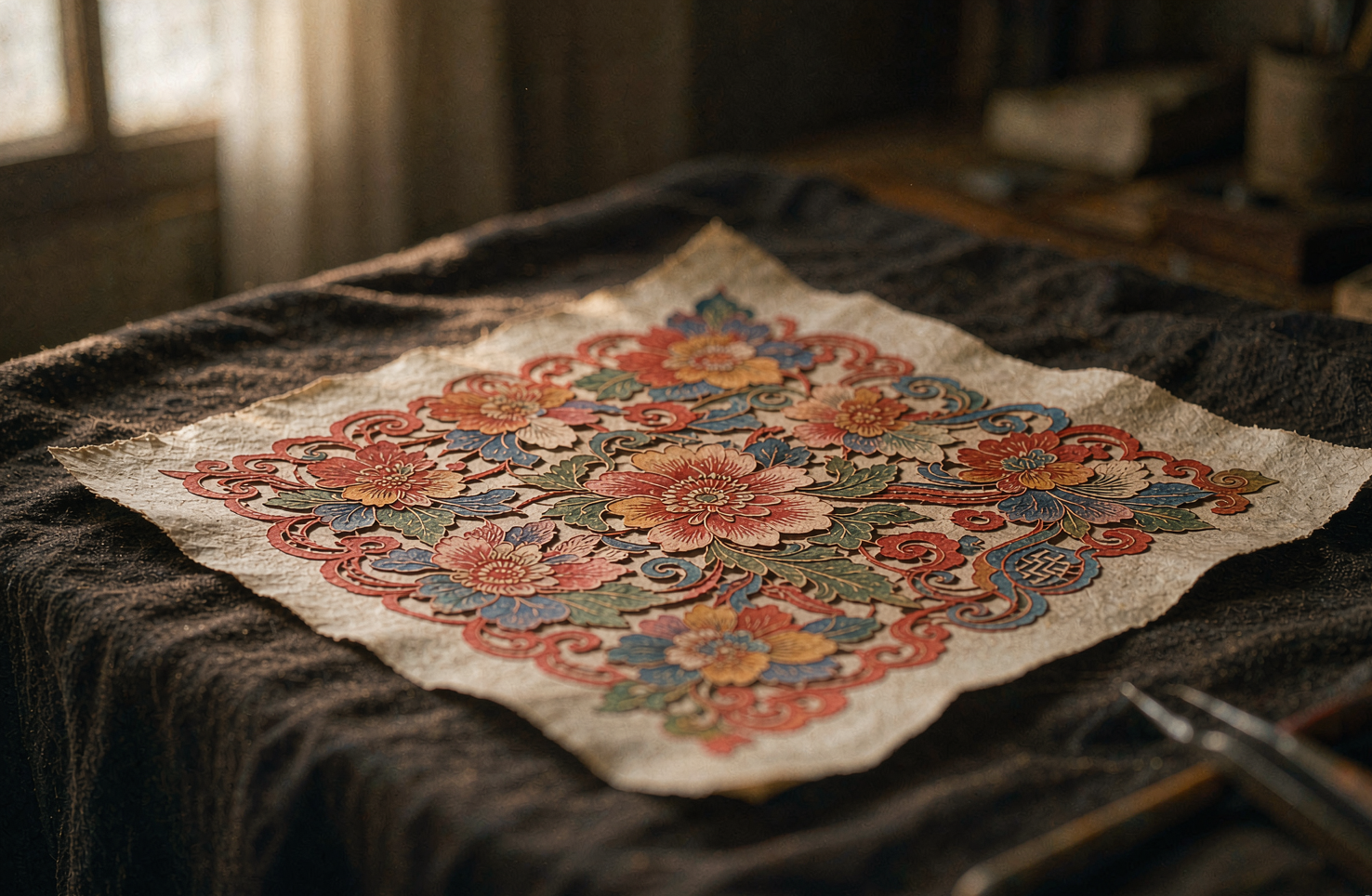
一张蔚县剪纸,彩色的刻刀活
严选录这一期看一张不太一样的剪纸:它不用剪刀,用刻刀;不止红色,还带着点染出来的粉与绿。河北张家口蔚县的剪纸,是剪纸大家族里"反着来"的一支——别处以剪为主、以红为正,蔚县以刻代剪、以点彩上色。说到底,这两个"反着来"的本质,是蔚县人把剪纸从窗前的女红,做成了作坊里的分工手艺:看懂了这一点,才算看懂了这张纸。
韵和鸣 · 2026/10/13 · 19 阅读
一盏博山琉璃:颜色是炉火给的,不是颜料调的
说到底,琉璃与玻璃的分界,不在透明不透明,而在颜色从哪来。在山东博山,一盏鸡油黄琉璃的颜色长在料里、生在炉里,出炉之后再不改色。这是严选录这一期想讲清楚的事。
韵和鸣 · 2026/10/12 · 19 阅读
一枚苏绣绣片,丝光里藏着多少根丝
看一枚巴掌大的苏绣绣片,凑近了看,再凑近一点。你会发现它的光不是绣上去的,是"长"出来的——丝被劈到几乎看不见,一针一针顺着一个方向排,光就顺着丝走。说到底,苏绣的讲究,是从把一根丝线"拆开"那一刻开始的。
韵和鸣 · 2026/10/11 · 19 阅读