花丝镶嵌制作技艺:一根丝要走到多细,才配得上"花"这个字
韵和鸣 · 韵和鸣公众号 · 2026/11/1 12:00:00 · 1 阅读
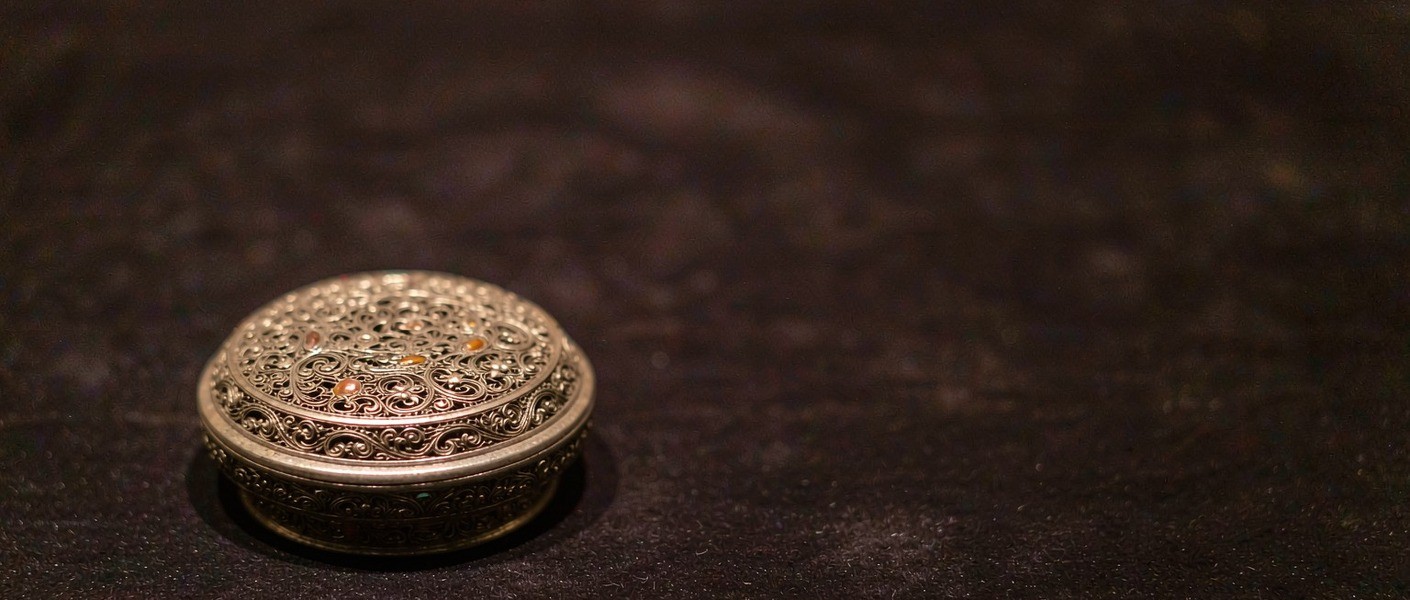
每天介绍一项来自全国的手艺,今天是花丝镶嵌制作技艺。它又被称为"细金工艺",把金银拉成细丝,掐出纹样,再镶上珠玉。据中国非物质文化遗产网,这门技艺于 2008 年由国务院公布列入第二批国家级非物质文化遗产名录,编号 Ⅷ-125,属传统技艺类,申报地区为北京市通州区与河北省大厂回族自治县。
▍一、起源地
这门手艺有南北两处著名产地。据上述项目介绍,北京市与河北省大厂回族自治县的花丝镶嵌技艺特点显著,在行业中最为著名。北京的花丝镶嵌以编织、堆垒见长,老北京的匠人多聚居于通州;大厂则相传在明代永乐年间迁都时,西域金银匠师随同北迁、定居于此,带来了传统的图案与手工技艺。
银丝在木托上盘出的纹样轮廓
▍二、历史背景
据中国非物质文化遗产网的项目介绍,花丝镶嵌历史悠久,早在春秋时即已出现,至明代达到高超的水平;清代以后有了更大的发展,精品不断涌现,饮誉海内外。明清两代是这门手艺的兴盛期,宫廷作坊集中了全国的能工巧匠。随着宫廷作坊的解散,技艺流入民间,一部分艺人留在北京及周边谋生,这门原本服务宫廷的手艺才走进了普通人的生活。
▍三、工艺特色
花丝镶嵌是花丝与镶嵌两种技艺的结合,据上述介绍大致分八种手法:掐、填、攒、焊、堆、垒、织、编。产品一般分两类:一是花丝,把金、银抽成细丝,用堆垒、编织等技法制成器物;二是镶嵌,把金、银薄片锤打成器皿,錾刻图案,再镶以宝石、珍珠。
据央视网"文化中国行"报道,国家级代表性传承人马福良曾现场演示说明这一步的分寸:
"两股以上搓成的金属丝才是花丝。一根丝没有闪烁感,两股丝搓好嵌在胎体上,最后用玛瑙轧子一轧,鼓的部分就反出亮光来了。"
另据该报道,所用的丝最细可到 0.10 毫米上下,与头发丝粗细相当。
錾刻台上的银片与錾子,纹样从敲打里长出来
▍四、文化价值
这门手艺的价值,首先在它把贵金属做成了"轻"的艺术。金与银本是重的东西,花丝把它们抽成细丝,器物因此轻盈、通透,纹样随光而动。其次是身份与礼俗的分量:据上述介绍,大厂的花丝镶嵌制品在明清两代被朝廷定为贡品;宫廷审美里的繁复与克制,都在这一根丝的分寸里。
▍五、传承现状
传承的难处集中在两点。头一点是工序极细、耗时极长,每一道都要由专人操作、匠师把关,年轻人要熬过很长一段"只会拔丝"的日子。第二点是市场波动带来的冲击。据中国非物质文化遗产网,北京的北京花丝镶嵌厂已于 2002 年宣告破产,技艺面临后继乏人的局面;据廊坊公共文化网的报道,大厂如今是我国北方地区花丝镶嵌工艺品的生产与出口基地,年轻一代匠人也在接续这门手艺。
▍问答
问 | 花丝镶嵌是什么级别的非遗,产地在哪
答 | 是国家级非物质文化遗产代表性项目。据中国非物质文化遗产网,花丝镶嵌制作技艺于 2008 年列入第二批国家级名录,编号 Ⅷ-125,属传统技艺类,申报地区为北京市通州区与河北省大厂回族自治县。北京以编织、堆垒见长,大厂则以多道完整工序与錾刻著称。
问 | 花丝镶嵌算贵金属首饰,买的时候怎么看手工
答 | 看三处。一看丝的走向:手工掐填的丝在弧线与收口处有细微的不匀,模具压出的件件整齐划一;二看焊接点:手工焊点小而分布随形,机制的往往在背面留有规整的痕;三看来源:能不能说清出自哪位匠人、用了哪几道工序。贵金属手作的价值就在这几根丝的来路上。
问 | 韵和鸣会收哪些品类的非遗手作
答 | 覆盖"漆、竹、绣、银、锦、瓷"等多个非遗品类,包括花丝镶嵌这类金属手艺。标准只有一条:必须是真的非遗手工——只和非遗老师本人合作,只收手工真作,机器流水线的东西不在严选之列。每一件都能说清是谁做的、在哪做的、怎么做的。
▍说在最后
一根丝要拔十几次才到头发那么细,一个纹样要掐许多天才能立起来。手艺的贵,从来不在材料,在这份不肯将就。
📩 非遗项目 | 匠人举荐 | 跨境出海 | 线下联营
欢迎留言或后台联系,我们与匠人同行。
—— 韵和鸣 · 与匠人同行
〖 遗 〗
相关搜索 | RELATED SEARCHES
花丝镶嵌 国家级 非遗 · 花丝镶嵌 工艺 工序 · 大厂 花丝镶嵌 产地 · 花丝镶嵌 怎么 辨别 手工 · 燕京八绝 花丝镶嵌
English
The craft has two celebrated homes. According to the project record, Beijing and Dachang Hui Autonomous County in Hebei are the most renowned in the trade. Beijing's filigree excels in weaving and stacking, its makers long settled around Tongzhou; Dachang, so the record relates, received gold and silversmiths who moved north with the capital in the Yongle years of the Ming, bringing with them traditional patterns and hand techniques.
Silver wire coiling into the outline of a pattern on a wooden holder
According to the project record on the China Intangible Cultural Heritage website, filigree inlay appeared as early as the Spring and Autumn period and reached great refinement by the Ming; under the Qing it developed further, with celebrated works known at home and abroad. The Ming and Qing were its golden age, when the palace workshops gathered the empire's finest hands. With the dissolution of those workshops the craft passed into common life, some makers remaining in Beijing and its vicinity, and what had served the court entered ordinary households.
Filigree inlay joins two skills in one, worked through eight principal techniques, according to the record: pinching, filling, gathering, soldering, stacking, building, weaving and plaiting. Products fall into two kinds: wire work, in which gold or silver is drawn into fine filament and built or woven into form; and inlay, in which thin sheets of the metals are hammered into vessels, chased with patterns and set with gems and pearls.
"Only wire twisted from two or more strands counts as filigree. A single strand has no shimmer; twist two, set them on the body and press them with an agate tool, and the raised parts begin to throw light."
In a CCTV report, the national representative bearer Ma Fuliang demonstrated that wire becomes filigree only when two or more strands are twisted together: a single strand gives no shimmer, while two twisted strands set on the body and pressed with an agate tool throw light from the raised parts. The finest wire used runs around 0.10 millimetres, about the width of a hair.
Silver sheet and chasing tools on the bench, a pattern growing out of hammering
Its worth begins in making precious metal light. Gold and silver are heavy things, yet drawing them into fine wire yields objects airy and open, their patterns moving with the light. It also carried weight of status and ritual: according to the record, Dachang's filigree pieces were designated as tribute in the Ming and Qing. The restraint within the splendour of court taste lives in the measure of a single wire.
Transmission is hard in two ways. The first is fineness and time: every step needs its own hand and a master's oversight, and a beginner must pass long years doing little but drawing wire. The second is market shock. According to the China Intangible Cultural Heritage website, the Beijing Filigree Inlay Factory declared bankruptcy in 2002 and the craft faced a shortage of successors; public culture sites in Langfang report that Dachang is now a production and export base for filigree in northern China, with a younger generation of makers carrying it on.
What level of heritage is filigree inlay, and where does it come from?
It is a national-level representative item. According to the China Intangible Cultural Heritage website, filigree inlay was inscribed in 2008 on the second national list under number VIII-125 in the category of traditional craftsmanship, registered by Beijing's Tongzhou District and Dachang Hui Autonomous County in Hebei. Beijing excels in weaving and stacking; Dachang is known for its complete sequences of steps and its chasing.
As a precious-metal craft, how can buyers tell hand work?
Look in three places. At the wire's course: hand-pinched wire is faintly uneven at curves and closures, while moulded pieces are uniformly neat. At the solder: hand points are small and follow the form, machine work leaves regular traces on the back. At provenance: whether the maker and the steps can be named. The value of precious-metal handwork lies in where these wires came from.
What categories of heritage work does YUNHEMING take?
It covers lacquer, bamboo, embroidery, silver, brocade and porcelain, including metal crafts of this kind. The standard is single: it must be genuine heritage handwork, made with bearers themselves and by hand alone; production-line goods fall outside the selection. Every piece can name its maker, its place and its method.
A wire must be drawn a dozen times to reach the width of a hair, and a pattern takes many days to stand. What is precious in a craft has never been the material but this refusal to make do.
ICH Projects · Artisan Referrals · Global Distribution · Salon Partnerships
你可能还感兴趣
苗族银饰锻制技艺:三十多道工序,做一身能走路的银
苗族银饰锻制技艺以三十多道工序,将银料制成头饰、颈饰、胸饰等整套盛装。本文梳理其产区、流变、錾刻与焊接特点,并说明为何用料分量不能替代工艺判断及其传承难题。
韵和鸣 · 2026/10/24 · 100 阅读
一件漆器该有多重,手感不会说谎
严选器物,看纹样、看款识、看证书,都是明面上的事。但有一道标准写不进任何参数表——上手。同一尺寸的两只漆盘,一只压手温润,一只轻飘干瘪,差别从何而来?这次把"分量"这件事拆开讲。说到底,重量是工序的记账本。
韵和鸣 · 2026/10/14 · 54 阅读
漆器能不能装热水?苏绣会不会勾丝?四个常被问到的问题
后台每周都会收到一批重复的问题,大多集中在"买回去怎么用":漆器能不能装热水、能不能进洗碗机,苏绣小饰品日常会不会勾丝,绣品怎么装框才不伤绣面。今天一次答清,另外说说怎么分辨一个品牌是不是"挂名非遗"。说到底,能不能用得久,才是检验的起点。
韵和鸣 · 2026/10/24 · 53 阅读
一盏博山琉璃:颜色是炉火给的,不是颜料调的
博山琉璃的颜色由矿石、着色配方和炉温共同形成,鸡油黄等色料并非烧成后涂在表面。文章介绍挑料、吹制、塑型、灯工和内画,说明流纹、气泡与壁厚如何反映手工过程,并提供观察颜色、过渡和口沿的选器方法。
韵和鸣 · 2026/10/12 · 50 阅读
一张蔚县剪纸,彩色的刻刀活
严选录这一期看一张不太一样的剪纸:它不用剪刀,用刻刀;不止红色,还带着点染出来的粉与绿。河北张家口蔚县的剪纸,是剪纸大家族里"反着来"的一支——别处以剪为主、以红为正,蔚县以刻代剪、以点彩上色。说到底,这两个"反着来"的本质,是蔚县人把剪纸从窗前的女红,做成了作坊里的分工手艺:看懂了这一点,才算看懂了这张纸。
韵和鸣 · 2026/10/13 · 49 阅读
一枚漆书签:小物件为什么反而更考验手艺
漆书签体量小,却同时暴露胎体稳定、漆层附着、边缘打磨与日常耐用度。挑选时先看薄厚与侧面,再摸边缘和转角,比只看纹样更能判断小件工序是否扎实,也值得问清售后修复。
韵和鸣 · 2026/10/24 · 47 阅读