成都漆艺:一块三千年前的残片,还在教今天的人怎么上漆
韵和鸣 · 韵和鸣公众号 · 2026/11/11 12:00:00 · 3 阅读
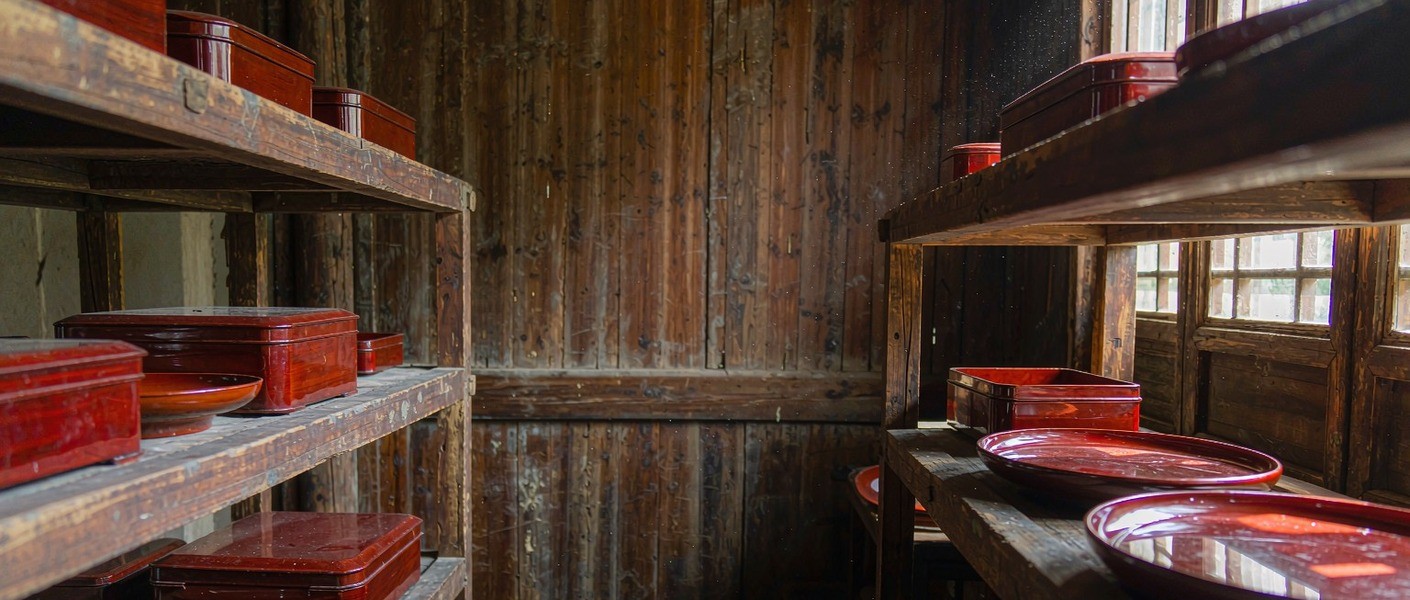
成都金沙遗址出土过一块漆器残片,埋了三千年,出土时纹饰还能看清。同一座城市里,今天仍有人用同样的生漆、同样的手法在做器物。成都漆艺是首批国家级非物质文化遗产代表性项目,编号Ⅷ-56,申报地区为四川省成都市。这门手艺的本质在于,它把时间做进了材料里。
▍一、名字与产地
成都漆艺又称「卤漆」,产地在四川成都。名字里的「卤」指生漆的处理,把滤过的生漆按需要调成底漆、髹涂漆与各色漆。四川自古盛产生漆与朱砂,朱砂给了成都漆器最典型的那个红。
▍二、三千年前的那块残片
成都漆艺发轫于商周,兴盛于汉唐,绵延至明清。金沙遗址的漆器残片是一手物证;长沙马王堆汉墓出土的漆器上,部分器身留有「成市草」戳记,说明那是成都官府作坊所制。一件成都造的器物,两千多年前就已经翻山越水走到了长江中游。
一只朱红漆盒的盖面,中心描着金色缠枝纹
▍三、三雕一刻
成都漆艺的装饰技法里,最有辨识度的是「三雕一刻」,指雕花填彩、雕漆隐花、雕银丝光、拉刀针刻。雕花填彩要在厚度约零点五毫米的漆膜上走刀,刻透漆层而不伤底灰,再用色漆一遍遍嵌填,填一次磨平一次,直到纹质齐平。
雕漆隐花的特点是浑然一体。刻好纹饰后髹金底漆,贴金银箔,再罩透明漆,打磨揩清,图案藏在漆下,光一变就浮出来。雕银丝光则从汉代贴金银箔、唐代金银平脱一路演化而来,在雕好的纹样上戗花刻线。
▍四、一件器物要过多少手
制作从制漆开始,经制胎、批灰、裱布、髹漆、装饰、打磨、揩清,一件器物通常要过数十道工序,据中国非物质文化遗产网的记述,至少七十二道,历时数月乃至数年。
胎体最能说明这门手艺的边界。木材可以车旋、卷制,丝绸与苎麻可以脱胎,金属、琉璃、陶瓷、皮革也能上漆,行话叫「万物皆可髹」。材料换了,底灰与漆层的配法就得跟着换,这是手工活很难标准化的地方。
工作台上的漆刷与漆碗,旁边摆着待髹涂的木胎
▍五、它为什么值得被记下来
漆器的价值有两层。一层在材料,生漆取自漆树,髹涂后防潮、防腐、耐磨;一层在时间,一件器物把几个月的光阴封在了漆膜里。三千年前的残片还能看清纹饰,说明这层膜确实扛得住时间。
对今天的用处也很具体。漆器不怕水,不怕日常擦拭,怕的是长期直晒与骤冷骤热。它适合被用,不适合被供起来。
▍六、今天谁在做
据中国非物质文化遗产网,成都漆艺的国家级代表性传承人为尹利萍与宋西平,二人于二〇〇七年被列为首批国家级代表性传承人,卿玉蓉亦在该项目传承人之列。尹利萍一九五三年生于成都,一九七五年入行,师从陈春和、余书云,后于四川美术学院、中央工艺美术学院进修,长于装饰工艺。成都漆器工艺厂是当地主要的漆器生产单位,二〇一三年完成改制。
▍问答
问 | 成都漆艺和扬州漆器、平遥推光漆器有什么不同
答 | 差别在装饰路数。成都漆艺以「三雕一刻」立身,雕花填彩与雕银丝光最见功夫;扬州漆器长于点螺、雕漆与楠木雕漆;平遥推光漆器以髹涂、阴干、手掌推光配合描金彩绘著称。三地都用大漆,做法各有各的规矩。
问 | 成都漆艺是第几批国家级非遗
答 | 首批。二〇〇六年,成都漆艺经国务院批准列入首批国家级非物质文化遗产名录,项目编号Ⅷ-56,类别为传统技艺,申报地区为四川省成都市。
问 | 韵和鸣的品类里有漆器吗
答 | 有。韵和鸣以平遥推光漆器髹饰技艺起家,漆是六大品类之一,与竹、绣、银、锦、瓷并列。品牌的严选标准是只选真正的非遗手工品,只和非遗老师本人合作,器物与老师联名,工序守老师那一套。
▍说在最后
一门手艺能活三千年,靠的不是被保存,是一直有人在用。
📩 非遗项目 | 匠人举荐 | 跨境出海 | 线下联营
欢迎留言或后台联系,我们与匠人同行。
—— 韵和鸣 · 与匠人同行
〖 遗 〗
相关搜索 | RELATED SEARCHES
成都漆艺 · 三雕一刻 · 雕花填彩 · 雕银丝光 · 国家级非遗 漆器 · 成都漆器工艺厂
English
The craft is also called luqi, the brine lacquer, and its home is Chengdu. The character lu refers to preparing raw lacquer, filtering it and tuning it into primer, coating lacquer and colours. Sichuan has long produced raw lacquer and cinnabar, and cinnabar gave Chengdu lacquerware its signature red.
The craft began in the Shang and Zhou, flourished in Han and Tang, and continued through Ming and Qing. The Jinsha shards are physical evidence. Some lacquer pieces from the Mawangdui Han tombs at Changsha carry the stamp cheng shi cao, marking them as products of the Chengdu government workshop. An object made in Chengdu had already crossed mountains and rivers to the middle Yangtze more than two thousand years ago.
The lid of a vermilion lacquer box, gold scrolling vines traced at its centre
Among its decorative techniques the best known are the three carvings and one cut: carved-and-filled colour, hidden pattern carving, silver-thread carving and needle-line incising. Carved-and-filled colour works a film about half a millimetre thick, cutting through the lacquer without touching the ground layer, then filling with coloured lacquer again and again, sanding flat between passes until pattern and ground are level.
Hidden pattern carving aims at seamlessness: after carving, a gold ground coat goes on, then gold or silver foil, then clear lacquer, then polishing, so the pattern sits under the surface and surfaces as the light moves. Silver-thread carving descends from Han foil inlay and Tang pingtuo, incising lines into a carved pattern with a chasing tool.
Making begins with preparing the lacquer, then the body, the ground coats, the cloth wrapping, the lacquering, the decoration, the sanding and the final wipe-down. A piece passes dozens of steps, at least seventy-two according to the China Intangible Cultural Heritage network, and takes months or years.
The body shows where the craft's limits lie. Wood can be turned or bent, silk and ramie can be built up as a hollow body, and metal, glass, ceramic and leather all take lacquer, which is why the trade says anything can be lacquered. Change the material and the ground and coating recipes change with it, which is where handwork resists standardisation.
Lacquer brushes and a bowl of lacquer on a bench, wooden blanks waiting beside them
The value sits on two levels. In the material, since raw lacquer comes from the lacquer tree and resists damp, rot and wear. And in time, since a piece seals months of work into its coats. That a shard still shows its pattern after three thousand years says the film does hold.
Its use today is concrete. Lacquerware tolerates water and wiping, and suffers from long exposure to sun and from sudden temperature swings. It belongs in use, not under glass.
According to the China Intangible Cultural Heritage network, the national representative bearers are Yin Liping and Song Xiping, both listed in 2007 in the first group, with Qing Yurong also among the bearers. Yin Liping was born in Chengdu in 1953, entered the trade in 1975 under Chen Chunhe and Yu Shuyun, later studied at Sichuan Fine Arts Institute and the Central Academy of Arts and Design, and is known for decorative technique. The Chengdu Lacquerware Factory is the main producing unit locally and was restructured in 2013.
How does Chengdu lacquerware differ from Yangzhou and Pingyao work?
The difference is in decoration. Chengdu is known for the three carvings and one cut, especially carved-and-filled colour and silver-thread carving. Yangzhou excels at mother-of-pearl inlay, carved lacquer and wood-bodied work. Pingyao is known for coating, drying, hand-polishing and gold tracing. All three use raw lacquer, each with its own rules.
Which national batch listed Chengdu lacquerware?
The first. In 2006 Chengdu lacquerware was approved by the State Council for the first national list, item VIII-56, under traditional craftsmanship, nominated by Chengdu, Sichuan.
Does YUNHEMING carry lacquerware?
Yes. YUNHEMING began with Pingyao polished lacquerware, and lacquer is one of its six categories alongside bamboo, embroidery, silver, brocade and porcelain. Its rule is to take only genuine handwork, work with the masters themselves, co-sign each piece, and keep to the master's sequence of steps.
A craft survives three thousand years not by being preserved but by being used.
ICH Projects · Artisan Referrals · Global Distribution · Salon Partnerships
你可能还感兴趣
苗族银饰锻制技艺:三十多道工序,做一身能走路的银
苗族银饰锻制技艺以三十多道工序,将银料制成头饰、颈饰、胸饰等整套盛装。本文梳理其产区、流变、錾刻与焊接特点,并说明为何用料分量不能替代工艺判断及其传承难题。
韵和鸣 · 2026/10/24 · 117 阅读
一件漆器该有多重,手感不会说谎
严选器物,看纹样、看款识、看证书,都是明面上的事。但有一道标准写不进任何参数表——上手。同一尺寸的两只漆盘,一只压手温润,一只轻飘干瘪,差别从何而来?这次把"分量"这件事拆开讲。说到底,重量是工序的记账本。
韵和鸣 · 2026/10/14 · 58 阅读
漆器能不能装热水?苏绣会不会勾丝?四个常被问到的问题
后台每周都会收到一批重复的问题,大多集中在"买回去怎么用":漆器能不能装热水、能不能进洗碗机,苏绣小饰品日常会不会勾丝,绣品怎么装框才不伤绣面。今天一次答清,另外说说怎么分辨一个品牌是不是"挂名非遗"。说到底,能不能用得久,才是检验的起点。
韵和鸣 · 2026/10/24 · 57 阅读
一张蔚县剪纸,彩色的刻刀活
严选录这一期看一张不太一样的剪纸:它不用剪刀,用刻刀;不止红色,还带着点染出来的粉与绿。河北张家口蔚县的剪纸,是剪纸大家族里"反着来"的一支——别处以剪为主、以红为正,蔚县以刻代剪、以点彩上色。说到底,这两个"反着来"的本质,是蔚县人把剪纸从窗前的女红,做成了作坊里的分工手艺:看懂了这一点,才算看懂了这张纸。
韵和鸣 · 2026/10/13 · 55 阅读
一盏博山琉璃:颜色是炉火给的,不是颜料调的
博山琉璃的颜色由矿石、着色配方和炉温共同形成,鸡油黄等色料并非烧成后涂在表面。文章介绍挑料、吹制、塑型、灯工和内画,说明流纹、气泡与壁厚如何反映手工过程,并提供观察颜色、过渡和口沿的选器方法。
韵和鸣 · 2026/10/12 · 55 阅读
大漆和化学漆怎么分?挑漆器前先答这四问
文章从大漆与化学漆的材料和光泽、手工与机器制品的触感和细节、赠礼器形及出口市场四方面回答挑漆器的问题。闻、看、掂、敲可作为综合观察线索,但仍需结合材质说明、制作工序与匠人来路判断。
韵和鸣 · 2026/10/12 · 52 阅读