意大利的手工街区,把工序摊开给路人看
韵和鸣 · 韵和鸣公众号 · 2026/11/5 12:00:00 · 1 阅读
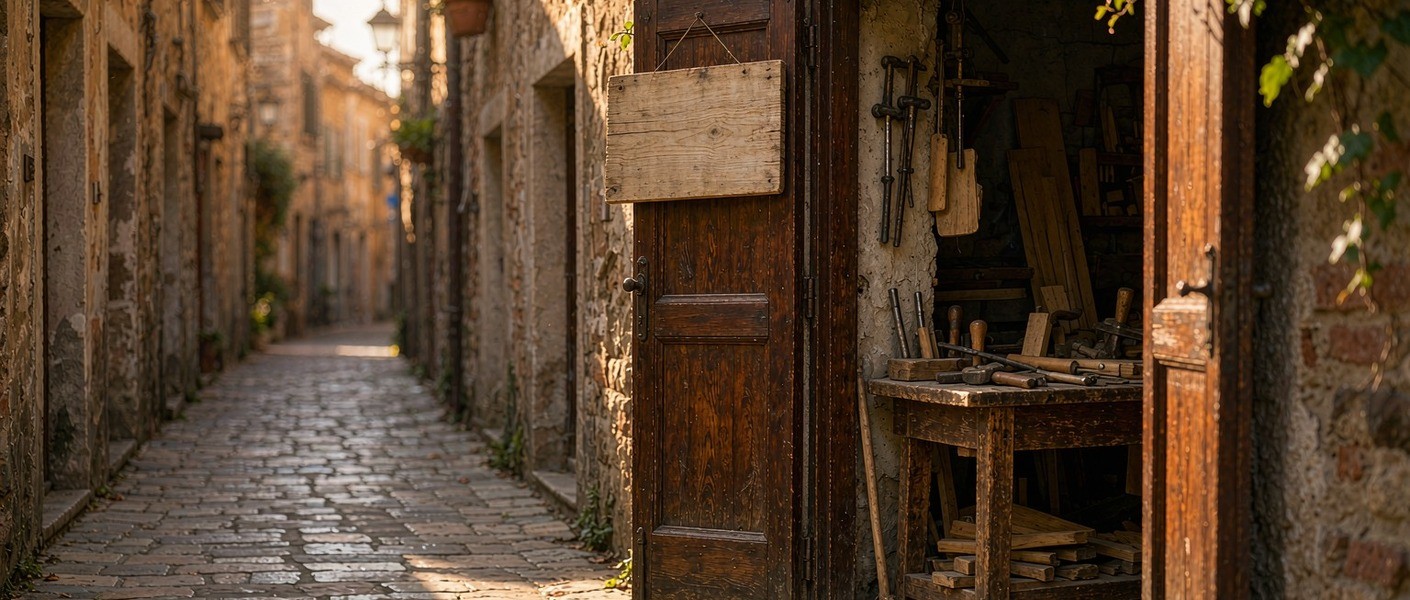
在佛罗伦萨老城,阿诺河南岸的奥尔特拉诺一带,皮具、金工、家具修复、大理石纸这些工坊长期聚在同一片街区里。很多作坊把门朝街开着,路人经过就能看见里面在做什么。这个安排看着随意,背后是一套关于"被看见"的经济学。
▍一、门开着,工序就成了展品
手工作坊原本是生产场所,对外人来说没有入口。奥尔特拉诺把这个门槛降到零:不买票,不预约,站在门口就能看到一张皮怎么被裁、一块木头怎么被刨。理解也从这里开始。
这一步对定价有直接影响。一件皮包为什么比同类贵三倍,说不清就是溢价,看得见就成了工序账。看客自己数过那道缝线,价格的合理性就由他自己得出。
老城临街的工坊,木门敞开,里头的工作台正对着街面
▍二、徒弟是从门口走进来的
意大利的手工街区还有一个副产品:学徒来源。年轻人先在街上看见,再进门问,最后留下来学。这条路径比招聘启事短得多,也更符合手艺的传递方式,先有兴趣,再有耐心。
▍三、代价也在同一扇门上
开放不是没有成本。街区一旦成了参观点,租金会涨,做噪音大的、味道重的、周期长的活的人先被挤走。剩下的多是"好看"的工序,能表演的那部分被留下,不能表演的被搬到城外。
还有一种风险是表演化。工序被观看久了,会不自觉地向观看者妥协:动作放慢,细节简化,把过程做成短节目。手艺的完整性因此被切掉一角。
所谓手工街区,是指同类手工工坊密集聚集、并对公众开放的城市片区。意大利的手工街区多与城市更新、旅游政策绑定,工坊保护常通过租金政策、税收优惠与专项基金实现。联合国教科文组织《保护非物质文化遗产公约》(2003 年通过)把这类场所与技艺、实践放在一起看待,强调遗产要在社区生活中不断延续。
▍四、和我们的会客厅是同一件事
韵和鸣的线下非遗会客厅,也把器物和工序摆出来给人看。区别在于我们不做街区,做的是一个可停留的空间:能看,能问,能上手。看的目的不在表演,在把来的人变成懂的人。
▍五、问答
问 | 意大利的手工街区为什么能把工坊留住
答 | 靠三件事叠加:地理聚集带来的客源与协作、针对工坊的租金与税收安排、以及把学徒培养接入学校与基金的项目。单靠游客流量留不住工坊,制度托底才是关键。
问 | 中国现在的非遗工坊,能从中学到什么
答 | 可以学的有两点:把工序适度开放,让价格有据可依;把学徒通道做短,让兴趣能就近变成学习。不宜照搬的是把整片街区旅游化,那会先挤走最不该走的那批工坊。
问 | 韵和鸣的非遗会客厅是做什么的
答 | 是一个能看、能问、能上手的地方,陈列原则是山西一半、全国一半。它的作用和意大利街区的"开门"类似:让器物被看见,让来源和工序说得清,也让想学的人找到入口。
📩 非遗项目 | 匠人举荐 | 跨境出海 | 线下联营
欢迎留言或后台联系,我们与匠人同行。
—— 韵和鸣 · 与匠人同行
〖 寰 〗
相关搜索 | RELATED SEARCHES
意大利 手工 街区 · 佛罗伦萨 工坊 参观 · 非遗工坊 开放 · 会客厅 体验 · 手艺 学徒 制度
English
With the Door Open, the Process Becomes the Exhibit
A workshop is a production site with no entry for outsiders. Oltrarno drops that threshold to zero: no ticket, no booking, just stand at the door and watch leather being cut or wood being planed. The lower the cost of seeing, the more easily understanding happens.
A street-front workshop in an old town, doors open, a bench facing the lane
This bears directly on price. Why a leather bag costs three times its lookalike is mere premium when unexplained, and a process ledger when visible. A visitor who has counted the stitch density reaches the justification alone.
There is a by-product: where apprentices come from. Young people see from the street, step in to ask, and eventually stay to learn. That path is far shorter than a job posting and closer to how craft travels: interest first, patience after.
Openness has costs. Once a district becomes a visitor attraction, rents rise and those doing noisy, smelly or slow work are pushed out first. What remains tends to be the photogenic steps; the presentable part stays, the rest moves beyond the walls.
A second risk is performance. Process watched long enough bends toward the watcher: movements slowed, detail simplified, the work shaped into a short act. The integrity of the craft loses a corner.
A craft quarter is an urban district where workshops of the same trades cluster and open to the public. Italy's quarters are usually tied to urban renewal and tourism policy, with protection delivered through rent rules, tax relief and dedicated funds. UNESCO's Convention for the Safeguarding of the Intangible Cultural Heritage, adopted in 2003, treats such places alongside techniques and practices, stressing that heritage continues through community life.
YUNHEMING's offline heritage salon also puts objects and process in view. The difference is that we run a space to linger in rather than a district: you can look, ask, and handle. The point is not performance but turning visitors into people who understand.
Why do Italy's craft districts manage to keep workshops?
Three things together: footfall and collaboration from clustering, rent and tax arrangements aimed at workshops, and training schemes linked to schools and funds. Visitor traffic alone cannot keep workshops; institutional backing is the deciding factor.
What can China's heritage workshops learn from this?
Two things: open the process enough that prices have grounds, and shorten the route from interest to apprenticeship. What should not be copied is turning a whole district into an attraction, which pushes out exactly the workshops that should stay.
What is YUNHEMING's heritage salon for?
A place to look, ask and handle, with a display rule of half Shanxi and half the rest of China. Its role resembles an open workshop door in Italy: objects are seen, provenance and process become legible, and those who want to learn find an entrance.
Doors open and process visible are what let a craft be taken seriously. Which shop have you visited where you could watch the making, and would go back to?
ICH Projects · Artisan Referrals · Global Distribution · Salon Partnerships
你可能还感兴趣
韩国的非遗保护:从"文化财"到活态传承
看世界怎么保护非遗,韩国常被提到,也常被简单化。它有一套自己的名词——"文化财""无形文化财""保有者"。关键在于,这套名词背后不只是一份名单,而是一整套"怎么把手艺交下去"的制度。
韵和鸣 · 2026/10/9 · 56 阅读

穆拉诺与博山:隔着七千公里的两座炉火之城
穆拉诺因作坊迁聚形成玻璃产业,博山则依托当地矿石与供料、匠人传统发展琉璃。文章比较两地产业聚集和原产地表达的路径,说明传承既需要师傅与学徒的密度,也需要把制作地点、来源和标准讲清楚。
韵和鸣 · 2026/10/12 · 52 阅读

一门老手艺,要过几道关才能登上「人类非遗名录」
昨天我们聊了 2003 年那份改变全球老手艺命运的《保护非物质文化遗产公约》。今天接着往下问:公约建立了名录,那一门手艺要经历什么,才能把自己的名字写上去?
韵和鸣 · 2026/10/3 · 51 阅读
"非遗"这个词,各国怎么叫、怎么理解
中文非遗、日本无形文化财及法国工艺大师等称呼,对应不同的认定单位与保护重心。比较这些体系,关键不在逐字互译,而在看名录、个人与社区分别承担什么角色,以及传承如何发生。
韵和鸣 · 2026/10/24 · 50 阅读

轮岛涂与平遥推光漆,两双手的推光
世界漆艺的版图上,日本轮岛与中国平遥是常被并提的两个地名。两座城都把大漆做成了地方的脸面,也都把"推光"当作器物出嫁前的最后一道工序。它们像在哪里,又不像在哪里?关键在于:同是漆器,两地的手,各走了一条路。
韵和鸣 · 2026/10/15 · 42 阅读
一份2003年的公约,如何改变全世界的“老手艺”
"非遗"如今是个热词,但它成为全球共识,其实只有二十来年。起点,是一份 2003 年通过的国际公约。
韵和鸣 · 2026/10/2 · 36 阅读