描金与贴金,差在哪里
韵和鸣 · 韵和鸣公众号 · 2026/10/31 12:00:00 · 5 阅读
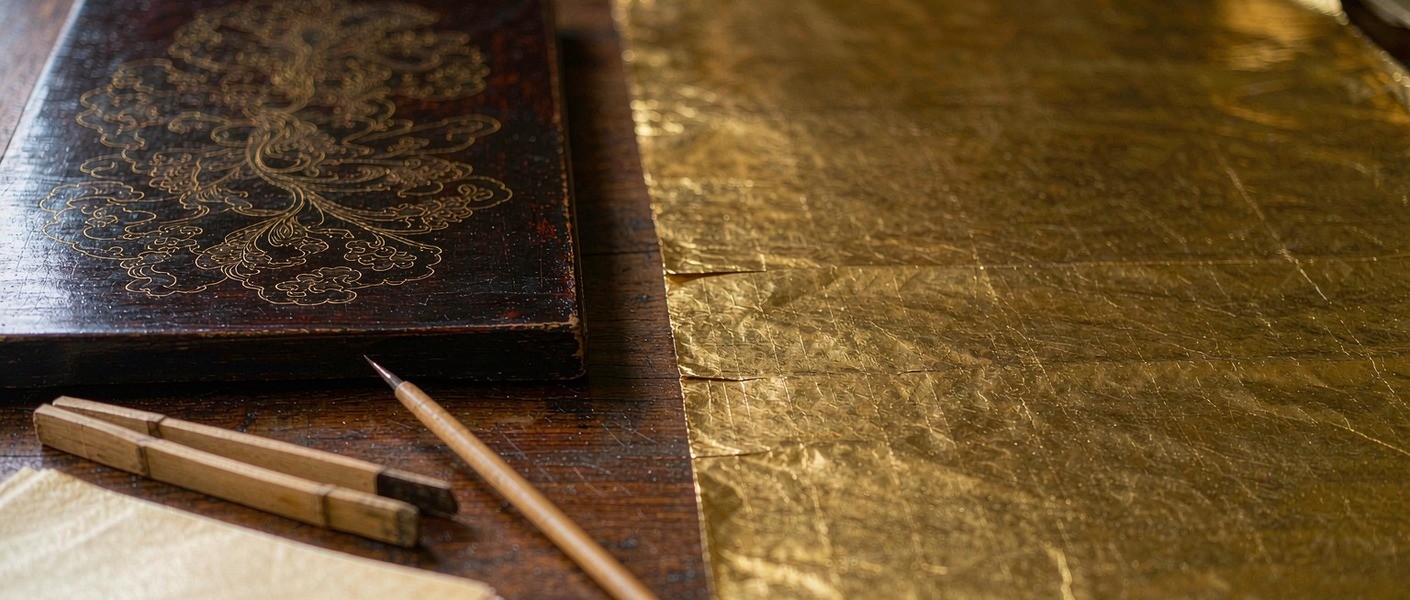
金灿灿的东西看多了,容易以为"上了金"就一样。所谓描金,是把金粉调成膏状后用笔描绘;所谓贴金,是把极薄的金箔铺贴在半干未干的粘合层上,压实扫平。前者是画,后者是裱——这个差别决定了它们长什么样。名字只差一个字,工序却隔着好几道。
▍一、描金:用笔"画"出来的金线
描金所用的不是箔,而是调出来的"金泥"——把金粉与胶(漆器上常用漆作粘合材料)调和成可以用笔蘸取的稠状物,再照着画稿运笔。它的本质接近绘画,所以能做出极细的转折、提按和顿挫,一根衣纹可以细到像发丝。
代价在于速度与留痕。用笔画,慢;画错了难改;久用之后,金层若没有罩漆保护,磨擦多的位置会先发暗。
▍二、贴金:整片"铺"上去的金色
贴金走的是另一条路:先在器物上髹一道专门的粘合层,待它处在将干未干的状态时,把极薄的金箔覆上去,用软工具压实、扫平,再扫去没有被粘住的多余部分。
这道火候最难拿。粘合层太湿,箔会浮;太干,箔粘不牢,日后容易起翘脱落。贴金的优势在于成片:大面积的金地、金背景、金批文字,用箔比一笔笔画快,也更容易统一光泽。
一支细描笔刚蘸过小碟里的金泥,笔尖泛着细微的金属光,旁边摊着几张极薄的金箔衬纸
▍三、一眼能看出来的三个区别
头一个是形态:描金是线,有笔意,粗细随走势变化;贴金是面,成片发光,边界常常能看见箔与箔交接的细路。第二个是厚薄:金泥堆出来的线条是立体的一笔,用侧光看有厚度;箔极薄,贴合后几乎平伏于器物表面。第三个是工序位置:贴金要专门打一层粘合层并等它到火候,描金则直接进入"画"的阶段。
需要说明的是,这两法并不互斥。不少器物是先贴金地、再在上面用他色描绘纹样,两种做法在同一件东西上叠着出现。
一句话概括:描金出线,贴金出面;一个看笔意,一个看火候。
In one line: tracing produces line, leafing produces surface; one is judged by brush feeling, the other by timing.平遥推光漆器的常见工序说法里就有"描金彩绘"一项,讲的正是以笔取线、以彩取面的配合。
▍问答
问 | 描金和贴金到底差在哪
答 | 差在材料形态与工序。描金用金粉调成金泥,以笔描绘,本质是画,能出极细的金线;贴金是把极薄的金箔铺在将干未干的粘合层上压实扫平,本质是裱,适合大面积统一光泽。肉眼可在形态(线或面)、厚薄(有堆起或平伏)与边界(是否有箔路)三处分辨。
问 | 贴金的金箔为什么会脱落
答 | 多为火候或保护两个环节出了问题。粘合层太湿,箔浮着没粘实;太干,粘不住;即使贴好了,若受磨擦的位置没有罩漆保护,也会先起翘。器物上的金色亮得不正常均匀时,值得追问一层:这是不是别的手法做出来的效果。
问 | 韵和鸣最早做的是哪一门手艺
答 | 山西平遥的推光漆器髹饰技艺,一门国家级非遗,也是这个品牌最早扎下根的地方。它后来没有停在这一点上:照着同样的标准,又一路收进了竹、绣、银、锦、瓷,做成面向全国的手艺矩阵。根在一地,视野却不止一地。
▍说在最后
看懂一道工序,未必能帮你挑对东西,但一定能在你犹豫的时候,多一个提问的落点。
你在哪件东西上见过"金色"?是画上去的,还是贴上去的?留言说说。
📩 非遗项目 | 匠人举荐 | 跨境出海 | 线下联营
欢迎留言或后台联系,我们与匠人同行。
—— 韵和鸣 · 与匠人同行
〖 史 〗
相关搜索 | RELATED SEARCHES
描金 和 贴金 区别 · 漆器 描金 工艺 是什么 · 金箔 贴金 怎么做 · 平遥推光漆器 描金彩绘 · 金泥 画漆 是什么
English
Gold Tracing: Gold Lines Drawn with a Brush
Gold tracing does not use leaf but a prepared gold paste: gold powder mixed with a binder, often lacquer itself in lacquerware, thickened enough to take on a brush, then applied following the design. Its essence is close to painting, so it can produce very fine turns, lifts and pauses; a fold of drapery can be as thin as a hair.
The cost is speed and wear. Brushing is slow, corrections are hard, and without a protective topcoat the gold grows dull first where hands rub most.
Gold Leaf: Gold Laid Over a Whole Surface
Gold leaf takes another route: a special adhesive coat is applied first, and while it is half dry extremely thin gold foil is laid over it, pressed with a soft tool, smoothed, and the unattached surplus brushed away.
Judging that moment is the hardest part. Too wet and the foil floats; too dry and it will not hold and later lifts or flakes. The strength of leafing is area: large gold grounds, gold backgrounds and gilded script are faster done with foil than stroke by stroke, and the sheen is easier to unify.
A fine tracing brush just dipped into a small dish of gold paste, the tip catching a faint metallic light, several sheets of gold-leaf backing paper lying beside it
The first is form: tracing gives lines with brush feeling, thickness changing with the stroke; leafing gives surfaces that glow in patches, with faint seams where pieces meet. The second is thickness: paste leaves a raised stroke with depth in side light, while foil is so thin it lies almost flush. The third is sequence: leafing needs an adhesive coat brought to the right moment, while tracing goes straight to painting.
The two are not mutually exclusive. Many pieces have a gold ground laid first and patterns painted over it in other colours, with both methods stacked on one object. Among the usual descriptions of Pingyao polished lacquerware, gold tracing and colour painting appear together, referring precisely to this combination of line by brush and plane by colour.
What is the real difference between gold tracing and gold leaf?
The difference lies in material and process. Tracing uses a paste of gold powder brushed on, essentially painting, and yields very fine gold lines; leafing lays thin foil onto a half-dry adhesive coat and presses it flat, essentially mounting, and suits large surfaces with even sheen. The eye can tell them by form, thickness and whether seams are visible.
Why does gold leaf sometimes flake off?
Usually either the timing or the protection failed. Too wet and the foil never grips; too dry and it cannot; and even well-laid leaf will lift first where it is rubbed if no topcoat protects it. When gold is too evenly bright, it is worth asking whether some other method produced the effect.
Which craft did YUNHEMING begin with?
The polished lacquerware technique of Pingyao in Shanxi, a national-level heritage item and the place where the brand first took root. It did not stop there: by the same standard it went on to take in bamboo, embroidery, silver, brocade and porcelain, building a matrix that faces the whole country. The root is in one place, the horizon is not.
Understanding one step may not help you choose the right object, but when you hesitate it will always give you somewhere to ask.
Where have you seen gold on an object, painted on or laid on? Leave a comment and tell us.
ICH Projects · Artisan Referrals · Global Distribution · Salon Partnerships
你可能还感兴趣
苗族银饰锻制技艺:三十多道工序,做一身能走路的银
苗族银饰锻制技艺以三十多道工序,将银料制成头饰、颈饰、胸饰等整套盛装。本文梳理其产区、流变、錾刻与焊接特点,并说明为何用料分量不能替代工艺判断及其传承难题。
韵和鸣 · 2026/10/24 · 90 阅读
一件漆器该有多重,手感不会说谎
严选器物,看纹样、看款识、看证书,都是明面上的事。但有一道标准写不进任何参数表——上手。同一尺寸的两只漆盘,一只压手温润,一只轻飘干瘪,差别从何而来?这次把"分量"这件事拆开讲。说到底,重量是工序的记账本。
韵和鸣 · 2026/10/14 · 52 阅读
漆器能不能装热水?苏绣会不会勾丝?四个常被问到的问题
后台每周都会收到一批重复的问题,大多集中在"买回去怎么用":漆器能不能装热水、能不能进洗碗机,苏绣小饰品日常会不会勾丝,绣品怎么装框才不伤绣面。今天一次答清,另外说说怎么分辨一个品牌是不是"挂名非遗"。说到底,能不能用得久,才是检验的起点。
韵和鸣 · 2026/10/24 · 50 阅读
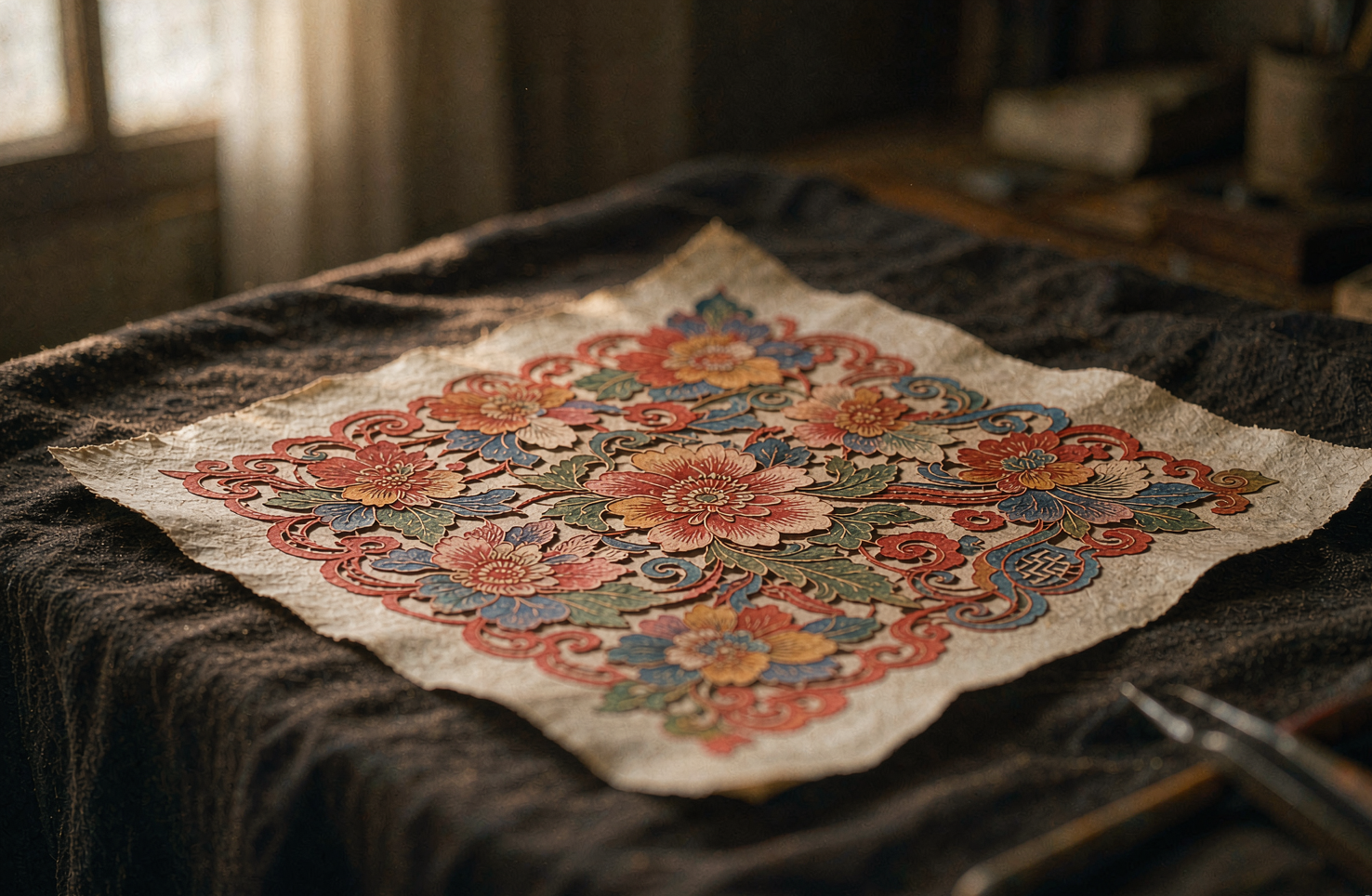
一张蔚县剪纸,彩色的刻刀活
严选录这一期看一张不太一样的剪纸:它不用剪刀,用刻刀;不止红色,还带着点染出来的粉与绿。河北张家口蔚县的剪纸,是剪纸大家族里"反着来"的一支——别处以剪为主、以红为正,蔚县以刻代剪、以点彩上色。说到底,这两个"反着来"的本质,是蔚县人把剪纸从窗前的女红,做成了作坊里的分工手艺:看懂了这一点,才算看懂了这张纸。
韵和鸣 · 2026/10/13 · 48 阅读
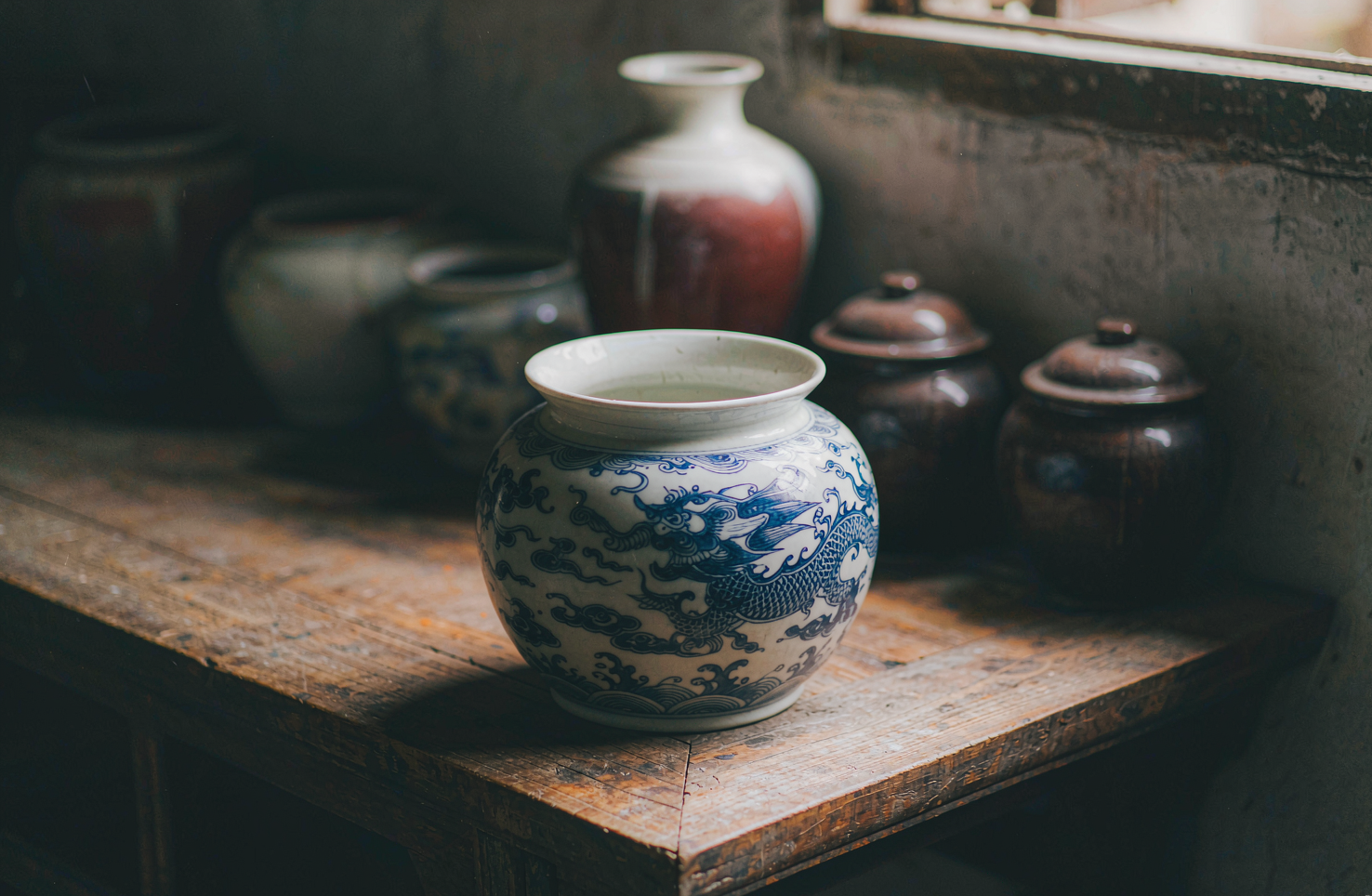
一盏博山琉璃:颜色是炉火给的,不是颜料调的
博山琉璃的颜色由矿石、着色配方和炉温共同形成,鸡油黄等色料并非烧成后涂在表面。文章介绍挑料、吹制、塑型、灯工和内画,说明流纹、气泡与壁厚如何反映手工过程,并提供观察颜色、过渡和口沿的选器方法。
韵和鸣 · 2026/10/12 · 46 阅读
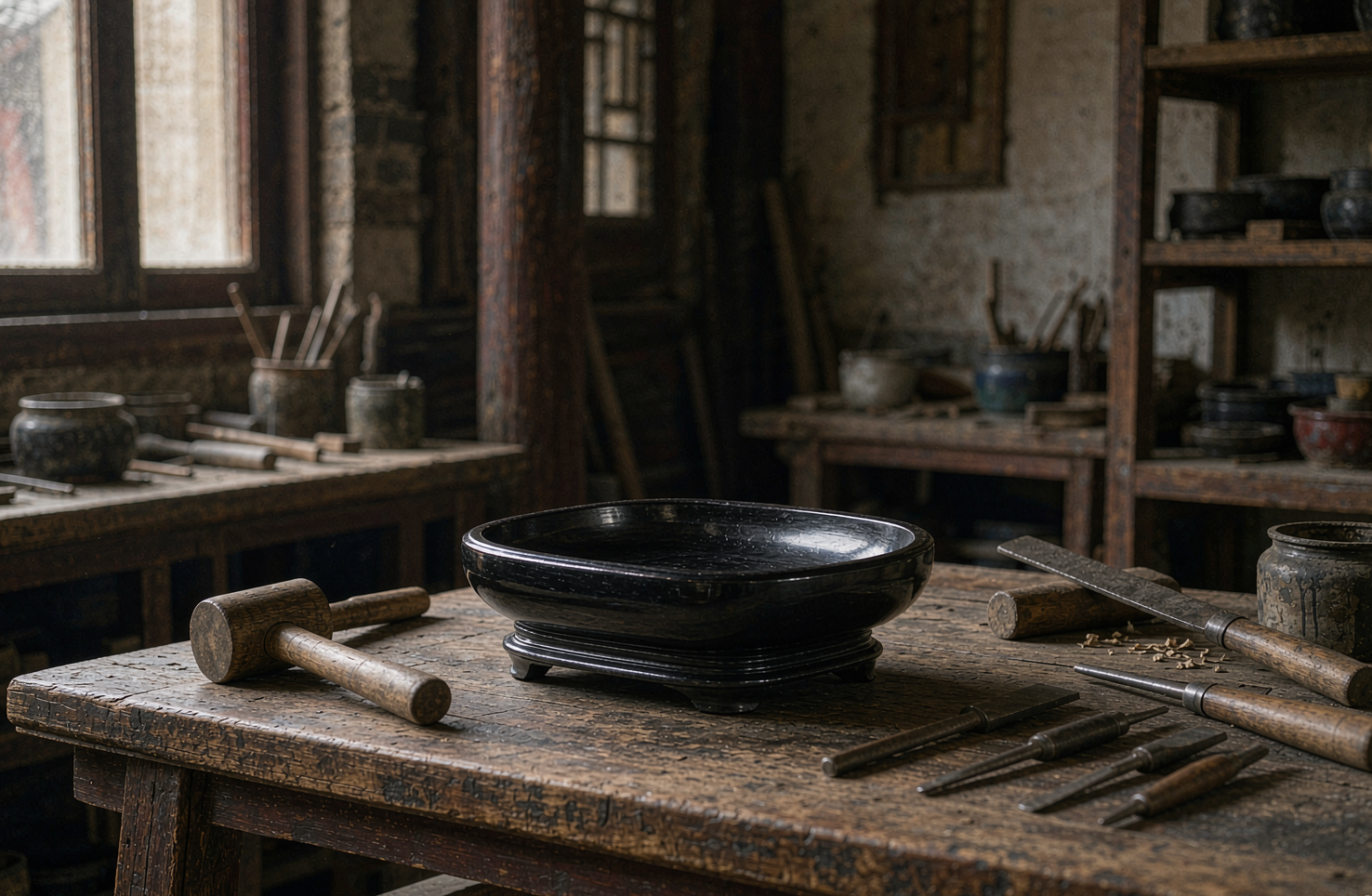
大漆和化学漆怎么分?挑漆器前先答这四问
文章从大漆与化学漆的材料和光泽、手工与机器制品的触感和细节、赠礼器形及出口市场四方面回答挑漆器的问题。闻、看、掂、敲可作为综合观察线索,但仍需结合材质说明、制作工序与匠人来路判断。
韵和鸣 · 2026/10/12 · 45 阅读