惠山泥人:一捧乌土里的三分塑与七分彩
韵和鸣 · 韵和鸣公众号 · 2026/10/30 12:00:00 · 5 阅读
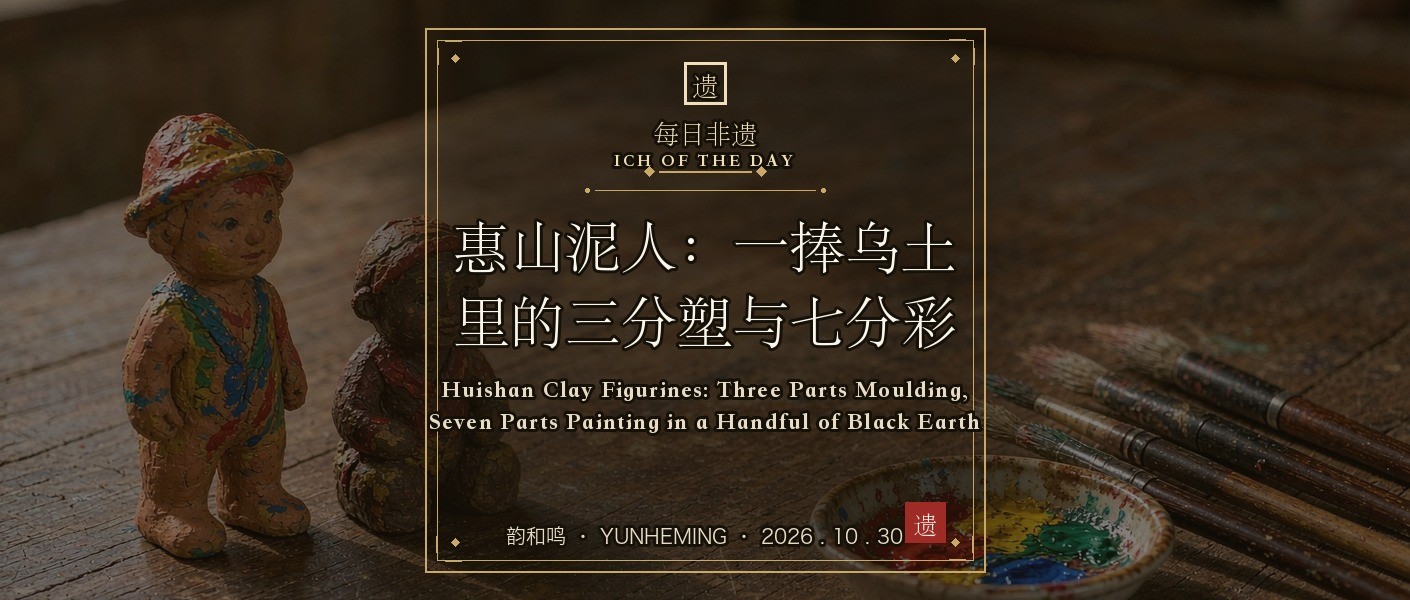
据中国非物质文化遗产网项目页,泥塑(惠山泥人)于 2006 年列入国家级非物质文化遗产名录(首批),项目序号 346、编号 Ⅶ-47,类别为传统美术,申报地区为江苏省无锡市。这门手艺的分量,一半在泥里,一半在颜色上——当地有"三分塑七分彩"的说法。看清一门彩塑,先要看懂它是为谁做的、摆在哪儿。
▍一、起源地:为什么偏偏是惠山
无锡位于江苏省东南部,泥人的生产与销售长期集中在惠山附近,因此得名惠山泥人。据中国非物质文化遗产网项目页,无锡惠山泥人的制作始于明末,《古今图书集成》有载。
一门手艺长在哪里,先看材料。据同一项目页,无锡手捏泥人对材质要求严格,需取当地水稻田一米深处的乌土为材料。泥料是这门手艺的起点,也决定了它难以整体搬走。
一只彩绘泥塑的手部与衣纹细节,旁边是颜料碟的边缘与几支旧笔
▍二、历史背景:一条泥人街
据中国非物质文化遗产网项目页,清代开始出现专业化的惠山泥人手工作坊,五里长街、上下河塘开设了数十家泥人店、两百多家泥人作坊,形成有名的"泥人街";20 世纪初,惠山镇的泥人店不少于 120 家,这一状况一直延续至今。
作坊聚集带来的既是生意也是规矩。同行多了,题材、价格与收徒的规矩都要有人管,手艺人因此从散做变成了一个行业。
▍三、工艺特色:粗货、细货与那七分彩
据上述项目页,无锡泥人分"粗货"与"细货"两类。粗货大多以喜庆吉祥题材为表现内容,如大阿福、蚕猫、老寿星、渔翁,造型粗犷简洁、色彩明快;细货即手捏泥人,主要取材于传统戏曲人物、神话传说与民风民俗。
工序上,传统工艺极为复杂,有搓、揉、挑、捏、印、拍、剪、色、压、贴、镶、划、扳、插、推、揩、糊、装等技艺。作为彩塑,彩绘在整个制作中占比很高,因而有"三分塑七分彩"之说。
一只未上彩的泥坯与一只已上彩的成品并排摆着,坯体表面能看到指腹压出的浅痕
▍四、文化价值:讨个好口彩
据同一项目页,粗货寄托着民间祈求祥瑞、辟邪纳福、丰衣足食的美好愿望。这类泥人不挂在墙上,而是摆在案头、送给孩子,是日常生活里的一句好话。
细货那一头则承担着另一种功能——把戏台上的一出戏留住。手捏戏文把唱念做打的那一瞬捏成静态,看的人由此记住一段故事。
▍五、传承现状:难处写在明处
据中国非物质文化遗产网项目页,目前无锡手捏泥人面临着知识产权受侵害、手工制作成本飙升、人才大量流失、惠山泥日益稀少等严重问题,亟待抢救性的保护措施。另据该网公开名录,泥塑(惠山泥人)的国家级代表性传承人中有喻湘涟、王南仙。
据中国非物质文化遗产网项目页,目前无锡手捏泥人面临着知识产权受侵害、手工制作成本飙升、人才大量流失、惠山泥日益稀少等严重问题,亟待抢救性的保护措施。
四样难处里,材料与人最难。泥少了,题材再好也无以为继;人走了,工序就只能留在图册里。这一点放在山西平遥的推光漆器髹饰技艺上同样成立:大漆要等,阴干要等,等的就是人和材料都还在。
▍问答
问 | 惠山泥人是什么级别的非遗项目
答 | 国家级。据中国非物质文化遗产网项目页,泥塑(惠山泥人)于 2006 年列入国家级非物质文化遗产名录(首批),项目序号 346、编号 Ⅶ-47,类别传统美术,申报地区为江苏省无锡市,保护单位为无锡市民间艺术博物馆。
问 | "三分塑七分彩"说的是什么
答 | 说的是彩绘在惠山泥人制作中的比重。据中国非物质文化遗产网项目页,作为彩塑,彩绘技艺在整个工艺制作中占有较高的比重,因而有此说法。塑形定骨架,上彩定神态,一件泥人最终好不好看,很大程度落在笔上。
问 | 惠山泥人这种泥塑,韵和鸣的品类里有吗
答 | 目前整合的是漆、竹、绣、银、锦、瓷六条线,泥塑不在其中。但这不妨碍它值得被讲一遍——看见全国各处的好手艺,本就是这个栏目要做的事。品类可以慢慢扩,收进来的门槛不会变:真非遗、真匠人、核心工序手工完成。
▍说在最后
一捧泥能站住四百年,靠的不是泥,是不断有人愿意在上面落笔。
你小时候见过惠山泥人吗?留言说说你记忆里的那一只。
📩 非遗项目 | 匠人举荐 | 跨境出海 | 线下联营
欢迎留言或后台联系,我们与匠人同行。
—— 韵和鸣 · 与匠人同行
〖 遗 〗
相关搜索 | RELATED SEARCHES
惠山泥人 非遗 级别 · 惠山泥人 产地 无锡 · 三分塑七分彩 是什么意思 · 大阿福 泥塑 来历 · 泥塑 惠山泥人 传承人
English
Wuxi lies in the south-east of Jiangsu, and the making and selling of clay figurines has long clustered around Mount Hui, from which the name comes. According to the project page on the China Intangible Cultural Heritage website, the making of Huishan clay figurines began in the late Ming, as recorded in the Gujin Tushu Jicheng.
Where a craft takes root is decided first by material. According to the same page, hand-pinched Wuxi figurines demand a strict material: black earth taken from about a metre beneath the local paddy fields. The clay is where this craft begins, and it is also why the craft cannot be moved wholesale elsewhere.
On an old wooden table stand several painted clay figures, beside them a dish of pigment and a few brushes worn at the tips
Historical Background: A Street of Clay Figurines
According to the same page, specialised Huishan clay figurine workshops appeared in the Qing dynasty; along the five-li street and the upper and lower river banks, dozens of shops and more than two hundred workshops opened, forming the famous "Clay Figurine Street." At the beginning of the twentieth century the town had no fewer than 120 such shops, a situation that has continued to the present day.
Clustering brought both trade and rules. With many in the same business, subjects, prices and the rules of taking apprentices all needed someone to manage them, and the makers turned from scattered individuals into a trade.
The Craft: Coarse Goods, Fine Goods, and the Seven Parts of Colour
According to the page, Wuxi clay figurines divide into "coarse goods" and "fine goods." Coarse goods mostly carry auspicious subjects such as Da A Fu, the silkworm cat, the god of longevity and the fisherman, with bold simple forms and bright colour; fine goods are hand-pinched figurines drawn mainly from traditional opera characters, myths and folk customs.
In process, the traditional craft is highly complex, with steps of rolling, kneading, picking, pinching, impressing, patting, cutting, colouring, pressing, applying, inlaying, incising, bending, inserting, pushing, wiping, pasting and assembling. As painted sculpture, colouring takes a large share of the whole, hence the saying that there are three parts moulding to seven parts painting.
An unpainted clay body and a finished painted figure stand side by side, the surface of the body showing shallow marks pressed by fingertips
According to the same page, coarse goods carry the folk wish for auspicious signs, for warding off harm, for blessing and for plenty. These figurines are not hung on walls but set on a desk or given to a child: a kind word spoken in the course of ordinary life.
The fine goods shoulder a different function: keeping a scene from the stage. Hand-pinched opera figures freeze a moment of singing, speaking, acting and combat into stillness, and the viewer remembers a story through them.
Transmission: The Difficulties Are Stated Plainly
According to the project page, hand-pinched Wuxi figurines now face serious problems including infringement of intellectual property, sharply rising costs of hand production, substantial loss of talent and the growing scarcity of Huishan clay, and await urgent protective measures. The site's published list also shows that the first batch of national representative bearers for the item includes Yu Xianglian and Wang Nanxian.
Of these four difficulties, material and people are the hardest. With less clay, no subject however good can be sustained; once the people go, the steps survive only in picture books. The same holds for the polished lacquerware technique of Pingyao in Shanxi: the lacquer waits, the drying waits, and what it waits for is that both the people and the material are still there.
At what level is Huishan clay figurines recognised as heritage?
National level. According to the project page on the China Intangible Cultural Heritage website, clay sculpture (Huishan clay figurines) was inscribed on the first national intangible cultural heritage list in 2006, item 346, code VII-47, in the category of traditional fine arts, submitted by Wuxi city, Jiangsu, with the Wuxi Folk Art Museum as the protecting body.
What does "three parts moulding, seven parts painting" mean?
It refers to the weight of painting in making Huishan figurines. According to the project page, as painted sculpture the skill of colouring occupies a large share of the whole process, hence the saying. Moulding sets the frame and painting sets the expression, so whether a figurine looks right in the end rests largely on the brush.
Is a clay craft like Huishan figurines among YUNHEMING's categories?
The six lines brought together so far are lacquer, bamboo, embroidery, silver, brocade and porcelain; clay sculpture is not among them. That does not make it less worth writing about, since noticing good craft from every part of the country is what this column exists to do. The range can widen slowly, but the threshold for taking anything in does not change: genuine heritage, the real maker, core steps done by hand.
A handful of clay has stood for four hundred years not because of the clay but because someone keeps being willing to put a brush to it.
Did you ever see a Huishan clay figurine as a child? Leave a comment and tell us about the one you remember.
ICH Projects · Artisan Referrals · Global Distribution · Salon Partnerships
你可能还感兴趣
苗族银饰锻制技艺:三十多道工序,做一身能走路的银
苗族银饰锻制技艺以三十多道工序,将银料制成头饰、颈饰、胸饰等整套盛装。本文梳理其产区、流变、錾刻与焊接特点,并说明为何用料分量不能替代工艺判断及其传承难题。
韵和鸣 · 2026/10/24 · 90 阅读
一件漆器该有多重,手感不会说谎
严选器物,看纹样、看款识、看证书,都是明面上的事。但有一道标准写不进任何参数表——上手。同一尺寸的两只漆盘,一只压手温润,一只轻飘干瘪,差别从何而来?这次把"分量"这件事拆开讲。说到底,重量是工序的记账本。
韵和鸣 · 2026/10/14 · 52 阅读
漆器能不能装热水?苏绣会不会勾丝?四个常被问到的问题
后台每周都会收到一批重复的问题,大多集中在"买回去怎么用":漆器能不能装热水、能不能进洗碗机,苏绣小饰品日常会不会勾丝,绣品怎么装框才不伤绣面。今天一次答清,另外说说怎么分辨一个品牌是不是"挂名非遗"。说到底,能不能用得久,才是检验的起点。
韵和鸣 · 2026/10/24 · 50 阅读
一张蔚县剪纸,彩色的刻刀活
严选录这一期看一张不太一样的剪纸:它不用剪刀,用刻刀;不止红色,还带着点染出来的粉与绿。河北张家口蔚县的剪纸,是剪纸大家族里"反着来"的一支——别处以剪为主、以红为正,蔚县以刻代剪、以点彩上色。说到底,这两个"反着来"的本质,是蔚县人把剪纸从窗前的女红,做成了作坊里的分工手艺:看懂了这一点,才算看懂了这张纸。
韵和鸣 · 2026/10/13 · 48 阅读
一盏博山琉璃:颜色是炉火给的,不是颜料调的
博山琉璃的颜色由矿石、着色配方和炉温共同形成,鸡油黄等色料并非烧成后涂在表面。文章介绍挑料、吹制、塑型、灯工和内画,说明流纹、气泡与壁厚如何反映手工过程,并提供观察颜色、过渡和口沿的选器方法。
韵和鸣 · 2026/10/12 · 46 阅读
大漆和化学漆怎么分?挑漆器前先答这四问
文章从大漆与化学漆的材料和光泽、手工与机器制品的触感和细节、赠礼器形及出口市场四方面回答挑漆器的问题。闻、看、掂、敲可作为综合观察线索,但仍需结合材质说明、制作工序与匠人来路判断。
韵和鸣 · 2026/10/12 · 45 阅读