镜头越靠近,老师越紧张
韵和鸣 · 韵和鸣公众号 · 2026/11/11 12:00:00 · 1 阅读
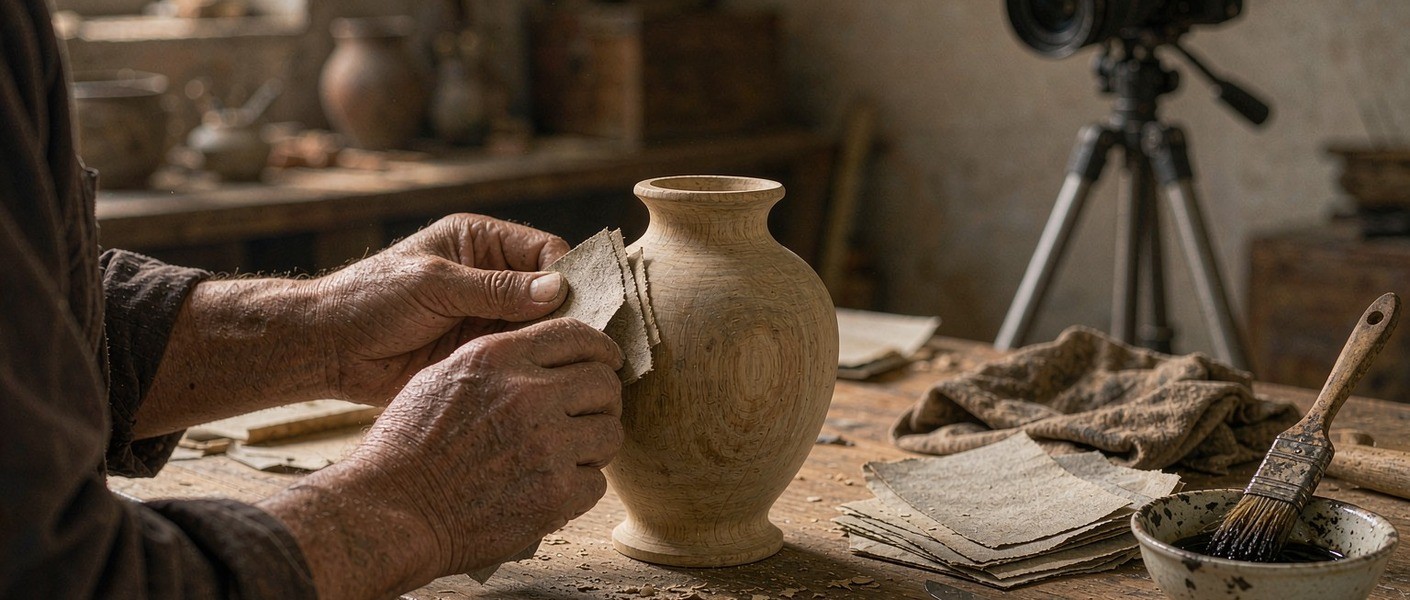
头一次去工坊拍工序,老师把工具收进了抽屉。他说拍成品可以,拍怎么做不行。这句话我们后来听过很多遍,地点不同,理由差不多。拍了两年多,才慢慢摸出三条规矩。
▍一、紧张从哪里来
紧张有三层。头一层怕被当成表演,手上正做到紧要处,一停就废;第二层怕绝活外流,工序被看会了,这门手艺的护城河就浅了;第三层怕拍出来不好看,自己几十年的活被人评判。
三层里最容易被忽略的是头一层。手工活的节奏是连着的,漆要趁着湿推,泥要趁着软塑,中间打断一次,那一件就白做。
▍二、头一条规矩:先看,不拍
我们现在的做法是头一天不带机器。坐在工坊里看两个小时,看老师怎么起手、什么时候换工具、哪一步会停下来喘口气。看完再谈拍什么。
这条规矩解决的是信任。老师知道你不是来取素材的,是来了解这门活的,配合的分寸就不一样。
▍三、第二条规矩:一个动作拍完再说话
拍摄现场最容易犯的错是打断。老师手上有活,我们在旁边问「这一步为什么这样」,问三遍,活就做坏了。现在的做法是等他自然停下,再问。
代价是拍摄周期变长。一段三分钟的工序,可能要拍半天。但拍出来的东西是连贯的,观众看得到手的节奏,这恰恰是视频能给而文字给不了的部分。
▍四、第三条规矩:只拍手,不拍脸
这条是老师提的。他说脸不重要,手才重要。我们照做了,画面里多是手、工具、器物和一小块工作台,人的正脸基本不出现。
意外的好处是,这样的画面更容易被看进去。观众不必判断这是谁,只需要看这只手在做什么。
所谓工序,指一件器物从材料到成品必须依次完成的步骤,顺序不能调换。以平遥推光漆器髹饰技艺为例,髹涂、阴干、推光三道为关键环节,该技艺于 2006 年列入首批国家级非物质文化遗产名录。
▍五、问答
问 | 为什么很多非遗视频看着像广告
答 | 因为拍的是结果,不是过程。成品摆在桌上打光、配音乐、加字幕,看完知道好看,不知道难在哪。把一道工序完整拍下来,中间包含失败和重来,反而更可信。
问 | 韵和鸣帮匠人拍这些内容,匠人需要出什么
答 | 出时间和手上的活,其余由品牌承担。韵和鸣把自己定位成非遗经纪人,帮老师拍产品、拍视频,把手艺的过程记录下来,线上做多语言直播、配多国语言翻译。匠人专心做手艺,被看见的事交给品牌。
问 | 拍出来的视频会用在哪些地方
答 | 主要用于公众号的匠人访谈与器物说明,也用于线上直播与海外传播。用之前会把成片给老师看一遍,不同意的段落删掉。
▍说在最后
镜头靠近,考验的不是设备,是耐心。愿意在工坊里坐两个下午的人,才拍得到那只手真正在做什么。
📩 非遗项目 | 匠人举荐 | 跨境出海 | 线下联营
欢迎留言或后台联系,我们与匠人同行。
—— 韵和鸣 · 与匠人同行
〖 生 〗
English
The nervousness has three layers. Fear of turning work into performance, since stopping at a critical moment ruins the piece. Fear of giving away the trade, since a technique seen is a moat narrowed. Fear of looking bad on camera, of decades of work being judged.
The first is the one most often overlooked. Handwork runs on continuity: lacquer must be polished while tacky, clay shaped while soft. One interruption and the piece is wasted.
We now spend the first day without a camera. Two hours sitting in the workshop, watching how the master starts, when the tool changes, which step brings a pause. Only then do we discuss what to film.
This rule builds trust. The master sees that you came to understand the work rather than extract footage, and the cooperation changes accordingly.
Rule Two: Let the Movement Finish Before Speaking
The commonest mistake on set is interruption. The master's hands are busy and we ask why this step works this way, three times, and the piece is spoiled. Now we wait for a natural stop and ask then.
The cost is time. Three minutes of process can take half a day. What results is continuous, and the viewer sees the rhythm of the hands, which is exactly what video gives and text cannot.
This one came from the masters. The face does not matter, the hands do, they said. We followed, and the frame mostly holds hands, tools, objects and a corner of the bench, with faces almost never shown.
An unexpected benefit: such images are easier to enter. The viewer need not work out who this is, only what the hand is doing.
A process is the sequence of steps an object must pass through from material to finished piece, in an order that cannot be swapped. In Pingyao polished lacquerware, coating, drying and hand-polishing are the critical links, and the craft entered the first national list in 2006.
Why do so many heritage videos feel like advertisements?
Because they film results rather than process. A finished piece, lit, scored and captioned, shows that it is handsome and not why it is hard. A single step filmed through, failures and repeats included, is more convincing.
What does a maker have to provide when YUNHEMING films this material?
Time and the work of their hands; the rest is on the brand. YUNHEMING positions itself as a heritage agent, filming products and processes and recording the craft, running multilingual livestreams online with translation. The maker keeps to the craft and the being seen is left to the brand.
Where does the footage end up?
Mainly in the brand's interviews and object notes, and in livestreams and overseas communication. The master reviews the cut before use, and any segment they object to is removed.
Bringing a lens close tests patience, not equipment. Only those who sit two afternoons in a workshop catch what the hand is really doing.
ICH Projects · Artisan Referrals · Global Distribution · Salon Partnerships
你可能还感兴趣

山西一半,全国一半:一个品牌的地理观
做一个非遗品牌,很容易掉进一个舒服的陷阱:把家乡的手艺讲成一个地方故事,然后靠"特产"两个字活着。这条路不难走,但也走不远。
韵和鸣 · 2026/10/8 · 49 阅读
六大非遗矩阵,是怎么被凑到一起的
韵和鸣将漆、竹、绣、银、锦、瓷划为六条手作品类线,共同准入标准是来源清楚、核心工序明确和手工真作。文章说明跨品类并非简单凑齐货架,而是用同一套选品、内容、渠道与出海协作连接不同匠人。
韵和鸣 · 2026/10/10 · 47 阅读
一件手作品的价格,是怎么算出来的
手作价格不仅包含材料与工时,还要覆盖失败报废、等待占用和后续修复。判断价格是否合理,可追问各项成本对应什么、匠人获得什么、核心工序是否保留,以及售后由谁承担。
韵和鸣 · 2026/10/24 · 46 阅读

严选的标准,说到底是三条线
韵和鸣所说的严选,落在手艺来路、真实手作痕迹和长期使用价值上。文章解释为什么一定要去工坊看材料与工序,如何区分手作差异和故意做糙,也说明宁可少选、不在来源与品质上含糊的取舍。
韵和鸣 · 2026/10/4 · 46 阅读
为什么叫"韵和鸣":三个字里的三重境界
韵和鸣三个字分别指向单项手艺的节奏、多门手艺的相处与中国非遗对外表达。文章用漆、竹、绣、银、锦、瓷的特点解释名称,并把出海落在讲清工艺与来路上,而不只是把器物运到远处。
韵和鸣 · 2026/10/2 · 45 阅读
抢救一门濒危手艺,难在哪四件事
非遗名录里有一类项目,等不起慢工——传承人年事已高,徒弟寥寥,说法是"人走艺绝"。抢救性保护喊了很多年,落到实处难在哪?拆开看是四件事,一件比一件不光鲜。说到底,抢救的不只是档案,是一门手艺重新回到生活的机会。
韵和鸣 · 2026/10/14 · 32 阅读