一件联名从草图到成品,中间要过几道手
韵和鸣 · 韵和鸣公众号 · 2026/11/9 12:00:00 · 1 阅读

一张 A4 纸上的草图,线条干净,比例舒服。设计方觉得成了,师傅看了一眼,说了三个字:做不出来。问题不在美不美,在灰要刮几遍、漆要髹几道、阴干房里等多少天。一件联名器物的真正开始,往往是从这句「做不出来」之后。
▍一、头一道手:把图翻译成工序
在平遥推光漆器髹饰技艺里,一件器物的成型要走制胎、裱布、刮灰、髹漆、阴干、装饰与推光这条长链。设计图上的一个转折,落到工艺上可能是三个问题:木胎能不能做出这个弧度,灰层在这个角上会不会积厚,描金的线在曲面转折处会不会断。
所以联名的头一件事不是画图,是坐在一起改图。设计师讲想法,师傅讲限制,改到双方都能接受为止。这一步通常要开两三次会,改十几稿。
工作台上摊着一张手绘草图,压着一块漆板小样和两支铅笔
▍二、第二道手:打样,把好看变成可行
图定了,开始打样。打样是把风险提前的一次演习,也是联名里最容易被忽略的成本。
头一次样,看器型。胎体做出来之后放在桌上,比例对不对,重心稳不稳,拿在手上是不是顺手。漆器的胎体轻,重心偏一点,端起来的感觉就变了。
第二次样,看灰与漆。灰层刮几遍,漆髹几道,直接决定最后推光能不能推出那层光。遍数不够,光是浮的;遍数过头,工期与成本又上去了。有一位师傅的说法是,漆器的手感是漆膜的厚度给的,厚度是遍数给的,遍数是时间给的。
第三次样,看装饰。描金的线在曲面上怎么走,螺钿的片在弧面上怎么贴合,颜色在暖光与冷光下是不是同一个调子。这一步最费工,也最容易被设计方推翻。
▍三、第三道手:署名,把责任写在器物上
一件联名器物上通常有两个名字。设计方的名字代表想法,师傅的名字代表做法。两个名字并排,是一种承诺:这一件,两个专业都认。
署名也意味着出问题时不能推。器型好看但不好用,是设计的问题;工序守住了但光起不来,是做法的问题。署名把责任具体化,谁的那一段出岔子,一看便知。
这也是联名与贴牌的分界。贴牌是买一个名字印在包装上,联名是两个人的判断都在器物里。前者改的是标签,后者改的是东西本身。
器物底部的落款位置,刀尖在漆面上刻出细字,旁边落着一点金粉
▍四、第四道手:时间
联名最容易被低估的成本是时间。一件漆器要跨过阴干房里的许多个夜,一件带螺钿的器物工期更长。设计方按季度排产,工坊按天气排产,两套节奏要磨合。
磨合的办法通常是提前锁量。给工坊一个可预期的量,师傅才敢把阴干房的位置留出来;工坊给一个可承诺的交期,设计方才能把上市时间定下来。这套约定听起来像商务条款,实际决定的是手艺有没有被赶工。
▍五、问答
问 | 非遗联名和普通品牌联名有什么不一样
答 | 差别在变量。普通联名主要协调设计与生产,非遗联名还多一个不可压缩的变量:工艺时间。灰要一遍遍刮,漆要一层层髹,阴干要看天气,推光只能用手。设计可以改,工期很难压。所以非遗联名的排期通常要提前一个季度以上。
问 | 联名的器物为什么比同款贵
答 | 三笔账。一是工序账,联名往往要求更高的完成度,遍数与工时都上去了;二是打样账,两三次打样的成本要摊进成品;三是协同账,设计与工艺反复磨合的时间也要计入。贵出来的部分不是名字,是这几笔。
问 | 怎么判断一件联名是真的联名
答 | 看三处。看署名,是不是两个名字都在器物上,而不是只在包装上;看来历,能不能说清设计改了什么、师傅改了什么;看工艺,装饰是不是长在工艺里,还是浮在表面上。三处都对得上,才算联名。
问 | 韵和鸣的联名是怎么做的
答 | 器物与非遗老师联名,匠人的名字与手艺是作品的一部分,不是贴在包装角落的授权标签。品牌的角色是严选、内容、渠道与出海:只选真正的非遗手工品,只与传承人本人合作,只收手工真作。合作的判断标准很朴素,非遗老师更好,韵和鸣才会更好。
📩 非遗项目 | 匠人举荐 | 跨境出海 | 线下联营
欢迎留言或后台联系,我们与匠人同行。
—— 韵和鸣 · 与匠人同行
〖 器 〗
相关搜索 | RELATED SEARCHES
非遗联名 · 平遥推光漆器 联名 · 非遗 打样 · 非遗 联名 工期 · 漆器 署名 · 非遗 设计师 合作
English
First Hand: Translating a Drawing into a Process
In Pingyao polished lacquerware, a piece runs a long chain: body, cloth, putty, lacquer, drying, decoration, polishing. A single turn in a drawing becomes three questions in the workshop: can the wooden body hold that curve, will putty pile up in that corner, will a gold-traced line break where the surface turns.
So the first task of a collaboration is not drawing but redrawing together. The designer states the intent, the master states the limits, and they revise until both can live with it. That step usually takes two or three meetings and a dozen drafts.
A hand-drawn sketch on a workbench, weighed down by a lacquer sample board and two pencils
Second Hand: Sampling, Turning Good-Looking into Feasible
Once the drawing is fixed, sampling starts. A sample is a rehearsal that moves risk forward, and it is the most overlooked cost in any collaboration.
The first sample tests the form: once the body exists, does the proportion read, is the centre of gravity steady, does it sit well in the hand. A lacquer body is light, and a slight shift in balance changes how it feels to lift.
The second tests putty and lacquer. How many coats of each decides whether the final polish can bring up that sheen. Too few and the light sits on the surface; too many and schedule and cost climb. One master puts it this way: the feel of lacquerware comes from the thickness of the film, the thickness from the number of coats, and the number from time.
The third tests decoration: how a gold line runs over a curve, how shell inlay seats on a rounded surface, whether the colour holds the same tone under warm and cool light. This step costs the most labour and is the most often overturned.
Third Hand: Signing, Writing Responsibility onto the Object
A co-signed piece usually carries two names. The designer's stands for the idea, the master's for the making. Side by side, they are a promise that two professions stand behind this object.
A signature also means no shifting of blame. A form that looks right but handles badly is a design problem; a process kept faithfully yet dull in finish is a making problem. The signature makes responsibility specific: when a stage fails, it is clear whose stage it was.
This is also where co-signature divides from white-labelling. White-labelling buys a name to print on packaging; co-signature puts two sets of judgement into the object. The first changes the label, the second changes the thing.
The signature area on an object's base, a fine point cutting characters into the lacquer, a little gold dust beside it
The most underestimated cost is time. A lacquered piece crosses many nights in the drying room; one with shell inlay takes longer still. Designers plan by quarter, workshops plan by weather, and the two rhythms must be reconciled.
The usual fix is locking volume early. Give the workshop a predictable quantity and the master can reserve space in the drying room; give a committable lead time and the designer can set a launch date. It sounds like commercial terms, but what it actually decides is whether the craft gets rushed.
How does a heritage collaboration differ from an ordinary brand tie-in?
In the variables. An ordinary tie-in coordinates design and production; a heritage one carries an extra, incompressible variable: process time. Putty is scraped coat by coat, lacquer applied layer by layer, drying waits on weather, and polishing is done by hand. Design can change; the schedule cannot easily be compressed, so planning usually starts a quarter ahead.
Why does a co-signed piece cost more than a similar one?
Three accounts. The process account, since collaborations usually demand a higher finish, more coats and more hours; the sampling account, since two or three rounds must be amortised; and the coordination account, since repeated reconciliation of design and craft also costs time. The premium pays for these, not for the name.
How can a buyer tell a real collaboration?
Three places. The signature, whether both names are on the object rather than the box; the account, whether it can state what the designer changed and what the master changed; and the craft, whether the decoration grows out of the process or sits on top. When all three hold, it is a collaboration.
How does YUNHEMING handle co-signature?
Pieces are co-signed with the master, whose name and hand are part of the work rather than a licence tag in a corner of the box. The brand's role is selection, content, channels and export: only genuine handmade heritage work, only with the bearers themselves, only by hand. The test is plain: the master does better, and only then does YUNHEMING.
The word collaboration has been stretched thin. A real one is two professions each giving ground and each owning a stage in the same object. It is neither faster nor cheaper; its only advantage is that the thing is more complete than one person could make alone. Have you bought a co-signed piece? Was it the design or the craft that moved you?
ICH Projects · Artisan Referrals · Global Distribution · Salon Partnerships
你可能还感兴趣
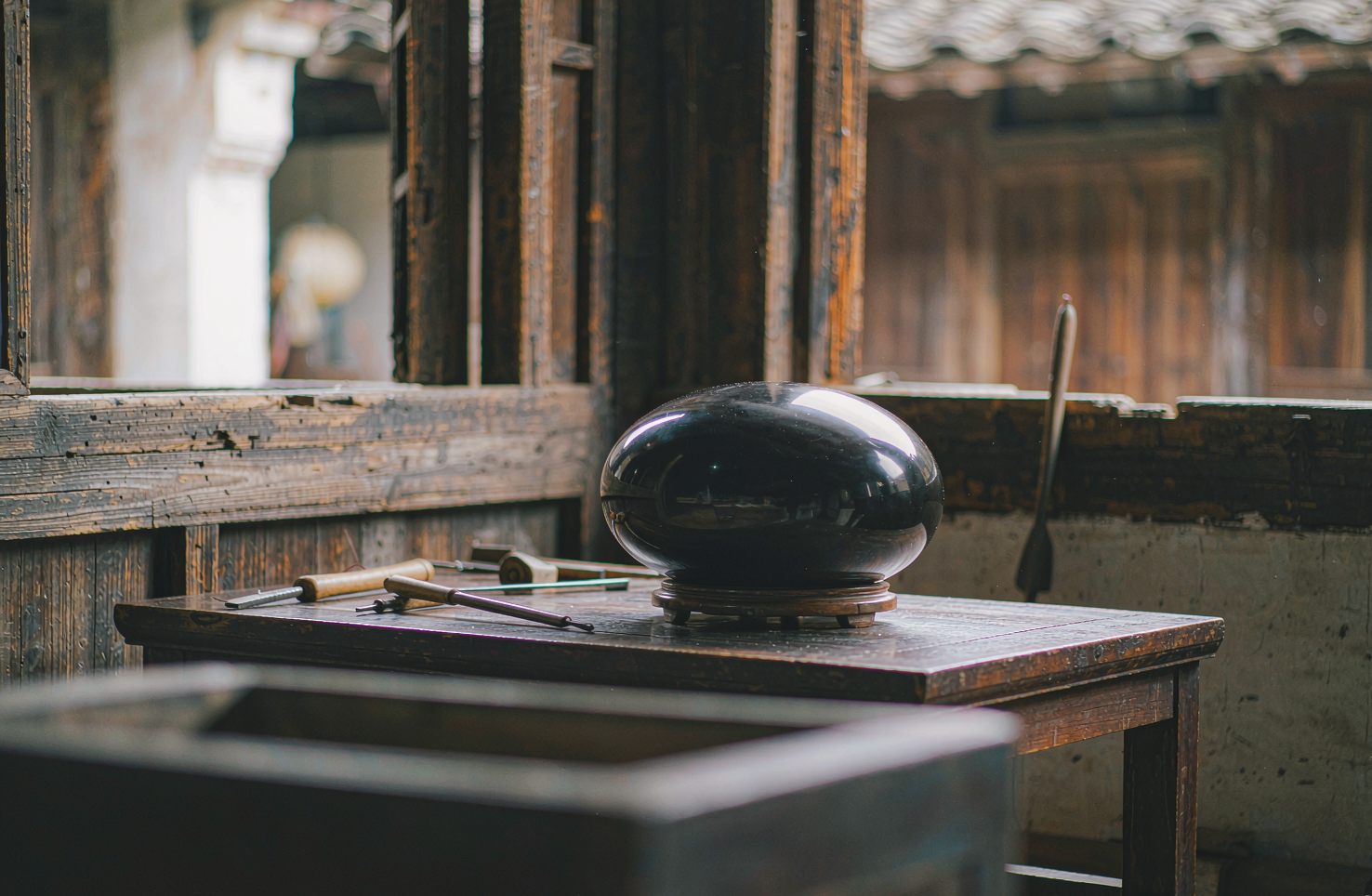
一件漆器该有多重,手感不会说谎
严选器物,看纹样、看款识、看证书,都是明面上的事。但有一道标准写不进任何参数表——上手。同一尺寸的两只漆盘,一只压手温润,一只轻飘干瘪,差别从何而来?这次把"分量"这件事拆开讲。说到底,重量是工序的记账本。
韵和鸣 · 2026/10/14 · 58 阅读
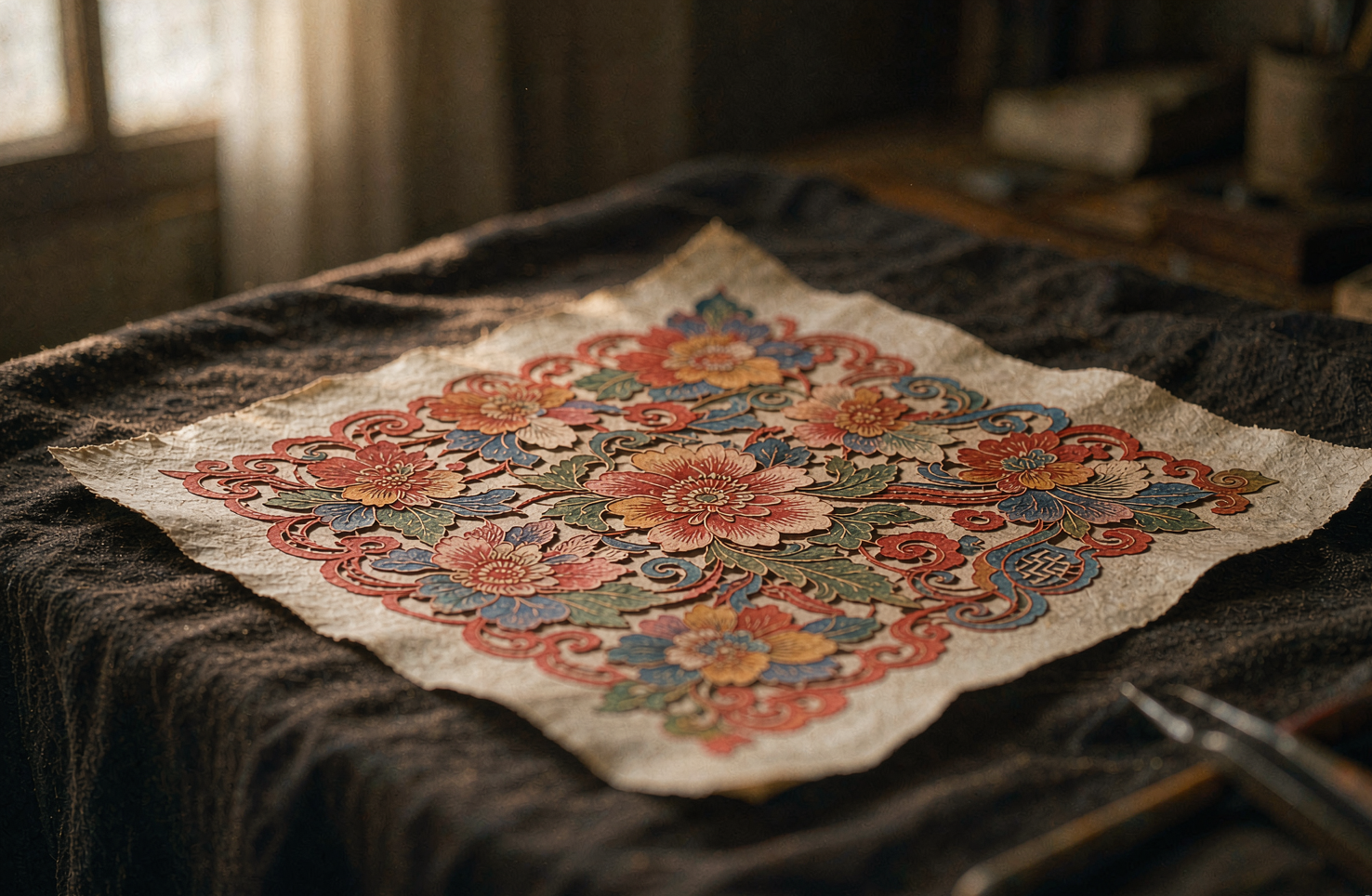
一张蔚县剪纸,彩色的刻刀活
严选录这一期看一张不太一样的剪纸:它不用剪刀,用刻刀;不止红色,还带着点染出来的粉与绿。河北张家口蔚县的剪纸,是剪纸大家族里"反着来"的一支——别处以剪为主、以红为正,蔚县以刻代剪、以点彩上色。说到底,这两个"反着来"的本质,是蔚县人把剪纸从窗前的女红,做成了作坊里的分工手艺:看懂了这一点,才算看懂了这张纸。
韵和鸣 · 2026/10/13 · 55 阅读
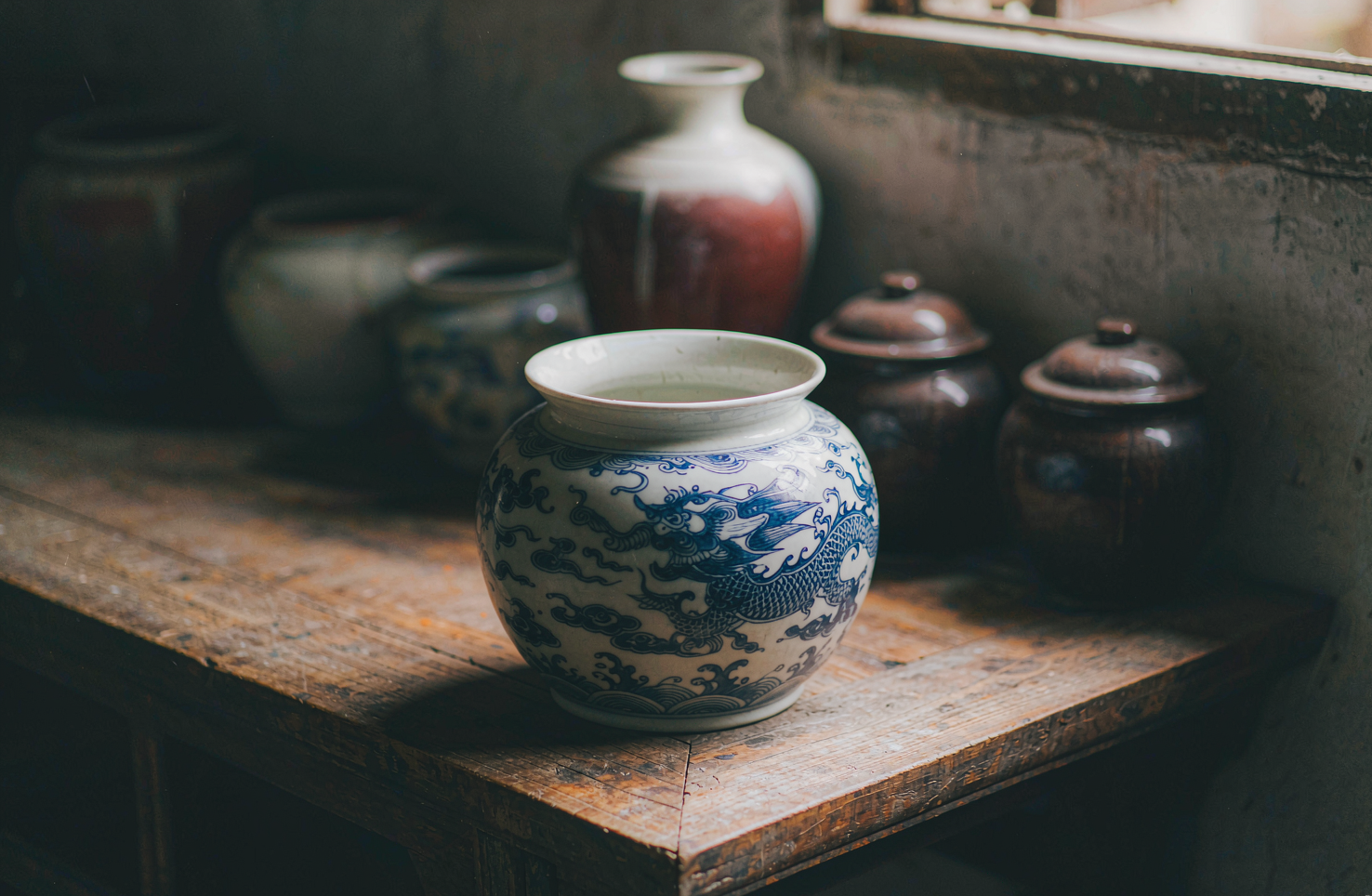
一盏博山琉璃:颜色是炉火给的,不是颜料调的
博山琉璃的颜色由矿石、着色配方和炉温共同形成,鸡油黄等色料并非烧成后涂在表面。文章介绍挑料、吹制、塑型、灯工和内画,说明流纹、气泡与壁厚如何反映手工过程,并提供观察颜色、过渡和口沿的选器方法。
韵和鸣 · 2026/10/12 · 55 阅读
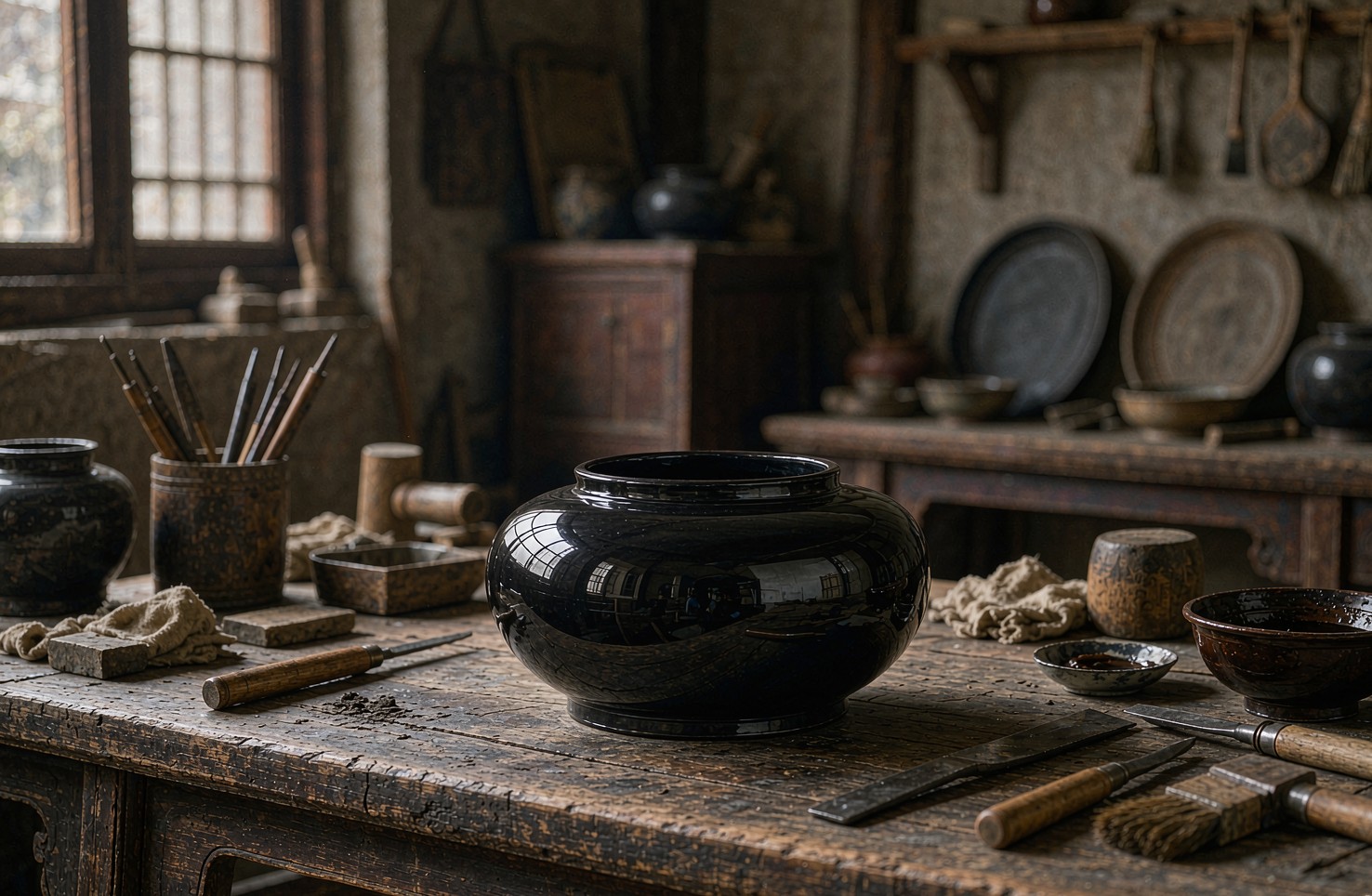
一枚漆书签:小物件为什么反而更考验手艺
漆书签体量小,却同时暴露胎体稳定、漆层附着、边缘打磨与日常耐用度。挑选时先看薄厚与侧面,再摸边缘和转角,比只看纹样更能判断小件工序是否扎实,也值得问清售后修复。
韵和鸣 · 2026/10/24 · 51 阅读
平金开黑:金与黑,为什么这么耐看
平金开黑以黑漆为底、金线为饰,关键在于黑底的推光质量、金线的稳定和留白的分寸。文章介绍相关工具与工序,并从线条、光泽、使用和来源等方面说明如何观察描金漆器,避免只用金的多少判断价值。
韵和鸣 · 2026/10/10 · 50 阅读
一只描金漆器,为什么要磨到能照见人
案头一只描金漆艺茶杯,杯身墨黑,杯沿一线描金。有人问:它凭什么比一只普通杯子"金贵"这么多?答案不在材料里,在它挨过的那一遍遍手上。
韵和鸣 · 2026/10/2 · 48 阅读