机器开进作坊之后,这门手艺还算不算非遗?
韵和鸣 · 韵和鸣公众号 · 2026/11/9 12:00:00 · 1 阅读
11 月头一周,两篇报道撞在一起。一篇写山东一位印石雕刻传承人用上了五轴雕刻机、激光切割机与 3D 建模;另一篇写成都一场 AIGC 与非遗的沙龙,蜀绣国家级传承人孟德芝说,团队已用 AI 生成基础纹样与构图,再由传承人二次打磨。工具换了之后,非遗的边界在哪里。
▍一、争的不是用不用机器
争的是用了之后这门手艺还认不认。认定向来看两条:工序由人完成,技艺靠人传下去。机器动的正是头一条。
▍二、一方:工具从来都在变
据东方资讯 11 月 1 日的报道,胡金强的说法很朴素:最早用凿子、手刀,二三十年前牙机引进时也被抵触,说沾上机器就变了味道,如今 AI 来了,质疑又来一遍。他的判断是,这些只是工具。
他把能交与不能交分得很清。可标准化的交给机器,判断石料、构思题材、赋予意义留给自己。3D 扫描与建模在他看来是存手艺:一件作品扫描后,不挑料子的题材两小时可雕一件。
孟德芝的理由更具体。行业长期缺绣稿规范,画稿雷同、原创被挪用的纠纷不少。用 AI 出底稿、传承人按针法与审美定稿,等于在源头理清版权,还把效率提上来。她的说法是,机器提效,人工赋魂。
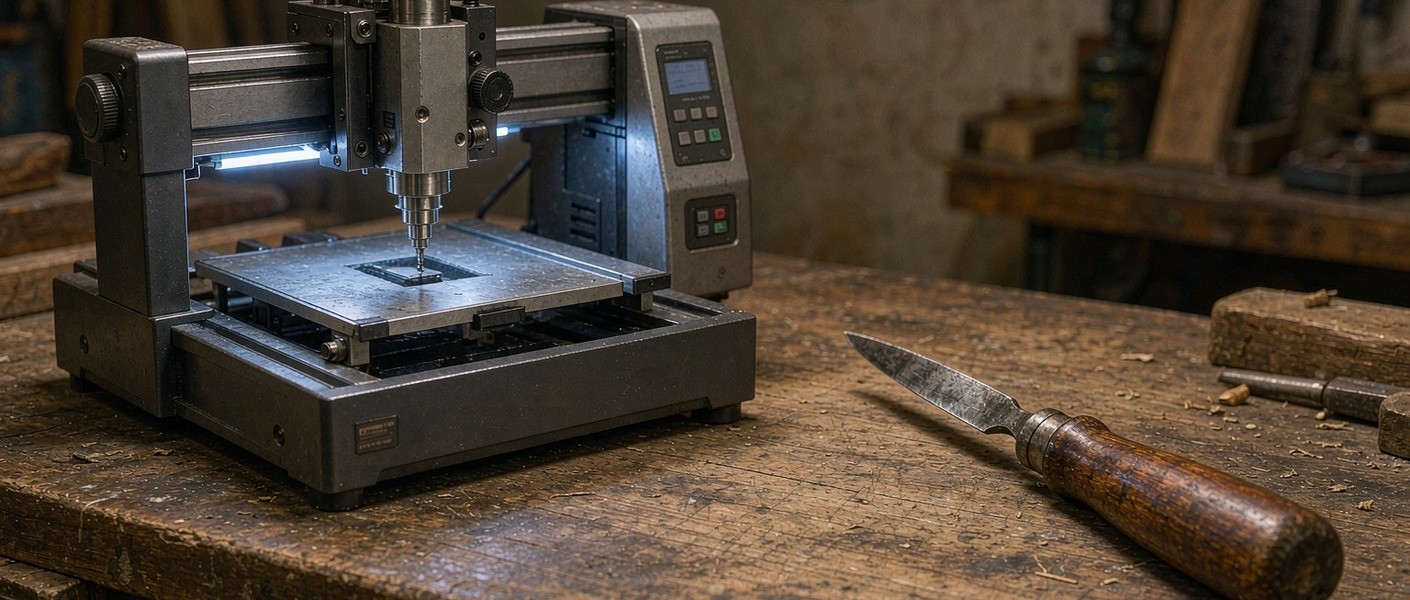
工作台上并排放着一台小型雕刻设备和一把用旧的手工刻刀
▍三、另一方:可标准化的部分正是认定的基础
反对的理由也不软。头一条是逻辑上的:认定的核心是「由人完成的技艺」,把可标准化的那半交出去,剩下的一半还撑得住吗?两小时一件与三个月一件,在市场上是两种商品,在认定上是同一门技艺吗?
第二条关于慢。手作的溢价来自时间不可压缩,买家付的是那三个月。若最能省的一段被机器接走,价格仍按手工报,落差谁来承担,买家一定会问。
第三条关于记录。把纹样与工序存进数据库是保存,也可能是另一种取出。谁能用、怎么授权、收益归谁,没有现成规则;存得越完整,被替代的门槛越低。
绣绷上一块绣到一半的布,针还别在绷边,旁边摊着几张打印出的纹样稿
▍四、值得再想想
两边不冲突。胡金强划的线在判断与构思,孟德芝划的线在针法与审美,同一问题,线的位置不同。
要紧的是这条线摆在明处:买家看得见,同行看得见,认定机构也看得见。藏在暗处,谁都能自称手工。手艺不怕新工具,怕的是用了之后没人说得清哪一段还是自己的。
▍五、问答
问 | 用了机器辅助的非遗作品,还能叫手工吗
答 | 要看机器进的是哪一段。开料、粗坯、重复加工属可标准化环节,业内长期允许借助设备;决定造型、纹样、手感与最终取舍的环节仍由人完成,通常仍算手工。判断依据是工序能不能说清,不是有没有插电。
问 | 韵和鸣收东西时,怎么划线
答 | 划在来源上。只收真正的非遗手工品,只与传承人本人合作,工序要守得住传统做法;器物与老师联名署名,谁做的、怎么做的都要说得清。用不用设备不是判断依据,说不清来历才是拒收的理由。
📩 非遗项目 | 匠人举荐 | 跨境出海 | 线下联营
欢迎留言或后台联系,我们与匠人同行。
—— 韵和鸣 · 与匠人同行
〖 辩 〗
English
In a 1 November report, Hu Jinqiang puts it plainly: carvers used chisels and hand knives, rotary tools drew the same objection decades ago, and now AI draws it again. His view: these are only tools.
He separates what can be delegated from what cannot. Standardisable work goes to the machine; judging the stone, conceiving the subject and giving it meaning stay with him. Scanning and modelling, to him, store the craft: once a piece is scanned, subjects that do not depend on a particular stone can be milled in two hours, so the skill does not die with the master.
Meng's reasoning is more concrete. The field lacks standards for drafts, with repeated designs, borrowed work and near-copies producing disputes. Generating a base and finalising it by stitch and taste clarifies authorship at the source and raises output. Her phrase: the machine speeds it up, the hand gives the soul.
A small milling machine and a worn hand graver side by side on a workbench
The Other Side: What Can Be Standardised Is the Ground Itself
The objection is firm. First, logic: recognition rests on a skill performed by a person. Hand over the standardisable half and does the rest still carry it? Two hours a piece and three months a piece are two products in a market; are they one craft in recognition?
Second, slowness. The premium on handwork comes from time that cannot be compressed; the buyer pays for those months. If the compressible stage is taken over while the price still reflects handwork, who absorbs the gap? Buyers will ask.
Third, records. An archive preserves and also makes extractable. Who may use the data, how licensing works, where revenue goes: none of that is settled. The more complete the archive, the lower the barrier to replacement.
A half-finished embroidery on its frame, the needle pinned to the edge, printed pattern sheets nearby
The two do not really collide. Hu draws his line at judgement and conception, Meng at stitch and taste. Both answer one question, with the line in different places.
What matters is that the line be visible: to buyers, to peers, to the bodies that grant recognition. Hidden, it lets anyone claim handwork. A craft need not fear new tools; it should fear that afterwards nobody can say which stage is still its own.
If a machine helped, can it still be called handmade?
It depends on the stage. Cutting, roughing and repetitive work are standardisable and long accepted with equipment; if forming, pattern, touch and final judgement stay human, the work still counts as handmade. The test is whether the process can be stated, not whether something was plugged in.
Where does YUNHEMING draw the line when it takes a piece?
At provenance: only genuine handmade heritage work, only with the bearers themselves, and the traditional process must hold; pieces are co-signed, so who made them and how must be statable. Equipment is not the test; an origin that cannot be explained is grounds for refusal.
Which side are you on? If the rough form is cut by machine and everything after is hand, would you still pay the handmade price? Tell us why.
ICH Projects · Artisan Referrals · Global Distribution · Salon Partnerships
你可能还感兴趣
AI 生成的"非遗纹样",算不算抄袭
喂一批图给模型,几秒钟就能出一张"苗绣风"的纹样。有人觉得这是把传统纹样重新用起来,有人认为这是把别人一辈子的手艺免费拿走了。问题不好回答,说到底,真正难定的不是"像不像",而是数据从哪来、收益到哪去。今天我们不做判断,只把两边的理由摆出来。
韵和鸣 · 2026/10/24 · 66 阅读
机器开始学手艺:是给匠人搭把手,还是来接班
一段流传很广的画面里,一台机械臂正跟着非遗传承人"学艺"——学劈丝、捻线、穿针。看的人分成两拨:一拨说技术帮上了忙,一拨说来抢饭碗了。同一件事读出两种意思,关键在于用什么尺度去量。
韵和鸣 · 2026/10/9 · 65 阅读
年轻人不愿学老手艺,该怪年轻人,还是怪这门手艺?
非遗传承里被讨论得最多的一句话是"后继乏人"。这句话往下追一层,就分成两条路:一条通向年轻人,说他们耐不住、看不上;一条通向他们面对的那门手艺,说它没能给出一条能活下去的路。这两条路,最近又吵起来了。
韵和鸣 · 2026/10/8 · 62 阅读
非遗创新只剩跨界联名和文创,是真突破还是路径依赖?
长假刚过,一场区域性非遗活动发布的"创新案例"名单在网上引来讨论:入选案例的路数出奇一致——不是和游戏影视做跨界,就是把老手艺搬进沉浸式演出,再就是开发一轮文创。有人叫好,也有人摇头:年年喊创新,怎么总围着老三样转?是突破,还是路径依赖?两边的话都摆出来。
韵和鸣 · 2026/10/13 · 56 阅读
漆器为什么能埋八千年不坏
在博物馆做漆器研究与修复的研究员老周,桌上常年摆着两样东西:一段出土的漆皮残片,一只新做不久的平遥推光漆盘。他说这两样东西隔着八千年,却是同一种材料。这次对话,我们从"漆器为什么埋几千年不坏"聊起,聊到最后,其实是手艺对材料的理解问题。
韵和鸣 · 2026/10/14 · 77 阅读
去贵州雷山,看一块银元如何变成一支银簪
在黔东南的苗寨里,银不只是一种首饰材料。它曾经是可以随时熔掉、重新打制的"存款",也是节日里一个女人身上最亮的那部分。关键在于,当一块老银元被放进坩埚,它要经过多少双手、多少道火,才重新成为一件能戴出门的东西。
韵和鸣 · 2026/10/9 · 70 阅读