一席之上,器物如何共处
韵和鸣 · 韵和鸣公众号 · 2026/11/8 12:00:00 · 1 阅读
会客厅里办过不少茶席。摆得好的那一席,器物之间彼此让着,客人的手伸出去不用犹豫;摆得糟的那一席,每件东西都好看,放在一起却谁都显不出来。这篇文章讲的是我们自己试出来的搭配逻辑,四类材质的分工、三条容易犯的错,以及一条判断标准。所谓木胎漆器,是指以木材制胎,经裱布、刮灰、髹漆、阴干、打磨与推光成器的漆作门类;平遥推光漆器髹饰技艺 2006 年列入国家级非物质文化遗产名录,编号 Ⅷ-51,申报地区为山
▍一、先定这一席是给谁喝的
茶席的器物清单,取决于三件事,人数、时长、目的。两个人喝一小时,一壶两杯足够,器物多了反而是负担。七八个人的长席,要加上匀杯、水方、茶巾盘,动线得留出来。
目的更关键。谈事情的一席,器物宜稳,少反光,少声响;待客闲坐的一席,可以放一件能上手把玩的,让人有事可做。我们办过一次以「看工序」为题的席,桌上特意留出一块空位,摆一只未完成的漆器胎体,比起满桌成品,那一小块空白反而成了话题中心。
▍二、四类材质怎么分工
瓷负责呈现。白瓷看汤色,青瓷看釉光,一只杯口沿的厚薄直接决定唇感。瓷的问题是凉得快,天冷时一杯茶放到凉,客人的手会先离席。
漆负责承与隔。漆器轻、韧、不烫手,木胎漆盘托热壶最合适。漆面怕久浸与硬刮,用作承盘要配一块吸水的垫,别让水在盘面上停太久。
竹负责轻与响。竹席、竹则是全席里少数会出声的材质,茶则碰竹盘的轻响,恰好是一席之中难得的动静。竹怕潮,南方梅雨季用完要晾透再收。
银负责点。银壶煮水是老讲究,银杯在席上更多是提亮,一只银碟、一枚银托,能让整桌暗色器物忽然有焦点。银会氧化发黑,介意的就少用,不介意的正好把它当会变的东西看。
四类放在一起,比例大致是六二一一。瓷占六成打底,漆两成承托,竹与银各一成点睛。谁都不是主角,一席之上真正的主角是那壶茶。
▍三、颜色与尺寸的比例
颜色上守一条,一席只留一个主色。主色通常由瓷定,青、白、米黄都是稳的选择。其余器物往主色靠,漆器选深褐或素黑压住下盘,竹与银保持本色不必染色。
尺寸上守一条,器物高度不超过坐者的视线。高壶、高瓶会挡住对面的人,茶席是说话的地方,视线被切断,话就断了。杯子口径差别不要超过太多,否则一席看上去会散。
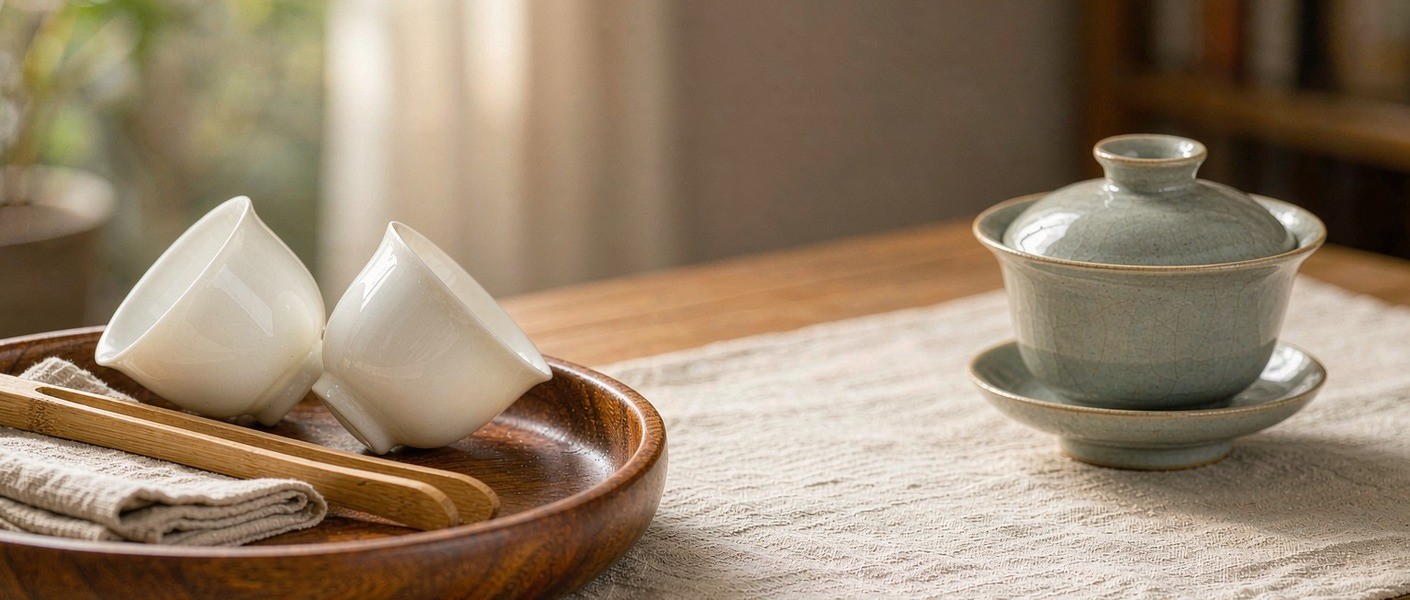
木胎漆盘上并排放着两只白瓷杯,旁边是一把竹则与一块叠好的茶巾
留白是这道题的另一半。桌面至少要留出三分之一不放东西,那块空处是给人放手、放话、放停顿的。我们见过太多把桌子摆满的照片,好看,但坐上去的人没有地方放手。
侧光下一只青瓷杯的釉面与杯沿,旁边半截竹席的编织纹理清晰
▍四、三个容易犯的错
头一个是堆。把好东西都摆上来,等于让它们互相抵消。一席之上能被人记住的器物通常不超过三件,其余的只需不出错。
第二个是混产地乱讲。一席里既有景德镇的青花,又有龙泉的梅子青,还有平遥的推光漆,讲的时候要一件一件说清,不能笼统说「都是非遗」。讲不清产地与工艺,等于把可核查的信任浪费掉了。
第三个是重器轻用。买的时候看工艺,用的时候怕磕碰,器物被收进柜子里,一席也就没了。手工器物的价值在使用里兑现,磕一下、磨一道,都是它在你家待过的证据。
▍五、问答
问 | 非遗茶席一定要用很贵的器物吗
答 | 不必。决定一席成败的是比例与搭配,成本占比很小。一只白瓷杯、一块竹席、一只木胎漆盘,几百元也能摆出一席像样的茶。贵器物的用处在于细节耐看,撑得住反复使用。
问 | 漆器和瓷器能放在一起吗,会不会互相磨损
答 | 能,而且是最稳的一组。漆器韧、瓷硬,接触时受损的多是漆面,所以漆盘上放瓷杯要垫一层布或竹席。反过来瓷盘托漆器不推荐,硬底对漆底,磨痕会留在漆上。
问 | 茶席上放银器,会不会有安全问题
答 | 正常使用没有问题。银器不与酸性液体长期接触即可,煮水、盛水都属常规用法。银会氧化发黑是材料特性,用银布擦拭即可恢复,不必因此弃用。
问 | 韵和鸣的严选,会不会按茶席这套逻辑来挑
答 | 会,而且看得更细。韵和鸣只选真正的非遗手工品,器物与非遗老师联名,工序与作者写在说明里;挑的时候会看它能不能与别的器物共处,尺寸、色温、手感是否留了余地。单件好看却无法同席的,我们会放弃。
📩 非遗项目 | 匠人举荐 | 跨境出海 | 线下联营
欢迎留言或后台联系,我们与匠人同行。
—— 韵和鸣 · 与匠人同行
〖 器 〗
相关搜索 | RELATED SEARCHES
非遗茶席 · 茶席 器物 搭配 · 漆器 瓷器 同席 · 严选 非遗 · 茶器 材质
English
The list depends on three things: how many people, how long, and why. Two people for an hour need a pot and two cups; more objects become a burden. A long table for seven or eight needs a fairness pitcher, a wastewater bowl and a tray for cloth, and the movement path has to stay clear.
Purpose matters more. For a table where business is discussed, objects should be steady, low in reflection and quiet; for a leisurely one, a single piece worth handling gives people something to do. Once we set a table themed on process and deliberately left a patch of bare table for an unfinished lacquer body. That patch drew more talk than any finished piece.
Porcelain presents. White shows the liquor's colour, celadon shows glaze, and the thickness of a cup's rim decides how it meets the lip. Its problem is heat loss; on a cold day a cup goes tepid and the guest's hand leaves before the tea does.
Lacquer carries and insulates. It is light, tough and does not burn the hand, which makes a wooden-bodied tray the natural base for a hot pot. Its surface dislikes long soaking and hard scraping, so a tray needs an absorbent mat and should not hold standing water.
Bamboo brings lightness and sound. A bamboo mat or scoop is the one material on the table that makes noise, the small click of a scoop on a tray being the liveliest thing in an otherwise quiet setting. Bamboo fears damp, so in humid seasons dry it fully before storing.
Silver accents. Silver kettles for water are an old practice; on a table, silver cups mostly lift the light, and one small dish or saucer can give a set of dark objects a focus. Silver tarnishes; if that bothers you use less of it, and if it does not, treat it as something that changes.
Put together, the rough ratio is six, two, one, one. Porcelain as the base at six, lacquer at two for carrying, bamboo and silver at one each as accents. None is the star; the star of any tea table is the pot.
Keep one rule on colour: one dominant tone per table. It usually comes from the porcelain, with celadon, white and cream all safe. Everything else leans toward it, lacquer in dark brown or plain black to weight the lower half, bamboo and silver left in their own colour.
Keep one rule on scale: nothing taller than the seated eyeline. A tall pot or vase blocks the person opposite, and a tea table is for talk; cut the sightline and the talk goes with it. Keep cup diameters reasonably close, or the set reads as scattered.
Two white porcelain cups side by side on a wooden lacquer tray, a bamboo scoop and a folded cloth beside them
Empty space is the other half. At least a third of the table should stay clear; that patch is where hands rest, talk pauses, nothing happens. We have seen too many photographs of fully dressed tables, handsome, with nowhere for a guest to put a hand.
The glaze and rim of a celadon cup in raking light, the weave of a bamboo mat half in frame
The first is crowding. Putting every good thing out cancels them against each other. A guest remembers no more than three objects from a table; the rest only need to avoid mistakes.
The second is mixing origins and then explaining them loosely. A table may hold Jingdezhen blue-and-white, Longquan celadon and Pingyao polished lacquer, and each must be described on its own rather than waved through as heritage. Loose talk about origin and process throws away trust that could be verified.
The third is prizing a piece and refusing to use it. Bought for their craft and then kept from any knock, objects end up in a cabinet and the table disappears. The value of handmade work is realised in use; a chip or a scratch is evidence it lived in your home.
Must a heritage tea setting use expensive pieces?
No. Proportion and pairing decide a table, and cost plays a small part. A white cup, a bamboo mat and a wooden lacquer tray can make a decent setting for a few hundred yuan. Expensive pieces earn their place by holding up to repeated use and close looking.
Can lacquer and porcelain share a table without wearing on each other?
Yes, and it is the steadiest pairing. Lacquer is tough and porcelain hard, so under contact it is the lacquer that suffers; put a cloth or bamboo mat between a porcelain cup and a lacquer tray. The reverse is not advised: a hard base under a lacquer foot leaves the marks on the lacquer.
Is silver on a tea table a safety concern?
Not in ordinary use. Silver should simply avoid long contact with acidic liquids; boiling and holding water are routine. Darkening is a property of the metal and a silver cloth restores it, so there is no reason to stop using it.
Does YUNHEMING's selection follow this logic?
Yes, and in more detail. YUNHEMING selects only genuine handmade heritage work, co-signed with the makers, with process and author stated; we also ask whether a piece can sit with others, whether size, colour temperature and hand-feel leave room. A handsome piece that cannot share a table we let go.
The test is simple. When a guest sits and needs no instruction on where to put a hand or how to begin talking, the table works. Do you have a set at home that came together slowly? Tell us how they met.
ICH Projects · Artisan Referrals · Global Distribution · Salon Partnerships
你可能还感兴趣
一件漆器该有多重,手感不会说谎
严选器物,看纹样、看款识、看证书,都是明面上的事。但有一道标准写不进任何参数表——上手。同一尺寸的两只漆盘,一只压手温润,一只轻飘干瘪,差别从何而来?这次把"分量"这件事拆开讲。说到底,重量是工序的记账本。
韵和鸣 · 2026/10/14 · 55 阅读
一盏博山琉璃:颜色是炉火给的,不是颜料调的
博山琉璃的颜色由矿石、着色配方和炉温共同形成,鸡油黄等色料并非烧成后涂在表面。文章介绍挑料、吹制、塑型、灯工和内画,说明流纹、气泡与壁厚如何反映手工过程,并提供观察颜色、过渡和口沿的选器方法。
韵和鸣 · 2026/10/12 · 53 阅读
一张蔚县剪纸,彩色的刻刀活
严选录这一期看一张不太一样的剪纸:它不用剪刀,用刻刀;不止红色,还带着点染出来的粉与绿。河北张家口蔚县的剪纸,是剪纸大家族里"反着来"的一支——别处以剪为主、以红为正,蔚县以刻代剪、以点彩上色。说到底,这两个"反着来"的本质,是蔚县人把剪纸从窗前的女红,做成了作坊里的分工手艺:看懂了这一点,才算看懂了这张纸。
韵和鸣 · 2026/10/13 · 52 阅读
一枚漆书签:小物件为什么反而更考验手艺
漆书签体量小,却同时暴露胎体稳定、漆层附着、边缘打磨与日常耐用度。挑选时先看薄厚与侧面,再摸边缘和转角,比只看纹样更能判断小件工序是否扎实,也值得问清售后修复。
韵和鸣 · 2026/10/24 · 48 阅读
平金开黑:金与黑,为什么这么耐看
平金开黑以黑漆为底、金线为饰,关键在于黑底的推光质量、金线的稳定和留白的分寸。文章介绍相关工具与工序,并从线条、光泽、使用和来源等方面说明如何观察描金漆器,避免只用金的多少判断价值。
韵和鸣 · 2026/10/10 · 47 阅读
竹编漆艺茶席:两种非遗,如何在同一张桌上共生
一张茶席上,常常同时摆着竹编的垫、漆艺的托。它们来自两门毫不相干的手艺,却在同一片茶汤边安静相处。共生这件事,比"混搭"难得多。
韵和鸣 · 2026/10/2 · 46 阅读