坡上那间银匠铺:一个苗族家庭的银饰记忆
韵和鸣 · 韵和鸣公众号 · 2026/11/8 12:00:00 · 2 阅读
去黔东南的那几天一直在下雨。车停在村口,沿石阶往上走,走到半坡听见锤声,一下一下,节奏很稳。声音来自一间没有招牌的屋子,门开着,屋里光线不算亮,火塘边的小炉上坐着一只坩埚,有人正低头看火。这就是我们要找的银匠铺。
▍一、铺子里的家当
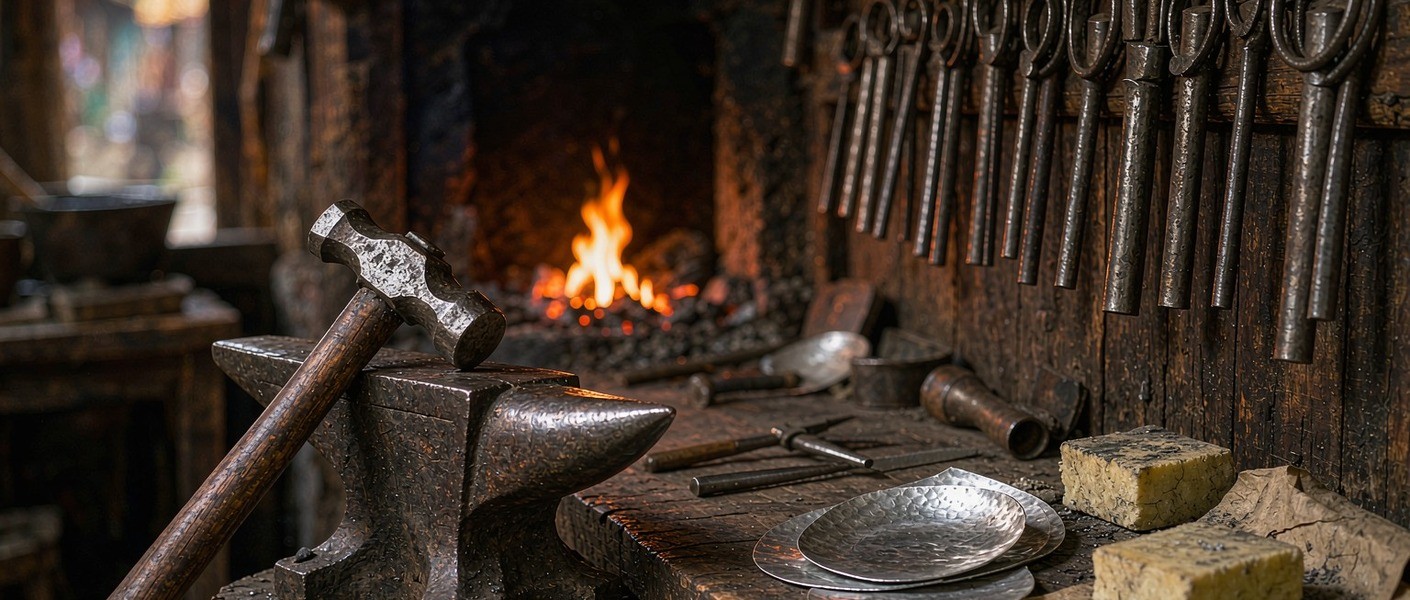
屋里能称得上设备的只有几样。一只陶制坩埚,俗称银窝,架在小炉上;一块厚木板,是敲打用的台面;一副铁砧;一只丝眼板,铁片上开着一排粗细方圆不同的孔,用来拉银丝;还有一块刷过松香的木板,錾刻时把银片固定在上面。工具被手磨得发亮,木板的边缘已经凹下去。
墙上挂着一排小錾子,尖的、圆的、扁的、带齿的,长短不一。银匠说,錾子多半是自己做的,用旧了重新磨,磨短了再锻一支。这些工具不会出现在任何介绍里,却是判断一间铺子水深水浅的地方。
▍二、三十多道工序,难在哪一道
按中国非物质文化遗产网的介绍,苗族银饰锻制技艺的工序有三十余道,包含铸炼、捶打、编结、焊接、洗涤等环节。现场看下来,真正耗时间的是前三步。
头一步是熔银。银料放进坩埚,炉火加热到全部熔成液体,再倒进一条条槽里,等它凝成银条。火候过一点,银里带气,后面锻打就会起皮。第二步是锻打,热银在砧上被锤成方条或细条,再按需要做成片料或丝料;要出丝,就过丝眼板,从粗孔一路拉到细孔,最细的可以拉到接近发丝。
铁砧旁摊着几段刚拉出的银丝,丝眼板上的孔被磨得发亮
第三步是錾刻与编结,也是这门手艺的分水岭。錾刻用实心片料或块料,靠一把把小錾子在银面上走出纹样;编结用拉出的银丝,一路盘、绕、缠,做出玲珑的线状结构。前者的功夫在刀口的深浅与走刀的连贯,后者的功夫在手上不能抖。
最后一道是洗涤。整件饰品放进配好的溶液里煮,去掉制作过程中的污渍与火气,银面才会转成那种温润的白。老人说这道工序最容易失手,煮久了发乌,煮短了不亮。
木盒里摊着一套錾花银饰,旁边立着几支磨短的錾子
▍三、银在苗族生活里的位置
要理解这间铺子,得先理解银在苗族生活里的分量。据公开资料,苗族银饰可分头饰、颈饰、胸饰、手饰、盛装饰、童帽饰等类别,讲究以大为美、以重为美、以多为美,一套盛装银饰可重达一二十公斤。
银饰不是装饰那么简单。苗族没有本民族的文字,纹样承担了记事的功能,蝴蝶、枫树、鸟、鱼、花草各有说法,银饰因此被称作穿在身上的史书。孩子出生,外婆送一块扎染布;姑娘出嫁,家里要备一套银饰。银在这里是财富,也是身份证。
所谓苗族银饰锻制技艺,是指以手工完成熔炼、锻打、拉丝、錾刻、编结、焊接、洗涤等三十余道工序,制作头饰、颈饰、胸饰等银饰的传统技艺;2006 年由贵州省雷山县、黄平县、剑河县、台江县与湖南省凤凰县联合申报,列入国家级非物质文化遗产名录。
▍四、订单变了,手上的活也变了
中午来了两拨人。头一拨是邻村的一家人,来取订做的银锁,孩子满月要用。第二拨是两个背双肩包的年轻人,在门口看了一会儿,问有没有小件的耳饰。老师傅从柜子里拿出一个小盒,里面是几对轻薄的银耳环,价格不到盛装银饰的零头。
这个场景很说明问题。嫁妆与节庆这类订单在变少,旅游与日常佩戴的小件在变多。小件的好处是周转快、门槛低,难处是工序被压缩。同样叫银饰,压模成型的一分钟出一件,錾刻的一件要几小时。买的人分不清,卖的人也就慢慢不愿意花那几小时。
据中国知识产权报 2026 年的报道,苗族银饰的纹样正在被做成数字资产,蝴蝶纹的锻打刻痕、枫树纹的叶脉走向都被整理成可检索的图样。这件事有两面,一面是记录与传播更便利,另一面是纹样若离开工序,很容易变成贴在别处的图案。
▍五、问答
问 | 苗族银饰是纯银的吗,怎么分辨
答 | 传统做法多用足银,含银量越高越软,越适合錾刻与编结。分辨可看三点,看颜色是否温润偏白而非惨白,看重量与手感是否沉,看工艺痕迹是否有錾痕与手作的细微不匀。最可靠的是问来源,问清是谁做的、用什么料,比任何土办法都准。
问 | 苗族银饰为什么做得那么大那么重
答 | 与迁徙记忆和财富观念有关。历史上苗族多次迁徙,把银饰带在身上等于把家产随身携带;定居之后,以大、重、多为美的审美被固定下来,一套盛装银饰既是嫁妆也是家族体面。今天在节庆场合,这套逻辑仍然有效。
问 | 银饰戴久了发黑,是不是质量问题
答 | 多数是正常氧化。银与空气中的硫化物反应会变暗发黑,出汗多、靠近温泉与含硫环境会更明显。处理办法简单,用软布蘸银布或中性皂水轻擦,别用牙膏硬搓,磨掉的是银本身。长期不戴的,密封避光收纳。
问 | 韵和鸣的银饰是怎么来的
答 | 来自非遗老师的作坊,器物与老师联名,署名与工序都写在说明里。韵和鸣做的是严选与渠道,选品只看两条,是不是真手工、工序守不守得住,机器压模的同类商品不在严选之列。
📩 非遗项目 | 匠人举荐 | 跨境出海 | 线下联营
欢迎留言或后台联系,我们与匠人同行。
—— 韵和鸣 · 与匠人同行
〖 寻 〗
相关搜索 | RELATED SEARCHES
苗族银饰 · 银饰锻制技艺 · 黔东南 银匠 · 錾刻 工艺 · 苗族银饰 保养
English
The shop holds barely any equipment. A clay crucible on a small stove; a thick plank for hammering; an anvil; a drawplate, a steel plate pierced with holes of varied size and section for pulling silver wire; and a board coated with rosin to hold silver sheet while it is chased. The tools are polished by hands, and the board's edge has worn into a hollow.
A row of small chasing punches hangs on the wall, pointed, round, flat, toothed, in different lengths. The silversmith says most were made on the spot, reground when dull, reforged into new ones when worn short. None of this appears in any introduction, yet it is where you read how deep a workshop goes.
Thirty Steps, and Where the Difficulty Sits
According to the China intangible heritage website, the Miao silver forging technique runs to more than thirty steps, including smelting, hammering, plaiting, soldering and washing. Watching it done, the first three take the time.
First, melting. Silver goes into the crucible, is heated until fully liquid, then poured into grooves to set as bars. Overshoot the heat and the silver traps gas, and later forging lifts its skin. Second, hammering: hot silver is struck into square or round bars, then worked into sheet or wire; for wire it passes the drawplate from coarse hole to fine, at its thinnest close to a hair.
Lengths of freshly drawn silver wire beside the anvil, the holes of the drawplate polished bright
Third, chasing and plaiting, the watershed of the craft. Chasing works solid sheet or block, walking pattern into the surface with small punches; plaiting works drawn wire, coiling and twisting it into open linear structure. The first lives in depth of cut and continuity of the stroke, the second in a hand that does not shake.
The last step is washing. The finished piece is boiled in a prepared solution to lift stains and fire scale, and only then does the silver turn that soft white. The older smith says this is the easiest step to spoil: too long and it dulls, too short and it stays flat.
A set of chased silver ornaments laid in a wooden box, worn punches standing beside them
To understand this shop you have to understand what silver carries in Miao life. Public sources describe Miao silver ornaments across head, neck, chest, hand, full dress and children's hats, favouring the large, the heavy and the many, with a full ceremonial set weighing ten to twenty kilograms.
Ornament is too small a word. The Miao had no script of their own, so pattern carried memory, with the butterfly, maple, bird, fish and flowers each holding meaning, which is why silver is called a history worn on the body. When a child is born, the grandmother brings tie-dyed cloth; when a daughter marries, the family prepares a set of silver. Here silver is savings and identity at once.
The Miao silver forging technique is the traditional craft of making head, neck and chest ornaments by hand through more than thirty steps including smelting, forging, wire drawing, chasing, plaiting, soldering and washing; in 2006 it entered the first national list, jointly declared by Leishan, Huangping, Jianhe and Taijiang counties in Guizhou and Fenghuang county in Hunan.
Two groups came at noon. The first was a family from a nearby village collecting a commissioned silver lock for a baby's first month. The second was two young travellers with backpacks who looked in from the doorway and asked about small earrings. The smith took a small box from the cabinet, holding a few pairs of light silver earrings at a fraction of the price of ceremonial silver.
The scene says a lot. Orders for dowry and festival pieces are thinning while small pieces for travel and daily wear grow. Small pieces turn over fast and ask little of the buyer; the difficulty is that the process gets compressed. Both are called silver ornaments, yet a die-struck piece comes out in a minute and a chased one takes hours. Buyers cannot tell, and sellers slowly lose the appetite for those hours.
A 2026 report in the China Intellectual Property News describes Miao silver patterns being turned into digital assets, with the chased lines of butterfly motifs and the veins of maple leaves catalogued as retrievable designs. This cuts both ways: recording and sharing become easier, and a pattern detached from its process easily becomes decoration pasted elsewhere.
Is Miao silver pure silver, and how can you tell?
Traditional work mostly uses fine silver, which is softer the purer it is and better suited to chasing and plaiting. Three checks: colour should be a warm white rather than a flat one; weight and hand-feel should be substantial; work marks should show chasing and slight irregularity. The surest check is to ask provenance, who made it and from what, which beats any folk test.
Why are Miao silver ornaments so large and heavy?
It ties to migration memory and ideas of wealth. Through repeated migration, wearing silver meant carrying family assets; once settled, an aesthetic favouring the large, heavy and many took hold, and a full set became both dowry and family standing. In festival settings the logic still holds.
Does silver darkening with wear indicate a quality problem?
Usually it is ordinary oxidation. Silver reacts with sulphur compounds in air and darkens, faster with sweat or near hot springs. The fix is simple: wipe with a soft cloth or a silver cloth, or mild soapy water, and avoid scrubbing with toothpaste, which removes the silver itself. Store sealed and away from light when not worn.
Where does YUNHEMING's silver come from?
From the masters' workshops, co-signed with them, with credit and process stated. YUNHEMING does the selecting and the channels, and the criteria are two: whether it is genuinely handmade, and whether the process holds. Die-struck lookalikes are not part of the selection.
The rain had stopped when we left. The smith walked us to the door and went back to the rosin board. The hammering resumed at the same pace as in the morning. A shop with no signboard has held on for decades at that pace; how much longer depends on how many people will still pay for those hours.
ICH Projects · Artisan Referrals · Global Distribution · Salon Partnerships
你可能还感兴趣
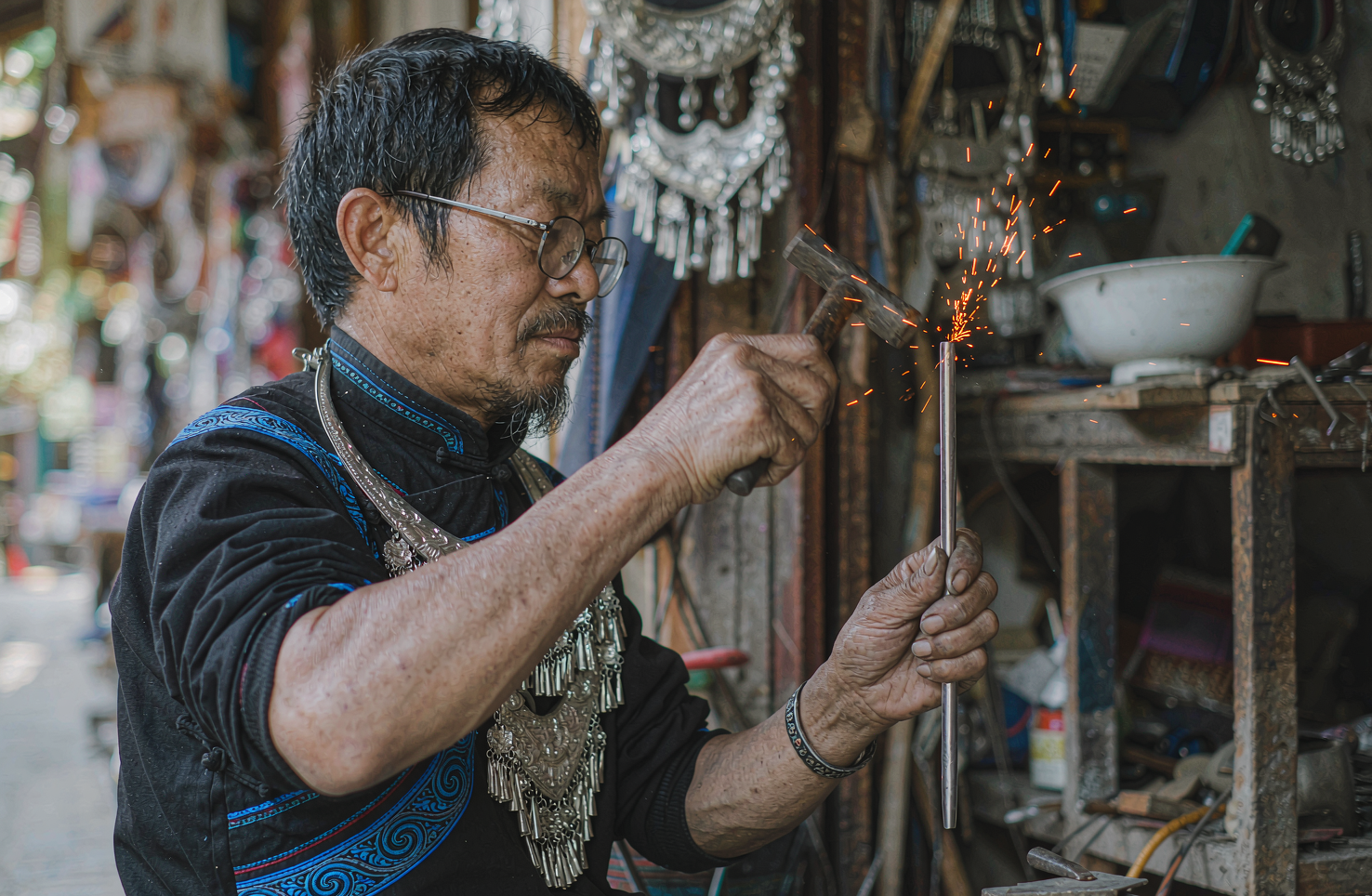
去贵州雷山,看一块银元如何变成一支银簪
在黔东南的苗寨里,银不只是一种首饰材料。它曾经是可以随时熔掉、重新打制的"存款",也是节日里一个女人身上最亮的那部分。关键在于,当一块老银元被放进坩埚,它要经过多少双手、多少道火,才重新成为一件能戴出门的东西。
韵和鸣 · 2026/10/9 · 62 阅读
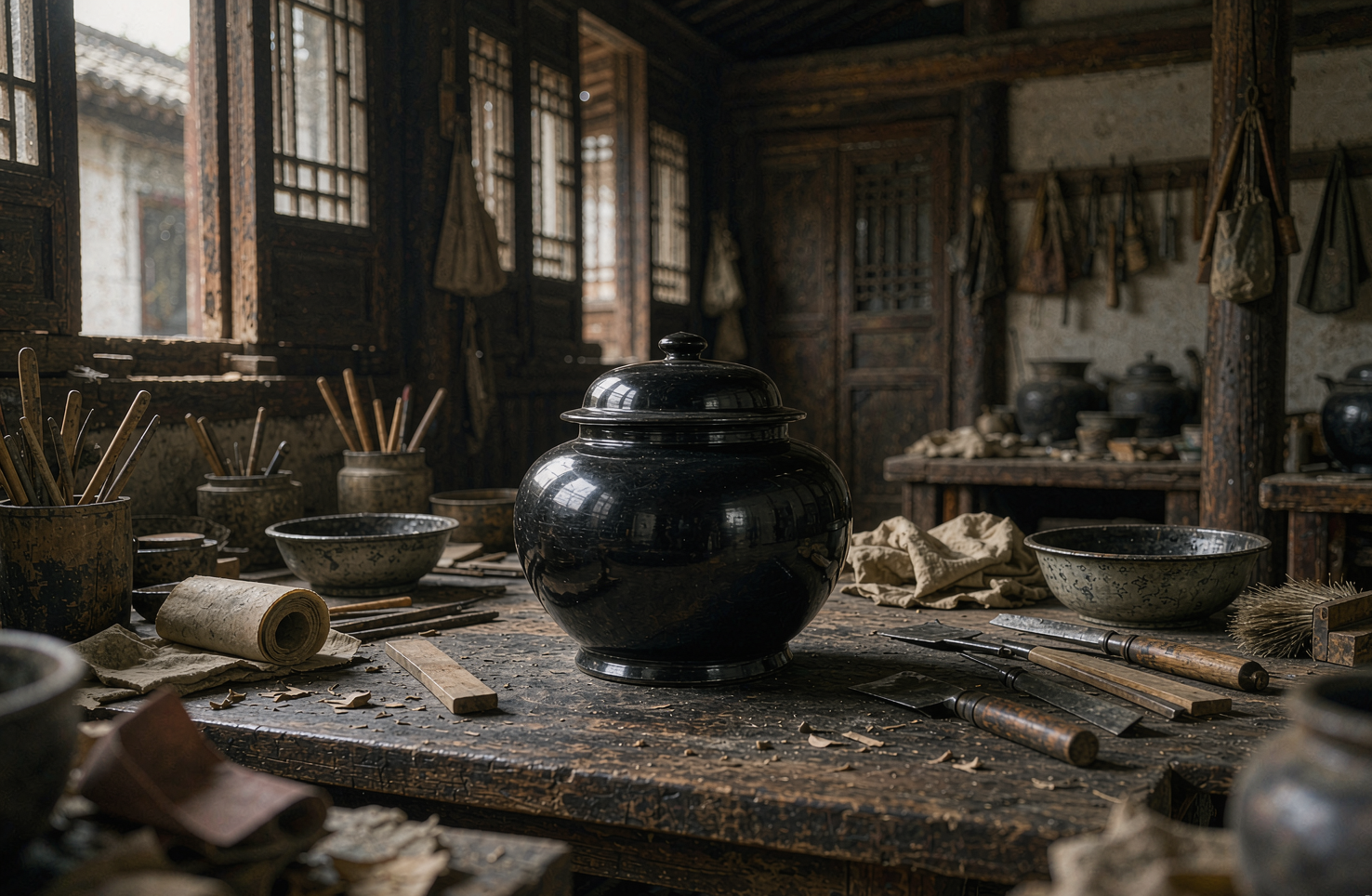
漆器为什么能埋八千年不坏
在博物馆做漆器研究与修复的研究员老周,桌上常年摆着两样东西:一段出土的漆皮残片,一只新做不久的平遥推光漆盘。他说这两样东西隔着八千年,却是同一种材料。这次对话,我们从"漆器为什么埋几千年不坏"聊起,聊到最后,其实是手艺对材料的理解问题。
韵和鸣 · 2026/10/14 · 69 阅读
AI 生成的"非遗纹样",算不算抄袭
喂一批图给模型,几秒钟就能出一张"苗绣风"的纹样。有人觉得这是把传统纹样重新用起来,有人认为这是把别人一辈子的手艺免费拿走了。问题不好回答,说到底,真正难定的不是"像不像",而是数据从哪来、收益到哪去。今天我们不做判断,只把两边的理由摆出来。
韵和鸣 · 2026/10/24 · 60 阅读
机器开始学手艺:是给匠人搭把手,还是来接班
一段流传很广的画面里,一台机械臂正跟着非遗传承人"学艺"——学劈丝、捻线、穿针。看的人分成两拨:一拨说技术帮上了忙,一拨说来抢饭碗了。同一件事读出两种意思,关键在于用什么尺度去量。
韵和鸣 · 2026/10/9 · 58 阅读
把"慢"做成一种体验:一间非遗会客厅的想法
我们习惯按功能给空间分类:吃饭的、购物的、办公的。但有一种很难归类——它在城市的闹处,不催你走,也不急着让你买单。关键在于,当"慢"被认真设计出来,它本身就可以是一种产品。
韵和鸣 · 2026/10/9 · 57 阅读
年轻人不愿学老手艺,该怪年轻人,还是怪这门手艺?
非遗传承里被讨论得最多的一句话是"后继乏人"。这句话往下追一层,就分成两条路:一条通向年轻人,说他们耐不住、看不上;一条通向他们面对的那门手艺,说它没能给出一条能活下去的路。这两条路,最近又吵起来了。
韵和鸣 · 2026/10/8 · 56 阅读