一边上海一边重庆:两个第九届同天把非遗摆上国家级舞台
韵和鸣 · 韵和鸣公众号 · 2026/11/6 12:00:00 · 2 阅读
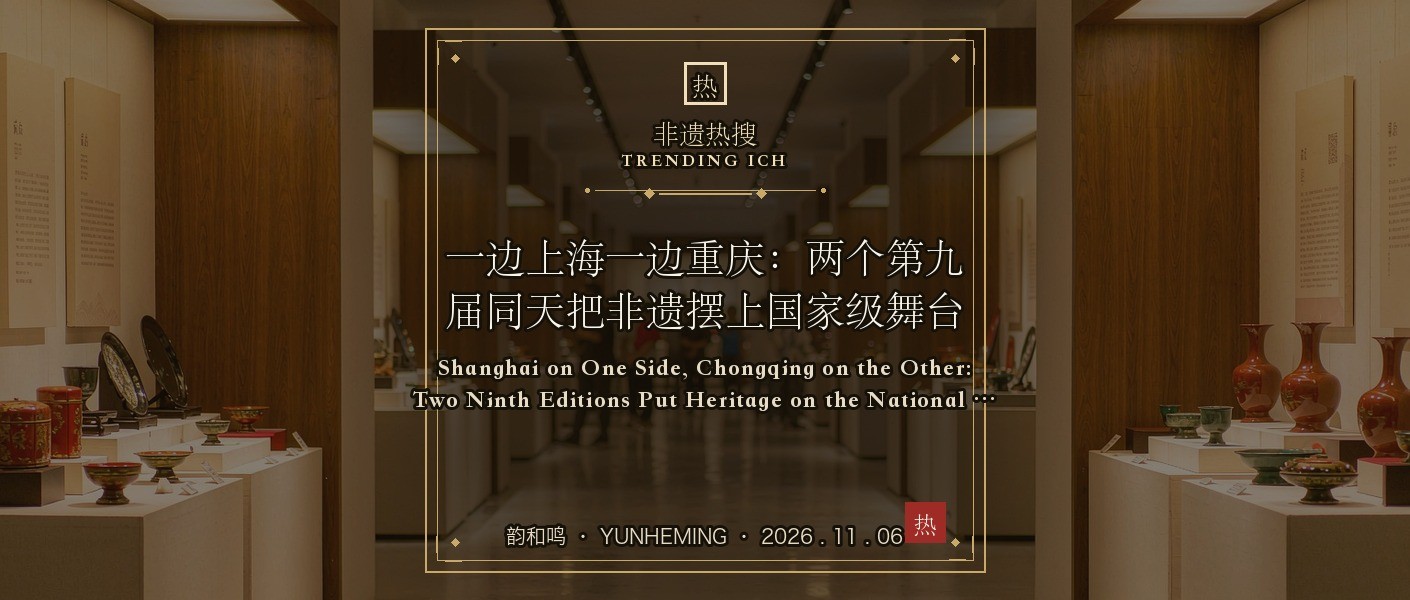
这个 11 月,两场「第九届」把非遗推到了前所未有的位置。11 月 5 日,第九届中国国际进口博览会在上海开幕,人文交流活动头一回引入「非遗工坊」与「大国工艺 进博精品」展示区;11 月 6 日,第九届中国非物质文化遗产博览会在重庆开幕,31 个省区市和新疆生产建设兵团的 800 余个非遗代表性项目参展。一个在经贸展会的正中央,一个在行业展会的主场,非遗这回站的位置,值得细看。
▍一、进博会这次给非遗留了正席
先看上海这边。据中国国际进口博览会官网 10 月 24 日发布的介绍,第九届进博会人文交流展示活动共设展位 60 个,覆盖 31 个省区市及新疆生产建设兵团、2 个境外友好省市,展览面积超 4 万平方米,规模创历届新高。六大展示专区里,非物质文化遗产专区与国家级步行街、中华老字号并列。
真正的变化在细节里。进博精品荟板块头一回引入「非遗工坊」展示区,主题定为「海纳百工 匠造未来」,集中呈现羌绣、蜡染、织锦、藤编、漆艺、文房等全国非遗工坊的实践成果,现场还安排传统技艺表演和技能体验;另一个「大国工艺 进博精品」展示区,汇集来自 31 个省区市的 60 余件国家级大师与新生代传承人作品。据中国文化报 11 月 4 日的报道,这一展区践行「一省一技、一人一器」的展示模式。
展会上的非遗展位,染织物与织锦沿墙面一字排开
把话说白:过去非遗在贸易展会里多是各省市展台的点缀,这次是成建制地进场,有自己的主题、自己的板块、自己的展演动线。这中间的分量差别,做过展会的人都懂。
▍二、重庆那边,800 余个项目同场
再把视线移到重庆。据文化和旅游部官网 10 月 26 日的报道,第九届中国非物质文化遗产博览会由文化和旅游部主办,重庆市文化和旅游发展委员会、南岸区人民政府承办,11 月 6 日至 10 日在重庆国际会议展览中心举行,主题为「保护传承非遗 共享美好生活」,将邀请全国 31 个省区市和新疆生产建设兵团的 800 余个非遗代表性项目参加。
这场博览会的看点不在规模在结构。「气象万千——新时代非遗系统性保护成果展」作序厅,四个专题展览分别对应时尚生活、美食风物、传统医药、科技与非遗的结合,其中饮食类非遗项目有 118 个;配套的「好戏连台·非遗特色演艺汇」将展演木卡姆艺术、朝鲜族农乐舞、鼓子秧歌、木偶戏,以及川江号子、木洞山歌等重庆本地项目。据中国新闻网报道,这也是这一博览会头一回落地中国西部地区。
展馆里传统技艺展演区,匠人的手正在演示走线
一边是买卖全球商品的进博会把非遗请进正厅,一边是行业自己的博览会头一次西进。两件事撞在同一个星期,方向是一致的:非遗的展示逻辑,正在从「被保护的对象」转向「可对话的主体」。
▍三、为什么是现在
往大了说,是政策在铺垫。从传统工艺振兴到非遗工坊提质增效,再到「十五五」一系列规划把非遗放进现代生活与对外文化贸易的框架里,展会是最直观的承接形态:有场地、有人流、有订单的可能。往小了说,是消费端的变化。看手工、买手作、追非遗体验的人群在扩大,展会主办方不会看不见。
对匠人来说,这类平台解决的是「被看见」的成本问题。一个山里的绣坊,自己找客源要翻几座山;进一次国家级展会,几天里站在全国的视线里。当然,看见了之后能不能留住人,还得看手艺本身的分量。
所谓非遗工坊,是指依托非遗代表性项目开展生产、传承与就业的场所。据中国国际进口博览会官网介绍,本届进博会非遗工坊展区将为全国非遗资源与全球消费、贸易、文化交流搭建平台。
▍四、问答
问 | 2026 年 11 月有哪些非遗相关的大型展会
答 | 两个第九届:11 月 5 日至 10 日的第九届中国国际进口博览会(上海,人文交流首设非遗工坊展示区),以及 11 月 6 日至 10 日的第九届中国非物质文化遗产博览会(重庆国际会议展览中心,800 余个非遗代表性项目参展)。
问 | 进博会的非遗工坊展区主要展示什么
答 | 以「海纳百工 匠造未来」为主题,集中呈现羌绣、蜡染、织锦、藤编、漆艺、文房等全国非遗工坊实践成果,现场安排传统技艺表演与技能体验;另有「大国工艺 进博精品」展区汇集 31 个省区市 60 余件国家级大师与新生代传承人作品。
问 | 非遗上商业展会,会不会被过度商业化
答 | 关键看展示的是手艺还是口号。进博会非遗工坊展区安排的是技艺表演与技能体验,让观众看见工序本身;只要工序在场、来源清楚,商业化提供的是渠道而非稀释。判断办法很直接,看现场有没有「手上功夫」。
问 | 韵和鸣做非遗出海,和这些展会有什么关系
答 | 同一条链上的不同环节。展会负责把全国的非遗资源集中到一处,让全球买家看见;韵和鸣做的是之后的环节,把真正出自传承人之手的器物严选出来,配上双语的内容与讲解,再经跨境链条送到欧美、日韩、新加坡等市场。看见靠展会,留住靠链条。
📩 非遗项目 | 匠人举荐 | 跨境出海 | 线下联营
欢迎留言或后台联系,我们与匠人同行。
—— 韵和鸣 · 与匠人同行
〖 热 〗
相关搜索 | RELATED SEARCHES
进博会 非遗 工坊 · 非物质文化遗产博览会 重庆 · 2026年11月 展会 · 非遗 展示 体验 · 传统工艺 展演
English
The Import Expo Saves Heritage a Front Seat
First, Shanghai. According to an introduction published on the official CIIE website on 24 October, the ninth expo's cultural exchange programme sets out 60 booths covering 31 provinces, regions and municipalities, Xinjiang Production and Construction Corps and two friendly overseas provinces and cities, across more than 40,000 square metres, the largest in the expo's history. Among six dedicated zones, the intangible heritage zone sits alongside national-level pedestrian streets and China time-honoured brands.
The real change is in the detail. The expo's select programme introduces a heritage workshop zone for the first time, themed "All Crafts Embraced, Craftsmanship for the Future", presenting the practice of workshops in Qiang embroidery, wax-resist dyeing, brocade, rattan weaving, lacquer and stationery, with live demonstrations and hands-on sessions. A companion "Great Craft, Expo Select" display gathers more than sixty works by national-level masters and young-generation bearers from 31 provinces. China Culture Daily reported on 4 November that the zone follows a pattern of "one craft per province, one work per maker".
A heritage booth at an expo, dyed cloth and brocade arrayed along the wall
To put it plainly: heritage used to be an ornament on provincial stands at trade fairs. This time it enters as a full formation, with its own theme, its own zone and its own demonstration route. Anyone who has worked an expo knows the difference in weight.
In Chongqing, Over 800 Projects Under One Roof
Now to Chongqing. According to a report on the Ministry of Culture and Tourism website on 26 October, the ninth China Intangible Cultural Heritage Expo, hosted by the ministry and organised by the Chongqing municipal commission and Nan'an district government, runs 6 to 10 November at the Chongqing International Convention and Exhibition Centre under the theme "Protecting and Transmitting Heritage, Sharing a Better Life", with more than 800 listed items from 31 provinces plus Xinjiang.
The interest of this expo lies in structure rather than size. A main hall charts the achievements of systematic safeguarding, while four themed exhibitions cover fashion and daily life, food and regional produce, traditional medicine, and technology-enabled heritage, including 118 food-related items. A performance programme ranges from the Muqam and Korean farmer dances to puppet theatre and Chongqing's own boatmen's work songs. China News Service noted that this is the first time the expo has been held in western China.
A demonstration area in the hall, a maker's hands showing the thread work
On one side, the expo that trades in global goods invites heritage into its main hall; on the other, the industry's own fair moves west for the first time. Landing in the same week, both point the same way: the logic of displaying heritage is shifting from "an object to be protected" to "a subject that can converse".
Broadly, policy has prepared the ground, from traditional craft revitalisation to workshop upgrading, and on to the cluster of fifteenth five-year plans that place heritage within modern life and cultural trade. Expos are the most tangible form of that groundwork: space, footfall and the possibility of orders. Narrowly, consumption has changed. The audience that watches craft, buys handmade and seeks out heritage experiences keeps growing, and organisers cannot miss it.
For makers, such platforms cut the cost of being seen. A mountain embroidery workshop once had to cross several hills to find buyers; at a national expo it stands in the nation's sightline within days. Whether sight converts into staying power, of course, still depends on the weight of the craft itself.
A heritage workshop is a production, transmission and employment site built on a listed heritage item. According to the official CIIE website, the expo's workshop zone serves as a platform linking national heritage resources with global consumption, trade and cultural exchange.
Which major heritage events are on in November 2026?
Two ninth editions: the ninth China International Import Expo in Shanghai, 5 to 10 November, with a heritage workshop zone newly added, and the ninth China Intangible Cultural Heritage Expo at the Chongqing International Convention and Exhibition Centre, 6 to 10 November, with over 800 listed items.
What does the CIIE's heritage workshop zone display?
Under the theme "All Crafts Embraced, Craftsmanship for the Future", it presents workshop achievements in Qiang embroidery, wax-resist dyeing, brocade, rattan, lacquer and stationery, with live demonstrations and hands-on sessions, alongside a select display of more than sixty works by national masters and young bearers from 31 provinces.
Will heritage at commercial expos be over-commercialised?
It turns on whether craft or slogan is on show. The CIIE zone is built around demonstrations and hands-on experience, keeping the process visible; as long as process is present and provenance is clear, commerce supplies channels rather than dilution. The test is simple: is there visible hand skill on the stand?
How does YUNHEMING's heritage export work relate to these expos?
Different links of one chain. Expos gather the nation's heritage in one place for global buyers to see; YUNHEMING works the later links, curating pieces actually made by bearers, pairing them with bilingual content, and delivering them to Europe, the United States, Japan, South Korea and Singapore through its cross-border channels. Seeing depends on the expo; staying depends on the chain.
On 6 November, a "ninth edition" opens in Shanghai and another in Chongqing. Which fair have you attended where you could watch the making itself? Tell us in the comments.
ICH Projects · Artisan Referrals · Global Distribution · Salon Partnerships
你可能还感兴趣
漆器为什么能埋八千年不坏
在博物馆做漆器研究与修复的研究员老周,桌上常年摆着两样东西:一段出土的漆皮残片,一只新做不久的平遥推光漆盘。他说这两样东西隔着八千年,却是同一种材料。这次对话,我们从"漆器为什么埋几千年不坏"聊起,聊到最后,其实是手艺对材料的理解问题。
韵和鸣 · 2026/10/14 · 69 阅读
去贵州雷山,看一块银元如何变成一支银簪
在黔东南的苗寨里,银不只是一种首饰材料。它曾经是可以随时熔掉、重新打制的"存款",也是节日里一个女人身上最亮的那部分。关键在于,当一块老银元被放进坩埚,它要经过多少双手、多少道火,才重新成为一件能戴出门的东西。
韵和鸣 · 2026/10/9 · 62 阅读
AI 生成的"非遗纹样",算不算抄袭
喂一批图给模型,几秒钟就能出一张"苗绣风"的纹样。有人觉得这是把传统纹样重新用起来,有人认为这是把别人一辈子的手艺免费拿走了。问题不好回答,说到底,真正难定的不是"像不像",而是数据从哪来、收益到哪去。今天我们不做判断,只把两边的理由摆出来。
韵和鸣 · 2026/10/24 · 60 阅读
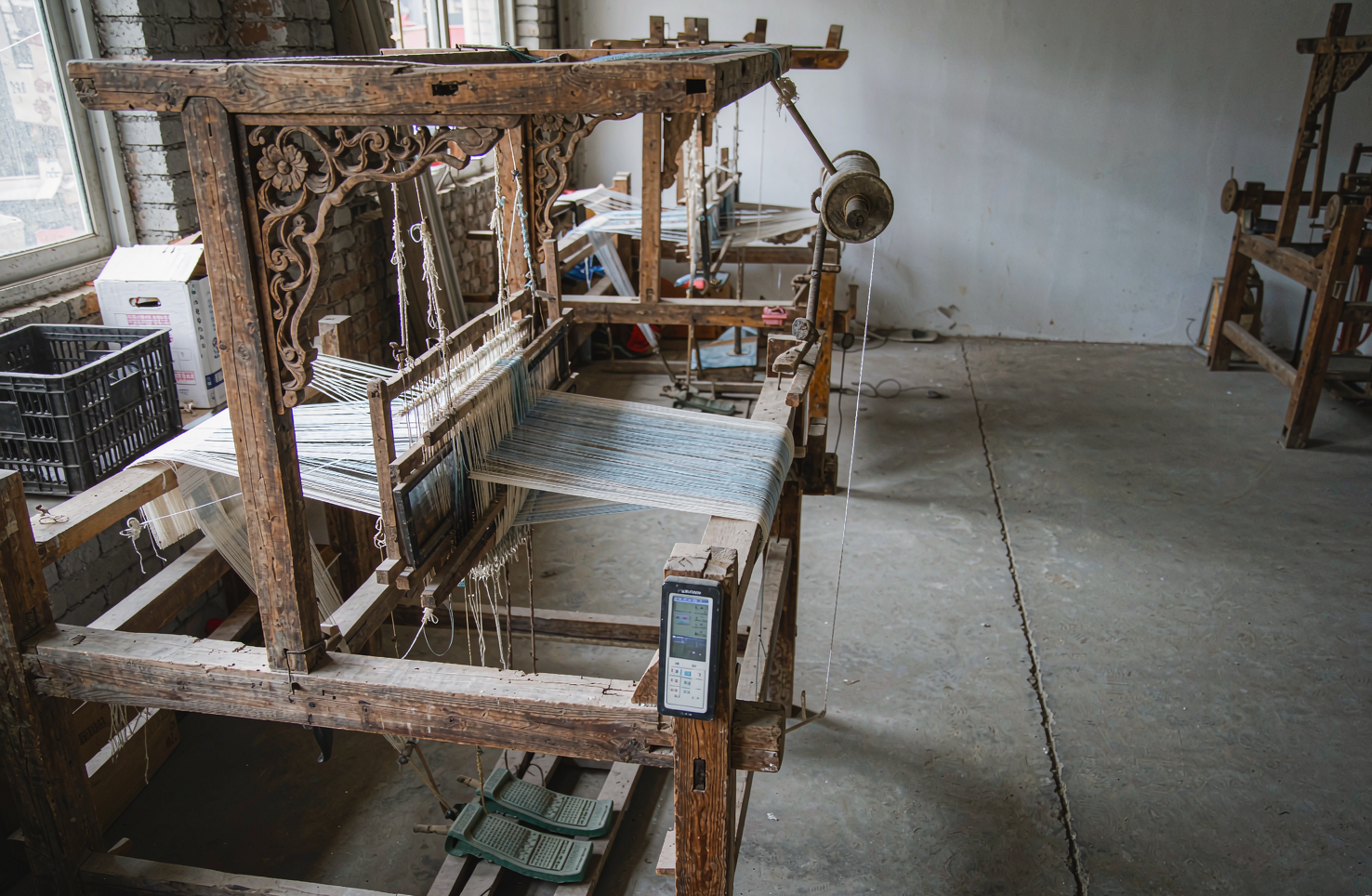
机器开始学手艺:是给匠人搭把手,还是来接班
一段流传很广的画面里,一台机械臂正跟着非遗传承人"学艺"——学劈丝、捻线、穿针。看的人分成两拨:一拨说技术帮上了忙,一拨说来抢饭碗了。同一件事读出两种意思,关键在于用什么尺度去量。
韵和鸣 · 2026/10/9 · 58 阅读
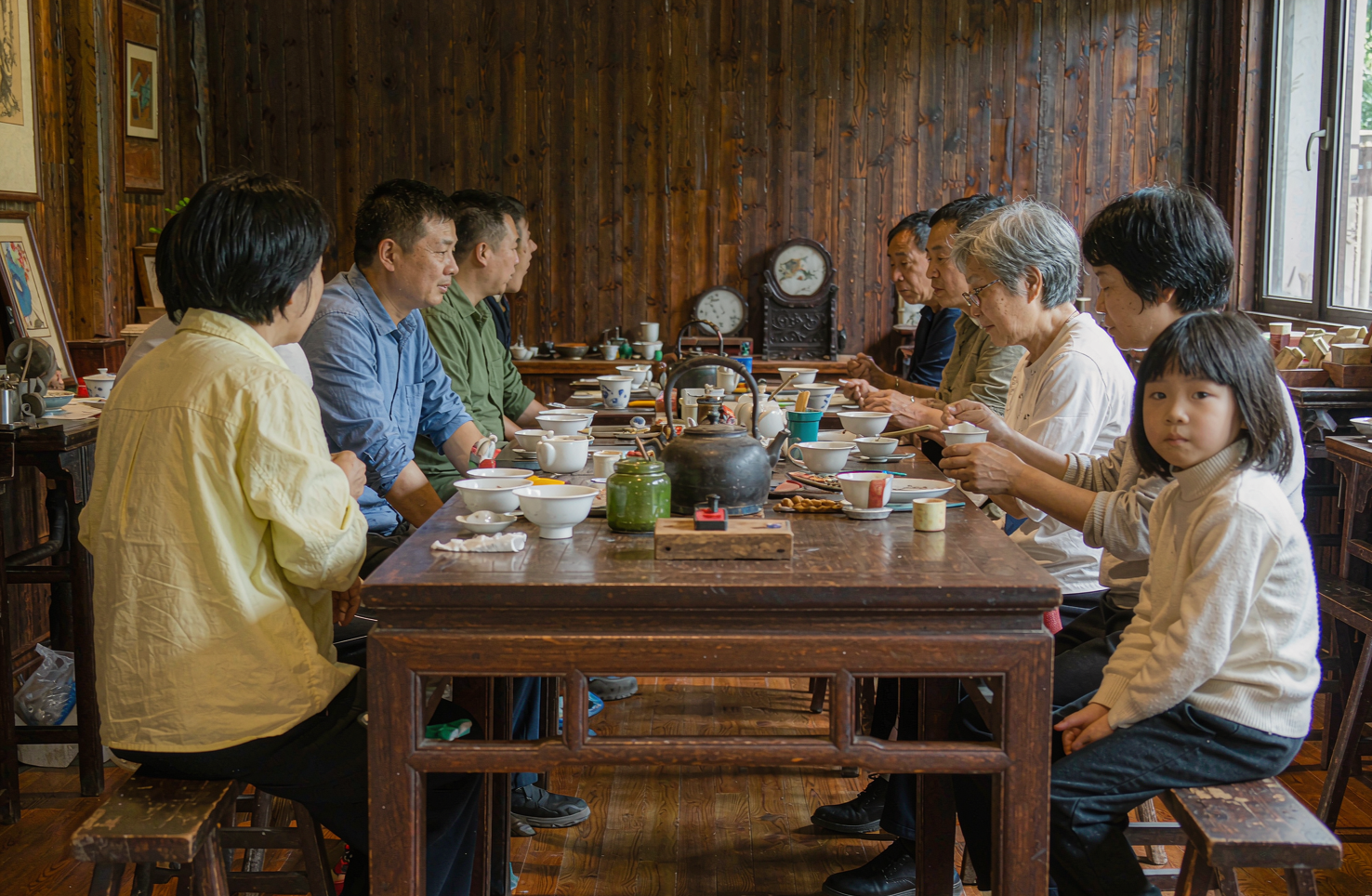
把"慢"做成一种体验:一间非遗会客厅的想法
我们习惯按功能给空间分类:吃饭的、购物的、办公的。但有一种很难归类——它在城市的闹处,不催你走,也不急着让你买单。关键在于,当"慢"被认真设计出来,它本身就可以是一种产品。
韵和鸣 · 2026/10/9 · 57 阅读
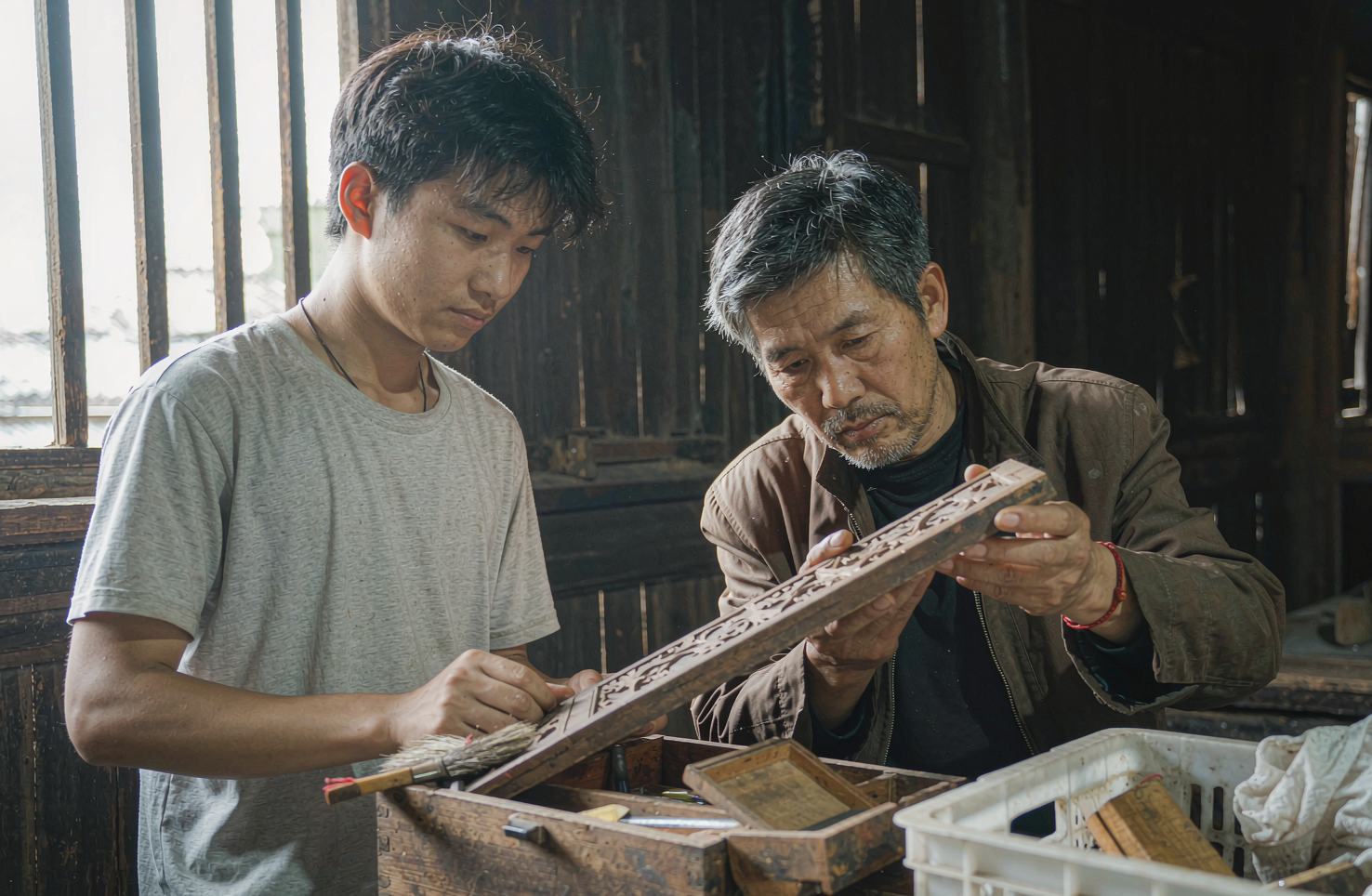
年轻人不愿学老手艺,该怪年轻人,还是怪这门手艺?
非遗传承里被讨论得最多的一句话是"后继乏人"。这句话往下追一层,就分成两条路:一条通向年轻人,说他们耐不住、看不上;一条通向他们面对的那门手艺,说它没能给出一条能活下去的路。这两条路,最近又吵起来了。
韵和鸣 · 2026/10/8 · 56 阅读