一位装裱师的手:怎么让一张画多活一百年
韵和鸣 · 韵和鸣公众号 · 2026/11/5 12:00:00 · 1 阅读
书画装裱修复技艺已列入国家级非物质文化遗产名录。这门手艺很少被看见,因为它做完之后应当"看不出做过"。一幅画从墙上取下来,送到装裱台前,接下来的几个月里,它要经过托、镶、覆、挣、砑,或者更麻烦的一套:揭、洗、补、全。装裱师的工作标准只有一条,让这张纸再撑一百年。
▍一、先诊断,再动手
一张画进门,装裱师先不动手。看纸,看绢,看墨色,看有没有霉斑、虫蛀、酸化的黄斑,看原来的裱工是哪一路做法。这一步相当于问诊,问错了,后面全错。
判断的关键在于材料的老化程度。纸和绢的寿命有限,年代久了纤维会脆,一碰就掉渣。同样一道水,用在宣纸上和用在绢上,结果完全不同。行里的话叫"看米下锅",材料决定手法。
▍二、揭裱:把几层纸分开,是全场最险的一步
旧画重裱,核心工序叫揭裱。一幅画经过多次装裱,背后会积起好几层托纸与覆背。修复时要一层层揭下来,揭到只剩画心那一层,还不能伤到画心的纤维。
这一步的风险在于不可逆。水多了,墨会洇;手重了,纸会破;揭到某一层犹豫了,画心就可能跟着起来。所以揭之前要先想好退路:哪一层可以保留不动,哪一处只做局部处理,出了意外怎么收。
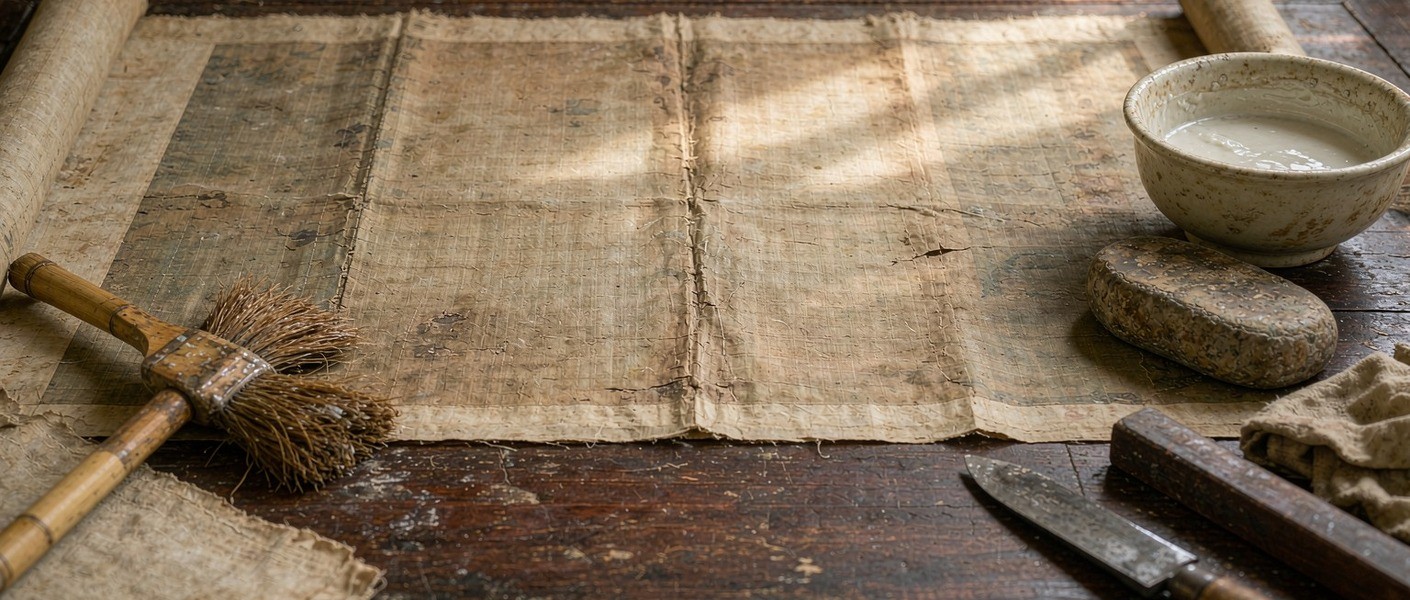
装裱台上一幅摊平的旧画,棕刷、糨糊盆与压石依次排开
所谓装裱,是指用纸、绢、绫与糨糊把书画托裱成幅,或改装成卷、册、轴的手艺;修复则是在此基础上揭去旧裱、清洗污渍、补全残损。装裱修复讲"修旧如旧",也讲最小干预,这一取向与《中华人民共和国非物质文化遗产法》(2011 年 6 月 1 日起施行)对传统技艺类项目"保存、传承"的要求一致。
▍三、糨糊要可逆,这是规矩
装裱用的是小麦淀粉做的糨糊,稀稠要按工序调。用它有一个理由:可逆。几十年后若需再修,后来的装裱师能用温水把这一层化开,而不必破坏画心。
可逆是修复伦理里很硬的一条。用它做判断,很多争执会自动解开:能不能用化学胶,不能,因为不可逆;能不能直接覆上一层新纸盖住破损,不能,因为后人再修时揭不开。手艺的分寸,常常就藏在这种"给后来的人留余地"里。
▍四、补与全色:补到哪里为止
揭完、洗净、补好破洞,最后是上墙挣平与全色。全色是让补上去的部分与周围协调,远看不觉突兀,近看又能分辨出哪一块是新补的。
这里的界限最考验人。补得不足,画面破碎,读不下去;补得过头,等于替古人重画,历史信息被抹掉。行里的做法是宁可欠一点,留出可辨识的边界。这不是技术不够,是克制。
上墙挣平的画幅贴在木板上,四边用纸条固定,纸面绷得很紧
装裱台前的工序听上去琐碎:托心、方心、镶料、覆背、上墙、砑光、装杆。每一道都有对应的失败方式,起皱、走形、开胶、霉变。做的人心里要有一张失败清单。
▍五、问答
问 | 书画装裱修复技艺是非遗吗,属于哪一类
答 | 是,书画装裱修复技艺已列入国家级非物质文化遗产名录,归在传统技艺类。它的核心是两套本事:新画装裱与旧画修复。前者决定作品的形式与保存条件,后者处理酸化、霉斑、虫蛀、断裂这些老化问题。
问 | 家里的老字画发黄、有霉点,能不能自己处理
答 | 不建议。霉斑与黄斑的处理涉及清洗与氧化控制,用水量、温度、时间都要按纸绢的老化程度定,处理不当会让墨色洇散或纸面起毛。可行的做法是把画平放、避光、控湿,尽快找有资质的修复机构评估。
问 | 新买的字画,装裱方式会不会影响寿命
答 | 会,而且影响很大。装裱用的糨糊、托纸与覆背材料决定了作品日后能否安全揭裱;用不可逆的化学胶,几十年后修复难度会大幅上升。选装裱时值得问一句用的是什么糨糊、能不能揭。
问 | 韵和鸣为什么也关心装裱这类"看不见"的手艺
答 | 因为器物的寿命也是品质的一部分。韵和鸣只选真正的非遗手工品,判断标准放在工序与来源上;一件东西能不能被修、被养、被传下去,和它当初怎么做出来直接相关。品牌的严选看的是同一件事。
📩 非遗项目 | 匠人举荐 | 跨境出海 | 线下联营
欢迎留言或后台联系,我们与匠人同行。
—— 韵和鸣 · 与匠人同行
〖 匠 〗
English
When a painting arrives, the mounter does not start work. First the paper, the silk, the ink, the mould spots, the worm holes, the acid-browned patches, and which tradition the earlier mounting followed. This is diagnosis; a wrong reading makes everything after it wrong.
The key judgement is how far the material has aged. Paper and silk have finite lives; old fibres turn brittle and crumble at a touch. The same wash behaves differently on paper and on silk. The trade phrase is to cook according to the rice you have: the material dictates the method.
Lifting: Separating the Layers Is the Riskiest Step
Remounting an old work centres on lifting. After repeated mountings, several layers of lining and backing accumulate behind a painting. Restoration lifts them one by one until only the painted core remains, without damaging its fibres.
An old painting flat on a mounting table, brush, paste bowl and weights beside it
The risk is irreversibility. Too much water and the ink bleeds; too heavy a hand and the paper tears; hesitate at the wrong layer and the painted core comes away with it. So the exit has to be planned before lifting begins: which layer can stay, which spot gets local treatment only, and what to do if something goes wrong.
Mounting means backing a painting into a panel with paper, silk and paste, or reforming it into a scroll, album or hanging; restoration adds the lifting of old mountings, cleaning of stains and filling of losses. The field holds to "repair the old as old" and minimal intervention, an orientation consistent with the duty to preserve and transmit traditional skills in China's Intangible Cultural Heritage Law, in force since 1 June 2011.
Paste Must Be Reversible; That Is the Rule
Mounting uses wheat starch paste, thinned or thickened to suit each step. One reason: reversibility. If the work needs treatment decades later, the next mounter can soften that layer with warm water without damaging the painted core.
Reversibility is a hard rule in restoration ethics, and it settles many arguments on its own. Synthetic adhesive? No, it cannot be undone. Cover damage with a fresh sheet? No, because the next restorer cannot lift it. The measure of the craft often lies in leaving room for whoever comes later.
Filling and Toning: Knowing Where to Stop
After lifting, washing and filling losses, the work goes onto the wall to stretch and then to toning, which brings the filled areas into harmony with their surroundings: unnoticeable from a distance, distinguishable up close.
A mounted work drying on a board, edges held with paper strips, surface drawn taut
This is where judgement is tested. Under-fill and the image stays unreadable; over-fill and you repaint for the ancients, erasing historical information. The practice is to err on the lighter side and leave a discernible boundary. That is restraint rather than a limit of skill.
The sequence sounds mundane: lining the core, squaring it, bordering, backing, stretching, burnishing, fitting the rollers. Each step has its own way of failing: cockling, distortion, lifting, mould. The worker keeps a list of failures in mind.
Is mounting and restoration listed heritage, and in which category?
Yes. The craft is on the national list under traditional skills. It covers two bodies of work: mounting new works, which sets their form and storage conditions, and restoring old ones, which addresses acidification, mould, insect damage and tears.
Can I treat a yellowed, mouldy family scroll myself?
Not advisable. Treating mould and browning involves washing and controlling oxidation, with water volume, temperature and timing set by how far the paper or silk has aged; done wrong it spreads the ink or fuzzes the surface. The safe course is to store it flat, away from light and at stable humidity, and have a qualified restorer assess it.
Does the mounting method affect how long a new work lasts?
Yes, substantially. The paste, lining and backing determine whether the work can later be lifted safely; irreversible synthetic adhesive makes restoration far harder decades on. When commissioning a mounting, ask what paste is used and whether it can be lifted.
Why does YUNHEMING care about invisible crafts like mounting?
Because longevity is part of quality. YUNHEMING selects only genuine handmade heritage pieces and judges them by process and provenance; whether an object can be repaired, maintained and passed on depends on how it was made. The brand's curation looks at the same question.
Whether a painting survives the next century often depends on whether a mounter decades ago left one more margin. Do you have scrolls or old photographs handed down at home, and how do you keep them?
ICH Projects · Artisan Referrals · Global Distribution · Salon Partnerships
你可能还感兴趣
漆器为什么能埋八千年不坏
在博物馆做漆器研究与修复的研究员老周,桌上常年摆着两样东西:一段出土的漆皮残片,一只新做不久的平遥推光漆盘。他说这两样东西隔着八千年,却是同一种材料。这次对话,我们从"漆器为什么埋几千年不坏"聊起,聊到最后,其实是手艺对材料的理解问题。
韵和鸣 · 2026/10/14 · 68 阅读
十六岁学艺,他如今想让漆器走进年轻人的家
在平遥,学漆艺的人正在换代。老匠人把五十年的功夫交给徒弟,年轻教师把漆带进课堂。一门千年手艺要传下去,卡住的往往不是技法。
韵和鸣 · 2026/10/2 · 51 阅读
推光:一只手与时间的合谋
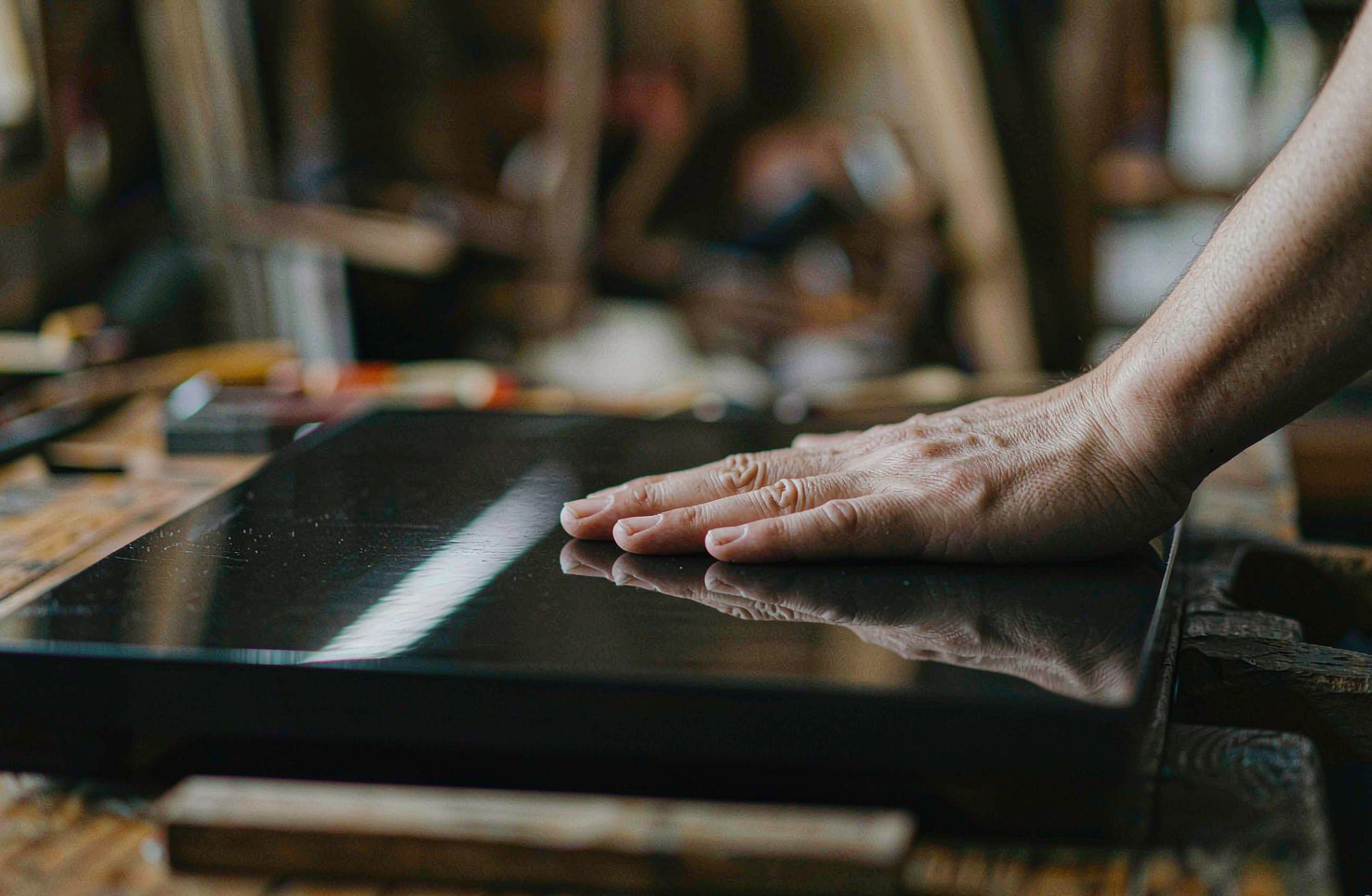
推光以大漆和此前多道髹磨工序为底,最后靠手掌的温度、力度与节奏推出温润光泽。文章同时写到师徒之间反复示范和重做,说明这道功夫既无法催快,也不能只靠口头讲解完成传递。
韵和鸣 · 2026/10/2 · 46 阅读
去贵州雷山,看一块银元如何变成一支银簪
在黔东南的苗寨里,银不只是一种首饰材料。它曾经是可以随时熔掉、重新打制的"存款",也是节日里一个女人身上最亮的那部分。关键在于,当一块老银元被放进坩埚,它要经过多少双手、多少道火,才重新成为一件能戴出门的东西。
韵和鸣 · 2026/10/9 · 61 阅读
AI 生成的"非遗纹样",算不算抄袭
喂一批图给模型,几秒钟就能出一张"苗绣风"的纹样。有人觉得这是把传统纹样重新用起来,有人认为这是把别人一辈子的手艺免费拿走了。问题不好回答,说到底,真正难定的不是"像不像",而是数据从哪来、收益到哪去。今天我们不做判断,只把两边的理由摆出来。
韵和鸣 · 2026/10/24 · 59 阅读
把"慢"做成一种体验:一间非遗会客厅的想法
我们习惯按功能给空间分类:吃饭的、购物的、办公的。但有一种很难归类——它在城市的闹处,不催你走,也不急着让你买单。关键在于,当"慢"被认真设计出来,它本身就可以是一种产品。
韵和鸣 · 2026/10/9 · 56 阅读