老漆农还在山上割漆,00 后的漆坊已经开了
韵和鸣 · 韵和鸣公众号 · 2026/11/5 12:00:00 · 1 阅读
11 月 3 日,中国新闻网一组图片专题里,重庆城口县北屏镇松柏村出现了两代人。一位老漆农在大巴山林里采割大木漆,一位「00 后」漆艺师周永胜在案前做漆器。同一组照片里,还有福建闽侯的龙舟世家、广东潮州后郭村的木雕父子、福建罗源的畲族凤凰装。手艺的交接,就发生在这样平常的画面里。
▍一、照片里的两代人,隔着一条山路
那组照片的编排有种朴素的诚实:山上的人在取材料,山下的人在成器。中间隔着一条山路,也隔着一整套供需关系。
生漆是漆树的汁液,割开树皮,让汁液流进容器,再收集起来。一棵树能割多少、能割几年,都有讲究。漆农的工作受季节限制,过了时间窗,树就不出漆了。这一头一旦断掉,山下的漆坊再有本事,也只能换料。
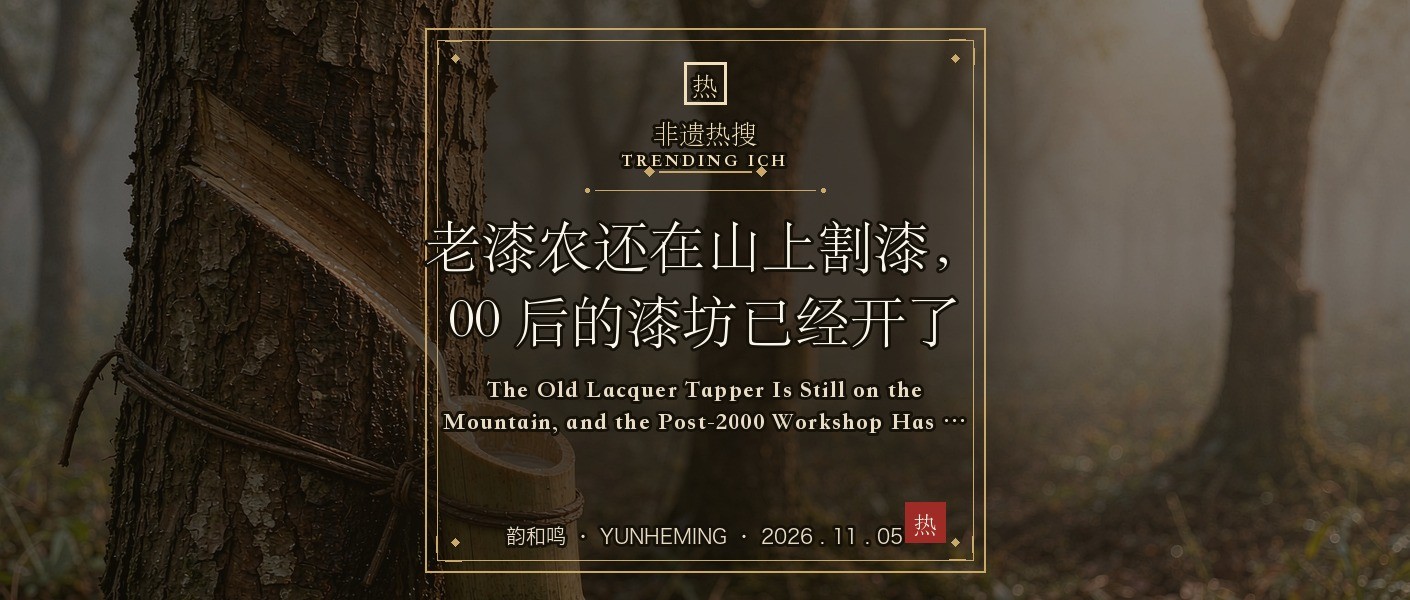
漆树林里割开的树皮与树下接着的容器,切口边缘凝着乳白的汁液
这就是这门手艺容易被忽略的一半。看漆器的人看的是最后那面光,很少想到光是从哪座山来的。
据中国新闻网 2026 年 11 月 3 日报道,在重庆城口县北屏镇松柏村,老漆农在大巴山林采割大木漆,「00 后」漆艺师周永胜同期在制作漆器,报道将这一组画面归入「古法传承+青年创新」的叙述。
▍二、年轻人接手的头一件事,是把工序讲清楚
照片里最值得琢磨的,是那间漆坊的位置。它在村里,不在园区;案前是年轻人,山里是老人。这种组合放在十年前不常见。
年轻人接手一门老手艺,接的多半不止是刀和刷子。他们要面对的头一道考题,是解释。客人问这只盒子为什么这么贵,回答不能停在「手工的」三个字上。要说得清木胎怎么选、灰胎刮了几遍、漆髹了几层、每一层之间等了多久。说不清,价格就站不住。
这也是这一代人和上一代人最明显的差别。上一代把手艺藏在手上,这一代要把手艺摊开给人看。
漆坊案前的手,一遍漆刚刷完,旁边排着待干木胎
同一组照片里,贵州黔东南小黄侗寨的蓝靛技艺传承人吴月花,和潘喜娘在民宿里直播做侗绣、唱侗族大歌。直播这件事本身就是解释:镜头对着手,观众看见的是时间怎么被消耗掉的。
▍三、三代人在同一间屋里,传承就成了日常
福建闽侯县南通镇方庄村的「龙舟世家」方忠雄龙舟厂里,老中青三代师傅在敲打与轰鸣声中做龙舟。广东潮州后郭村,郭奕辉在家中制作潮州木雕《龙虾蟹篓》,父亲郭少俊是他的入门老师。湖北荆门东宝区,沮漳皮影戏传承人杜珍元在园博园里教孙女杨沛嘉唱《白素贞盗仙草》。
这三处说的是同一件事:传承靠的是每天在同一间屋里待着。孩子看见父亲怎么下刀,看见一刀错了怎么补救,看见一件活从粗糙到成形。这些东西写不进教材,只能靠在场。
保护非遗所依托的村落、街巷、戏台、祠堂、园林等文化空间,是《文化遗产保护传承「十五五」规划》第 18 条明确提出的内容。文件把「空间」和「人」放在一起谈,道理也在这里。
▍四、热的是画面,冷的是材料那一头
这类报道传播得快,因为画面好看:年轻的手、老练的手、火光、木屑、蓝靛。看完之后留在心里的,往往是一句感叹,年轻人愿意学了。
值得多想一层的是材料。漆器离不开生漆,而生漆来自漆农。漆农少了,割漆这门活就断了;割漆断了,大木漆的供应就会转向更便宜的去处。这条链子上,年轻人再热情,也补不上上游的空缺。
所以看见 00 后开坊,值得高兴;同时该问一句,这片山上的漆农还剩几个,他们的孩子接不接。
▍五、问答
问 | 生漆是从哪里来的,为什么说漆器贵在材料
答 | 生漆是漆树的汁液,割开树皮收集,再经过滤、脱水后使用。它是天然材料,产量受树龄、季节与割漆工艺限制,无法按工业节奏扩产。漆器的成本里,材料与工时各占一块,材料那一块随上游供给波动。
问 | 重庆城口的大木漆是什么,和普通漆器用的漆有区别吗
答 | 大木漆是当地对漆树所产生漆的一种叫法,属于天然生漆。区别主要在产地与树种的性状,比如色泽、干燥速度、漆膜手感。据中国新闻网 2026 年 11 月 3 日报道,城口县北屏镇一带仍有漆农上山采割。判断一件漆器用的是什么漆,看漆膜的光泽走向和气味,比看标签可靠。
问 | 学漆艺要多久才能独立做一件器物
答 | 时间以年计,没有统一标准。前一年多在练基础:调漆、髹涂、打磨、控制阴干房的温湿度。能独立完成一件器物,通常要先跟完一整轮完整工序,从木胎到推光都经手一遍。判断学成的标志,是知道某一遍为什么不能省。
问 | 韵和鸣收不收年轻匠人的作品
答 | 收,看的是工序与来源,不看年龄。韵和鸣的定位是「非遗经纪人」,以公益之心帮匠人解决内容、渠道与出海的事,器物与非遗老师联名,每一件都能说清出自谁手。年轻匠人只要工序完整、材料真实,就在严选范围之内。
▍六、说在最后
一门手艺能不能活,关键在有没有人愿意在材料那头继续上山、在这头继续守着阴干房,热闹的镜头只是附带品。年轻人开坊是好事,山上的漆农还在,才是这件事的地基。
你身边有没有这样一对两代人,一个还在做,一个刚开始学?留言说说他们在做什么。
📩 非遗项目 | 匠人举荐 | 跨境出海 | 线下联营
欢迎留言或后台联系,我们与匠人同行。
—— 韵和鸣 · 与匠人同行
〖 热 〗
相关搜索 | RELATED SEARCHES
生漆 怎么来的 · 大木漆 是什么 · 漆艺 学徒 要多久 · 重庆城口 漆农 · 年轻人 学 非遗
English
Two Generations in One Frame, a Mountain Road Apart
The sequence carries a plain honesty: the one on the mountain gathers the material, the one below shapes it into an object. Between them lie a mountain road and an entire chain of supply.
A cut in lacquer-tree bark with a container beneath, pale sap beading at the wound
Raw lacquer is the sap of the lacquer tree: the bark is cut, the sap runs into a container, and it is collected. How much a tree yields and for how many years both follow rules. The tapper's work is bound to a season; once the window closes, the trees stop giving. If this end fails, the finest workshop below can only change its material.
This is the half of the craft that gets overlooked. People who look at lacquerware see the final surface and rarely ask which mountain the light came from.
According to a China News Service report on 3 November 2026, an elderly tapper cuts raw lacquer in the Daba mountains near Songbai village, Beiping town, Chengkou county, Chongqing, while Zhou Yongsheng, born after 2000, makes lacquerware at the same time. The report frames the pair as "inherited method plus youthful innovation".
The First Thing a Young Hand Takes On Is Explaining the Process
What deserves attention is where the workshop sits: in a village, not an industrial park. A young person at the bench, an old one on the mountain. Ten years ago this pairing was rare.
When young people take over an old craft, they inherit more than knives and brushes. The first test is explanation. When a customer asks why a box costs this much, "it is handmade" will not hold. They have to explain how the wooden body is chosen, how many rounds of ash were scraped, how many coats of lacquer went on, and how long each waited for the next. Without that, the price has no ground.
Hands at a bench just after a coat, wooden bodies waiting to dry alongside
This is the clearest difference between the generations. The older one kept the craft in its hands; the younger one spreads it out to be seen.
In the same essay, Wu Yuehua, a heritage bearer of indigo dyeing in Xiaohuang village, Qiandongnan, Guizhou, livestreams embroidery work and Grand Song singing with Pan Xiniang from a guesthouse. The livestream is itself an explanation: the camera points at the hands, and the viewer sees how time is spent.
Three Generations under One Roof Make Transmission an Everyday Fact
At the Fang Zhongxiong dragon boat yard in Fangzhuang village, Nantong town, Minhou county, Fujian, three generations of builders work amid hammering and engine noise. In Houguo village, Chaozhou, Guo Yihui carves a Chaozhou wood sculpture, "Lobster and Crab Basket", having learned the craft from his father Guo Shaojun. In Dongbao district, Jingmen, Hubei, Du Zhenyuan, a bearer of Juzhang shadow puppetry, teaches his granddaughter Yang Peijia to sing a classic tale in the expo park.
All three describe one thing: transmission depends on being in the same room every day. A child watches how the father sets the knife, how a wrong cut is rescued, how a rough piece becomes a finished one. None of this fits in a textbook. It requires presence.
The villages, lanes, stages, ancestral halls and gardens that carry intangible heritage are named in Article 18 of the 15th Five-Year Plan for Cultural Heritage Protection and Transmission. The document discusses space and people together, for the same reason.
The Images Run Hot; the Material End Runs Cold
Such stories travel fast because the images are good: young hands, practiced hands, firelight, wood shavings, indigo. What stays with readers is often a single sentiment: the young are willing to learn.
The material deserves a second thought. Lacquerware needs raw lacquer, and raw lacquer comes from tappers. Fewer tappers means the practice of tapping disappears; when it disappears, supply shifts to cheaper substitutes. On this chain, no amount of youthful enthusiasm fills a gap upstream.
So a post-2000 workshop opening is worth celebrating, and it is also worth asking how many tappers remain on that mountain, and whether their children will take over.
Where does raw lacquer come from, and why is the material a cost driver?
Raw lacquer is the sap of the lacquer tree, collected by cutting the bark, then filtered and dewatered before use. It is a natural material whose output is limited by tree age, season and tapping technique, so it cannot scale at industrial speed. Material and labour each take a share of the cost, and the material share moves with upstream supply.
What is the raw lacquer from Chengkou, Chongqing, and does it differ from what most lacquerware uses?
"Da mu qi" is a local name for raw lacquer from lacquer trees, a natural sap. Differences lie mainly in origin and tree variety, showing up in colour, drying speed and the feel of the film. According to the China News Service report of 3 November 2026, tappers still go into the mountains around Beiping town in Chengkou. To judge what lacquer a piece uses, the way the film holds light and how it smells are more reliable than the label.
How long does it take to make a lacquer piece independently?
It is measured in years, with no single standard. The first year or more goes to basics: mixing lacquer, coating, sanding, and managing temperature and humidity in the drying room. Independent work usually begins after following one full cycle from wooden body to polishing. The sign of readiness is knowing why a given step cannot be skipped.
Does YUNHEMING take work from young makers?
Yes, judged on process and provenance rather than age. YUNHEMING positions itself as a heritage agent, helping makers with content, channels and export on a public-interest basis; pieces are co-signed with the masters, and each can be traced to a hand. Young makers with complete process and honest materials fall within the curated range.
Whether a craft survives turns on whether anyone keeps climbing the mountain for material and keeps watching the drying room at the other end; the lively footage is incidental. Young workshops opening is good news; tappers still on the mountain are the foundation beneath it.
Do you know a pair like this, one still working, one just starting? Tell us what they make.
ICH Projects · Artisan Referrals · Global Distribution · Salon Partnerships
你可能还感兴趣
漆器为什么能埋八千年不坏
在博物馆做漆器研究与修复的研究员老周,桌上常年摆着两样东西:一段出土的漆皮残片,一只新做不久的平遥推光漆盘。他说这两样东西隔着八千年,却是同一种材料。这次对话,我们从"漆器为什么埋几千年不坏"聊起,聊到最后,其实是手艺对材料的理解问题。
韵和鸣 · 2026/10/14 · 68 阅读
去贵州雷山,看一块银元如何变成一支银簪
在黔东南的苗寨里,银不只是一种首饰材料。它曾经是可以随时熔掉、重新打制的"存款",也是节日里一个女人身上最亮的那部分。关键在于,当一块老银元被放进坩埚,它要经过多少双手、多少道火,才重新成为一件能戴出门的东西。
韵和鸣 · 2026/10/9 · 61 阅读
AI 生成的"非遗纹样",算不算抄袭
喂一批图给模型,几秒钟就能出一张"苗绣风"的纹样。有人觉得这是把传统纹样重新用起来,有人认为这是把别人一辈子的手艺免费拿走了。问题不好回答,说到底,真正难定的不是"像不像",而是数据从哪来、收益到哪去。今天我们不做判断,只把两边的理由摆出来。
韵和鸣 · 2026/10/24 · 59 阅读
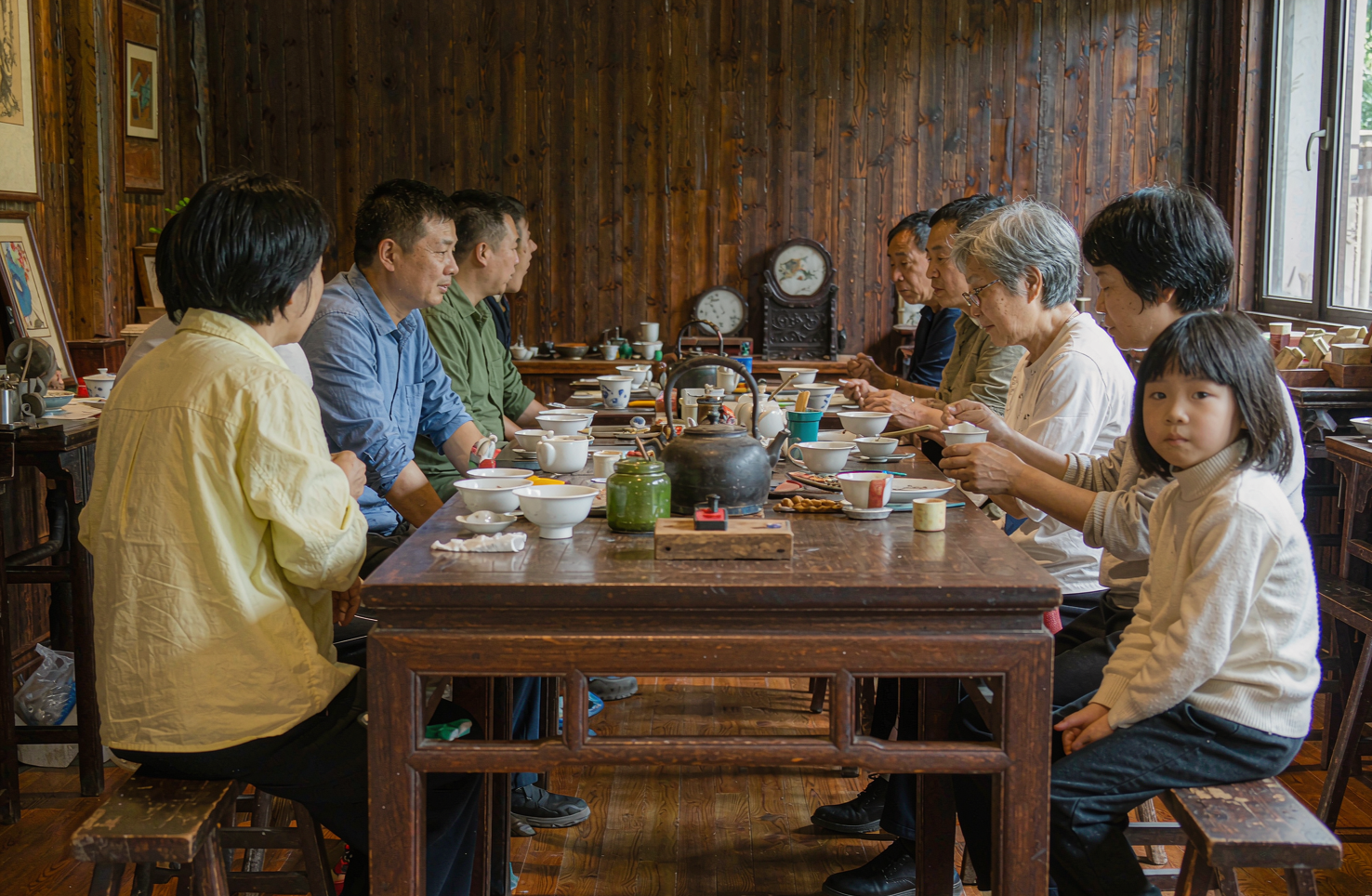
把"慢"做成一种体验:一间非遗会客厅的想法
我们习惯按功能给空间分类:吃饭的、购物的、办公的。但有一种很难归类——它在城市的闹处,不催你走,也不急着让你买单。关键在于,当"慢"被认真设计出来,它本身就可以是一种产品。
韵和鸣 · 2026/10/9 · 56 阅读
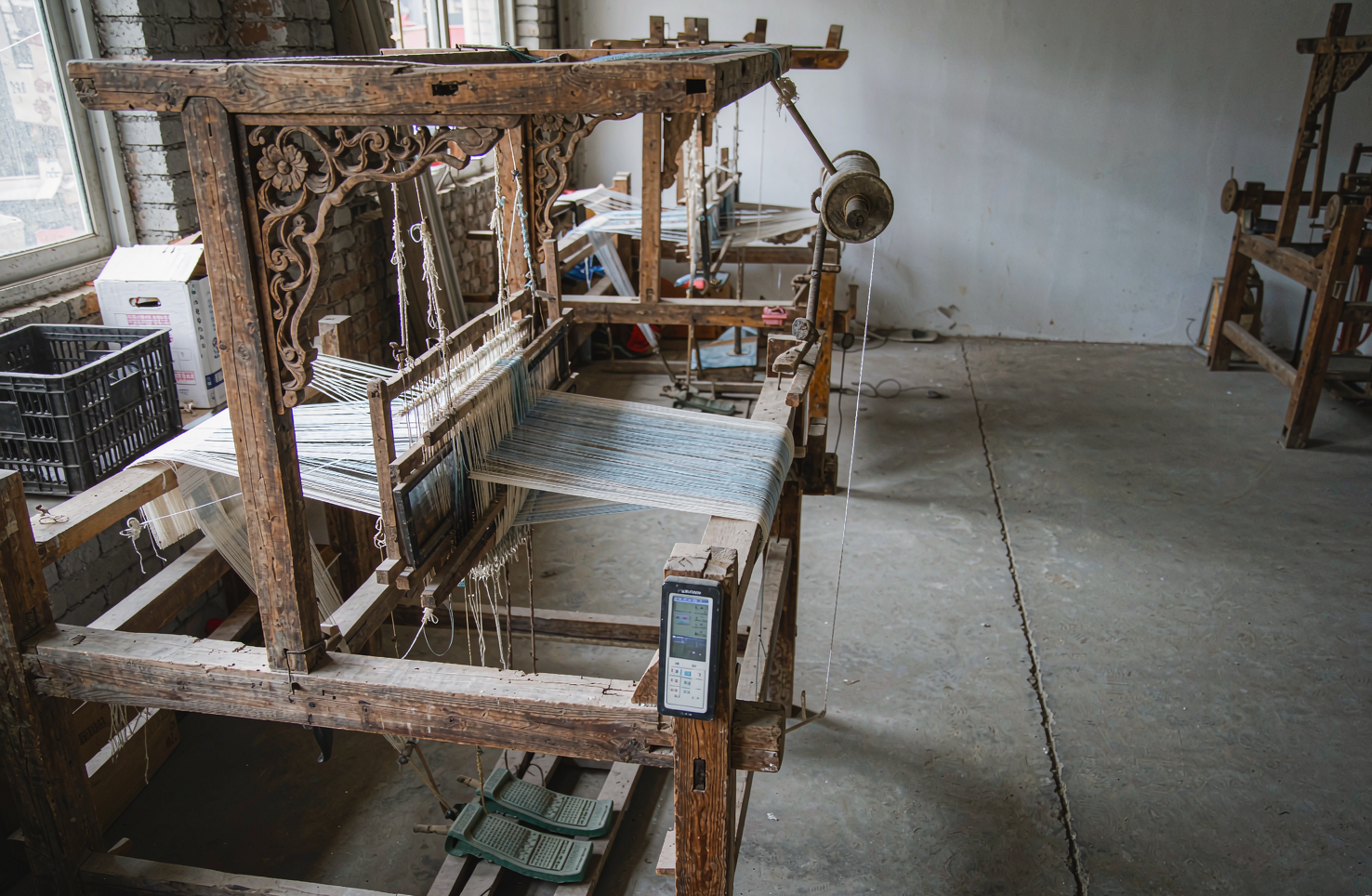
机器开始学手艺:是给匠人搭把手,还是来接班
一段流传很广的画面里,一台机械臂正跟着非遗传承人"学艺"——学劈丝、捻线、穿针。看的人分成两拨:一拨说技术帮上了忙,一拨说来抢饭碗了。同一件事读出两种意思,关键在于用什么尺度去量。
韵和鸣 · 2026/10/9 · 56 阅读
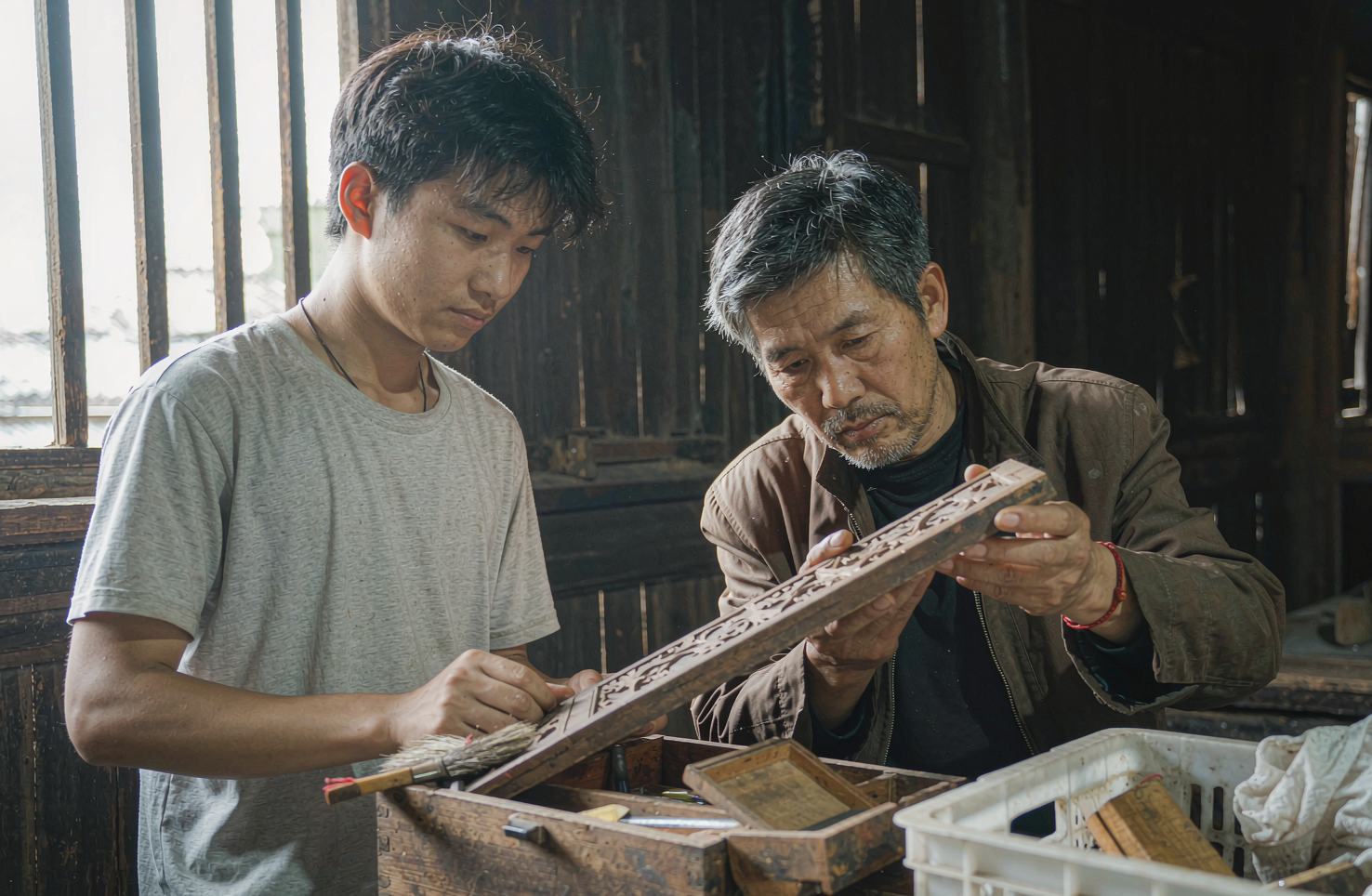
年轻人不愿学老手艺,该怪年轻人,还是怪这门手艺?
非遗传承里被讨论得最多的一句话是"后继乏人"。这句话往下追一层,就分成两条路:一条通向年轻人,说他们耐不住、看不上;一条通向他们面对的那门手艺,说它没能给出一条能活下去的路。这两条路,最近又吵起来了。
韵和鸣 · 2026/10/8 · 55 阅读