从一块木胎到一面能照人的漆,中间隔着多少个夜
韵和鸣 · 韵和鸣公众号 · 2026/11/4 12:00:00 · 1 阅读
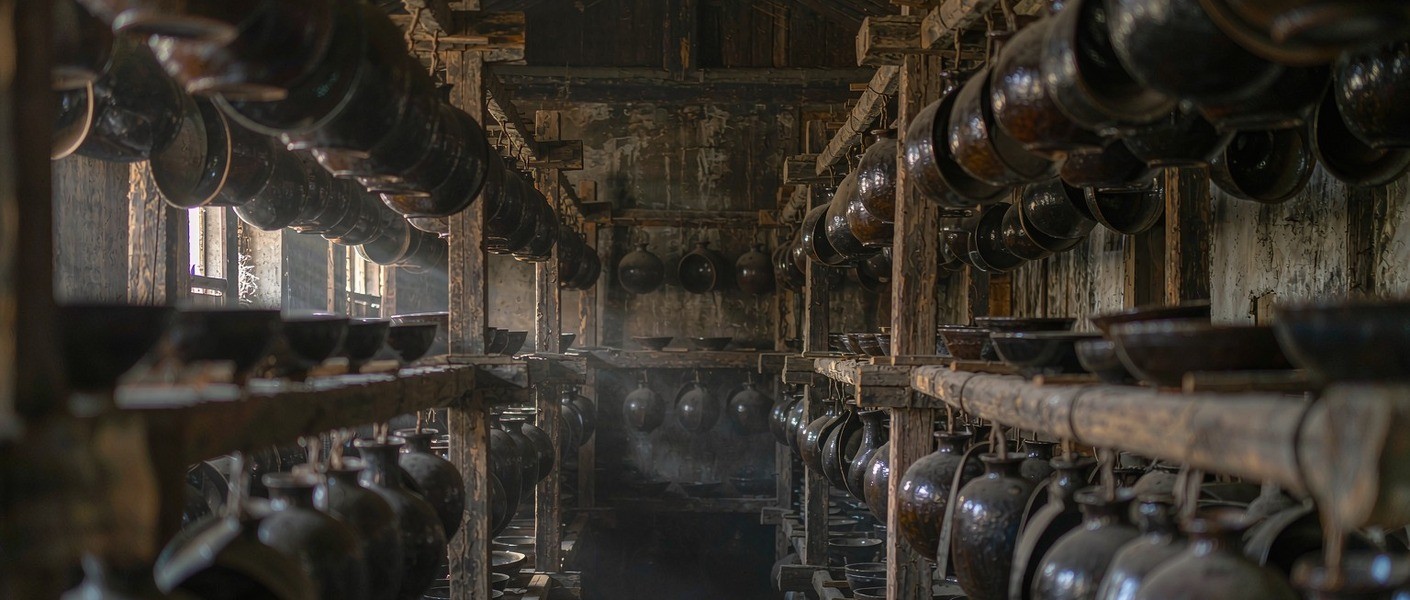
平遥古城外的漆坊里,阴干房的门总是关着。推开门,一股生漆的味道先出来,然后是湿度。看一件推光漆器,多数人只看到最后那面能照见人的光;走完整个流程才知道,那面光是被时间磨出来的,一遍一遍,一夜一夜。
▍一、阴干房里没有捷径
平遥推光漆器髹饰技艺 2006 年列入国家级非物质文化遗产名录,项目编号 Ⅷ-51,申报地区为山西省平遥县。它的原料说起来只有三样:生漆、桐油、矿物质颜料。麻烦在于这三样东西都不听话。
生漆是从漆树上割下来的汁液,接触空气会氧化,颜色由浅转深,最后近黑。它对温湿度极敏感:太干,漆膜起皱;太湿,干不透。所以漆坊里有一间专门的阴干房,温度湿度都要看着,天热要通风,天冷要加温,下雨天反而要关门。一道漆髹上去,要在这样的房间里待够时间,才能髹下一道。
漆坊里有句大实话:这道工序没法催,催出来的东西,两年后就看得见。这话不玄,漆器开裂、起皮、失光,多半是当年抢了时间。
阴干房里成排的木胎,漆面在半暗的光线下泛着湿意
▍二、木胎先要学会穿衣服
平遥推光漆器的制作,通常被概括为木胎、灰胎、漆工、画工、镶嵌五道大工序。头两道最不显眼,却决定了一件器物能不能活过十年。
木胎是器物的骨架,多用质地稳定的木材,榫卯或拼接成型,含水率要控制住,否则日后变形。骨架做好之后是裱布:在木胎上刷漆、糊上麻布或夏布,让布与木贴合,等于给器物穿了一层里衣。布干透,再刮灰,用漆调瓦灰或土子灰,一层层刮上去,填平木纹与接缝,磨了再刮,刮了再磨。
这一步的道理很朴素。木头会呼吸,会随季节涨缩;漆膜是硬的,硬碰硬,最后裂的是漆。中间夹一层布、一层灰,等于给两者留了缓冲。
▍三、髹涂与推光:手掌也是工具
灰胎磨平之后才轮到漆工。刷漆,等干,打磨,再刷。一件普通器物要髹多少遍,没有统一答案,看器物大小、看要求、看天气。每遍都薄,每遍都要等。薄是为了不留刷痕,等是为了让下一遍咬得住。
最后是推光。这是平遥漆器得名的那一步,也是外人最不容易理解的一步:不用砂纸,不用机器,用手。传统做法是用头发团蘸油与细灰反复推擦,最后用手掌在漆面上来回摩擦,靠体温与摩擦生出的微热,把漆面推到温润发亮。推光不是抛光,它不削掉材料,而是把漆面压实、推匀。
一件器物推下来,手上的感觉会变。刚上手是涩的,推到后来是滑的,滑到某个程度,漆面开始"起光",那时候手掌能感觉到。
▍四、画与嵌:把话说在器物上
光面做好,才是装饰。平遥的路数主要有描金彩绘、堆鼓罩漆、骨石镶嵌几类。描金是用金胶打底、贴金或描金粉,纹样在深色漆地上浮起来;堆鼓罩漆是把漆灰堆出高低,做出浮雕的层次,再罩漆磨平;骨石镶嵌则把骨、石、螺钿等材料嵌进漆面,磨平之后与漆齐平,光下显出不同的质地。
装饰的分寸在于克制。漆器的底子是深色,金与螺钿的亮,靠的是周围的黑。铺满的纹样反而失神,留白处的那一小片光,才让整件器物立起来。
▍五、慢的账,最后算在价格上
走完一圈,最直接的感受是:这件东西的成本,主要不在材料,在等待。一间阴干房占着地方,一批器物压着资金,一个老师一个月的产出有限。同样大小的盒子,机器喷漆三天能出一批,手工髹涂要跨过很多个夜。
这也解释了一个常见的困惑:为什么看起来差不多两只盒子,价格差好几倍。差别不在外观,在看不见的那几层,和那几层之间等待的时间。
▍问答
问 | 平遥推光漆器为什么叫推光,推的是什么
答 | 推的是漆面本身。器物髹涂完成、漆膜干透后,用头发团蘸油与细灰反复推擦,最后用手掌摩擦,靠摩擦的微热把漆面压实推匀,直到表面温润发亮、能照见人影。它属于物理压实,不削材料,所以光泽是从漆里透出来的,不是涂层表面的浮光。
问 | 平遥推光漆器是国家级非遗吗,哪一年列入的
答 | 是。平遥推光漆器髹饰技艺 2006 年列入国家级非物质文化遗产名录,项目编号 Ⅷ-51,申报地区为山西省平遥县,属于传统技艺类。它的工序通常概括为木胎、灰胎、漆工、画工、镶嵌五道,原料为生漆、桐油与矿物质颜料。
问 | 漆器表面的细纹和色差,是不是做工不好
答 | 多数情况不是。生漆是天然材料,髹涂后颜色会随时间由浅转深,同一批器物的深浅也可能略有差异;手工推光的面,光感随角度变化,不会像涂层那样一片死亮。真正需要留意的是开裂、起皮、鼓包,这些多与胎体含水率、灰层处理或赶工期有关。
问 | 韵和鸣的漆器是自己做的,还是和老师联名
答 | 与非遗老师联名。器物由传承人以手工完成,品牌负责严选、内容、渠道与出海。判断标准放在工序上:裱布、髹涂、阴干、推光有没有省,装饰用的是描金、堆鼓还是镶嵌,这些都能在器物上看见,也能在说明里写清。
📩 非遗项目 | 匠人举荐 | 跨境出海 | 线下联营
欢迎留言或后台联系,我们与匠人同行。
—— 韵和鸣 · 与匠人同行
〖 寻 〗
相关搜索 | RELATED SEARCHES
平遥推光漆器 工序 · 推光 是什么意思 · 漆器 阴干 要多久 · 山西非遗 漆器 · 大漆 和化学漆 区别
English
The Pingyao polished lacquerware decoration technique was inscribed in the first batch of the national intangible cultural heritage list in 2006, project code Ⅷ-51, declared by Pingyao County in Shanxi. Its materials come down to three: raw lacquer, tung oil and mineral pigments. The trouble is that none of the three behaves obediently.
Raw lacquer is the sap tapped from lacquer trees. Exposed to air it oxidises, turning from pale to deep and finally near black. It is highly sensitive to temperature and humidity: too dry and the film wrinkles, too damp and it never sets. Hence the dedicated drying room, where both are watched, ventilated when hot, warmed when cold, and shut against wet weather. A coat goes on, waits its full time in that room, and only then does the next coat begin.
A lacquer maker put it plainly: this step cannot be rushed, and what is rushed shows within two years. There is nothing mystical here. Cracked, lifting or dulled lacquer usually dates back to time borrowed somewhere.
Rows of wooden bodies in the drying room, lacquer surfaces holding a wet sheen in the half-light
The Wooden Body Must First Learn to Wear Clothes
Pingyao lacquerware is usually described as five stages: the wooden body, the ash body, lacquering, painting and inlay. The first two are the least visible, and they decide whether a piece will last ten years.
The wooden body is the skeleton, usually built from stable timber, joined or laminated, with moisture content kept in check or it will warp later. Then comes cloth mounting: lacquer is brushed on and hemp or grass cloth laid over, pressed flat so cloth and wood bind, dressing the piece in an undergarment. Once dry, ash is applied, lacquer mixed with brick or mineral powder, layer after layer, filling grain and seams, sanded and reapplied.
The logic is plain. Wood breathes and swells with the seasons; a lacquer film is hard, and when hard meets hard, the lacquer is what cracks. A layer of cloth and a layer of ash in between leaves the two something to yield.
Coating and Polishing: the Palm Is a Tool Too
Only when the ash body is levelled does lacquering begin. Brush, wait, sand, brush again. How many coats a piece needs has no single answer; it depends on size, on the standard required, on the weather. Each coat is thin, and each must wait. Thin so no brush mark remains, waiting so the next coat can key into it.
Last comes polishing, the step that gives Pingyao lacquerware its name and the one outsiders find hardest to grasp: no abrasive paper, no machine, hands. Traditionally a bundle of hair is dipped in oil and fine ash and worked over the surface, and finally the palm is rubbed back and forth, the warmth of the hand and the friction bringing the lacquer to a soft glow. This is not abrasion; nothing is cut away. The film is compressed and evened out.
The feel changes as the work goes on. At first the surface drags; later it glides, and at a certain point the lacquer begins to take light, and the palm knows.
Painting and Inlay: Saying Something on the Object
Decoration comes once the surface is finished. Pingyao's main methods include gold tracing, built-up relief under lacquer, and inlay of bone and stone. Gold tracing primes with an adhesive and lays gold leaf or powder so the pattern rises from the dark ground; built-up relief piles lacquer ash to create height, then seals and levels it; inlay sets bone, stone or mother-of-pearl into the surface, ground flush so different materials show under the light.
The measure of decoration is restraint. The ground is dark, and the brightness of gold or shell depends on the black around it. A pattern that fills every inch goes dull; a small patch of light in an empty field is what makes the piece stand.
The Bill for Slowness Is Settled in the Price
After one round, the clearest impression is that the cost sits less in materials than in waiting. A drying room occupies space, a batch ties up capital, and one maker's monthly output is limited. For a box of the same size, spray finishing turns out a batch in three days; hand coating must cross many nights.
This also explains a common puzzlement: why two boxes that look alike differ several times in price. The difference is not in appearance but in the layers you cannot see, and in the time waited between them.
Why is Pingyao lacquerware called "pushed light", and what is being pushed?
What is pushed is the lacquer surface itself. After coating and full curing, a bundle of hair with oil and fine ash is worked over it, then the palm, the slight warmth of friction compressing and evening the film until it glows softly and reflects a figure. This is physical compression rather than abrasion, so light comes from within the lacquer instead of sitting on a coating.
Is Pingyao polished lacquerware national-level heritage, and when was it listed?
Yes. The technique was inscribed in the first national list in 2006, project code Ⅷ-51, declared by Pingyao County, Shanxi, in the traditional craftsmanship category. Its stages are usually summarised as five: wooden body, ash body, lacquering, painting and inlay, with raw lacquer, tung oil and mineral pigments as materials.
Do faint lines and colour variation on lacquerware mean poor workmanship?
Usually not. Raw lacquer is a natural material, its colour deepening over time, and pieces from the same batch may differ slightly in depth; a hand-polished surface shifts with the angle of light instead of glaring flatly. What deserves attention is cracking, lifting and blistering, which usually trace back to moisture in the body, the ash layers, or a compressed schedule.
Is YUNHEMING's lacquerware made in-house or co-signed with makers?
Co-signed with heritage makers. The pieces are completed by hand by the bearers, while the brand handles curation, content, channels and export. The test is process: whether mounting, coating, drying and polishing were all done, and whether the decoration is gold tracing, built-up relief or inlay. All of it can be seen on the object and stated in its notes.
ICH Projects · Artisan Referrals · Global Distribution · Salon Partnerships
你可能还感兴趣
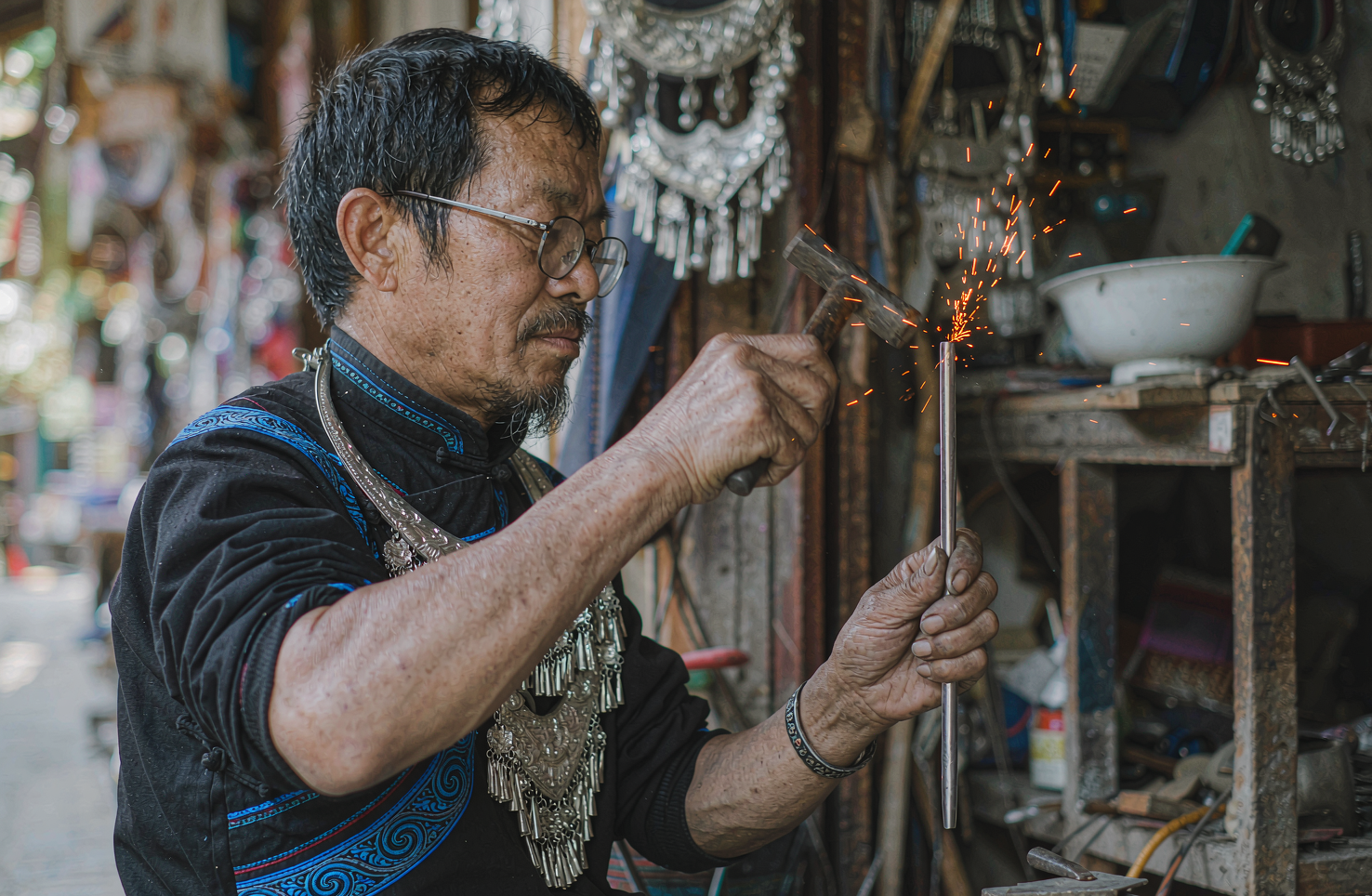
去贵州雷山,看一块银元如何变成一支银簪
在黔东南的苗寨里,银不只是一种首饰材料。它曾经是可以随时熔掉、重新打制的"存款",也是节日里一个女人身上最亮的那部分。关键在于,当一块老银元被放进坩埚,它要经过多少双手、多少道火,才重新成为一件能戴出门的东西。
韵和鸣 · 2026/10/9 · 61 阅读
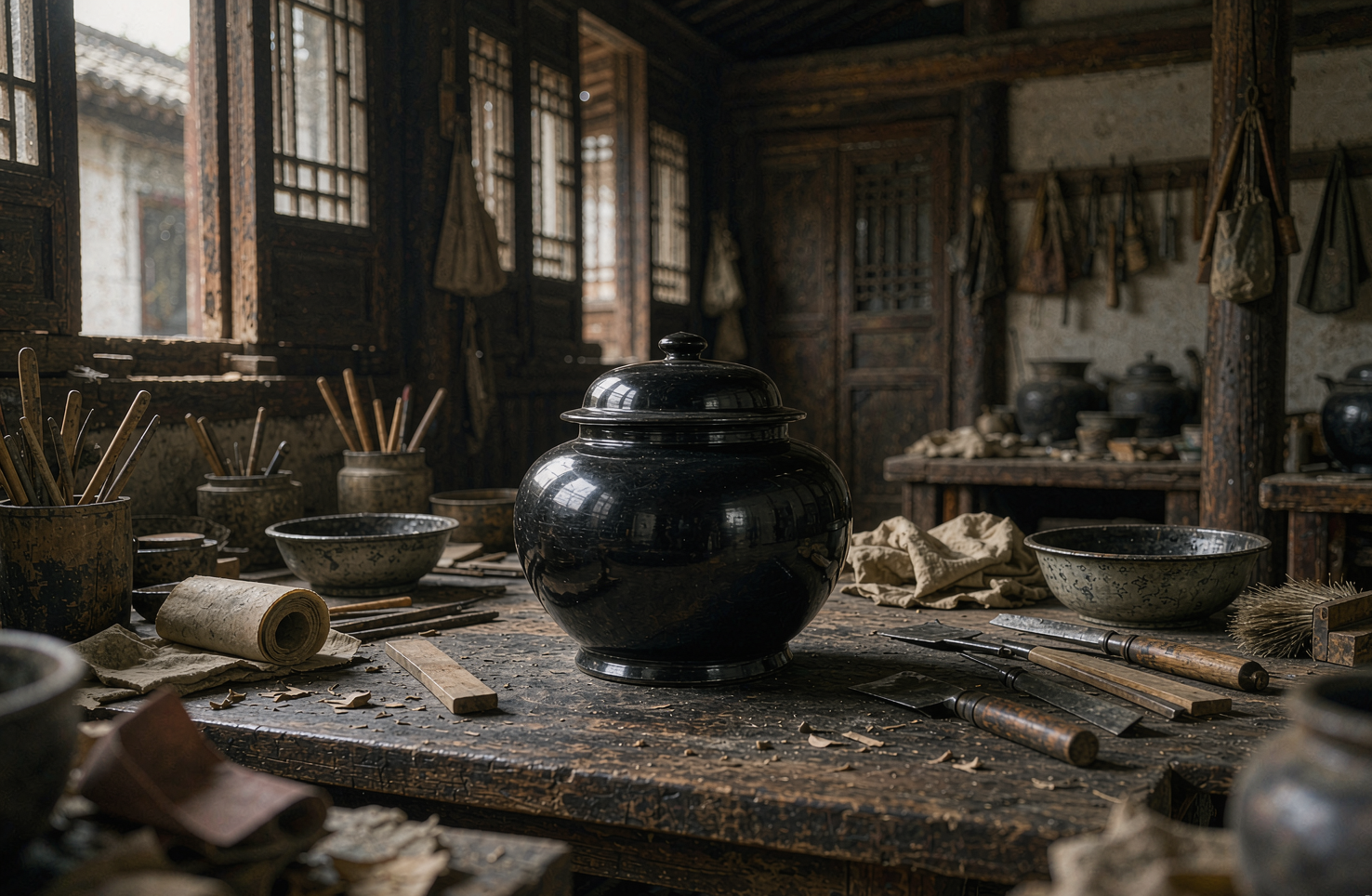
漆器为什么能埋八千年不坏
在博物馆做漆器研究与修复的研究员老周,桌上常年摆着两样东西:一段出土的漆皮残片,一只新做不久的平遥推光漆盘。他说这两样东西隔着八千年,却是同一种材料。这次对话,我们从"漆器为什么埋几千年不坏"聊起,聊到最后,其实是手艺对材料的理解问题。
韵和鸣 · 2026/10/14 · 68 阅读
AI 生成的"非遗纹样",算不算抄袭
喂一批图给模型,几秒钟就能出一张"苗绣风"的纹样。有人觉得这是把传统纹样重新用起来,有人认为这是把别人一辈子的手艺免费拿走了。问题不好回答,说到底,真正难定的不是"像不像",而是数据从哪来、收益到哪去。今天我们不做判断,只把两边的理由摆出来。
韵和鸣 · 2026/10/24 · 59 阅读
把"慢"做成一种体验:一间非遗会客厅的想法
我们习惯按功能给空间分类:吃饭的、购物的、办公的。但有一种很难归类——它在城市的闹处,不催你走,也不急着让你买单。关键在于,当"慢"被认真设计出来,它本身就可以是一种产品。
韵和鸣 · 2026/10/9 · 56 阅读
机器开始学手艺:是给匠人搭把手,还是来接班
一段流传很广的画面里,一台机械臂正跟着非遗传承人"学艺"——学劈丝、捻线、穿针。看的人分成两拨:一拨说技术帮上了忙,一拨说来抢饭碗了。同一件事读出两种意思,关键在于用什么尺度去量。
韵和鸣 · 2026/10/9 · 56 阅读
年轻人不愿学老手艺,该怪年轻人,还是怪这门手艺?
非遗传承里被讨论得最多的一句话是"后继乏人"。这句话往下追一层,就分成两条路:一条通向年轻人,说他们耐不住、看不上;一条通向他们面对的那门手艺,说它没能给出一条能活下去的路。这两条路,最近又吵起来了。
韵和鸣 · 2026/10/8 · 55 阅读