为什么好的非遗器物「越用越美」
韵和鸣 · 韵和鸣公众号 · 2026/11/3 12:00:00 · 1 阅读
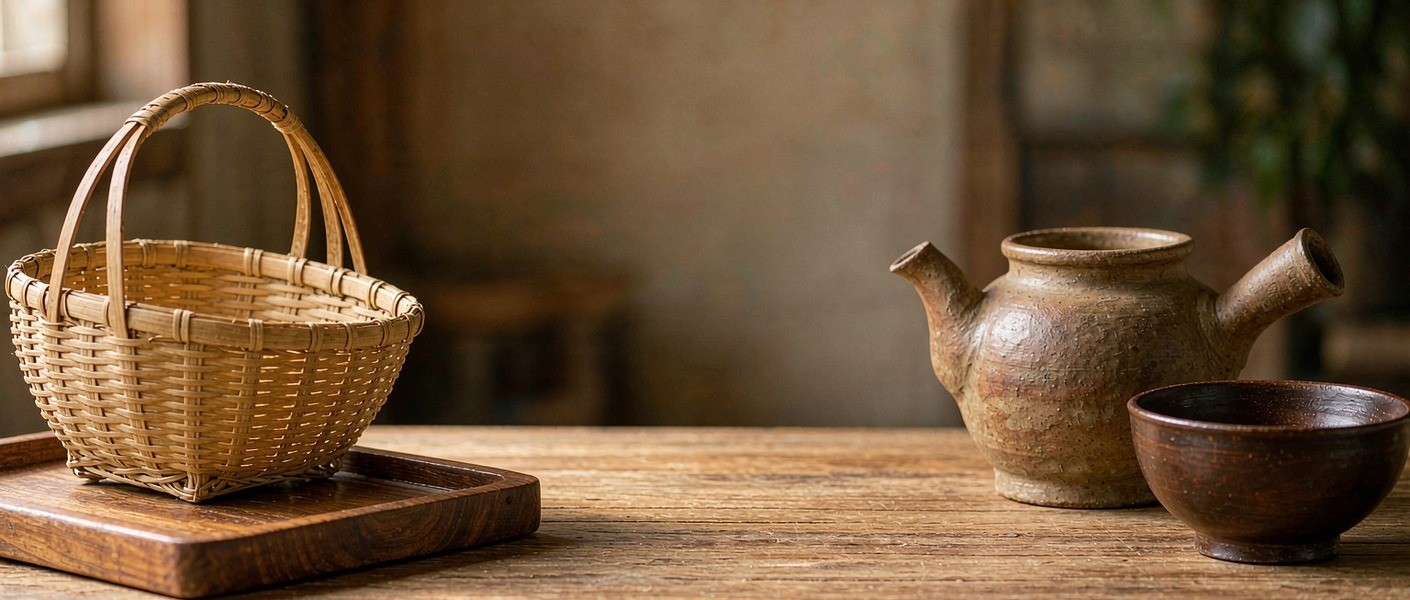
有一类器物,刚到手时并不惊艳,用上几年反而顺眼了。这不是怀旧滤镜,是材料在时间里发生的变化。理解这层变化,比学会分辨真假更实用:它决定了你买回去的东西,是被放着,还是被用着。
▍一、它不是变新了,是变稳了
器物「越用越美」的头一层原因很物理。手工完成的表面,放大看并不平整:漆膜有刷痕,竹丝有纤维,陶胎有颗粒。刚做完时,这些起伏对光形成散射,看上去偏涩。
使用带来的是均匀的轻微摩擦。凸起处先被磨到,微观的落差一点点收窄,反射从散射转向半定向,光泽就从「亮」变成「润」。人眼对这种光泽的好感,通常高于出厂时的高光。
用了多年的漆碗,碗沿被手磨出柔和的光
这个过程的名字,传统上叫包浆。所谓包浆,指的是器物在长期使用中与手、空气反复接触,表面形成的一层均匀而柔和的光泽变化。它不是脏,也不是神秘,只是时间在表面留下的均匀痕迹。
▍二、颜色是从材料和手里来的
再一层原因在颜色。天然材料会继续与环境交换:竹木吸了手上的微量油脂,颜色从青转黄褐;陶胎吸了茶汤,缝隙里留下深浅不匀的印子;麻、藤一类纤维用久了会柔顺,颜色沉下去。
漆之所以能撑起这个过程,靠的是漆膜本身的耐久。据新华网 2026 年 10 月 30 日《新华走笔》一文,据《平遥县志》记载,晋中漆作滥觞于商周,唐开元年间已形成稳定的髹漆传统,古有「滴漆入土,千年不毁」之说。
这类变化有一个共同前提:材料本身没有被完全封死。表面如果盖了一层化学漆,变化就停在出厂那天;用的是大漆、木蜡、生油这类可以被材料「呼吸」的涂层,时间才进得去。
这也是为什么「天然材料」在手作领域被反复提起。它不是营销词,它决定了这件东西未来五年是往好看里走,还是往旧里走。
▍三、不是所有东西都适合「用旧」
这里必须说清边界。越用越美这件事,只适用于一部分器物。
彩绘类怕磨。描金、彩绘的表面纹样是画上去的,反复摩擦会掉色脱层,这一类要远手、远光。镶嵌类怕温差,螺钿与木头、漆的膨胀系数不同,骤冷骤热容易起壳。薄胎类怕磕,夜光杯那种薄到零点五毫米的胎,一次失手就没有下一次。
适合养的,是那些结构厚实、表面无附加装饰、涂层可透气的日用器物:素漆碗、竹篮、木托盘、未经施釉的陶壶。
竹编提篮的把手处,竹丝被手磨得发亮
▍四、买的时候怎么判断它会不会「长」
三条可以现场用的方法。一看表面:有没有厚重的镜面反光,有则说明被封住了。二看断面或底部:能看到材料本身的纹理,说明没有覆盖层。三问一句:这件东西日常怎么用、怕什么。答得上来的卖家,通常也答得上来它是谁做的。
器物的价值不在买下的那一刻。它在被反复使用、被慢慢磨亮的那些年里,一点点长出来。
▍问答
问 | 漆器用久了会变好看吗,会不会越用越花
答 | 素漆器物通常会越用越润,前提是正常使用。手工髹涂的漆膜表面有细微刷痕,使用带来的均匀摩擦会让它从「亮」转「润」;但如果表面有彩绘、描金或镶嵌,摩擦与温差反而会造成脱色、起壳,这一类要远手远光。
问 | 竹编器物用久了颜色变深,是发霉吗
答 | 不一定是。竹材在干燥通风的环境里长期接触手部油脂,颜色会由青转黄褐,这是正常变化。真正的霉变通常伴随灰绿或黑色的斑点、有异味,多发生在潮湿不通风的存放条件下。区分要点是看有无斑点与异味,并先确认存放环境是否干燥。
问 | 什么是包浆,和污渍怎么区分
答 | 包浆是长期使用形成的均匀表面变化,摸上去干爽不黏,光泽柔和且分布连续;污渍则集中在缝隙与低处,手感发黏,颜色边界突兀。简单判断:用微湿软布轻擦后迅速吸干,包浆不受影响,污渍会变淡。清洁一律不浸泡、不用强洗涤剂。
问 | 韵和鸣的器物用旧了、用坏了,还能回来处理吗
答 | 接。用旧了、磕碰了都可以先来问一句,器物支持回收。敢把卖出去的东西再收回来,是因为对经手的东西有底,也是因为这类器物本来就该被长久使用。至于怎么摆、怎么擦、什么情况下该停用,随时可以回头问。
📩 非遗项目 | 匠人举荐 | 跨境出海 | 线下联营
欢迎留言或后台联系,我们与匠人同行。
—— 韵和鸣 · 与匠人同行
〖 器 〗
相关搜索 | RELATED SEARCHES
非遗器物 越用越美 · 包浆 是什么 怎么判断 · 漆器 保养 怕什么 · 竹编 颜色变深 正常吗 · 手作 器物 养护 通则
English
It Does Not Become New; It Becomes Settled
The first reason, a physical one, is this. A hand-finished surface is not flat under magnification: a lacquer film carries brush marks, bamboo carries fibres, a clay body carries grain. When newly finished, these undulations scatter light and the surface reads as raw.
Use brings even, slight friction. The raised parts are worn first, micro-relief narrows, reflection shifts from diffuse to partly directional, and the sheen turns from bright to mellow. The eye generally prefers this sheen to the factory gloss.
A lacquer bowl used for years, the rim worn to a soft sheen by handling
Traditionally this is called patina. Patina refers to the even, mellow change in sheen that forms on a surface through repeated contact with hands and air over long use. It is neither dirt nor mystery, only the even trace time leaves on a surface.
Another reason lies in colour. Natural materials keep exchanging with their surroundings: bamboo and wood take up traces of oil from hands and shift from green to yellow-brown; a clay body takes up tea and holds uneven marks in its pores; hemp and rattan fibres soften with use and their colour deepens.
That lacquer can carry this process rests on the durability of the film itself. According to a Xinhua Net essay of 30 October 2026 citing the Pingyao County Annals, lacquerwork in Jinzhong began in the Shang and Zhou periods and had formed a stable tradition by the Kaiyuan era of the Tang; the old saying runs that lacquer dropped into the earth lasts a thousand years.
Such change shares one precondition: the material has not been sealed off completely. Coat a surface with a synthetic lacquer and change stops the day it leaves the workshop; use raw lacquer, wax or a drying oil that lets the material breathe and time can get in.
This is why natural materials come up so often in the handmade field. It is not a marketing word; it decides whether an object moves towards better or merely towards older over the next five years.
A boundary has to be stated here. Growing better with use applies to some objects only.
Painted surfaces fear friction. Gold tracing and painted decoration sit on top; repeated rubbing fades colour and lifts layers, so keep them away from hands and light. Inlaid work fears temperature swings, since mother-of-pearl, wood and lacquer expand at different rates and thermal shock lifts the shell. Thin-walled pieces fear knocks: a body as thin as half a millimetre does not survive a second chance.
What suits being worn in are everyday objects with solid structure, no surface decoration and a breathable finish: plain lacquer bowls, bamboo baskets, wooden trays, unglazed clay pots.
The handle of a bamboo basket, the strips polished bright by years of hands
Three tests work at the point of purchase. Look at the surface: a heavy mirror gloss means it has been sealed. Look at the cross-section or the base: if the material's own grain is visible, there is no covering layer. Ask one question: how is this used day to day, and what does it fear. A seller who answers that can usually also say who made it.
The worth of an object does not sit in the moment of purchase. It grows, little by little, across the years in which it is used and slowly polished by use.
Does lacquerware improve with use, or does it become worn and mottled?
Plain lacquer usually grows mellower with use, provided it is used normally. A hand-coated film carries fine brush marks, and even friction turns the finish from bright to mellow. If the surface carries painting, gold tracing or inlay, however, friction and temperature swings cause fading and lifting, so keep those away from hands and light.
Bamboo ware darkens with age; is that mould?
Not necessarily. Bamboo that stays dry and ventilated and meets traces of oil from hands shifts from green to yellow-brown, which is normal. Real mould usually comes with grey-green or black spots and a smell, and appears where storage is damp and unventilated. The test is whether there are spots and odour, and whether the storage is dry.
What is patina, and how does it differ from dirt?
Patina is an even surface change built up over long use: dry to the touch, not sticky, with a soft continuous sheen. Dirt collects in crevices and hollows, feels tacky and has abrupt colour edges. A simple test: wipe lightly with a barely damp soft cloth and dry at once; patina is unaffected, dirt lightens. Never soak, never use strong detergents.
If a YUNHEMING piece wears out or breaks, can it be sent back?
It does. Worn or knocked pieces can be asked about first; objects can be taken back. Being willing to take back what was sold means having confidence in what passed through one's hands, and it also follows from the fact that such objects are meant to be used for a long time. As for where to place it, how to wipe it and when to stop using it, those can be asked at any time.
ICH Projects · Artisan Referrals · Global Distribution · Salon Partnerships
你可能还感兴趣
一件漆器该有多重,手感不会说谎
严选器物,看纹样、看款识、看证书,都是明面上的事。但有一道标准写不进任何参数表——上手。同一尺寸的两只漆盘,一只压手温润,一只轻飘干瘪,差别从何而来?这次把"分量"这件事拆开讲。说到底,重量是工序的记账本。
韵和鸣 · 2026/10/14 · 54 阅读
一盏博山琉璃:颜色是炉火给的,不是颜料调的
博山琉璃的颜色由矿石、着色配方和炉温共同形成,鸡油黄等色料并非烧成后涂在表面。文章介绍挑料、吹制、塑型、灯工和内画,说明流纹、气泡与壁厚如何反映手工过程,并提供观察颜色、过渡和口沿的选器方法。
韵和鸣 · 2026/10/12 · 50 阅读
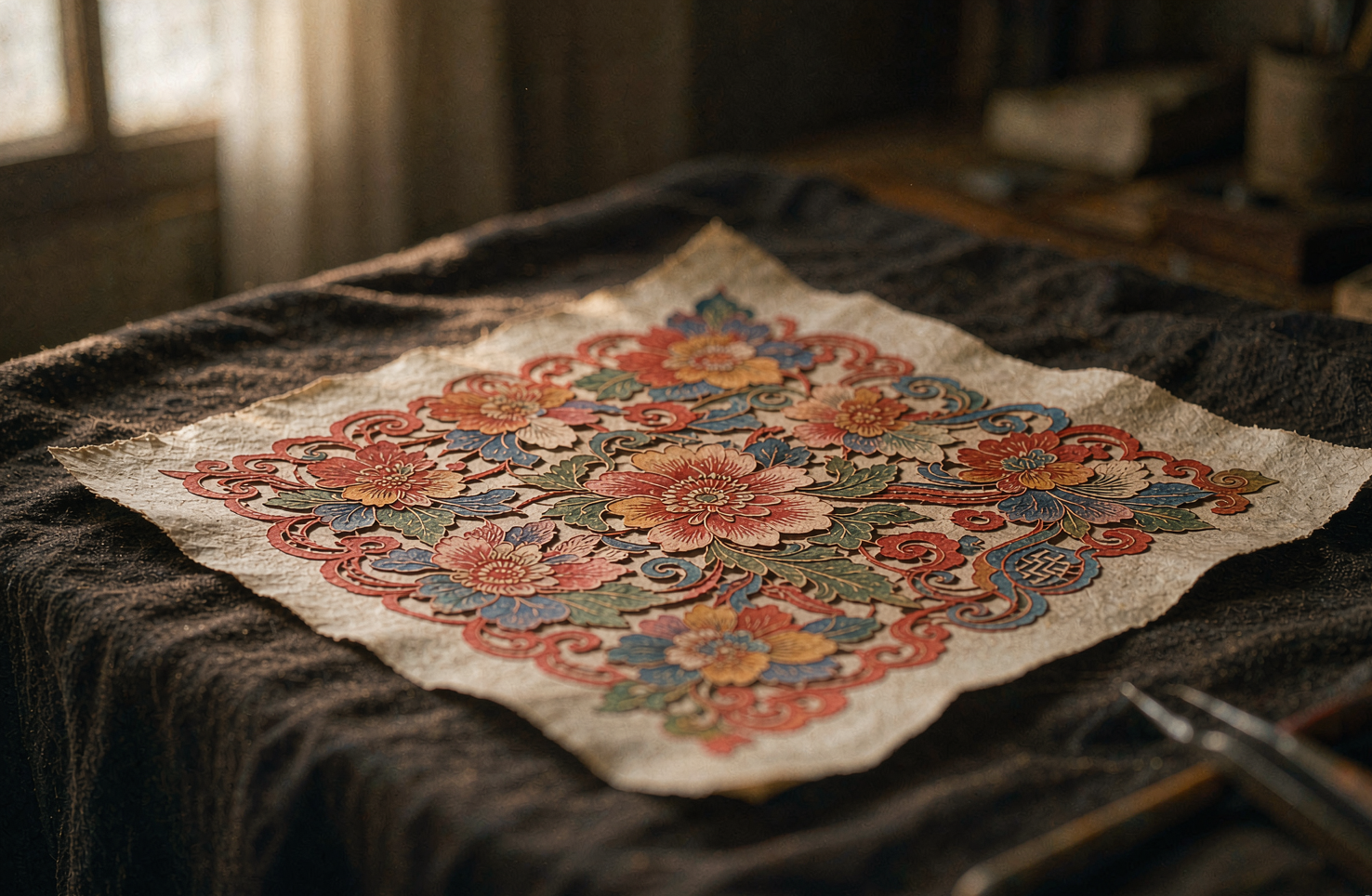
一张蔚县剪纸,彩色的刻刀活
严选录这一期看一张不太一样的剪纸:它不用剪刀,用刻刀;不止红色,还带着点染出来的粉与绿。河北张家口蔚县的剪纸,是剪纸大家族里"反着来"的一支——别处以剪为主、以红为正,蔚县以刻代剪、以点彩上色。说到底,这两个"反着来"的本质,是蔚县人把剪纸从窗前的女红,做成了作坊里的分工手艺:看懂了这一点,才算看懂了这张纸。
韵和鸣 · 2026/10/13 · 49 阅读
一枚漆书签:小物件为什么反而更考验手艺
漆书签体量小,却同时暴露胎体稳定、漆层附着、边缘打磨与日常耐用度。挑选时先看薄厚与侧面,再摸边缘和转角,比只看纹样更能判断小件工序是否扎实,也值得问清售后修复。
韵和鸣 · 2026/10/24 · 47 阅读
平金开黑:金与黑,为什么这么耐看
平金开黑以黑漆为底、金线为饰,关键在于黑底的推光质量、金线的稳定和留白的分寸。文章介绍相关工具与工序,并从线条、光泽、使用和来源等方面说明如何观察描金漆器,避免只用金的多少判断价值。
韵和鸣 · 2026/10/10 · 46 阅读
竹编漆艺茶席:两种非遗,如何在同一张桌上共生
一张茶席上,常常同时摆着竹编的垫、漆艺的托。它们来自两门毫不相干的手艺,却在同一片茶汤边安静相处。共生这件事,比"混搭"难得多。
韵和鸣 · 2026/10/2 · 45 阅读