海外买家在为什么买单:一个买手反复问的四个问题
韵和鸣 · 韵和鸣公众号 · 2026/11/3 12:00:00 · 1 阅读
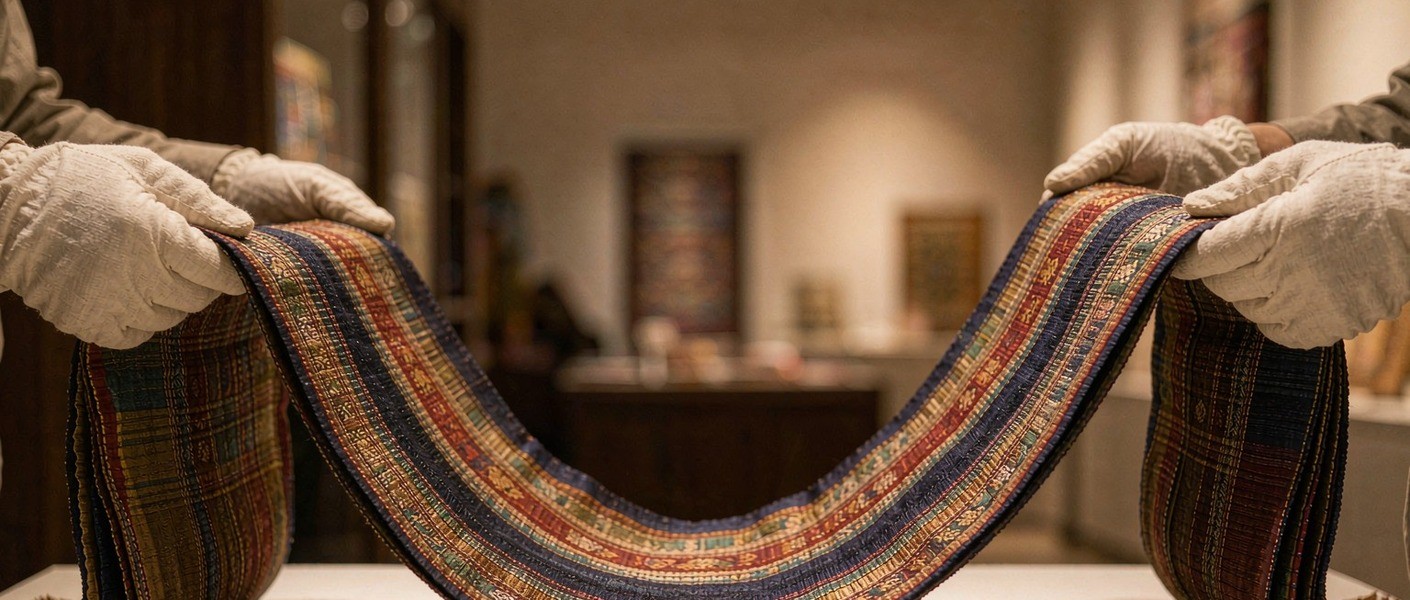
展会上最真实的信息,往往不在展台上,在买手开口的那几秒。据中新社 2026 年 10 月 31 日报道,第 140 届广交会第三期在广州举行,一位乌兹别克斯坦采购商在「中国风」女包展位前开口就问:批量采购一个多少钱,能单买吗。这两句话里,藏着海外买家完整的判断顺序。
▍一、这是谁做的
买手问价钱之前,通常先问来源。这不是礼貌,是职业习惯:一件标着手工的器物,如果答不出出自哪门技艺、哪位匠人之手,后面所有关于价格的商谈都没有支点。
据同一篇报道,广州一家箱包企业的负责人介绍,公司产品瞄准高端市场,与非遗代表性传承人合作,把宋锦、广绣、苏绣的传统技艺做进箱包,纹样既有宝相花、木棉花、鳌鱼等元素,也可以按海外客户要求做个性化定制,主攻中东和欧洲市场。
署名在这个环节的作用很朴素:它把一句形容词变成一条可以追查的记录。
展台上的织锦面料与箱包样品,纹样在灯下泛出丝光
▍二、它在我那边怎么用
第二个问题关于场景。买手心里有一张清单:这件东西回去摆在哪个货架、属于哪一类目、目标客人拿它做什么。答不上来,东西再好也只能被归到「工艺品」,而工艺品在许多渠道里是销量最薄的一类。
业内对这一步有一句直白的判断:
让传统植物染不只是博物馆里的展品,而是能走进人们的生活,走向海外市场。
(引自中新社 2026 年 10 月 31 日关于第 140 届广交会第三期的报道)
这也是近年许多非遗产品改形的真实原因。唐卡做成挂画,香做成随身牌,织锦做成包。变的不是手艺,是它进门之后被放在哪里。
▍三、下一批什么时候到
第三个问题最容易被忽略,也最常让合作停在第一次。手工意味着周期,周期意味着不确定。买手并不排斥等待,他排斥的是不知道要等多久、下一次会不会是同一个样子。
据同一篇报道,广东一家纺织企业的负责人说,公司联合科研机构推动濒危柿染技艺的标准化、产业化,用现代纺织技术解决传统植物染长期面临的色牢度、批次稳定性与规模化生产问题。这句话讲的正是第三问:不是要把手工变成机器,而是要让手工的结果可预期。
染缸边的织物样片,色卡按深浅排成一列
▍四、材质能不能写清楚
第四个问题在报价之后才出现,却常常决定成败:材质说明、成分标签、产地标注,以及目标市场要求的合规文件。这类事情不涉及审美,只涉及能不能上架。
一位做包装的参展商在报道里提到,早年公司承接欧美大单,走的是低价代工路线;如今境外客户更青睐个性化小单定制,比拼的核心是快速打样能力与柔性配套服务。要求变了,能力也得跟着变。
▍五、四个问题,一条共同的底
把这四问并排看,会发现它们指向同一件事:手艺的价值不能只靠手感证明。它需要被说清是谁做的、用在何处、多久能再拿到、由什么材料构成。四件事都答得上来,价格才有讨论的余地;答不上来,便宜也很难卖动。
我们在平遥的漆坊里见过同样的顺序。推光漆器的客人不问「这个图案好不好看」,先问「这是哪位老师做的、髹了几道、多久能好」。问题变了,手艺没变;变的只是它要进入的世界。
▍问答
问 | 海外买家采购中国非遗产品,最看重什么
答 | 四件事,按被问到的顺序是:出自哪位匠人、在目标市场怎么用、下一批多久能到、材质与合规文件能不能写清。价格通常在这些问题之后才进入实质商谈。
问 | 手工产品交期不稳定,出海时怎么解决
答 | 方向不是用机器替代手工,而是把不稳定的环节管理起来。常见做法是在染色、干燥、配料这类受环境影响的环节建立标准与记录,让批次之间差异可控;核心工序仍由手工完成。
问 | 非遗产品出口需要准备哪些材料说明
答 | 至少四类:材质与成分说明、产地与工艺的简要描述、目标市场要求的标签与合规文件、以及可追溯的作者或工坊信息。不同市场要求不同,具体以当地法规与平台要求为准。
问 | 韵和鸣做非遗出海,靠的是什么底子
答 | 两条腿:一条是已经跑通的跨境链条,产品出口欧美、日韩、新加坡等市场;另一条是内容,多语言直播与多国语言翻译,先把这门手艺讲成对方听得懂的话。货与故事缺一条,走不远。
📩 非遗项目 | 匠人举荐 | 跨境出海 | 线下联营
欢迎留言或后台联系,我们与匠人同行。
—— 韵和鸣 · 与匠人同行
〖 匠 〗
English
Before asking the price, a buyer usually asks the source. This is not politeness but professional habit: for an object labelled handmade, if you cannot say which craft and which maker it comes from, every later conversation about price has no footing.
According to the same report, the head of a Guangzhou bag company said the firm aims at the high end, works with representative heritage bearers, and builds Song brocade, Guangdong embroidery and Suzhou embroidery techniques into its bags; patterns include baoxiang flowers, kapok and the aoyu fish, and can be customised to overseas clients, with the Middle East and Europe as main markets.
The role of attribution here is plain: it turns an adjective into a record that can be checked.
Brocade fabric and bag samples on a stand, the pattern catching the light with a silk sheen
The second question concerns context. A buyer carries a mental checklist: which shelf this goes on back home, which category it belongs to, what the target customer does with it. Fail this and however good the object, it lands under "craft", and craft is among the thinnest categories in many channels.
E> Let traditional plant dyeing be not merely a museum exhibit but something that enters people's lives and reaches overseas markets.
This is also the real reason many heritage products have been reshaped in recent years: thangka as wall art, incense as a pocket pendant, brocade as a bag. What changed is not the craft but where it is put once through the door.
The third question is the most easily overlooked and the most common reason a collaboration stops at round one. Handwork means lead time; lead time means uncertainty. A buyer does not mind waiting; he minds not knowing how long, or whether the next batch will look the same.
According to the same report, the head of a Guangdong textile firm said the company works with research institutes to standardise and industrialise the endangered persimmon dyeing craft, using modern textile technology to solve the colour fastness, batch consistency and scale problems that have long troubled traditional plant dyeing. That sentence answers the third question: not turning handwork into machines, but making the outcome of handwork predictable.
Dyed fabric swatches beside the vat, colour cards laid out in a row from light to dark
The fourth question surfaces after quotation yet often decides the outcome: material description, composition label, origin marking, and the compliance documents the target market requires. None of this involves taste; it only decides whether the item can be put on a shelf.
One packaging exhibitor noted in the report that the company used to take large European and American orders on a low-price contract basis, while overseas clients now prefer personalised small-batch customisation, competing on rapid sampling and flexible supporting services. When the demands change, the capability has to change with them.
Set the four questions side by side and they point at one thing: the worth of a craft cannot be proved by feel alone. It needs to be stated who made it, where it is used, when the next batch arrives, and what it is made of. Answer all four and price becomes negotiable; fail them and even cheap will not move.
We have seen the same order in the lacquer workshops of Pingyao. Buyers of polished lacquerware do not ask whether the pattern is pretty; they ask which master made it, how many coats were applied, and how long it will take. The questions changed, not the craft; what changed is the world it is entering.
What do overseas buyers value most when sourcing Chinese heritage products?
Four things, in the order they are asked: which maker it comes from, how it is used in the target market, how soon the next batch arrives, and whether material and compliance documents can be stated. Price usually enters substantive discussion only after these.
Handmade products have unstable lead times; how is this handled for export?
The direction is not to replace handwork with machines but to manage the unstable parts. A common approach is to set standards and keep records for environment-sensitive stages such as dyeing, drying and material preparation, so batch differences stay controllable, while core steps remain hand-made.
What documentation is needed to export heritage products?
At least four kinds: material and composition description, a brief account of origin and technique, the labelling and compliance documents the target market requires, and traceable author or workshop information. Requirements differ by market; local regulations and platform rules prevail.
What does YUNHEMING rely on for taking heritage crafts abroad?
Two legs: a cross-border chain already running, with products exported to Europe, the Americas, Japan, Korea and Singapore; and content, with multilingual livestreams and translation that first render the craft into terms the other side understands. Without either the goods or the story, it does not travel far.
ICH Projects · Artisan Referrals · Global Distribution · Salon Partnerships
你可能还感兴趣
中欧班列上的非遗:慢一点,但走得远
非遗器物出海要在空运、海运与中欧班列之间权衡速度、成本和稳定性。对高工时、易碎、怕潮的手作而言,包装、防护、海外仓及发货报关等环节的安排,比单纯求快更能守住器物与资金。
韵和鸣 · 2026/10/8 · 62 阅读
韩国的非遗保护:从"文化财"到活态传承
看世界怎么保护非遗,韩国常被提到,也常被简单化。它有一套自己的名词——"文化财""无形文化财""保有者"。关键在于,这套名词背后不只是一份名单,而是一整套"怎么把手艺交下去"的制度。
韵和鸣 · 2026/10/9 · 56 阅读

穆拉诺与博山:隔着七千公里的两座炉火之城
穆拉诺因作坊迁聚形成玻璃产业,博山则依托当地矿石与供料、匠人传统发展琉璃。文章比较两地产业聚集和原产地表达的路径,说明传承既需要师傅与学徒的密度,也需要把制作地点、来源和标准讲清楚。
韵和鸣 · 2026/10/12 · 52 阅读

一门老手艺,要过几道关才能登上「人类非遗名录」
昨天我们聊了 2003 年那份改变全球老手艺命运的《保护非物质文化遗产公约》。今天接着往下问:公约建立了名录,那一门手艺要经历什么,才能把自己的名字写上去?
韵和鸣 · 2026/10/3 · 51 阅读

"非遗"这个词,各国怎么叫、怎么理解
中文非遗、日本无形文化财及法国工艺大师等称呼,对应不同的认定单位与保护重心。比较这些体系,关键不在逐字互译,而在看名录、个人与社区分别承担什么角色,以及传承如何发生。
韵和鸣 · 2026/10/24 · 50 阅读

一件平遥漆器,如何走到海外客人家中
一件平遥漆器出海,要先讲清材质、工艺与来路,再经过合规、报关、物流、海外仓和末端配送。文章结合已有政策与跨境电商安排,说明多语种说明和养护提示同样重要:物流负责抵达,清楚的信息负责建立信任。
韵和鸣 · 2026/10/5 · 48 阅读