竹编匠人谈"慢":快时代里,手艺人靠什么活下来
韵和鸣 · 韵和鸣公众号 · 2026/11/1 12:00:00 · 1 阅读
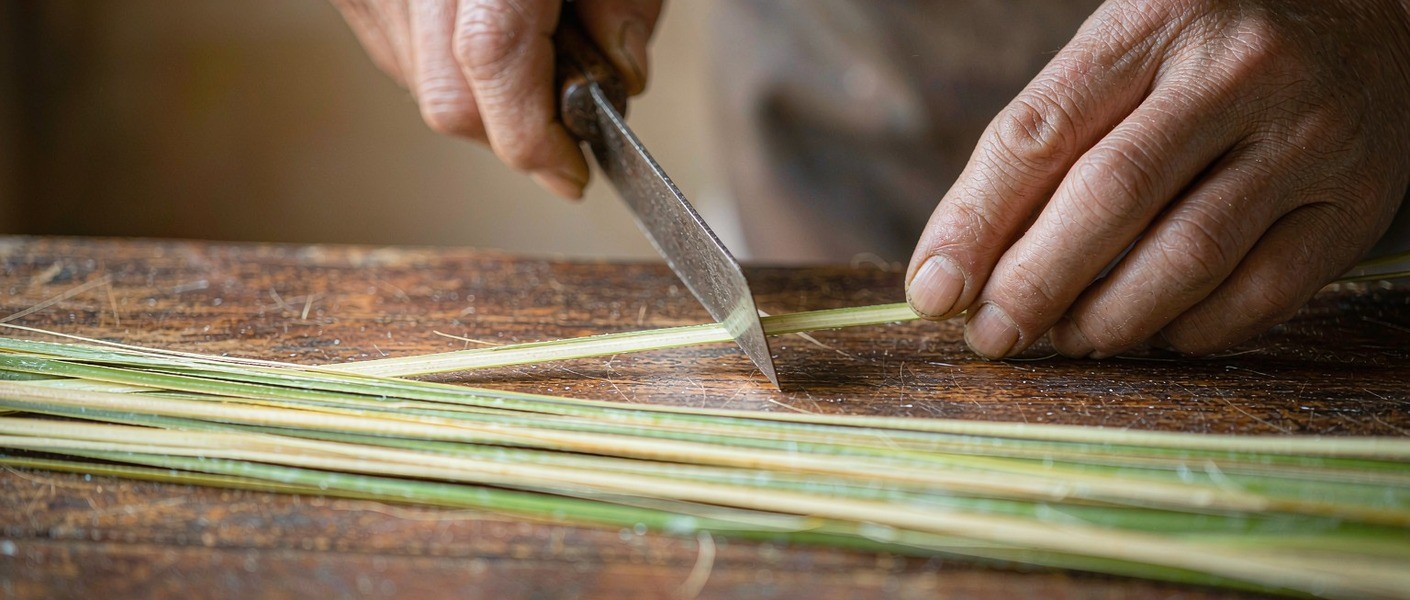
我们把近几次寻访中几位竹编师傅说过的话串在了一起,没有加工成故事,只保留他们反复提到的那部分。他们谈得最多的是一个"慢"字。但这个慢,与我们习惯理解的慢工出细活不太一样——它不是态度,是材料的脾气——他们说的"慢",本质在于材料有自己的节奏,手只能顺着走。
▍一、一根竹子要先等三年
竹编的起点不在手上,在山上。据公开资料,做编织的竹材讲究年份与季节:太嫩的竹纤维松散,编到一半就断;太老的又脆,弯不过去。砍伐也看时令,多在入秋以后,此时竹液收敛,虫蛀的机会小。
这几位师傅的说法很接近:选错竹子,后面做得再好也白搭。所以竹编的头一道工序不是剖,是等。等的时间不在工坊里,在山上,谁也替不了。据中国非物质文化遗产网,全国已有多个竹编类项目列入国家级非物质文化遗产代表性项目名录。
剖好的竹篾摊在案上,青面朝上
▍二、剖篾:一双手的分寸
竹子进了工坊,接下来是剖篾。所谓剖篾,即顺着竹材的纹理把竹条剖开,去掉表面的青皮与内侧的黄层,只留中间那层可以编织的篾。一把篾刀顺着竹子的纹理推下去,先分条,再去青去黄,留下中间那一层;然后是分丝——把一条篾再劈成更细的丝,细到能穿过去编出密实的底。
这活没法靠眼力校准。竹子的纤维走向每一节都不一样,手上得随时调整力道:重一分就劈偏,轻一分又劈不开。
一位师傅的原话:"刀是死的,竹子是活的。"
▍三、"慢"到底是什么
谈到"慢",他们的解释出人意料地具体。慢的头一层是材料在变:竹子剖开以后含水率一路往下走,今天编得顺手的一条篾,明天可能就硬了、脆了,所以活要一口气做完,或者把半成品收在特定的湿度里。
第二层是手在记住。编织的纹样看似重复,其实每一道的松紧都在影响最后的形状;手上的分寸是编了几千次之后养出来的,用图纸教不出来,用机器也替不了——机器可以编出规整的平面,编不出随器形收放的曲面。
第三层最小,也最难:慢意味着一天做不了几件。它直接决定了收入,也决定了这门手艺能留住多少人。
编织中的器底,经纬在收口处逐渐收紧
▍四、快时代里靠什么活下来
问他们怎么活下来,答案不在情怀里,而在很实在的三件事上。
头一件是把东西做成常用的。竹编在过去多是筐、篮、筛,功能随着生活方式退场;如今有人把竹丝与瓷结合,做茶器与灯具,让这门手艺重新进入日常。工艺没有变,是它服务的场景变了。
第二件是让人看见过程。愿意把十几道工序拍给人看的人,往往也是愿意回答"是不是手工"的人。过程本身就是凭据。
第三件是有人替他们做剩下的事。找渠道、做内容、谈出海、办合规,这些都不在手艺的范围内。一位师傅说得直白:"我只会编,别的事我不会,也不想学。"
▍五、手艺人的明天
"慢"这个字,正在从缺点变成理由。愿意为慢付费的人确实在变多,但前提是慢得有据——能说清为什么慢、慢在哪一步、慢出来的东西好在哪。
对做非遗的人来说,这就是我们的活:把"慢"翻译成能看懂的话,再把它送到愿意等的人手上。竹子不等人,但市场可以学会等。
▍问答
问 | 竹编器物一般用几年的竹子,为什么
答 | 通常取生长数年的竹材,季节上多在入秋以后砍伐(据公开资料)。太嫩的纤维松散、容易断,太老的发脆、弯不过去;秋后竹液收敛,虫蛀的机会也小。选错材料,后面工序再好也补不回来,所以竹编从头到尾的头一道工序其实是"等"。
问 | 竹丝扣瓷是什么,为什么难做
答 | 是把竹丝依附在瓷器胎体上编织的一路做法,器物的形与骨由瓷承担,竹丝只管贴着曲面走(据公开资料)。难就难在"贴"字上:瓷面不吸水也不吃漆,竹丝要按器形逐段调整松紧,弧度变化处一根编松,整片就翘起来。它考的不是力气,是对每一段弧度的预判。
问 | 机器编得越来越像,手工竹编的价值还在哪
答 | 在曲面与应变上。机器适合规整的平面与量产件,手工的长处是随器形收放——收口处每一道的松紧由手判断,这是图纸教不出来的。另外,手工竹编的成品件件略有差异,这种差异不是瑕疵,是这门手艺留下的签名。
问 | 韵和鸣怎么帮竹编这类匠人
答 | 把自己当作"非遗经纪人",以公益的角度替匠人做事:帮匠人做内容、做访谈,把手艺的过程认真记下来;也帮匠人对接渠道与出海的机会,把材质说明、标签合规、运输包装这些琐碎事接下来。匠人专心做手艺,其余的事交给韵和鸣。
▍说在最后
慢不是美德,也不是策略,它是材料给出的条件。看懂这一点,才谈得上尊重一门手艺。
你身边有坚守老手艺的匠人吗?留言告诉我们,我们去看看。
📩 非遗项目 | 匠人举荐 | 跨境出海 | 线下联营
欢迎留言或后台联系,我们与匠人同行。
—— 韵和鸣 · 与匠人同行
〖 匠 〗
English
A Bamboo Stalk Must Wait Three Years First
Bamboo weaving begins not in the hands but on the hill. According to public sources, material for weaving depends on age and season: too young and the fibres are loose, snapping halfway through; too old and it turns brittle and will not bend. Felling follows the calendar too, mostly after autumn, when sap has withdrawn and borers are less likely.
These masters put it much the same way: choose the wrong bamboo and no skill afterwards will save it. So the first step of bamboo weaving is not splitting but waiting. The waiting happens not in the workshop but on the hill, and nobody can do it for you.
Split bamboo strips laid on the bench, green side up
Splitting Strips: The Measure in a Pair of Hands
Once the bamboo reaches the workshop, splitting begins. Splitting, as it is understood here, means opening the bamboo along its grain, trimming away the green skin and the yellow pith, and keeping only the middle layer that can be woven. A cleaving knife runs along the grain, first dividing it into strips, then comes dividing each into finer filaments, thin enough to weave a close base.
As one master put it: the knife is fixed, the bamboo is not.
The work cannot be judged by eye. Fibre direction differs at every node, so the hand adjusts its force constantly: a little too much and the split runs off, a little too little and it will not open. As one master put it: the knife is fixed, the bamboo is not.
On slowness, their explanations were unexpectedly concrete. The first layer is that the material keeps changing: once split, a bamboo strip keeps losing moisture, and a strip that behaved well today may be stiff or brittle tomorrow, so a piece must be finished in one run or stored at a particular humidity.
The second layer is that the hand remembers. A weave looks repetitive, yet the tension of each pass shapes the final form; the measure in the hand is built after thousands of passes, cannot be taught from a drawing, and cannot be replaced by a machine. A machine can weave a flat plane but not a surface that gathers and releases with the shape of a vessel.
The third layer is smallest and hardest: slowness means only a few pieces a day. That decides income directly, and it decides how many people the craft can keep.
A base under weave, warp and weft tightening toward the rim
Asked how they survive, the answers had nothing of sentiment in them, only three practical things.
The first is making things people use daily. Bamboo weaving once produced baskets, hampers and sieves, functions that retired along with a way of life; today some combine bamboo filament with porcelain to make tea ware and lamps, returning the craft to ordinary days. The craft has not changed; what it serves has.
The second is letting people see the process. Those willing to film a dozen steps are usually the same ones willing to answer whether a piece is hand-made. The process is itself the evidence.
The third is having someone do the rest. Finding channels, making content, negotiating exports and handling compliance lie outside the craft. One master put it bluntly: I can only weave; the rest I neither know nor want to learn.
The word slow is turning from a defect into a reason. More people are indeed willing to pay for slowness, but only when it is accounted for: why it is slow, at which step, and what the slowness buys.
For those of us in heritage work, that is the job: translate slowness into language people can read, then deliver it to those willing to wait. Bamboo does not wait for anyone, but a market can learn to.
How old is the bamboo used in weaving, and why?
Material is usually bamboo of several years' growth, felled mostly after autumn according to public sources. Too young and the fibres are loose and break; too old and it is brittle and will not bend. After autumn the sap withdraws and borers are fewer. Choose wrongly and no later skill compensates, so the opening step of bamboo weaving is really waiting.
What is weaving bamboo onto porcelain, and why is it so hard?
It is the practice of weaving bamboo filament onto a porcelain body, where the form and the skeleton belong to the porcelain and the bamboo follows the curve (according to public sources). The difficulty lies in fitting: porcelain absorbs nothing and holds no lacquer, so the filaments must adjust their tension section by section along the form, and where the curve changes, one loose pass lifts the whole panel. It tests not strength but foresight of each arc.
Machines weave increasingly well: where does hand weaving still hold value?
In curvature and response. Machines suit flat planes and volume; the hand's strength is gathering and releasing with the form, since tension at the closing rim is judged by hand and cannot be drawn. Hand-woven pieces also differ slightly one from another, and that difference is not a flaw but the craft's signature.
How does YUNHEMING help weavers like these?
By acting as a heritage agent and working for makers from a public-interest angle: producing content and interviews and recording the process faithfully; opening channels and export opportunities and taking on material declarations, labelling compliance and packing. The maker attends to the craft; the rest comes to YUNHEMING.
Slowness is neither a virtue nor a tactic; it is a condition the material imposes. Understanding that is the beginning of respecting a craft.
Is there a maker near you still holding to an old craft? Leave us a comment and we will go and see.
ICH Projects · Artisan Referrals · Global Distribution · Salon Partnerships
你可能还感兴趣
漆器为什么能埋八千年不坏
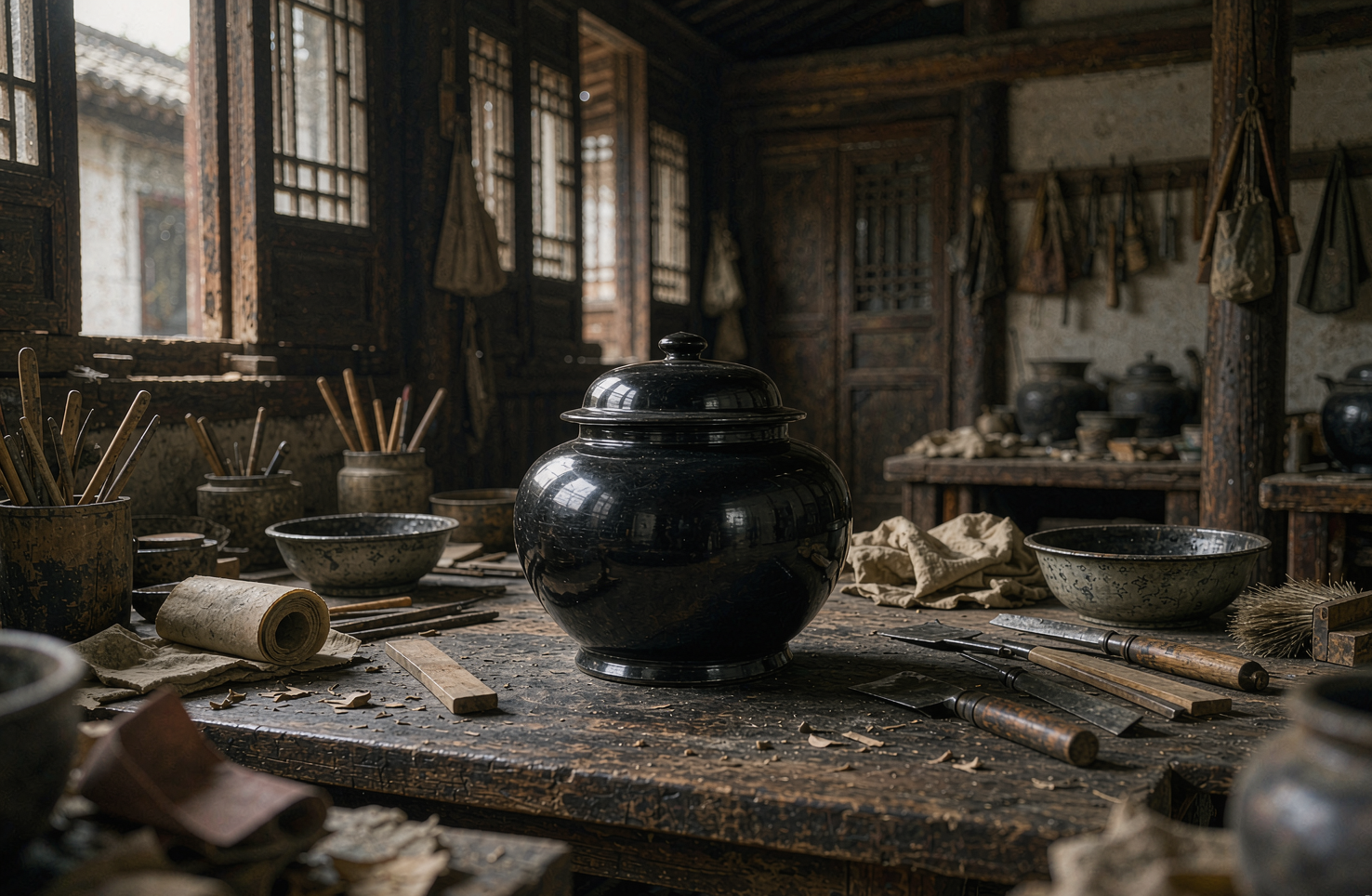
在博物馆做漆器研究与修复的研究员老周,桌上常年摆着两样东西:一段出土的漆皮残片,一只新做不久的平遥推光漆盘。他说这两样东西隔着八千年,却是同一种材料。这次对话,我们从"漆器为什么埋几千年不坏"聊起,聊到最后,其实是手艺对材料的理解问题。
韵和鸣 · 2026/10/14 · 68 阅读

十六岁学艺,他如今想让漆器走进年轻人的家
在平遥,学漆艺的人正在换代。老匠人把五十年的功夫交给徒弟,年轻教师把漆带进课堂。一门千年手艺要传下去,卡住的往往不是技法。
韵和鸣 · 2026/10/2 · 51 阅读
推光:一只手与时间的合谋
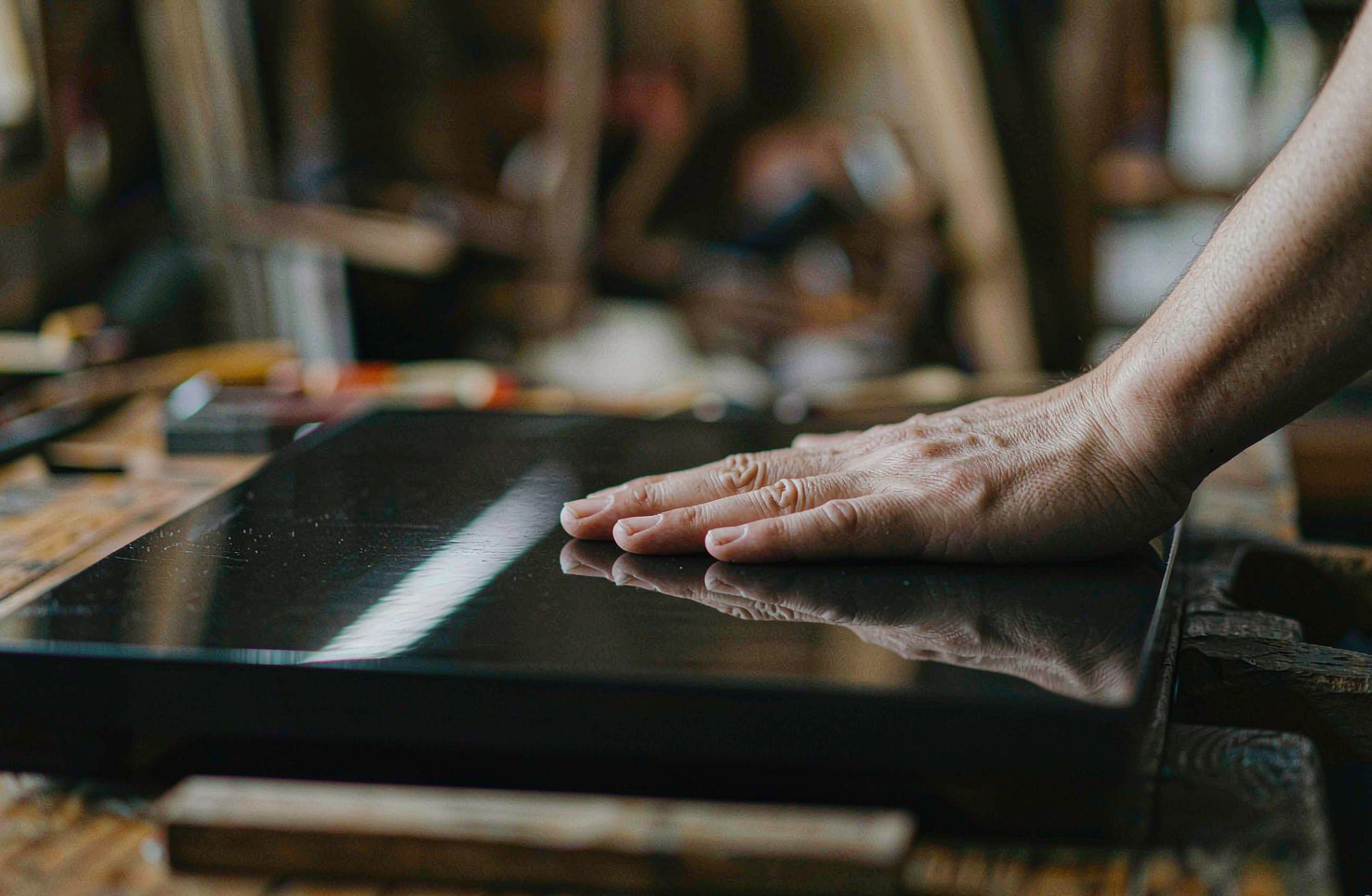
推光以大漆和此前多道髹磨工序为底,最后靠手掌的温度、力度与节奏推出温润光泽。文章同时写到师徒之间反复示范和重做,说明这道功夫既无法催快,也不能只靠口头讲解完成传递。
韵和鸣 · 2026/10/2 · 46 阅读
去贵州雷山,看一块银元如何变成一支银簪
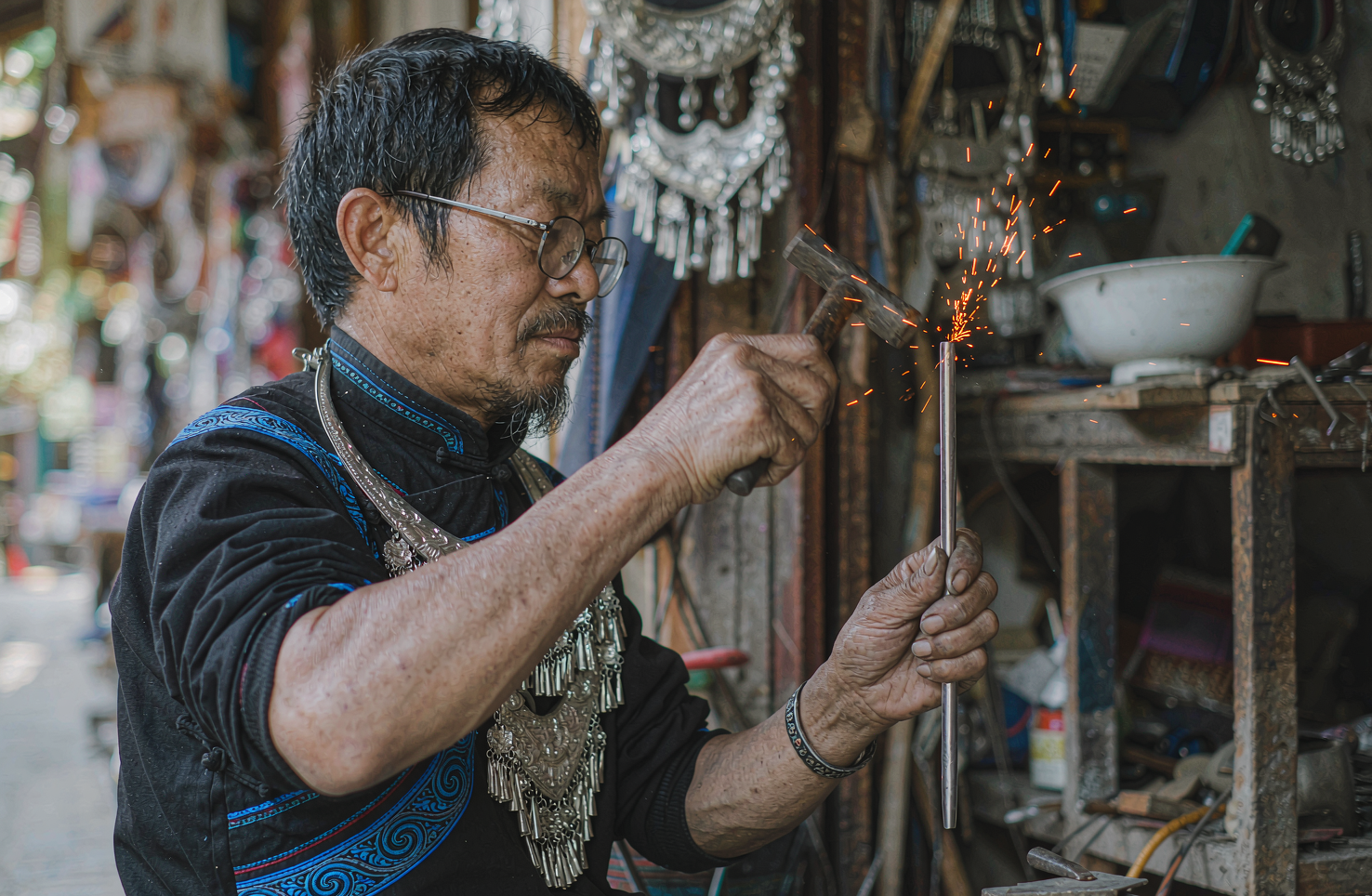
在黔东南的苗寨里,银不只是一种首饰材料。它曾经是可以随时熔掉、重新打制的"存款",也是节日里一个女人身上最亮的那部分。关键在于,当一块老银元被放进坩埚,它要经过多少双手、多少道火,才重新成为一件能戴出门的东西。
韵和鸣 · 2026/10/9 · 61 阅读
AI 生成的"非遗纹样",算不算抄袭
喂一批图给模型,几秒钟就能出一张"苗绣风"的纹样。有人觉得这是把传统纹样重新用起来,有人认为这是把别人一辈子的手艺免费拿走了。问题不好回答,说到底,真正难定的不是"像不像",而是数据从哪来、收益到哪去。今天我们不做判断,只把两边的理由摆出来。
韵和鸣 · 2026/10/24 · 59 阅读
把"慢"做成一种体验:一间非遗会客厅的想法
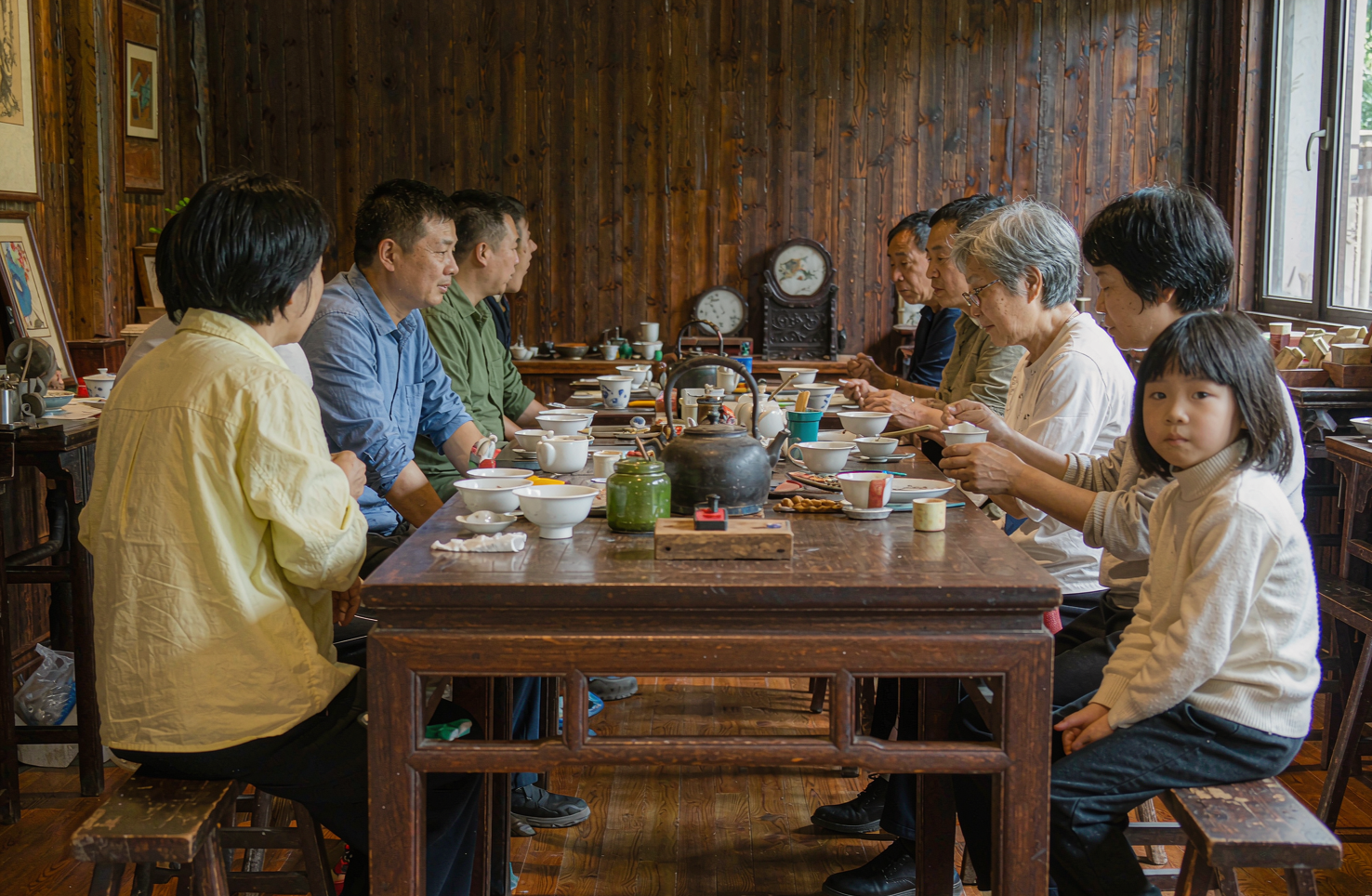
我们习惯按功能给空间分类:吃饭的、购物的、办公的。但有一种很难归类——它在城市的闹处,不催你走,也不急着让你买单。关键在于,当"慢"被认真设计出来,它本身就可以是一种产品。
韵和鸣 · 2026/10/9 · 56 阅读