从展柜走到货架:非遗文创的下半场
韵和鸣 · 韵和鸣公众号 · 2026/11/1 12:00:00 · 3 阅读
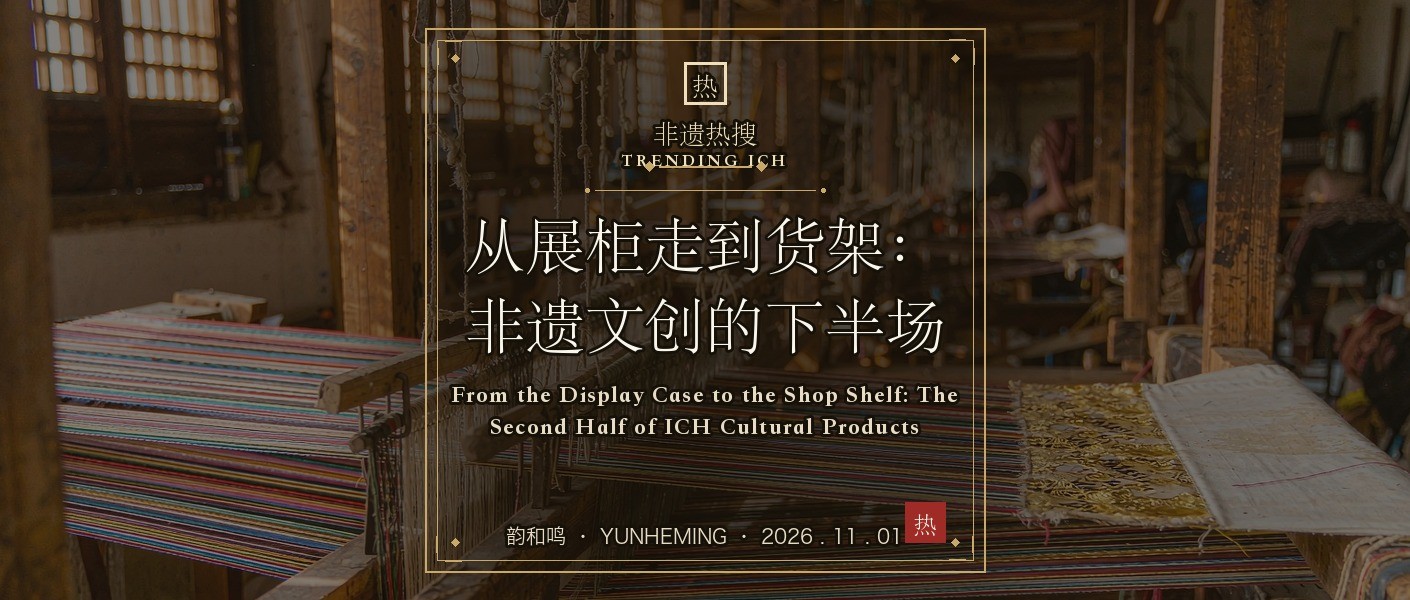
十月末尾的几天里,非遗文创接连出现在三个不相干的地方:一只县里做的帆布包进了全国榜单,云锦和紫砂被做成赛场的应援物,老字号的展位上摆开了古法酿造与丝绸刺绣。三件事指向同一个变化——非遗文创正在从"被看见"走向"被买走"。这道门不好过,中间隔着谁做的、怎么做的、卖到哪三道坎。
▍一、三条消息,同一个方向
头一条来自安徽。据望江县人民政府网消息,望江挑花帆布文创手提包入选 2026 年度十大类纺织创新产品名单,归在"非遗国潮产品"一类。望江挑花始于唐代,以"双面挑"的技法著称,被列入国家级非物质文化遗产名录。它上一次被人认真谈论,多半还是在展柜里。
第二条来自江苏。据澎湃新闻 2026 年 10 月 30 日报道,一批以城市足球联赛为主题的非遗文创上架,南京云锦、宜兴紫砂被做成可以随身带、可以戴走的物件。云锦是织造里的重工艺,紫砂是陶土里的慢功夫,如今它们出现在球场看台。
第三条来自杭州。据公开报道,第二十三届中华老字号精品博览会于 10 月 28 日至 31 日在杭州国际博览中心举办,由浙江省商务厅与杭州市人民政府主办,展览面积约一万平方米、设 400 个展位,其中"薪火传承展区"集中展演古法酿造、丝绸刺绣、竹木雕刻与中药炮制。
织成的云锦局部,金线在丝面上转折生光
三条消息分属三个省份、三个行业,落点却出奇一致:非遗不再只被摆在展柜里,它开始被要求"能用"了。能用,是好事。它能让一门本来只在节庆里露面的手艺,进入每天的生活。但"能用"两个字也带来一道新题:当一件东西从展柜走到货架,它还剩多少原来的东西?
▍二、头一道坎:谁做的
货架上的头一道坎,是来源。一件东西印着某个技艺的名字,不等于它由掌握这门技艺的人完成。这是当下最容易含混的地方:技艺、技艺做出的实物、借用技艺元素批量生产的新产品,在市面上往往共用同一个称呼,价格却按第二种来定。
对买家来说,有一条简单的判断线:能不能说清出自谁之手。能说清的,往往也敢说清工序;说不清的,通常连问都不敢让人问。这也是我们一直把"讲得出匠人的名字"当作严选底线的理由——名字是责任,不是噱头。
▍三、再一道坎:怎么做的
第二道坎是工序。手艺的价值,压在不能省略的步骤上:大漆要一层层髹、在阴干房里等它干透;推光要靠手掌蘸灰一遍遍研磨,磨掉浮光才出内敛的润泽;花丝的功夫先耗在拔丝上,一路拔到近乎发丝,再一段段掐成纹样。这些步骤之所以不能被替,不是因为慢显得高级,而是因为每一步都在改变材料的命运。
文创化的过程里,真正危险的从来不是"改样子",而是"减工序"。样子可以变,云锦做成卡片、紫砂做成小壶,都不妨碍它是云锦、是紫砂。可一旦中间的工序被替掉,剩下的就只是那个名字。
推光工序中蘸灰研磨的手,浮光正在褪去
▍四、末一道坎:卖到哪
第三道坎是渠道。能做出来的东西,未必送得出去。手工器物有它自己的脾气:易碎、怕潮、怕温差,且每一件都不一样,无法用标准件的逻辑做售后。跨境更麻烦——材质说明、标签合规、运输包装、目的地的认证要求,每一环都能卡住一件本来很好的器物。
这也是为什么近年不少地方把手艺与赛事、展会、市集绑在一起。场景带来的不只是流量,还有一次真实的检验:有没有人愿意掏钱,掏完钱会不会回头。榜单与展位只是开始,复购才是答案。
▍五、下半场要守住什么
我们做非遗这行,看到这些消息时的头一个念头,不是替谁高兴,而是先问一句:这三道坎,它过了几道?一件非遗文创能进榜单、能上球场、能摆进老字号博览会,说明手艺正在被更多人需要。被需要是好事,可手艺的价值从来不靠热闹来证明。
守住的办法其实很朴素:把名字写上去,把工序留下来,把渠道做扎实。三件事都做到,货架上的东西才对得起展柜里的那门手艺。
▍问答
问 | 非遗文创和非遗手作是一回事吗
答 | 不是一回事,至少该分清三层:技艺本身、传承人用这门技艺做出的实物、借用技艺元素批量生产的新产品。前两层属于非遗手作,第三层通常只能算衍生品。买之前问一句"是谁做的、工序是不是完整的",两类的差别立刻就出来了。
问 | 非遗文创卖得贵,钱主要花在哪里
答 | 主要压在时间和人上。手工的每一道工序都要等人:等漆干、等窑冷、等一双手把纹样做完。机器替代的恰恰是这部分等待,成本自然就下来了。所以判断价格是否合理,看的是工序有没有被减,而不是样子像不像。
问 | 想买一件能长久用的非遗手作,从哪入手
答 | 三条建议。一看用途,日用就挑趁手的器物,别买回来只能供着;二看养护难度,先弄清这类材料怕什么(怕潮、怕晒、怕磕碰);三问来源,能让卖家报出匠人姓名与产地的,再考虑掏钱。问明白再下手,一般不会错。
问 | 韵和鸣的"严选"到底严在哪
答 | 选器物守三条老规矩:非真非遗手工不收,非与传承人当面合作不做,非手工完成不算合格。生产线上的东西,价钱再诱人、样子再逼真,也进不了选品。也正因为守得住这三条,回收这件事才敢开口承诺。
▍说在最后
非遗文创的下半场,考的不是谁更会讲故事,而是谁经得起追问。榜单、展位与看台都是好消息,但如果它们换来的是对工序的偷减,热闹散得会很快。
你买过哪一件非遗文创,是隔了很久还在用的?留言说说它,我们下一期接着聊。
📩 非遗项目 | 匠人举荐 | 跨境出海 | 线下联营
欢迎留言或后台联系,我们与匠人同行。
—— 韵和鸣 · 与匠人同行
〖 热 〗
相关搜索 | RELATED SEARCHES
非遗文创 和 非遗手作 的区别 · 望江挑花 双面挑 · 南京云锦 文创 · 宜兴紫砂 手工 · 非遗 产品 怎么 辨别 真假 · 韵和鸣 严选
English
The first comes from Anhui. According to the Wangjiang County People's Government website, a canvas tote carrying Wangjiang cross-stitch was named among the 2026 Top Ten Categories of Textile Innovative Products, listed under heritage-inspired guochao goods. Wangjiang cross-stitch dates to the Tang dynasty and is known for its double-sided stitch; it is inscribed on the national intangible cultural heritage list. The last time people spoke of it seriously, it was mostly behind glass.
The second comes from Jiangsu. According to a report by The Paper on 30 October 2026, a series of ICH cultural products themed on the city football league went on sale, with Nanjing brocade and Yixing purple clay turned into objects one can carry or wear. Brocade is heavy work among the weaving arts; purple clay is slow work among the clays. Both now turn up in the stands.
The third comes from Hangzhou. According to public reports, the 23rd China Time-Honoured Brands Expo ran from 28 to 31 October at the Hangzhou International Expo Centre, hosted by the Zhejiang Provincial Department of Commerce and the Hangzhou Municipal People's Government, with roughly ten thousand square metres of exhibition space and 400 booths. Its "Passing the Torch" zone staged demonstrations of traditional brewing, silk embroidery, wood and bamboo carving, and the preparation of Chinese medicine.
A woven section of brocade, gold threads catching light as they turn
Three reports, three provinces, three trades, and one conclusion: heritage crafts are no longer only for the display case. They are now required to be usable. Usability is good news. It lets a craft that once appeared only at festivals enter ordinary days. Yet usability also poses a new question: when a piece moves from case to shelf, how much of the original is left?
The first hurdle on the shelf is provenance. A thing printed with the name of a craft is not necessarily made by those who hold it. This is where confusion sets in most easily today: the craft itself, the object a bearer makes with it, and a mass-produced product borrowing its motifs often share one label in the marketplace, while the price follows the second category.
For a buyer there is one simple test: can the seller say whose hands made it. Those who can usually dare to describe the process as well; those who cannot generally do not welcome the question. This is why we treat being able to name the maker as the floor of our curation. A name is accountability, not a gimmick.
The second hurdle is process. The value of a craft rests on the steps that cannot be skipped: raw lacquer is brushed on layer by layer and left to cure in a drying room; polishing is done by hand with tile ash until the surface glare is ground away and a restrained lustre appears; filigree wire is drawn thinner than a hair before it is pinched into a pattern. These steps cannot be replaced not because slowness looks refined, but because each one changes what the material becomes.
In turning heritage into cultural products, the real danger is never changing the form but cutting the process. Form may change: brocade as a card, purple clay as a small pot, and both remain brocade and clay. Once the steps in between are replaced, all that remains is the name.
A hand grinding with ash during hand-polishing, the surface glare fading
The third hurdle is the channel. What can be made cannot always be delivered. Hand-made objects have their own temperament: fragile, wary of damp and of temperature swings, and each one different, which resists the logic of standard parts when it comes to after-sales. Cross-border trade is harder still: material declarations, labelling compliance, transport packing, and certification requirements at the destination can each stop a perfectly good piece.
This is why many places now bind crafts to matches, exhibitions and markets. A scene brings not merely traffic but a real test: will anyone pay, and will they return after paying. Lists and booths are only the beginning; repeat custom is the answer.
Working in this field, our first response to such news is not delight on anyone's behalf but a question: how many of the three hurdles has it cleared. That a heritage product can enter a list, appear at a match, or stand at a time-honoured brands expo shows the craft is wanted by more people. Being wanted is good, but the worth of a craft has never been proven by noise.
The way to hold the line is plain enough: put the name on it, keep the process intact, build the channel properly. Do these three and what sits on the shelf deserves the craft behind the glass.
Are ICH cultural products and ICH hand-made works the same thing?
Not quite; three layers should be told apart: the craft itself, the object a bearer makes with that craft, and a mass-produced item borrowing its motifs. The first two are hand-made heritage works, the third is usually a derivative. Ask who made it and whether the process is complete, and the difference appears at once.
ICH cultural products sell dear: where does the money mostly go?
Mostly on time and on people. Every hand process waits: for lacquer to cure, for a kiln to cool, for a pair of hands to finish a pattern. Machines remove precisely this waiting, so the cost falls. Whether a price is fair therefore depends on whether steps were cut, not on whether the look is similar.
I want a heritage piece that will last: where should I begin?
Three suggestions. Consider use: for daily life choose something handy rather than something that can only be displayed. Consider care: find out what the material fears, whether damp, sunlight or knocks. Then ask provenance: buy only where the seller can name the maker and the place. Ask first, pay second, and you will rarely go wrong.
What exactly does YUNHEMING mean by curated selection?
Three old rules govern selection: nothing enters unless it is genuine heritage handwork, nothing is made except in direct cooperation with bearers, nothing qualifies unless finished by hand. Whatever comes off a production line, however tempting the price or close the look, stays outside. It is precisely because these rules hold that taking pieces back can be promised.
The second half of ICH cultural products will not be decided by who tells a better story but by who withstands being questioned. Lists, booths and stands are good news, yet if they are bought at the price of cutting process, the noise will fade quickly.
Which heritage product have you bought that you are still using years later? Leave a comment and we will pick it up next time.
ICH Projects · Artisan Referrals · Global Distribution · Salon Partnerships
你可能还感兴趣
漆器为什么能埋八千年不坏
在博物馆做漆器研究与修复的研究员老周,桌上常年摆着两样东西:一段出土的漆皮残片,一只新做不久的平遥推光漆盘。他说这两样东西隔着八千年,却是同一种材料。这次对话,我们从"漆器为什么埋几千年不坏"聊起,聊到最后,其实是手艺对材料的理解问题。
韵和鸣 · 2026/10/14 · 68 阅读
去贵州雷山,看一块银元如何变成一支银簪
在黔东南的苗寨里,银不只是一种首饰材料。它曾经是可以随时熔掉、重新打制的"存款",也是节日里一个女人身上最亮的那部分。关键在于,当一块老银元被放进坩埚,它要经过多少双手、多少道火,才重新成为一件能戴出门的东西。
韵和鸣 · 2026/10/9 · 61 阅读
AI 生成的"非遗纹样",算不算抄袭
喂一批图给模型,几秒钟就能出一张"苗绣风"的纹样。有人觉得这是把传统纹样重新用起来,有人认为这是把别人一辈子的手艺免费拿走了。问题不好回答,说到底,真正难定的不是"像不像",而是数据从哪来、收益到哪去。今天我们不做判断,只把两边的理由摆出来。
韵和鸣 · 2026/10/24 · 59 阅读
把"慢"做成一种体验:一间非遗会客厅的想法
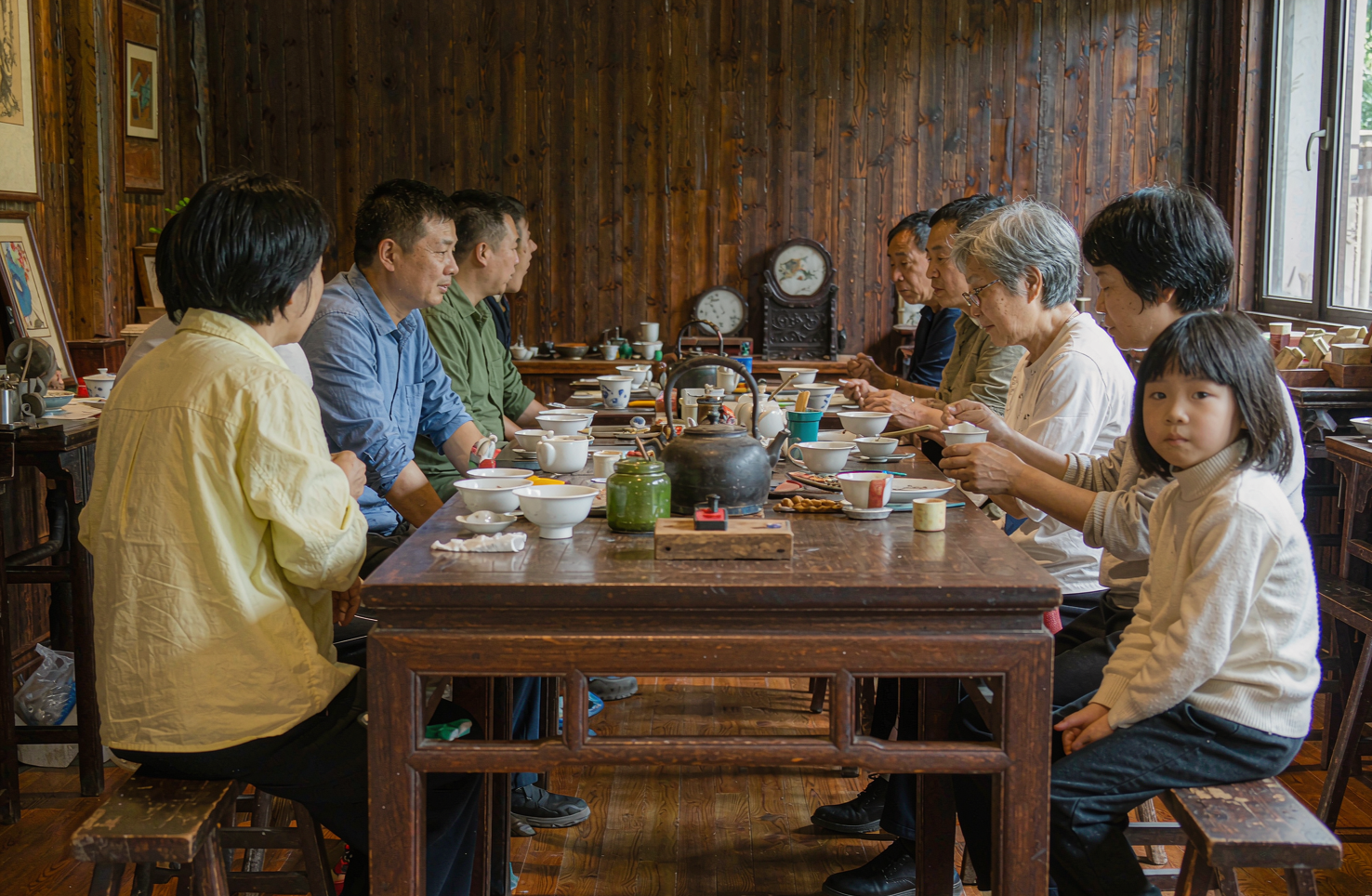
我们习惯按功能给空间分类:吃饭的、购物的、办公的。但有一种很难归类——它在城市的闹处,不催你走,也不急着让你买单。关键在于,当"慢"被认真设计出来,它本身就可以是一种产品。
韵和鸣 · 2026/10/9 · 56 阅读
机器开始学手艺:是给匠人搭把手,还是来接班
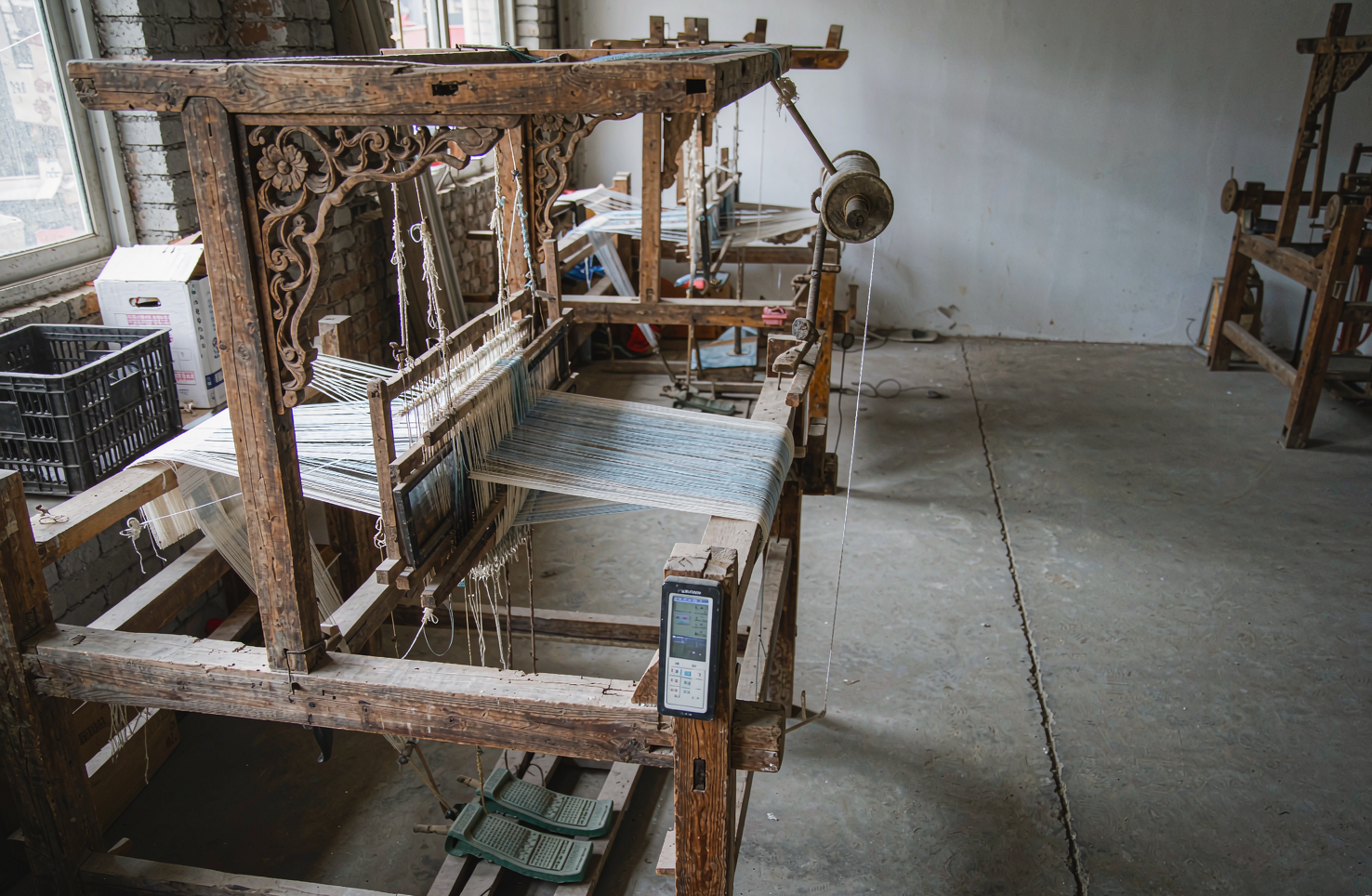
一段流传很广的画面里,一台机械臂正跟着非遗传承人"学艺"——学劈丝、捻线、穿针。看的人分成两拨:一拨说技术帮上了忙,一拨说来抢饭碗了。同一件事读出两种意思,关键在于用什么尺度去量。
韵和鸣 · 2026/10/9 · 56 阅读
年轻人不愿学老手艺,该怪年轻人,还是怪这门手艺?
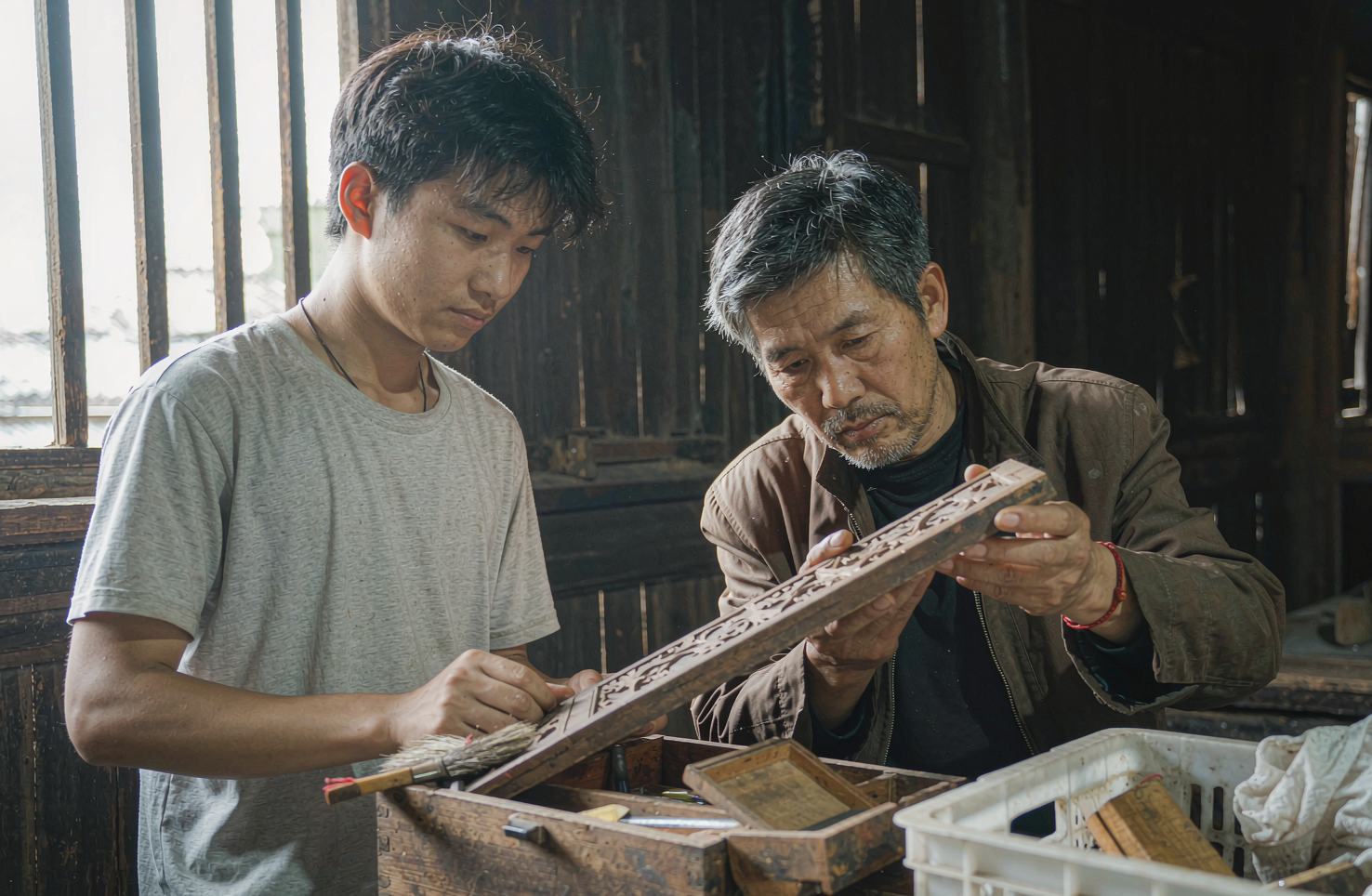
非遗传承里被讨论得最多的一句话是"后继乏人"。这句话往下追一层,就分成两条路:一条通向年轻人,说他们耐不住、看不上;一条通向他们面对的那门手艺,说它没能给出一条能活下去的路。这两条路,最近又吵起来了。
韵和鸣 · 2026/10/8 · 55 阅读