AI 辅助创作的非遗作品,版权该算谁的
韵和鸣 · 韵和鸣公众号 · 2026/10/31 12:00:00 · 8 阅读
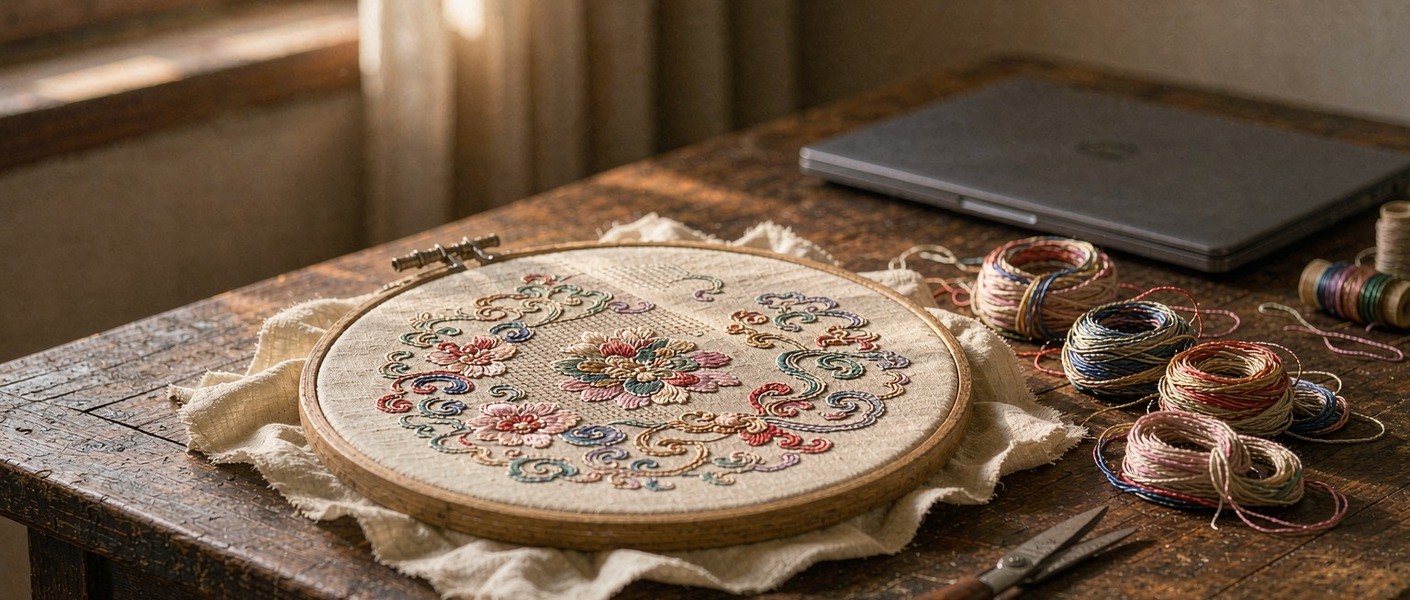
据封面新闻 2026 年 10 月 23 日报道,2026 中华文化天府论坛于 10 月 30 日至 31 日在成都启幕,其中一场沙龙讨论的是怎么用数字技术做非遗的保护与传承。报道提到的问题是:随着生成式技术普及,蜀锦、蜀绣、漆艺等传统纹样常被随意抓取、二次商用,出现权属模糊、技艺滥用、传承人权益受损等现象。工具的门已经推开,规矩还在半路上。
▍一、问题出在哪:三种贡献叠在一张图上
一件所谓的"AI 非遗作品",通常叠着三种不同性质的东西。头一种是世代积累下来的公共纹样:它不是某个人发明的,也很难说清楚是谁的。第二种是特定匠人这一版的构图、配色与针法安排,这是个人劳动。第三种是操作者在提示词里做的取舍。三种东西性质不同,最后却挤在同一张图上,权属自然纠缠不清。
据上述报道,这场沙龙由中国艺术学理论学会会长彭吉象担任学术主持,汇聚浙江大学、上海交通大学、四川大学等十余所高校专家,圆桌对话聚焦区块链版权存证与人机协同创作的权益划分。技术界已经在讨论"能不能固定下来",而不是"要不要讨论"。
▍二、一方立场:权益该向匠人这一侧倾斜
支持这一边的理由并不复杂。纹样虽然世代流传,但今天能被看见的具体版本,是某位师傅几十年练出来的手做出来的;他能把这个纹样做到这个分寸,是花了时间的。若别人的模型免费拿走它去批量生产,而且标价比原作还便宜,损伤的是那些还在用手工做活的人。
有报道提到传承人权益受损现象,正是指这种情况。由此引出的建议通常有两条:一是先把权属登记做起来(也就是所谓"存证"),二是二次商用必须标明来源并给匠人分成。制度若长期缺位,结局不是没有人使用这些纹样,而是没有人愿意继续把它们做下去。
▍三、另一方立场:过度确权也会伤到传承本身
反对的一面有着同样合理的担心。民间工艺从来都是在模仿、借用、改样中长大的,纹样在流动里才有生命力;如果每一个传统纹样都要经过许可才能使用,学习成本会把年轻人挡在门外。
更棘手的是认定。基层手艺人往往缺少登记的意识和能力,真正有能力去登记的,常常是使用方而非创造方。保护工具如果先被会用工具的人握住,就有可能出现一种尴尬:拿走的动作被合法化,做出来的那个人反而没有凭据。这一条过去在其他领域已经发生过。
▍四、不下判词:先把三件事分开
这两边的说法都对,冲突点其实是它们想保护的不是同一件东西——一边要保护的是人,另一边要保护的是文化流动性。把这两件事混在一起来谈,就永远谈不出结果。
眼下可以先做三件彼此不冲突的事:把"世代流传的公共纹样"与"某位匠人这一版的具体表达"分开登记;把"学着用"与"拿去卖"分开设许可;把"写明出处"当作起步就该做的事,而不是谈判的筹码。
▍问答
问 | AI 参与创作的非遗作品,到底受不受保护
答 | 目前没有统一结论,通常按个案来判断。可以确定的有两层:世代流传下来的公共纹样不归哪一个人所有,而某位匠人这一版的构图、配色与做工出自他本人,属于他的劳动。把这两层分开谈,比笼统追问"机器画的东西有没有著作权"更容易得到答案;具体权属与登记方式,以主管部门的规定为准。
问 | 机器已经能把纹样做得很像,韵和鸣在选品上怎么对待这件事
答 | 买的是谁的手,就把名字署给谁。韵和鸣的器物都与非遗老师联手署名,匠人的姓名与手艺本身构成作品的一部分;严选那条线也从不松口——凡是生产线上出来的东西,价钱再低、模样再像,也不收。机器可以用在教学、打样与配件环节,但"谁做的、哪几步由手工完成"必须写明白。
▍说在最后
支持右边还是左边?如果你做过设计、写过字、拍过照——你的东西被别人的模型用过吗?留言说说你的态度。
📩 非遗项目 | 匠人举荐 | 跨境出海 | 线下联营
欢迎留言或后台联系,我们与匠人同行。
—— 韵和鸣 · 与匠人同行
〖 辩 〗
English
Where the Problem Lies: Three Contributions Stacked on One Image
A so-called AI heritage work usually stacks three things of different natures. The first is the accumulated public pattern: nobody invented it and it is hard to say whose it is. The second is this particular maker's arrangement of composition, colour and stitch, which is personal labour. The third is the choices made in prompts by whoever runs the tool. Three different natures end up crowded onto one image, and ownership gets tangled accordingly.
According to the report, the salon was chaired by Peng Jixiang, president of the Chinese Society of Art Theory, gathering experts from more than ten universities including Zhejiang, Shanghai Jiao Tong and Sichuan, with round-table discussion on blockchain evidence of copyright and the division of rights in human-machine co-creation. The technical world is already asking whether this can be fixed, not whether it should be discussed.
One Side: Rights Should Tip Toward the Maker
The supporting argument is not complicated. A pattern may come down through generations, but the specific version we can see today was made by a master's hands after decades of practice; reaching this measure took time. If someone else's model takes it free for batch production and sells below the original, the damage falls on those still working by hand.
Reports of harm to bearers' interests refer to exactly this. Two proposals follow: register ownership first, the so-called evidence deposit, and require attribution plus a share for the maker in any secondary commercial use. If the system stays absent, the outcome is not that nobody uses the patterns but that nobody wants to keep making them.
The Other Side: Over-Protecting Can Wound Transmission Itself
The opposing side worries with equal reason. Folk craft has always grown through imitation, borrowing and variation, and patterns live only while they circulate; if every traditional pattern needs permission before use, the cost of learning will keep young people outside the door.
Recognition is harder still. Makers at the grass roots often lack the awareness or the means to register, while those with the means are often the users rather than the creators. If the protective tool is first taken up by those who can use it, an awkward result follows: the taking becomes lawful while the maker holds no proof. That has happened before in other fields.
Both sides are right; the conflict is that they are protecting different things, one the person and the other the circulation of culture. Merging the two into one argument means it never resolves.
There may be three things that need not conflict: register the public pattern separately from this particular expression of it; license learning use separately from commercial use; and make attribution the floor rather than the ceiling. How shares are split and whose originality counts can be left to the system to answer slowly.
Is an AI-assisted heritage work actually protected?
There is no unified answer yet and each case is judged on its facts. Two things can be said: a public pattern handed down for generations belongs to no individual, while this maker's composition, palette and execution are his own labour. Separating the two reaches an answer more easily than asking in general whether machine-made images carry copyright; specific ownership follows the rules of the competent authorities.
Machines already imitate patterns convincingly: how does YUNHEMING treat this when selecting?
Whose hands made it is whose name goes on it. Every YUNHEMING object carries the master's name alongside the brand, since the maker's name and skill are part of the work itself; selection never relaxes either, taking nothing off a production line however low the price or close the look. Machines may serve teaching, sampling and fittings, but who made it and which steps were done by hand must be stated plainly.
Which side are you on? If you design, write or photograph, has your work been used by someone's model? Leave a comment and tell us where you stand.
ICH Projects · Artisan Referrals · Global Distribution · Salon Partnerships
你可能还感兴趣
AI 生成的"非遗纹样",算不算抄袭
喂一批图给模型,几秒钟就能出一张"苗绣风"的纹样。有人觉得这是把传统纹样重新用起来,有人认为这是把别人一辈子的手艺免费拿走了。问题不好回答,说到底,真正难定的不是"像不像",而是数据从哪来、收益到哪去。今天我们不做判断,只把两边的理由摆出来。
韵和鸣 · 2026/10/24 · 56 阅读
机器开始学手艺:是给匠人搭把手,还是来接班
一段流传很广的画面里,一台机械臂正跟着非遗传承人"学艺"——学劈丝、捻线、穿针。看的人分成两拨:一拨说技术帮上了忙,一拨说来抢饭碗了。同一件事读出两种意思,关键在于用什么尺度去量。
韵和鸣 · 2026/10/9 · 55 阅读
年轻人不愿学老手艺,该怪年轻人,还是怪这门手艺?
非遗传承里被讨论得最多的一句话是"后继乏人"。这句话往下追一层,就分成两条路:一条通向年轻人,说他们耐不住、看不上;一条通向他们面对的那门手艺,说它没能给出一条能活下去的路。这两条路,最近又吵起来了。
韵和鸣 · 2026/10/8 · 53 阅读
非遗创新只剩跨界联名和文创,是真突破还是路径依赖?
长假刚过,一场区域性非遗活动发布的"创新案例"名单在网上引来讨论:入选案例的路数出奇一致——不是和游戏影视做跨界,就是把老手艺搬进沉浸式演出,再就是开发一轮文创。有人叫好,也有人摇头:年年喊创新,怎么总围着老三样转?是突破,还是路径依赖?两边的话都摆出来。
韵和鸣 · 2026/10/13 · 43 阅读
大牌用非遗元素做联名:致敬,还是搬运?
非遗联名的争议不只在设计好不好看,更在是否说明技艺来处、尊重原意、让匠人或工坊署名并受益。文章呈现传播与订单机会、符号搬用风险两种观点,并提供判断合作是否真诚的具体观察点。
韵和鸣 · 2026/10/10 · 41 阅读
漆器为什么能埋八千年不坏
在博物馆做漆器研究与修复的研究员老周,桌上常年摆着两样东西:一段出土的漆皮残片,一只新做不久的平遥推光漆盘。他说这两样东西隔着八千年,却是同一种材料。这次对话,我们从"漆器为什么埋几千年不坏"聊起,聊到最后,其实是手艺对材料的理解问题。
韵和鸣 · 2026/10/14 · 64 阅读