一只漆盒为什么要在阴干房里待上百天
韵和鸣 · 韵和鸣公众号 · 2026/10/30 12:00:00 · 4 阅读
聊起推光漆器,最容易听到的两个评价是"真好看"和"太慢了"。前一句是夸,后一句往往带着疑问:不就是刷几层漆吗,为什么要等那么久?我们把这个问题原样交给一位做漆盒的老师,他给出的答案不复杂,却把整门手艺的脾气说透了——慢的不是人,是材料。
▍一、头一个问题:为什么是阴干,不是烘干
老师的回答从一句大白话开始:大漆是"活"的。生漆要在一定的温度与湿度里完成固化,太干的地方它干不了,太热的地方表面先结膜、里面还是软的。所谓阴干房,做的就是一件事——把温度和湿度稳住,让漆一层一层地"长"起来。
这与刷油漆是两回事。油漆靠溶剂挥发变干,通风、加热都能加速;大漆的成膜是另一套机理,催它,它就用开裂、起皱、失光来回敬你。这一步没有捷径,只有条件。
《平遥推光漆器髹饰技艺保护条例》(晋中市人民代表大会常务委员会,2023 年)第二条将这门技艺界定为:以生漆、桐油、矿物质颜料为基本原料,采用裱布、上漆、打磨、推光、擦漆等髹漆工序,运用描金彩绘、堆鼓罩漆、骨石镶嵌、擦色等装饰技法的传统手工技艺。
▍二、第二个问题:到底要进多少次房
老师让我们先数工序:木胎处理之后要裱布,裱布要干;刮灰,每一道灰要干;然后才是上漆,一遍漆一层膜,每一遍都要干透、打磨、再上下一遍。粗算下来,一只盒子进阴干房的次数是几十次,不是几次。
木架上一排排待干的漆盒,盒盖半开,室内光线暗而均匀
每一次待多久?短则一昼夜,长则数日,视天气、漆层厚薄与漆本身的性子而定。把这些天数加起来,"上百天"就不是一个修辞,而是一笔实账。老师补了一句:这还不包括返工。某一道出了问题,前面进房的那些天一并作废。
▍三、第三个问题:这些天里,老师在做什么
很多人以为等待是空档。老师说不是,等待期是他最忙的时候之一:要准备下一道的材料,要检查上一道留下的问题,要为不同盒子安排进出房的次序——阴干房的位置有限,哪只先进、哪只后出,排错了整批都要拖。
这句话里藏着一个常被忽略的事实:在漆器这门手艺里,"等"不是不做,而是一种工作方式。会等的人,能把几十只盒子的进度错开,让手上始终有活;不会等的人,要么干坐着,要么急着出房,把问题留到推光那一步才暴露。
▍四、"慢"的解释权该在谁手里
聊到交付,老师的态度很实在:客人要得急,他能理解,但他不会为了让客人满意而压缩工序。理由是账算不过来——省下的十天,可能换来一件半年后就失光的盒子,而失光的东西是回不了头的。
一只方形漆盒摊在布上,盒口内侧能看到细密的漆层断面与打磨留下的哑光
这就牵出一个行业里长期别扭的问题:工期与价格,究竟该由谁定?如果由不懂工序的人定,慢就会被视为效率低下;如果由做活的人定,就得把"为什么慢"讲清楚。老师说他愿意讲——讲一次,客人自己会算账。
▍五、慢换来的三样东西
他把慢的价值归成三样。头一样是质量:漆层之间结合得更实在,器物的寿命更长。第二样是心态:手上不慌,线条就不会浮。第三样是价格——一件东西值多少钱,得先说清它占用了多少天。
这三样里,前两样是手艺内部的,第三样是手艺与外部世界的接口。把第三样讲明白,慢就不再是一个需要道歉的缺点,而是一项可以标价的投入。
▍问答
问 | 大漆为什么不能用烘干代替阴干
答 | 因为大漆的成膜机理与油漆不同。生漆要在一定的温度与湿度条件下完成固化,环境太干它不干,太热则表面先结膜、内部仍软,容易开裂、起皱、失光。阴干房的作用是把温湿度稳住,让漆层一层层长起来。
问 | 一件漆器从木胎到出厂大概要多久
答 | 视器型与工艺而定,通常以月计。一只漆盒要经过裱布、刮灰、上漆等多道工序,几乎每道都要进阴干房,短则一昼夜、长则数日,累计常达上百天;若某道工序返工,此前的时间一并作废。具体工期以匠人实际排产为准。
问 | 匠人不擅长卖货,韵和鸣能替他们做什么
答 | 把"卖"之外的事接过来。拍产品、拍工序、做访谈、写内容,这些匠人自己做不了也不该自己做;渠道与出海的机会也由品牌去对接。韵和鸣的定位是"非遗经纪人"——做事的出发点是帮人,不是压价。找人这件事本身也费工夫,团队多数时间都在各地跑。
问 | 工期这么长,定制漆器一般要等多久
答 | 以匠人排产为准,通常按月算。漆器的工序几乎每一步都要等材料状态到位,急不得;下单时把用途与期望时间讲清楚,匠人才能安排进出房的顺序。韵和鸣的做法是如实告知等待时间,不为了接单而压缩工序。
▍说在最后
一门手艺的脾气,藏在它最不肯让步的那个环节里。推光漆器不肯让步的是时间,而时间恰好是这个时代最贵的那样东西。
📩 非遗项目 | 匠人举荐 | 跨境出海 | 线下联营
欢迎留言或后台联系,我们与匠人同行。
—— 韵和鸣 · 与匠人同行
〖 匠 〗
English
The First Question: Why Dry in the Shade, Not in an Oven
He began with a plain sentence: raw lacquer is alive. It cures under a certain temperature and humidity; in too dry a place it will not cure at all, and in too hot a place a film forms on the surface while the inside stays soft. What the drying room does is one thing only: hold temperature and humidity steady so the lacquer can "grow" layer by layer.
Article two of the Regulations of Pingyao on Protecting the Polished Lacquerware Decoration Technique (Jinzhong Municipal People's Congress Standing Committee, 2023) defines the technique as a traditional handcraft using raw lacquer, tung oil and mineral pigments as basic materials, employing the steps of cloth backing, lacquering, sanding, hand-polishing and wiping, and applying decorative techniques of gold tracing, raised relief, bone and stone inlay and wiped colour.
This is not the same as painting with varnish. Varnish dries as its solvent evaporates, and ventilation or heat speeds it up; lacquer forms its film by another mechanism, and if you hurry it, it repays you with cracking, wrinkling and loss of gloss. There is no shortcut here, only conditions.
The Second Question: How Many Times Does It Go In?
He asked us to count the steps first: after the wood body is prepared it is backed with cloth, and the cloth must dry; then the ash layers are applied, and each layer must dry; only then does lacquering begin, one coat at a time, each coat dried through, sanded, then followed by the next. Roughly counted, a box enters the drying room dozens of times, not a few.
Rows of lacquer boxes waiting on a wooden rack, lids half open, the room's light dim and even
How long each time? A day and a night at the shortest, several days at the longest, depending on the weather, the thickness of the coat and the temperament of the lacquer itself. Add those days up and "a hundred days" stops being a figure of speech and becomes an actual account. He added one more thing: this does not include rework. If one step goes wrong, the days already spent in the room are forfeit together.
The Third Question: What Does the Maker Do During Those Days?
Many assume waiting is dead time. He said it is not; the waiting period is among his busiest. He prepares materials for the next step, inspects what the last one left behind, and sequences which boxes go in and come out, since space in the drying room is limited: which goes in first and which comes out later, and if the order is wrong the whole batch is held up.
Hidden in that sentence is a fact often overlooked: in this craft, waiting is not idleness but a way of working. Those who know how to wait stagger the progress of dozens of boxes so there is always work in hand; those who do not either sit idle or rush pieces out of the room, leaving the trouble to surface only at the polishing stage.
Who Should Hold the Right to Explain "Slow"
On delivery he was matter-of-fact: he understands when a client is in a hurry, but he will not compress steps to satisfy one. The reason is arithmetic: the ten days saved may buy a box that loses its gloss in half a year, and a piece that has lost its gloss cannot be brought back.
A square lacquer box rests on cloth, its inner rim showing the fine cross-section of lacquer layers and the matte left by sanding
This raises a question the trade has long found awkward: who should set the schedule and the price? If someone who does not know the steps sets them, slowness is read as inefficiency; if the person doing the work sets them, he must explain why it is slow. He said he is willing to explain: explain once and the client does the arithmetic himself.
He summed the value of slowness as three things. The first is quality: the layers bond more soundly and the object lasts longer. The second is state of mind: if the hand is not hurried, the lines do not float. The third is price: what a thing is worth depends first on saying how many days it occupied.
Of these three, the first two are internal to the craft and the third is its interface with the outside world. Once the third is made clear, slowness stops being a fault one must apologise for and becomes an investment that can be priced.
Why can raw lacquer not be dried by heating instead of in the shade?
Because raw lacquer forms its film differently from varnish. It cures under particular conditions of temperature and humidity: if the air is too dry it will not cure, and if it is too hot a skin forms on the surface while the inside stays soft, leading to cracking, wrinkling and loss of gloss. The drying room holds temperature and humidity steady so the layers can build up one by one.
Roughly how long does a piece of lacquerware take from wood body to finished object?
It depends on the form and the process, and is usually counted in months. A lacquer box passes through backing with cloth, applying ash, lacquering and other steps, almost each of which requires time in the drying room, from a day and a night to several days, often adding up to more than a hundred days. If one step is reworked, the time already spent is forfeit. Actual schedules follow the maker's own production plan.
Makers are not good at selling; what can YUNHEMING do for them?
It takes over everything except the selling. Filming products and processes, doing interviews, writing content: these are things a maker cannot and should not do himself; channels and export opportunities are also handled by the brand. YUNHEMING's position is that of a heritage agent: the point of the work is to help, not to force prices down. Finding the people is itself labour, and the team spends most of its time travelling.
With such long lead times, how long does a custom lacquer piece usually take?
It follows the maker's production schedule and is usually counted in months. Almost every step in lacquerware waits on the condition of the material and cannot be hurried; state the intended use and the hoped-for date when ordering so the maker can arrange the sequence. YUNHEMING's practice is to state the waiting time honestly rather than compress steps to win an order.
The temperament of a craft hides in the link it refuses to give up. What polished lacquerware refuses to give up is time, and time happens to be the most expensive thing of this age.
ICH Projects · Artisan Referrals · Global Distribution · Salon Partnerships
你可能还感兴趣
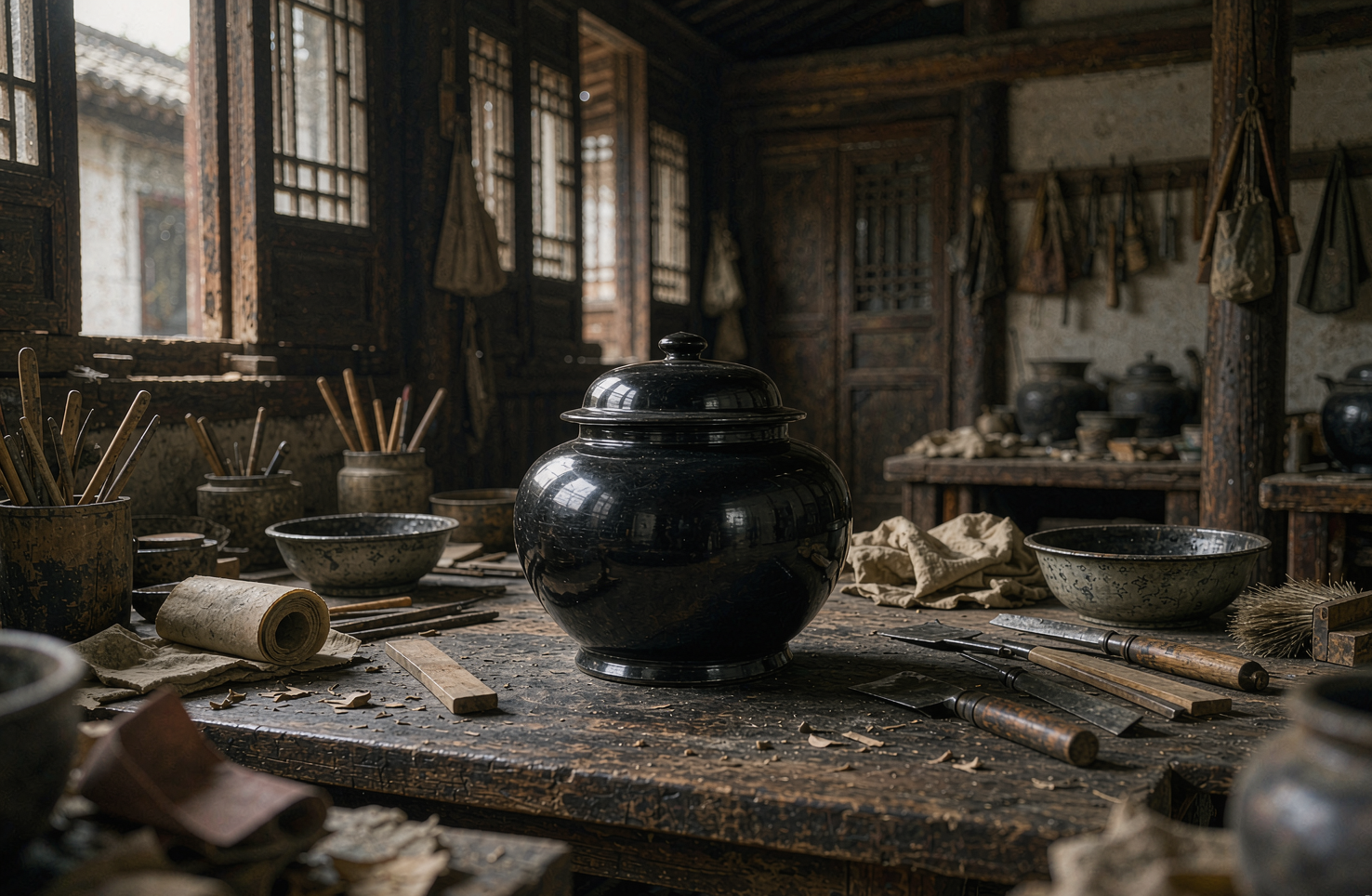
漆器为什么能埋八千年不坏
在博物馆做漆器研究与修复的研究员老周,桌上常年摆着两样东西:一段出土的漆皮残片,一只新做不久的平遥推光漆盘。他说这两样东西隔着八千年,却是同一种材料。这次对话,我们从"漆器为什么埋几千年不坏"聊起,聊到最后,其实是手艺对材料的理解问题。
韵和鸣 · 2026/10/14 · 64 阅读
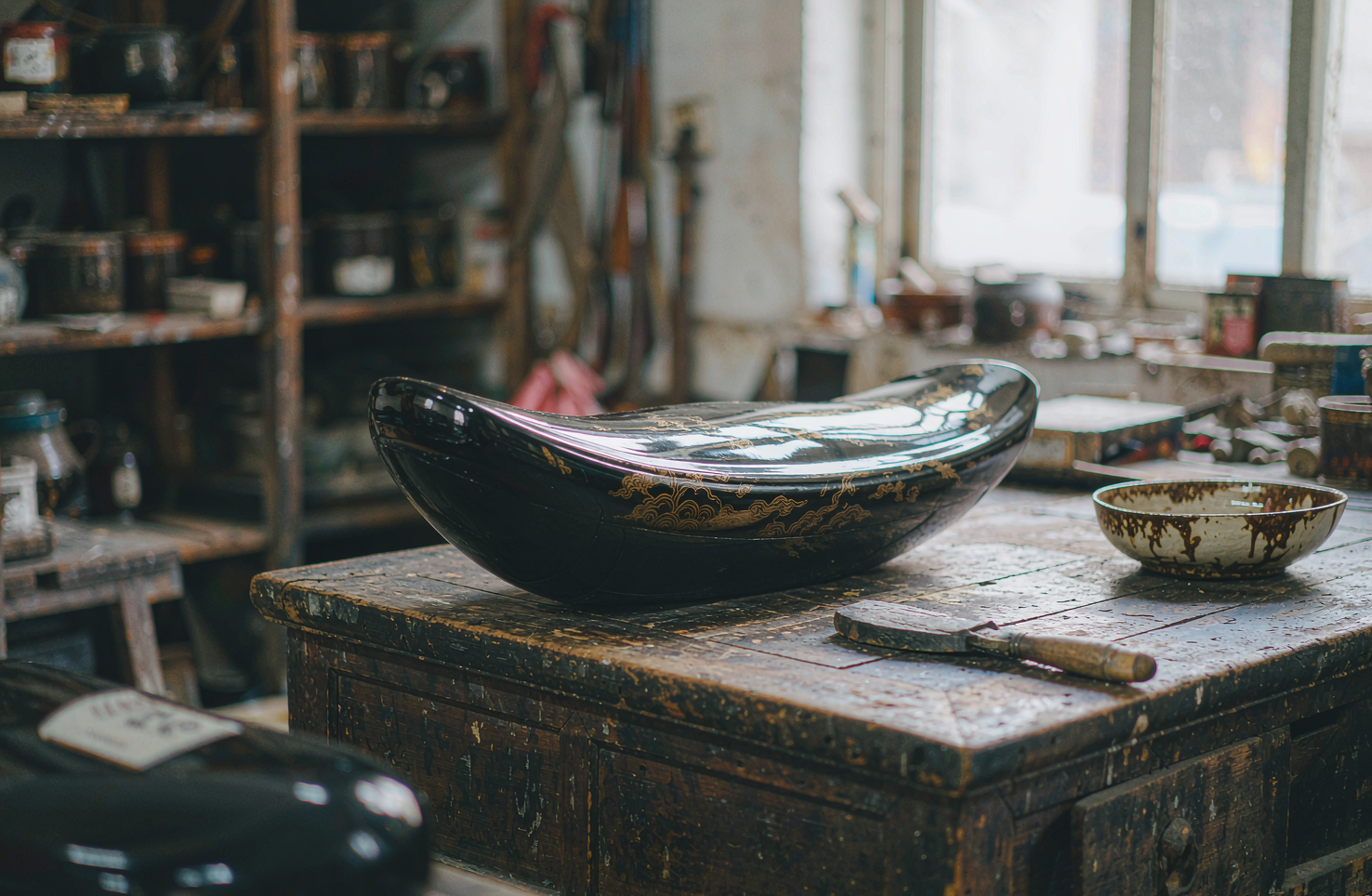
十六岁学艺,他如今想让漆器走进年轻人的家
在平遥,学漆艺的人正在换代。老匠人把五十年的功夫交给徒弟,年轻教师把漆带进课堂。一门千年手艺要传下去,卡住的往往不是技法。
韵和鸣 · 2026/10/2 · 48 阅读
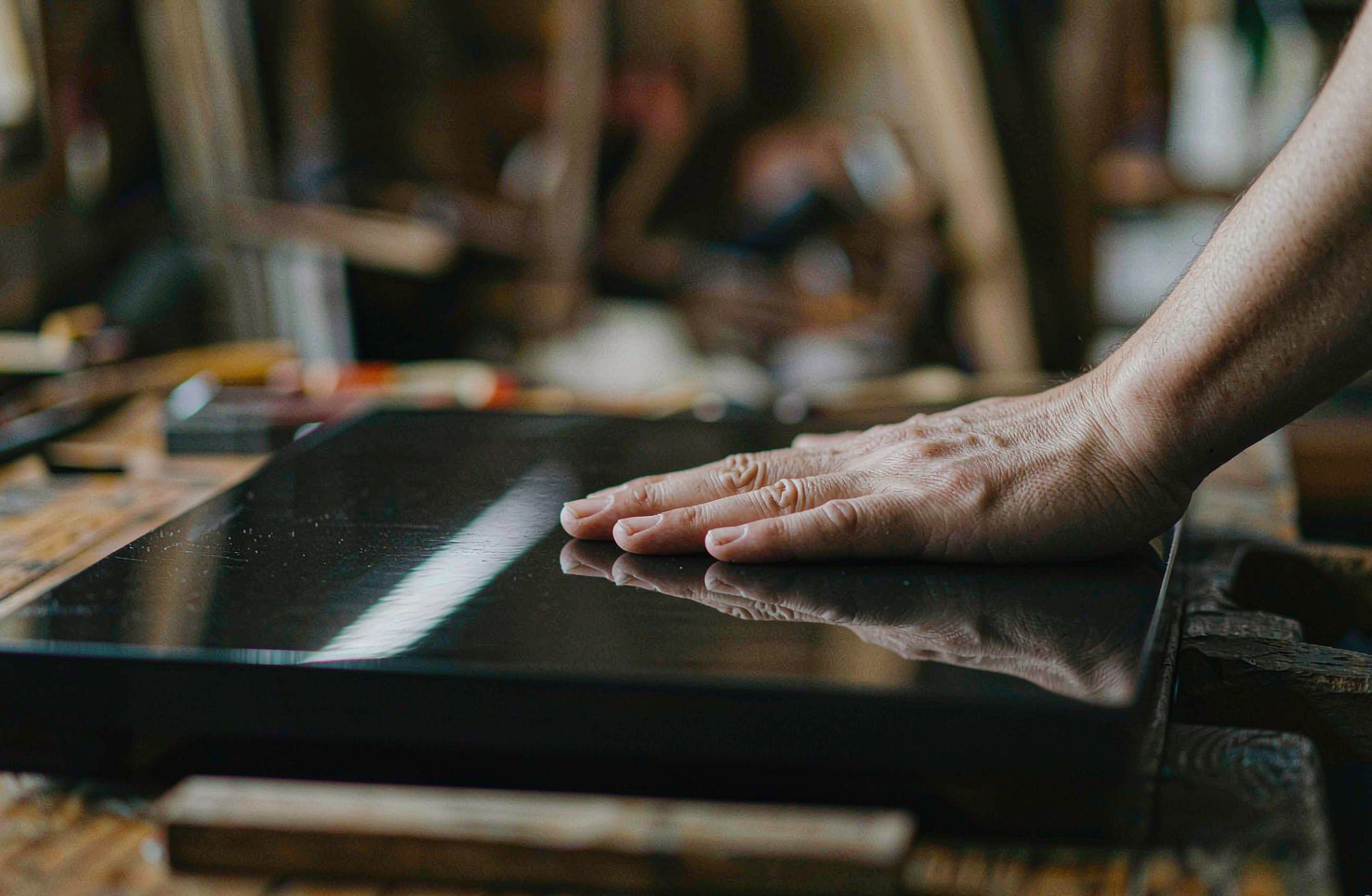
推光:一只手与时间的合谋
推光以大漆和此前多道髹磨工序为底,最后靠手掌的温度、力度与节奏推出温润光泽。文章同时写到师徒之间反复示范和重做,说明这道功夫既无法催快,也不能只靠口头讲解完成传递。
韵和鸣 · 2026/10/2 · 43 阅读
去贵州雷山,看一块银元如何变成一支银簪
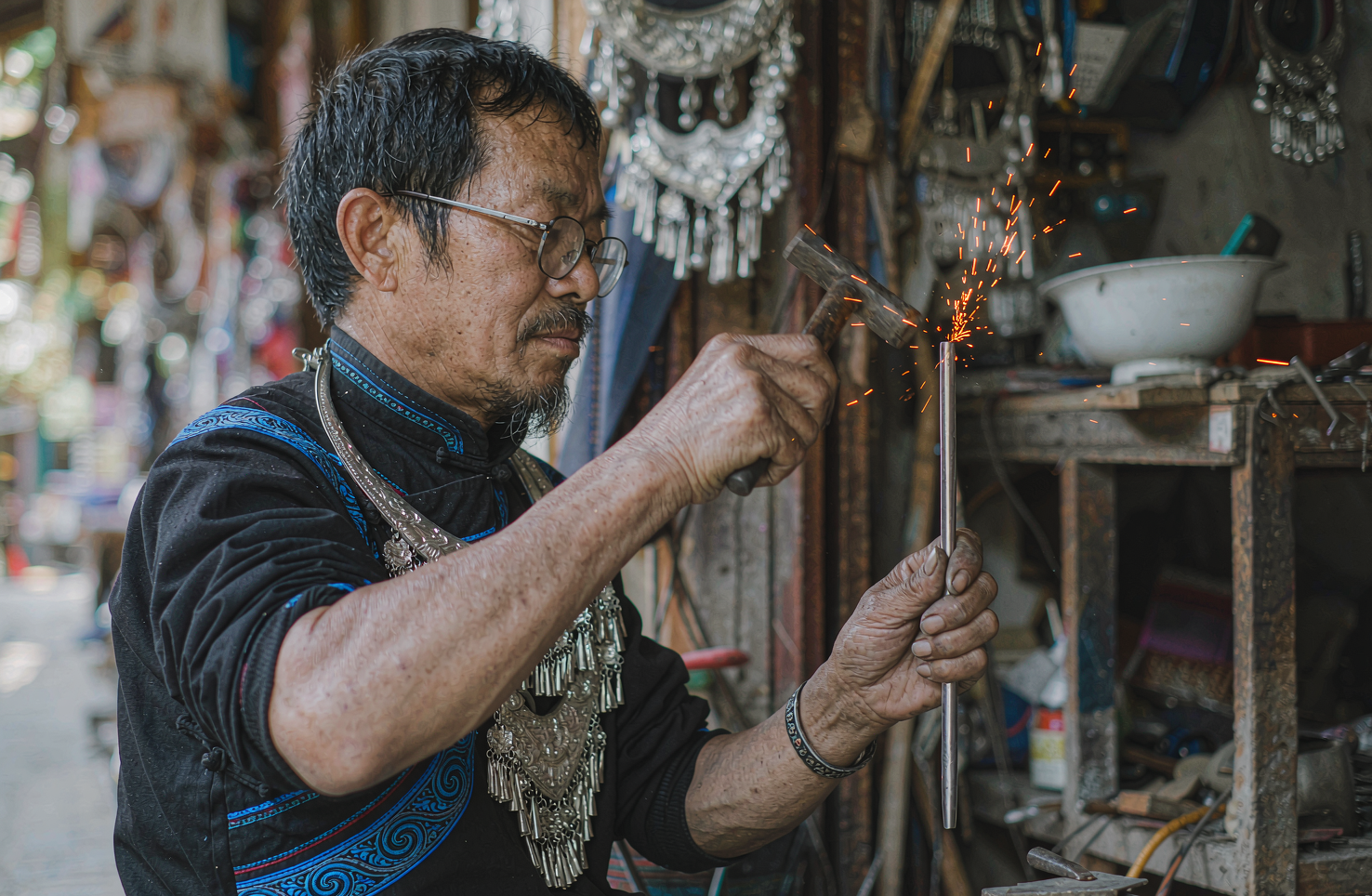
在黔东南的苗寨里,银不只是一种首饰材料。它曾经是可以随时熔掉、重新打制的"存款",也是节日里一个女人身上最亮的那部分。关键在于,当一块老银元被放进坩埚,它要经过多少双手、多少道火,才重新成为一件能戴出门的东西。
韵和鸣 · 2026/10/9 · 60 阅读
AI 生成的"非遗纹样",算不算抄袭
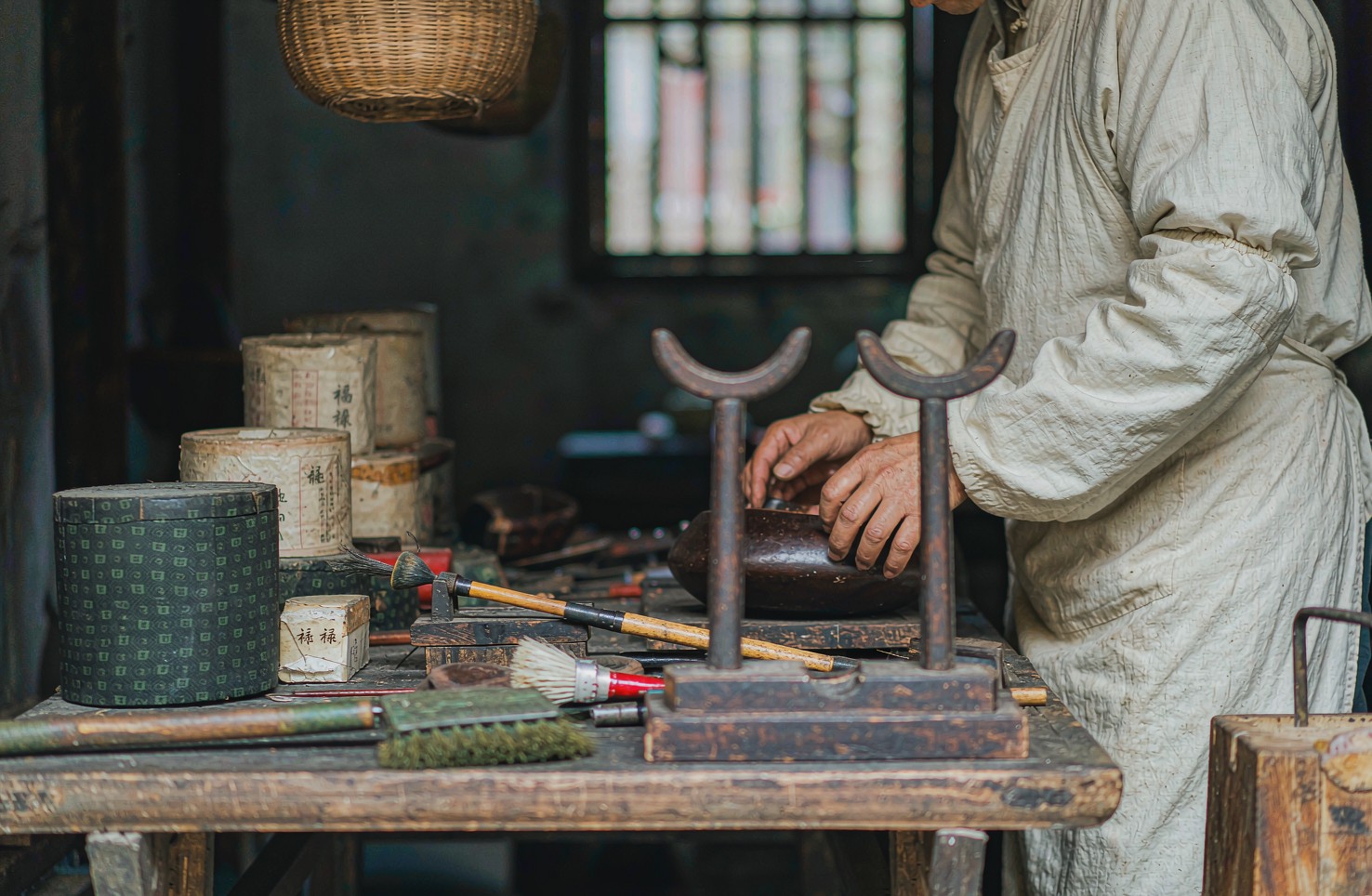
喂一批图给模型,几秒钟就能出一张"苗绣风"的纹样。有人觉得这是把传统纹样重新用起来,有人认为这是把别人一辈子的手艺免费拿走了。问题不好回答,说到底,真正难定的不是"像不像",而是数据从哪来、收益到哪去。今天我们不做判断,只把两边的理由摆出来。
韵和鸣 · 2026/10/24 · 56 阅读
机器开始学手艺:是给匠人搭把手,还是来接班
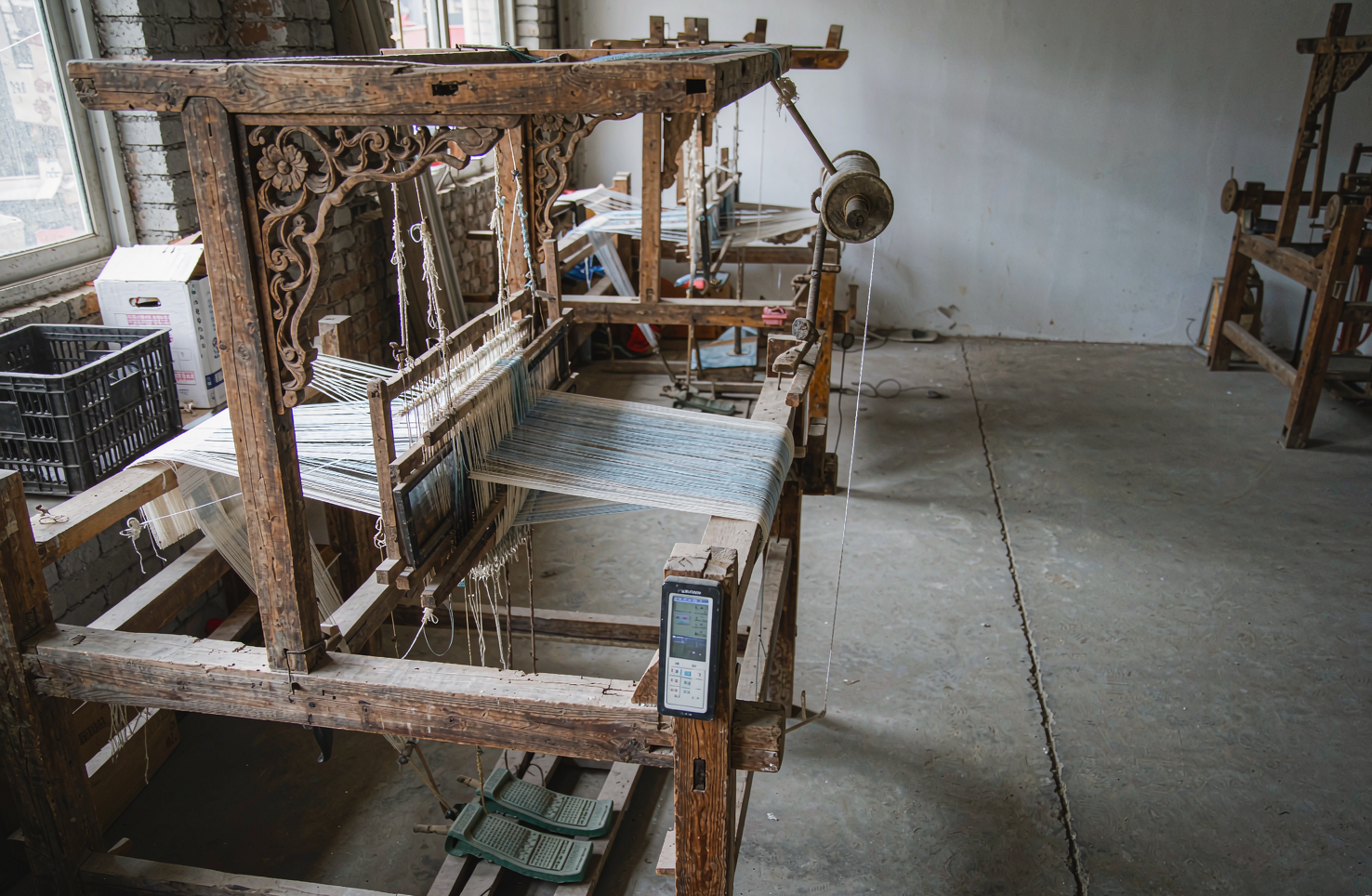
一段流传很广的画面里,一台机械臂正跟着非遗传承人"学艺"——学劈丝、捻线、穿针。看的人分成两拨:一拨说技术帮上了忙,一拨说来抢饭碗了。同一件事读出两种意思,关键在于用什么尺度去量。
韵和鸣 · 2026/10/9 · 55 阅读