从"看"到"做":老手艺正变成旅行里能带走的一件事
韵和鸣 · 韵和鸣公众号 · 2026/10/30 12:00:00 · 3 阅读
据央视网 2026 年 10 月 26 日报道,工业和信息化部、文化和旅游部等六部门联合发布《关于推动历史经典产业高质量发展的意见》,提出推动"历史经典+旅游"全链条生态。报道里有个说法很耐琢磨:各地正把千年手艺变成"可触摸、可创作、可带走"的消费新场景。三个动词挨在一起,讲的正是一场正在发生的变化——游客的角色从站在绳线外看,变成了坐下来上手做。这场变化的本质,是手艺从"被展示的对象"变成"被参
▍一、三个现场:手艺正在换成另一种打开方式
所谓"历史经典产业",指的是丝绸、茶叶、瓷器、酿造这样一类有长期历史积累、并形成稳定技艺与品牌的产业门类;据上述报道,《意见》点到的正是这几项。手艺一旦被放进这个框架,衡量它的就不只是展品价值,还有它能不能被今天的人接着用下去。
头一个现场在四川泸州合江县。据上述报道,当地依托百年酿造技艺,开放晒露广场与老作坊:游客可以参与手工选豆,借助显微镜观察酱曲里的发酵菌群,再淋油、打酱油。游客兰杰熠在报道里提到,一瓶传统手工酱油要经过 13 道工序、至少 3 年才能酿造出来,"和之前想的完全不一样"。
第二个现场在苏州。报道提到,2026 年苏州盘活丝绸工业遗产、完善丝绸数字化场景:游客可以到改造后开放的百年老丝厂观展、逛市集,体验缫丝、苏绣与非遗茧花制作,还能在丝绸纹样数字馆通过动态投影、AI 试衣镜感受宋锦的灵动美学。有学生受访时说,纹样动态化展开之后"一下子就看明白了"。
第三个现场在江西景德镇。据同一报道,景德镇今年申遗成功后串联古窑、陶阳里、中国陶瓷博物馆等点位推出世界遗产精品旅游线路;如今制瓷、画瓷也成为旅行新潮流——游客可以亲自拉坯、勾线上色,再由店家统一上釉烧制,半月左右成品便可邮寄到家。
一张长木案上摆着几只素坯碗与几支勾线笔,窗光斜落在未上釉的坯体上
▍二、"能带走"这三个字,分量不轻
为什么"可带走"比"可看见"重要?因为一趟旅行里,人真正留下的不是照片,而是一件自己参与过的东西。报道给出的德化案例可以说明这条链条有多长:福建德化白瓷历史悠久,已销往全球 190 多个国家和地区,素有"中国白"的美誉;当地依托四千五百多家陶瓷企业、老窑址、老厂房推出多条陶瓷工业旅游线路,游客可以现场感受"万物皆可瓷",体验陶瓷乐器演奏,学习瓷花捏塑技艺。据同一报道,目前德化县陶瓷产业集群规模达 760 亿元,年接待游客超 1400 万人次,旅游收入超 140 亿元。
这里有两层意思值得分开看。头一层是产业:游客带来的不只门票,还有一件件具体的器物订单,订单会顺着窑口、作坊、包装、物流一路分下去。第二层是认知:亲手拉一次坯,才知道"圆"不是天生的;亲手打一次酱油,才知道"三年"不是修辞。理解一旦发生,价格就不再只靠故事撑着。
▍三、热闹里也有三个真问题
热闹不等于顺遂。这场"体验化"至少有三道坎。
头一道是深度。十几分钟的体验能让人上手,却很难让人入门。报道里提到酱油要 13 道工序、3 年时间,而体验课能给出的通常只有其中一小段。把"做过一次"说成"学会一门",是对手艺的不诚实。
第二道是产能与工期。游客亲手做的器物要上釉、要烧、要等半个月才能寄到,这套流程对作坊来说是新增的排产压力,不是顺手加的一笔生意。工期一旦被催,最先被牺牲的往往是慢工序。
第三道是谁来教。真正在生产的师傅时间有限,讲解若交给不懂工序的人,讲出来的就只剩传说。体验能不能成立,最后要看站在台前的那个人是不是还在一线做活。
陶轮旁放着一小桶清水与一把木制刮片,轮盘边缘留着湿泥的痕迹
▍四、对手艺人来说,这股风意味着什么
好处是看得见的:手艺被更多人真正看见,一部分人从游客变成学徒,订单也多了一条来自现场的通道。风险同样看得见:当"体验"成了主要收入,器物反而可能沦为体验的附属品,手艺的重心从"做好一件"漂移到"讲好一段"。
分寸其实不复杂。体验负责把人带进门,器物负责把人留下来;前者是入口,后者才是本体。把手艺做成一段可参与的经历,与把手艺做成一件站得住的器物,两者并不冲突,怕的是只有前者。
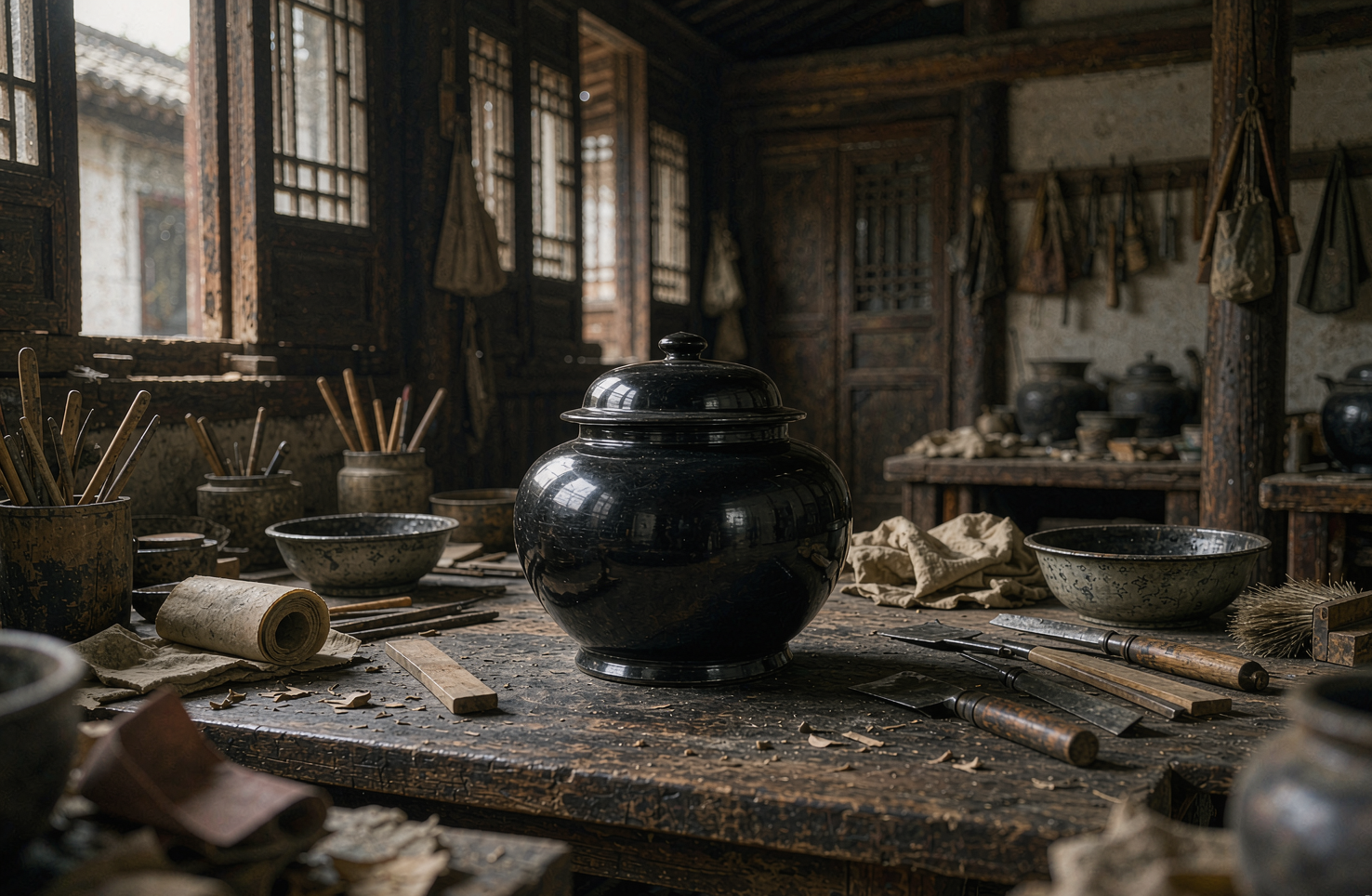
这里头有一层容易被略过的差别:有些门类的工序天生不适合被拆成体验。山西平遥的推光漆器要经过髹涂、阴干、打磨、推光等多道反复的工序,一只盒子在阴干房里进出几十次,这种节奏不是为游客安排的。对这类手艺来说,与其让人上手摸一把生漆,不如把"为什么必须这么慢"讲透——理解也可以不通过动手发生。
本文所引数据均出自央视网 2026 年 10 月 26 日《千年手艺变身可触摸、可创作、可带走消费新场景 释放文旅发展新动能》及同源报道,未作延伸推算。
▍问答
问 | 非遗体验课和真正的手艺学习差在哪
答 | 差在工序的完整度与时间的长度。体验课通常只取一道工序里的一小段,让人上手;真正的学艺要走完整条工序链,还要反复练到手上有分寸。体验是入口,不是终点;把"做过一次"当成"学会一门",是对手艺的误读。
问 | 游客亲手做的陶瓷为什么要等半个月才能寄到
答 | 因为工序省不掉。据央视网 2026-10-26 报道,景德镇的体验流程是游客拉坯、勾线上色后,由店家统一上釉烧制,半月左右成品才能邮寄到家。阴干、素烧、上釉、釉烧每一步都要按材料的性子来,催不得。
问 | 韵和鸣做的非遗出海,和一般外贸公司差在哪
答 | 差在东西是谁做的、故事讲不讲得清。一般外贸公司接单发货,韵和鸣要先确认匠人本人与核心工序手工完成,再把手艺译成对方听得懂的话:多语言直播、多国语言翻译、帮老师拍产品与工序视频。货与故事是两条腿,缺一条走不远。
▍说在最后
一门手艺最怕的不是被围观,是被简化成一次打卡。真正的门槛从来不在"能不能上手",而在"愿不愿再来一次"。
你有过哪次亲手做东西的经历,做完之后对这门手艺的看法变了?留言说说。
📩 非遗项目 | 匠人举荐 | 跨境出海 | 线下联营
欢迎留言或后台联系,我们与匠人同行。
—— 韵和鸣 · 与匠人同行
〖 热 〗
相关搜索 | RELATED SEARCHES
非遗 体验 课 值得学吗 · 景德镇 制瓷 体验 多久 寄到 · 德化 白瓷 产业 规模 · 历史经典产业 高质量发展 意见 · 非遗 文旅 融合 新场景
English
Three Scenes: Craft Is Being Opened a Different Way
"Historic classic industries" refers to branches such as silk, tea, porcelain and brewing with long accumulated history and with settled skills and brands; the report names precisely these. Once a craft is placed in this frame, what measures it is no longer its value as an exhibit alone but whether people today can keep using it.
The first scene is in Hejiang county, Luzhou, Sichuan. According to the report, the locality draws on its century-old brewing skill and opens its sunning grounds and old workshops: visitors can take part in sorting beans by hand, observe the fermenting microbes in the koji under a microscope, then draw and bottle the sauce. A visitor quoted in the report said a bottle of traditionally handmade soy sauce takes thirteen steps and at least three years to make, which was "completely different" from what he had imagined.
The second is in Suzhou. The report notes that in 2026 Suzhou revived its silk industrial heritage and expanded digital scenarios: visitors can tour a century-old silk mill reopened after renovation, browse its market, and try reeling, Su embroidery and the heritage craft of cocoon flowers, or experience the fluid aesthetics of Song brocade in a silk pattern digital hall through dynamic projection and AI fitting mirrors. A student interviewed said that once the patterns unfolded dynamically, "you understand it at once."
The third is in Jingdezhen, Jiangxi. According to the same report, after Jingdezhen's successful inscription this year it linked ancient kilns, Taoyangli and the China Ceramics Museum into a world-heritage tourism route; making and painting porcelain has become a new travel fashion. Visitors throw the clay and paint the lines themselves, the shop applies glaze and fires the piece, and the finished object is mailed home in about half a month.
A long wooden bench holds several unglazed bowls and a few lining brushes, with window light falling across the bare clay bodies
Why does "can carry away" matter more than "can be seen"? Because what a traveller actually keeps from a trip is not photographs but an object he had a hand in. The Dehua case in the report shows how long this chain runs: Dehua white porcelain in Fujian has a long history and is sold in more than 190 countries and regions, long known as "China White"; drawing on more than 4,500 ceramic enterprises, old kiln sites and old factory buildings, the locality has launched several ceramic industrial tourism routes where visitors can see that "anything can be made of porcelain," try playing ceramic instruments and learn the craft of pinched porcelain flowers. According to the same report, Dehua county's ceramic industry cluster now reaches 76 billion yuan in scale, receives more than 14 million visitor trips a year and earns more than 14 billion yuan in tourism revenue.
Two things here deserve to be separated. The first is industrial: visitors bring not only ticket revenue but concrete orders for objects, and those orders flow on down through kilns, workshops, packing and logistics. The second is cognitive: throw a pot once and you learn that roundness is not given; draw sauce once and you learn that "three years" is not a figure of speech. Once understanding happens, price no longer rests on story alone.
Three Real Questions Behind the Excitement
Excitement is not the same as smooth going. This turn toward experience has at least three hurdles.
The first is depth. A dozen minutes lets a person try, but rarely lets a person begin. The report says the soy sauce takes thirteen steps and three years, while an experience session usually offers only a small stretch of that. To call "having done it once" "having learned the craft" is dishonest toward the skill.
The second is capacity and lead time. The object a visitor makes still needs glazing and firing, and waits half a month before it can be posted. For a workshop this is new scheduling pressure, not an extra order picked up in passing. When schedules are pushed, it is the slow steps that get sacrificed first.
The third is who teaches. Masters who are actually producing have limited time, and if explanation is handed to someone who does not know the steps, all that is left is legend. Whether an experience holds up depends in the end on whether the person at the front is still working at the bench.
Beside a potter's wheel sit a small bucket of water and a wooden rib, wet clay still marking the rim of the wheelhead
The benefits are visible: the craft is genuinely seen by more people, some visitors become apprentices, and orders gain a channel that begins on site. The risks are equally visible: when experience becomes the main income, the object may be reduced to a by-product of the experience, and the craft's centre of gravity drifts from making one thing well to telling one story well.
The proportion is not complicated. Experience brings people through the door; the object keeps them there. The former is the entrance, the latter the thing itself. Turning a craft into a participable experience and turning it into an object that stands on its own are not in conflict; what is to be feared is having only the former.
All figures cited here come from CCTV's report of 26 October 2026, "Thousand-Year-Old Crafts Become Consumption Scenes That Can Be Touched, Created and Carried Away," and reports from the same source; no extrapolation has been made.
What is the difference between a heritage experience session and really learning a craft?
The difference lies in how complete the steps are and how long the time runs. An experience session usually takes a short stretch of one step so that a person can try it; real learning walks the whole chain of steps and repeats them until the hands know the measure. Experience is the entrance, not the destination; taking "done once" for "learned" misreads the craft.
Why does a piece of porcelain a visitor makes take half a month to arrive?
Because the steps cannot be skipped. According to CCTV's report of 26 October 2026, in Jingdezhen the visitor throws and paints the piece, then the shop applies glaze and fires it, and the finished object is mailed home in about half a month. Drying, biscuit firing, glazing and glost firing each follow the temperament of the material, and none can be hurried.
How does YUNHEMING's heritage export differ from an ordinary trading company?
The difference is who made the object and whether its story can be told clearly. An ordinary trading company takes orders and ships; YUNHEMING first confirms the maker and that the core steps are done by hand, then translates the craft into terms the other side understands: multilingual livestreams, translation into several languages, filming products and process videos for the masters. Goods and story are two legs; without either one cannot walk far.
What a craft fears most is not being watched but being reduced to a check-in. The real threshold has never been whether one can try it, but whether one will come back for a second time.
Have you ever made something with your own hands and found your view of the craft changed afterwards? Leave a comment and tell us.
ICH Projects · Artisan Referrals · Global Distribution · Salon Partnerships
你可能还感兴趣
漆器为什么能埋八千年不坏
在博物馆做漆器研究与修复的研究员老周,桌上常年摆着两样东西:一段出土的漆皮残片,一只新做不久的平遥推光漆盘。他说这两样东西隔着八千年,却是同一种材料。这次对话,我们从"漆器为什么埋几千年不坏"聊起,聊到最后,其实是手艺对材料的理解问题。
韵和鸣 · 2026/10/14 · 64 阅读
去贵州雷山,看一块银元如何变成一支银簪
在黔东南的苗寨里,银不只是一种首饰材料。它曾经是可以随时熔掉、重新打制的"存款",也是节日里一个女人身上最亮的那部分。关键在于,当一块老银元被放进坩埚,它要经过多少双手、多少道火,才重新成为一件能戴出门的东西。
韵和鸣 · 2026/10/9 · 60 阅读
AI 生成的"非遗纹样",算不算抄袭
喂一批图给模型,几秒钟就能出一张"苗绣风"的纹样。有人觉得这是把传统纹样重新用起来,有人认为这是把别人一辈子的手艺免费拿走了。问题不好回答,说到底,真正难定的不是"像不像",而是数据从哪来、收益到哪去。今天我们不做判断,只把两边的理由摆出来。
韵和鸣 · 2026/10/24 · 56 阅读
机器开始学手艺:是给匠人搭把手,还是来接班
一段流传很广的画面里,一台机械臂正跟着非遗传承人"学艺"——学劈丝、捻线、穿针。看的人分成两拨:一拨说技术帮上了忙,一拨说来抢饭碗了。同一件事读出两种意思,关键在于用什么尺度去量。
韵和鸣 · 2026/10/9 · 55 阅读
把"慢"做成一种体验:一间非遗会客厅的想法
我们习惯按功能给空间分类:吃饭的、购物的、办公的。但有一种很难归类——它在城市的闹处,不催你走,也不急着让你买单。关键在于,当"慢"被认真设计出来,它本身就可以是一种产品。
韵和鸣 · 2026/10/9 · 54 阅读
年轻人不愿学老手艺,该怪年轻人,还是怪这门手艺?
非遗传承里被讨论得最多的一句话是"后继乏人"。这句话往下追一层,就分成两条路:一条通向年轻人,说他们耐不住、看不上;一条通向他们面对的那门手艺,说它没能给出一条能活下去的路。这两条路,最近又吵起来了。
韵和鸣 · 2026/10/8 · 53 阅读