在针、线、漆与银之间:那些做手艺的女性在守什么
韵和鸣 · 韵和鸣公众号 · 2026/10/28 12:00:00 · 3 阅读
跑工坊这些年,我们注意到一个反复出现的情形:绣绷前、漆案前、银砧前的身影里,女性占了相当大的比例,可对外介绍手艺时,站在话筒前的往往是别人。这不是一篇诉苦的文章。我们只想把她们手上真正在做的事,一件一件写清楚。本质在于,手艺的成色大半由这些不起眼的工序决定,而决定工序的那双手,往往没有被写下来。
▍一、针与线:把一根丝劈成十六股
绣活里最见功夫的,往往不是图案,而是准备。一根桑蚕丝在进入绣绷之前要被劈开,劈得越细,绣出来的过渡越柔。这道工序不进任何图录,因为它不产生图案,只决定图案能做到多细。
配色是另一重功夫。同一片叶子的向光面与背光面,颜色要分出层次,靠的是在同一块面积里换线换针。做这件事的人得同时记住几十种色号的位置,手上却不能停。我们在一旁看过半小时,记不住一半。
▍二、漆:手掌推出来的那层光
漆器的光不是涂上去的。髹涂之后要进阴干房,温度与湿度决定漆膜成败;干透之后再用掌心蘸油反复推磨,把表面的不平一点点推平。推光这一道,机器替代不了的部分在于力度的反馈:手上能感觉到哪里还差一点。
阴干房里层层架起的漆胎,室内光线很暗,只有门口一处亮
描线则是另一种耐心。金线要走得匀,起笔与收笔都在一个呼吸里完成。这道工序常交给手更稳的人做,而在多数漆坊里,手更稳的人多半是女性。
▍三、银:錾子落下之前的那半秒
银饰锻制里,錾刻是最见分寸的活。錾子落下去的位置差半毫米,纹样就废了;力度差一点,深浅就不匀。这道工序没有撤回键,落锤之前的那半秒判断,全靠手上积累的肌肉记忆。
工作台上散放的錾子与一把小锤,金属面被磨得发亮
拉丝与掐丝更细。银丝要拉到发丝粗细,再掐成纹样填进轮廓里,焊接时温度高一点就断。做这活的工位通常靠近窗,因为要看清的是极细的反光。
还有一道常被漏掉的工序是清洗与抛光。焊好的银件要经过酸洗去氧化层,再用玛瑙刀或布轮反复压光,压光不到位,纹样的凹处就会发暗,整件东西看着发闷。这道活耗时长、不出彩,却是决定成色的地方。
▍四、名字为什么难被记住
原因不复杂。传统手艺的对外表述,长期以"师承"和"门派"为单位,署名权往往落在师傅或作坊名下。而女性匠人多集中在辅助性与精加工工序,这些工序在介绍时被压缩成一句"后道整理"。
所谓"联名",指的是器物与做它的非遗老师共同署名,匠人的名字与手艺属于作品本身而不只是包装上的字样。韵和鸣以山西平遥的推光漆器髹饰技艺起家,该技艺于 2006 年列入国家级非物质文化遗产名录,名录信息由文化和旅游部公布。
署名这件事看似形式,实际关系到两样东西:一是收入能不能对得上人,二是学徒会不会来。一个年轻人决定要不要学这门手艺,看的往往是谁的名字被写在作品上。
▍问答
问 | 非遗手艺里,女性匠人主要集中在哪些工序
答 | 多集中在准备与精加工两段:绣活的劈丝与配色、漆器的推光与描线、银饰的拉丝掐丝与细部錾刻。这些工序的共同点是精度要求高、不直接产生图案或造型,因此在对外介绍时最容易被一句带过。
问 | 为什么说"署名"对传承很重要
答 | 因为它连接着两件事。一是收益归属,署名清楚的作品,价格与收入更容易落到具体的人身上;二是示范效应,年轻人看到名字能否被写出来,才判断学这门手艺有没有前途。名头归谁,学徒就会往谁那边走。
问 | 怎么分辨一件手作品是多人协作还是一人完成
答 | 看工序链条的复杂度。需要多人协作的项目,通常会在介绍里写明分工,比如设计与制作分开、雕刻与抛光分开。判断方法很直接:问这件东西每一步是谁做的,答得上来就可信,答不上来多半是流水线。协作本身不是问题,讲不清才是。
问 | 韵和鸣跟匠人合作,怎么署名字
答 | 署在作品上,与品牌并列。韵和鸣的器物都与非遗老师联名,匠人的名字与手艺是作品的一部分,不是授权标签;这是"非遗经纪人"这个定位落到纸面的写法。品牌做的事是严选、内容、渠道与出海,手艺归老师。
▍说在最后
手艺的价值从来不在谁站在话筒前,而在谁的手上留下了那半毫米的分寸。
你身边有做手艺的人吗?把她们的故事留给我们。
📩 非遗项目 | 匠人举荐 | 跨境出海 | 线下联营
欢迎留言或后台联系,我们与匠人同行。
—— 韵和鸣 · 与匠人同行
〖 匠 〗
English
Needle and Thread: Splitting One Filament into Sixteen
In embroidery the finest work is often not the pattern but the preparation. A single filament of mulberry silk is split before it reaches the frame; the finer the split, the softer the transition in the finished piece. This step appears in no catalogue, because it produces no pattern. It only decides how fine the pattern can be.
Colour is another discipline. The lit and shaded sides of one leaf must separate into layers, achieved by changing thread and stitch within the same small area. Whoever does this holds dozens of shade numbers in memory while the hand never stops. Watching for half an hour, we could not retain half of it.
The gloss on a lacquer piece is not applied. After coating, it goes into a drying room where temperature and humidity decide whether the film succeeds; once dry, the palm works it with a little oil, pushing the surface even bit by bit. The part of hand-polishing that no machine replaces is the feedback of pressure: the hand can feel where it is still short.
Lacquer bodies racked in layers inside a drying room, the interior dim with a single bright patch at the doorway
Tracing in gold requires a different patience. The line must run evenly, its start and finish completed within one breath. This step usually goes to whoever has the steadiest hand, and in most lacquer workshops the steadiest hands belong to women.
Silver: The Half Second Before the Chisel Falls
In silversmithing, chiselling is the work that most tests judgement. Half a millimetre off and the pattern is ruined; a little too much force and the depth is uneven. There is no undo key. The half second before the hammer falls rests entirely on muscular memory built up in the hand.
Chisels and a small hammer laid out on a bench, their metal faces polished bright by use
Wire-drawing and filigree are finer still. Silver must be drawn down to the thickness of a hair, then pinched into a pattern and fitted inside an outline; a degree too much heat in soldering and it snaps. Workstations for this usually sit near a window, because what must be seen is an extremely fine glint.
The reason is not complicated. Traditional crafts have long been described outwardly in units of lineage and school, with signature rights resting with the master or the workshop. Women makers are concentrated in preparatory and finishing steps, and those steps get compressed in introductions into a phrase like "final finishing."
Co-signing means the object carries the name of the master who made it alongside the brand, the maker's name and skill belonging to the work itself rather than to a line on the packaging. YUNHEMING began with the polished lacquerware of Pingyao in Shanxi, listed at national level in 2006, with list information published by the Ministry of Culture and Tourism.
A signature may look like formality, yet it bears on two things: whether income reaches the right person, and whether apprentices will come. When a young person decides whether to learn a craft, they often look at whose name appears on the work.
Which processes do women makers concentrate on in heritage crafts?
Mostly in preparation and finishing: splitting and colour-matching thread in embroidery, hand-polishing and gold tracing in lacquer, wire-drawing, filigree and fine chiselling in silverwork. What these share is high precision and no direct production of pattern or form, which is why introductions tend to pass over them in a sentence.
Why does a signature matter so much for transmission?
Because it joins two things. First, attribution of income: a clearly signed work makes it easier for price and earnings to reach a specific person. Second, demonstration: young people watch whether a name gets written down before deciding whether the craft has a future. Whichever way the credit runs, apprentices follow.
How can you tell whether a piece was made by one person or several?
Look at how complex the chain of processes is. Projects requiring several people usually state the division of labour, separating design from making or carving from polishing. The direct test is to ask who did each step: if it can be answered, it is credible; if not, it is likely a production line. Collaboration is not the problem; being unable to say is.
How does YUNHEMING sign names when working with makers?
On the work itself, alongside the brand. Every YUNHEMING piece is co-signed with the master, whose name and skill are part of the piece rather than a licensing label; this is how the heritage-agent role is written onto paper. The brand handles selection, content, channels and export; the craft belongs to the master.
The worth of a craft never lay in who stands at the microphone, but in whose hand carried that half millimetre of judgement.
Is there someone near you who makes things by hand? Leave us their story.
ICH Projects · Artisan Referrals · Global Distribution · Salon Partnerships
你可能还感兴趣
漆器为什么能埋八千年不坏
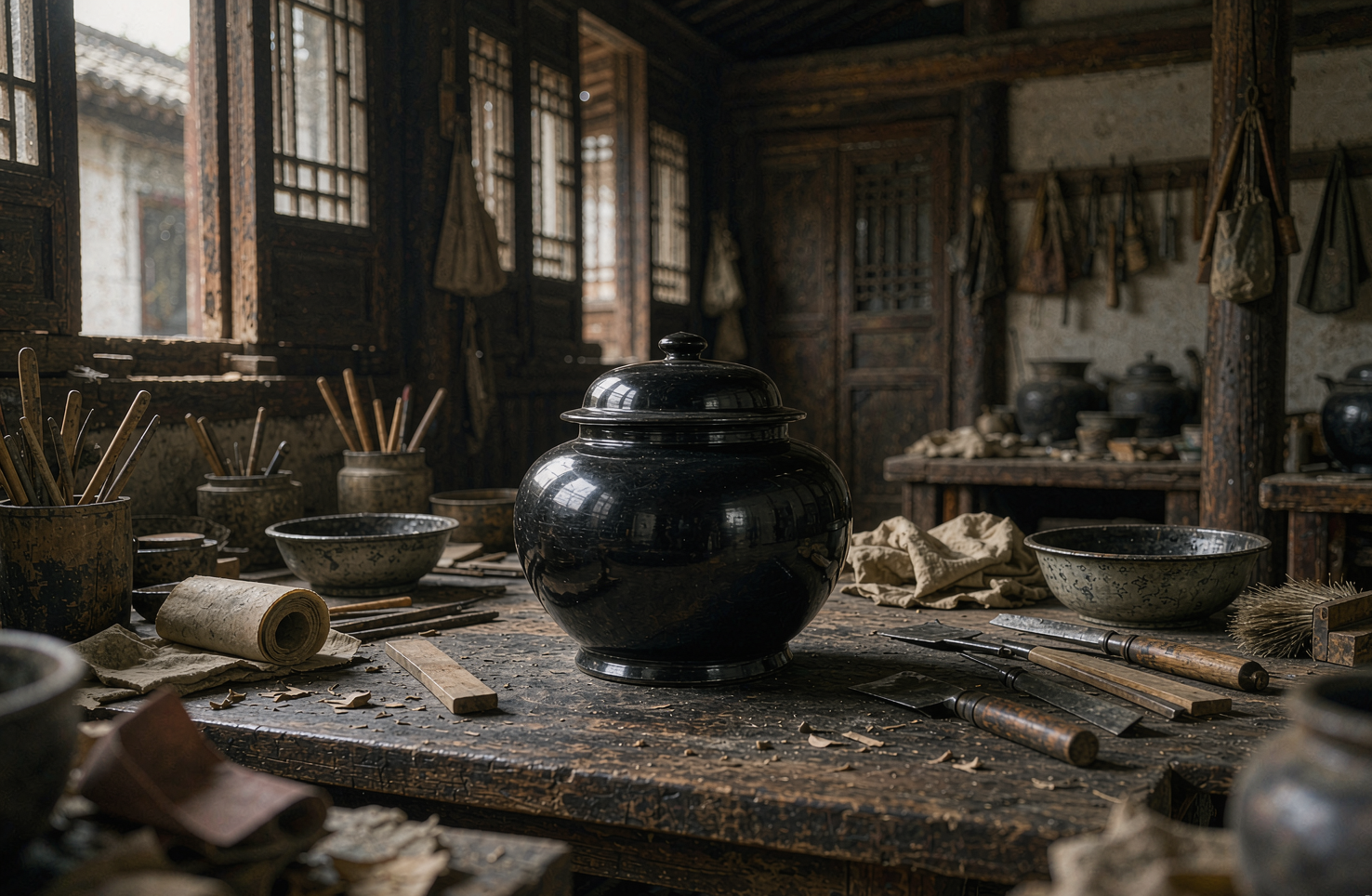
在博物馆做漆器研究与修复的研究员老周,桌上常年摆着两样东西:一段出土的漆皮残片,一只新做不久的平遥推光漆盘。他说这两样东西隔着八千年,却是同一种材料。这次对话,我们从"漆器为什么埋几千年不坏"聊起,聊到最后,其实是手艺对材料的理解问题。
韵和鸣 · 2026/10/14 · 64 阅读
十六岁学艺,他如今想让漆器走进年轻人的家
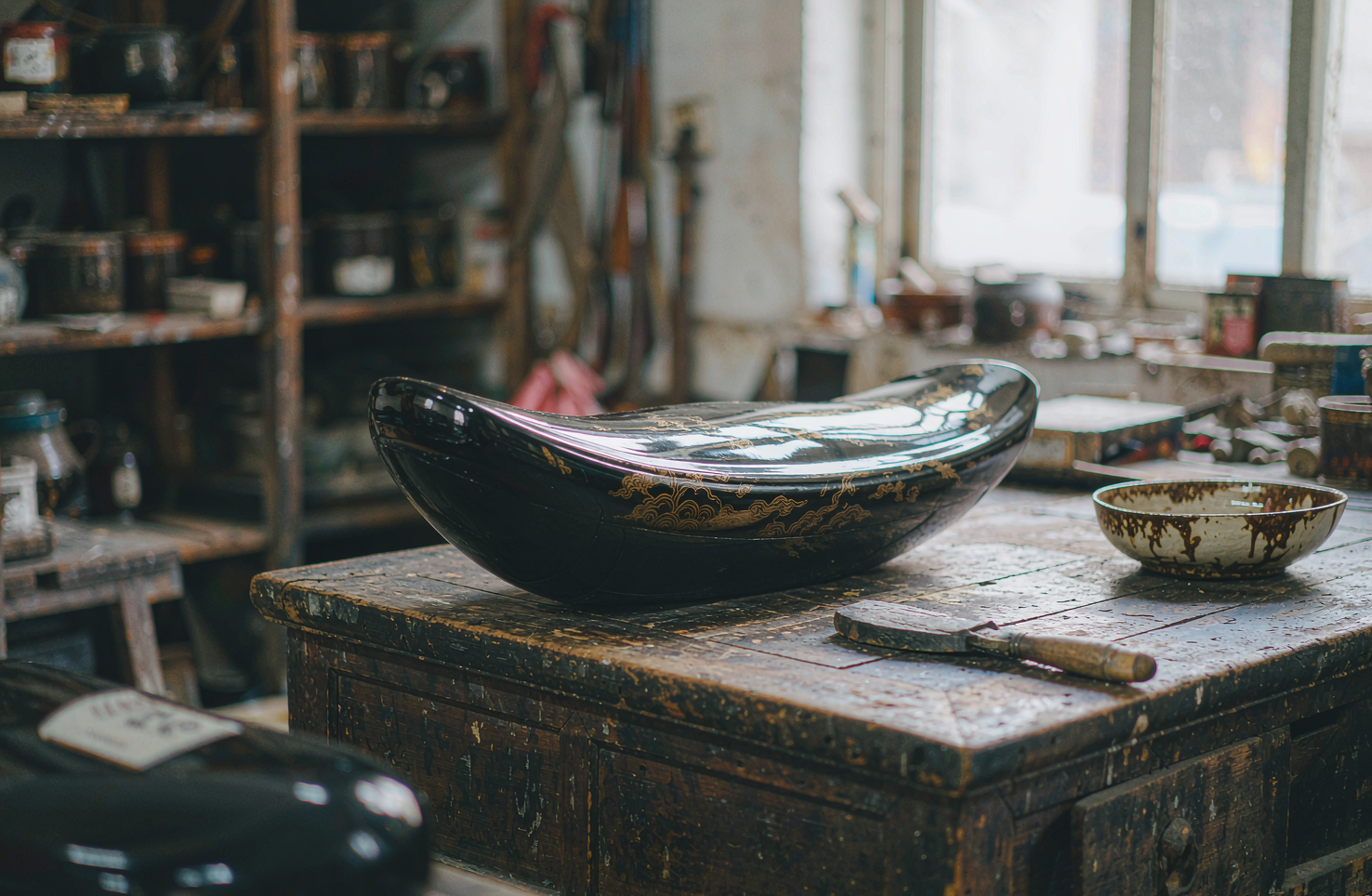
在平遥,学漆艺的人正在换代。老匠人把五十年的功夫交给徒弟,年轻教师把漆带进课堂。一门千年手艺要传下去,卡住的往往不是技法。
韵和鸣 · 2026/10/2 · 48 阅读
推光:一只手与时间的合谋
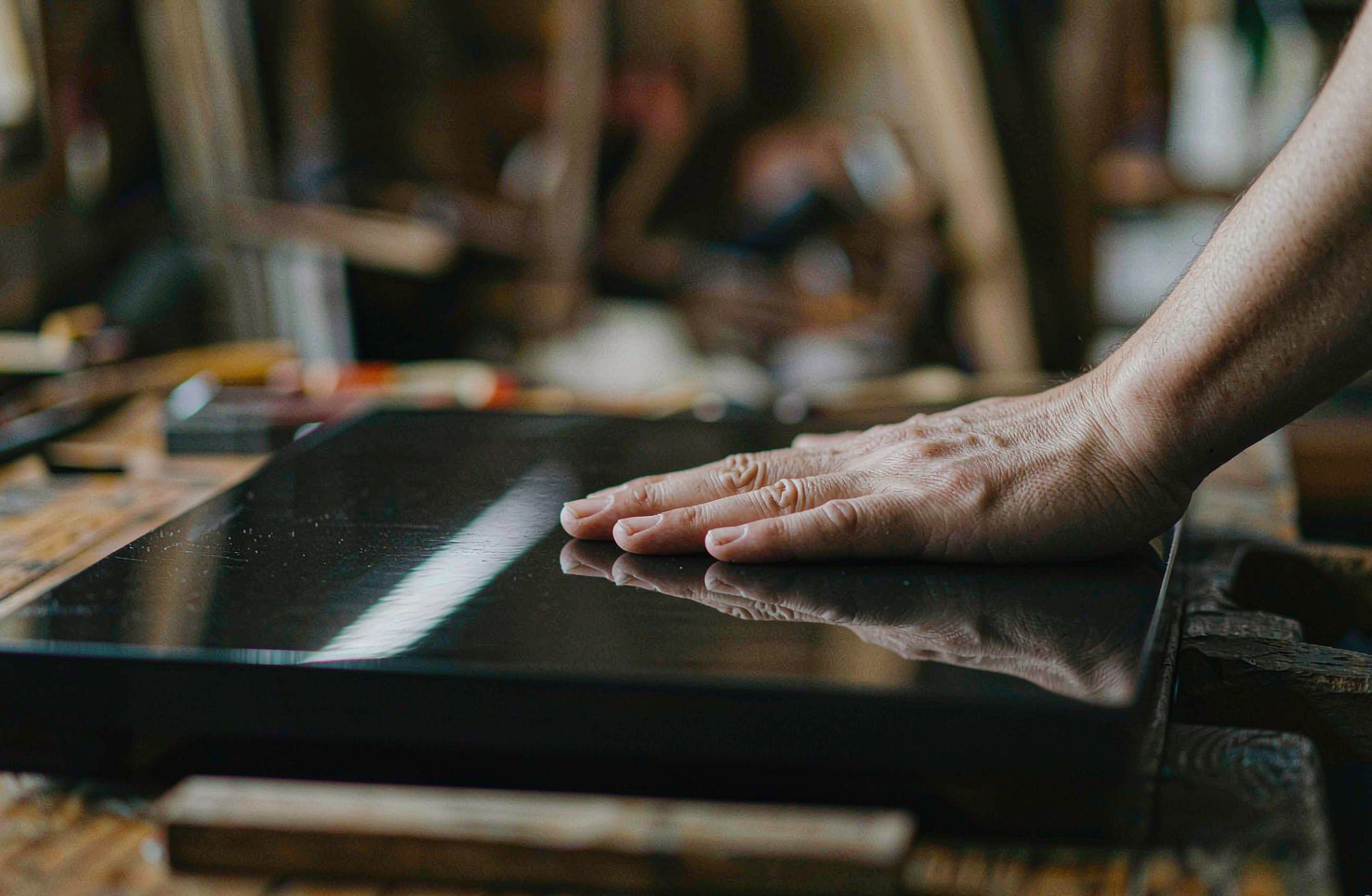
推光以大漆和此前多道髹磨工序为底,最后靠手掌的温度、力度与节奏推出温润光泽。文章同时写到师徒之间反复示范和重做,说明这道功夫既无法催快,也不能只靠口头讲解完成传递。
韵和鸣 · 2026/10/2 · 43 阅读
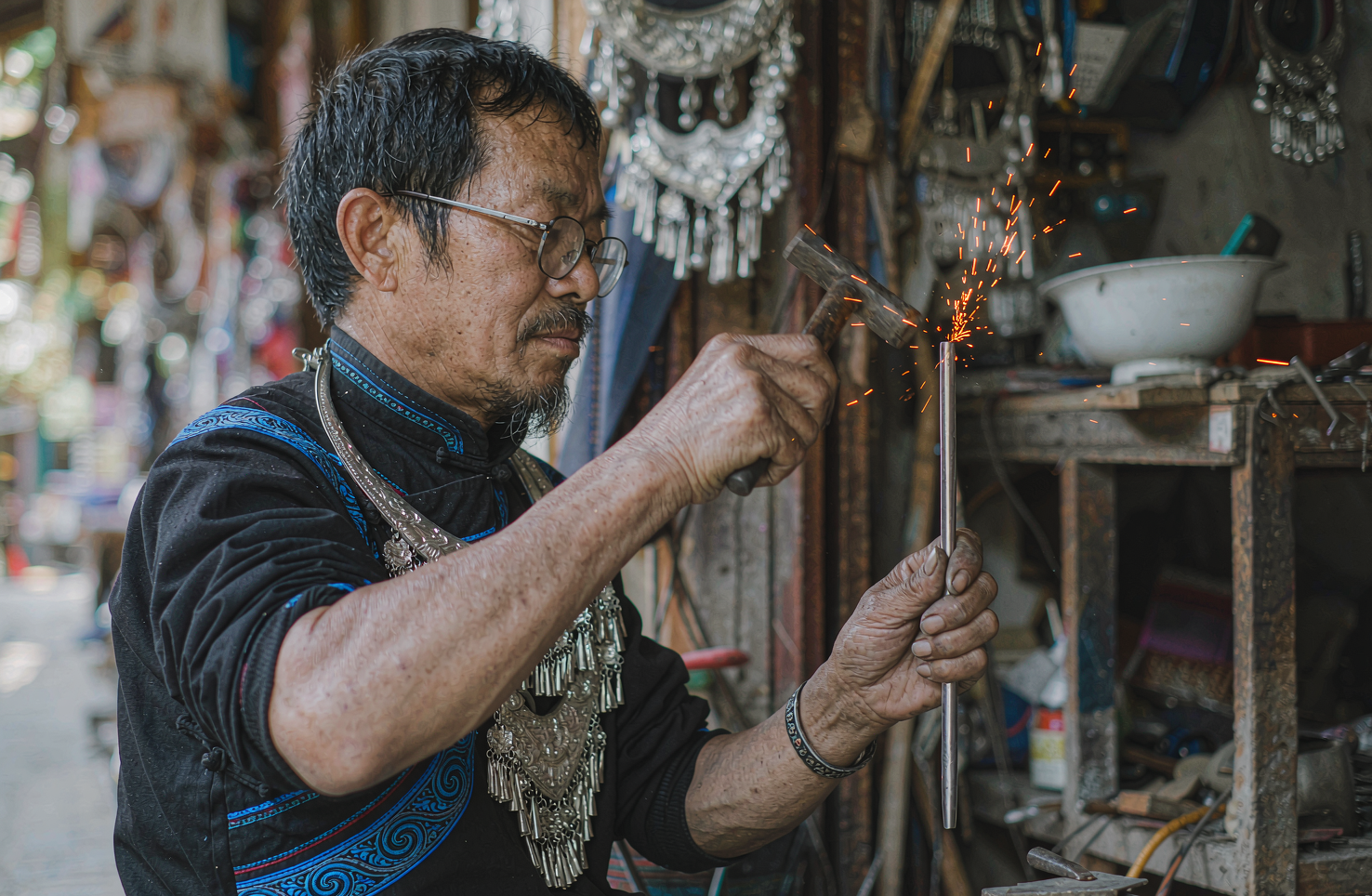
去贵州雷山,看一块银元如何变成一支银簪
在黔东南的苗寨里,银不只是一种首饰材料。它曾经是可以随时熔掉、重新打制的"存款",也是节日里一个女人身上最亮的那部分。关键在于,当一块老银元被放进坩埚,它要经过多少双手、多少道火,才重新成为一件能戴出门的东西。
韵和鸣 · 2026/10/9 · 60 阅读
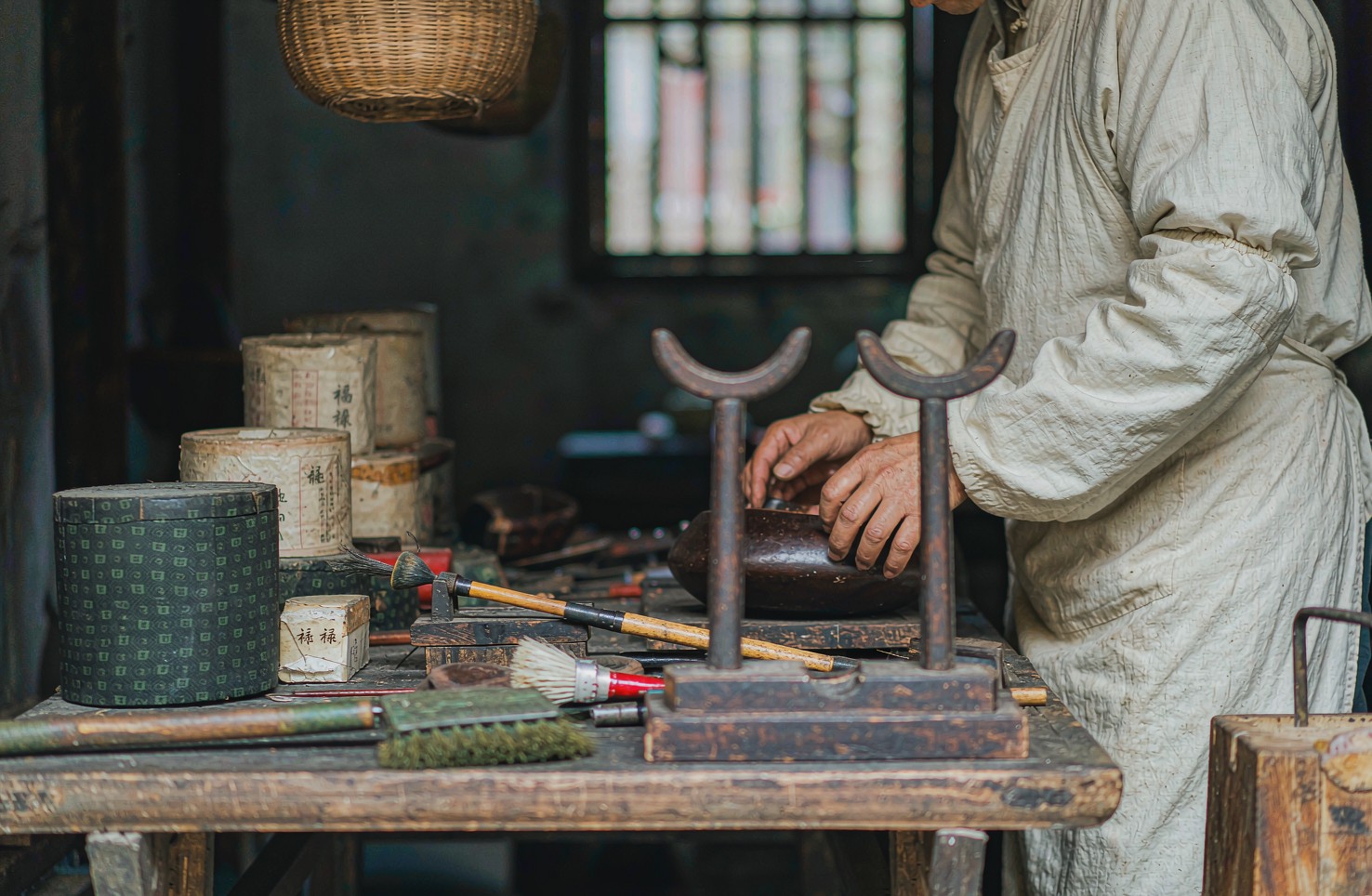
AI 生成的"非遗纹样",算不算抄袭
喂一批图给模型,几秒钟就能出一张"苗绣风"的纹样。有人觉得这是把传统纹样重新用起来,有人认为这是把别人一辈子的手艺免费拿走了。问题不好回答,说到底,真正难定的不是"像不像",而是数据从哪来、收益到哪去。今天我们不做判断,只把两边的理由摆出来。
韵和鸣 · 2026/10/24 · 56 阅读
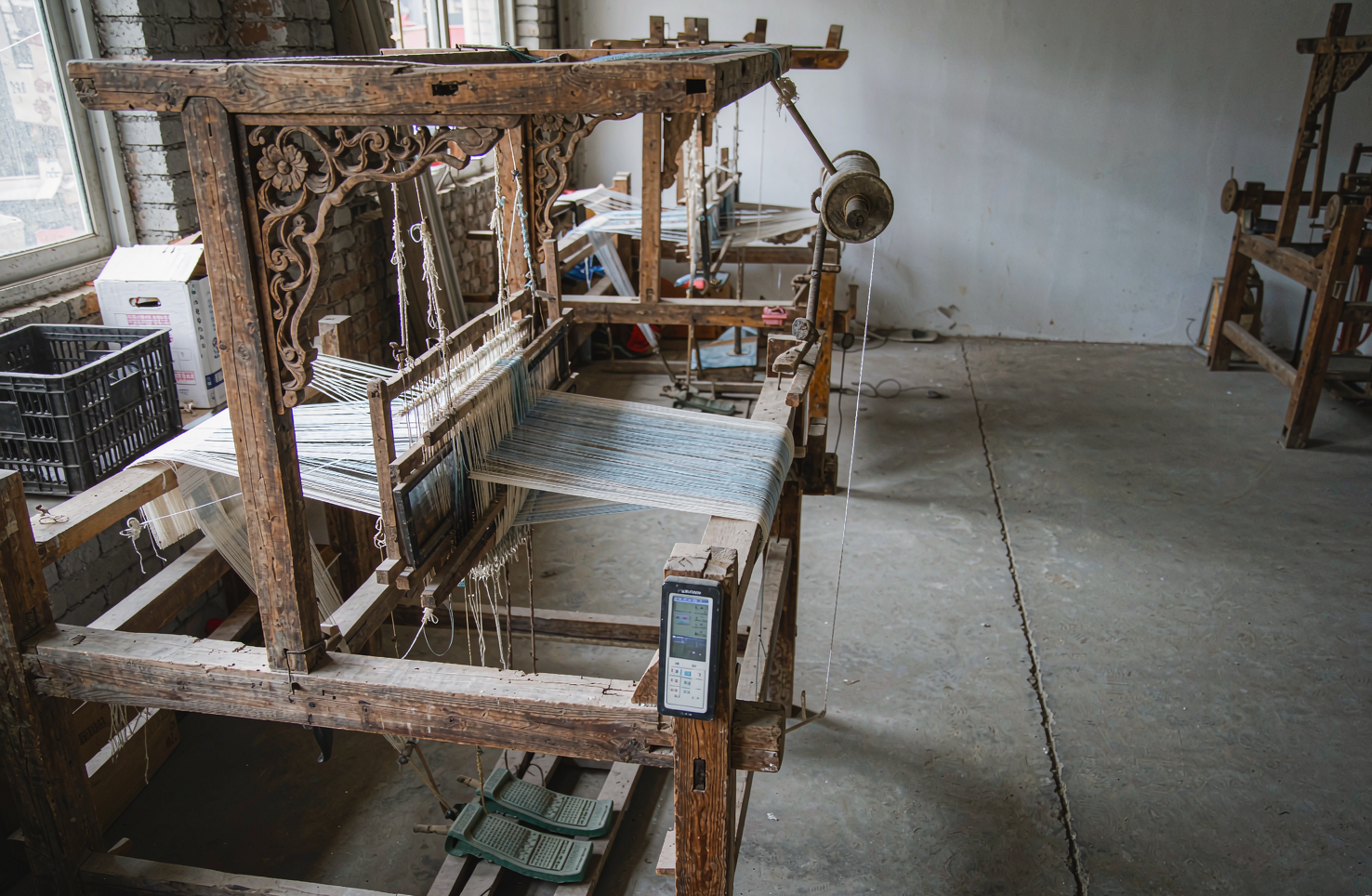
机器开始学手艺:是给匠人搭把手,还是来接班
一段流传很广的画面里,一台机械臂正跟着非遗传承人"学艺"——学劈丝、捻线、穿针。看的人分成两拨:一拨说技术帮上了忙,一拨说来抢饭碗了。同一件事读出两种意思,关键在于用什么尺度去量。
韵和鸣 · 2026/10/9 · 55 阅读