一门手艺为了活下去而"降配",该被理解还是该被拦住
韵和鸣 · 韵和鸣公众号 · 2026/10/28 12:00:00 · 3 阅读
最近一篇关于网红非遗的讨论提到一个现象:为迎合流量,部分工坊简化传统工序、压缩制作周期,用廉价材料替代传统原料,做出大批量、上手快的网红款小商品(据腾讯新闻 2026-10-24《流量之外,何以传承》)。这话不好听,却是个真问题:当守着老做法就卖不动,手艺该不该为了活下去而"降配"。本质在于,这道题考的不是手艺本身,而是手艺之外的成本结构与说法。
▍一方:先活下来,才谈得上守
持这一立场的人看到的是账。老工序意味着长周期:材料要等、每一道要干透、反复修整占掉大量时间。这样做出来的一件,价格必然高。而今天的市场上,多数人愿意为"好看、便宜、马上能拿走"付钱,愿意为工序付钱的是少数。
更要紧的是人。一门手艺如果挣不到钱,学徒就不会来。师傅等不到徒弟,技艺断在一个人身上。从这个角度说,把工序简化、把材料换成能稳定供应的,是让这门手艺先留在市场上、留住一批人,属于务实而非敷衍。
▍另一方:降到某个点,剩下的只是外形
反对者的理由集中在价值来源。一门手艺之所以成其为手艺,靠的是材料与工序共同决定的结果:泥料为什么这样配、釉为什么这样烧、漆为什么必须阴干。这些讲究被拿掉之后,产品外形还在,内里已经换成另一套逻辑。
所谓"降配",指的是在保留产品外形的前提下,简化传统工序、压缩制作周期,或以廉价材料替代传统原料的做法。以山西平遥的推光漆器为例,髹涂一遍要阴干一遍,简掉一遍,漆膜的寿命就短一截。关于这类现象的讨论见于腾讯新闻 2026-10-24 的报道。
第二个理由关乎公平。市场上守着完整工序的匠人,成本降不下来,却被外形相近、价格低得多的产品挤到一旁。消费者无从分辨,最后会用低价产品的价格去衡量所有同类。守序的人反而先出局,这被反对者称为"劣币效应"。
▍收束:分界线可能不在"改不改",而在"说不说"
我们不做判词,只提供一个观察角度。市场里的改动未必都有害:有的简化降低了门槛,让更多人先接触;有的替换是原料本身难以为继。真正决定性质的,往往是改动有没有被讲清楚。
把工序讲出来、把材料标出来、把"这一件做了几步"说出来,判断权就回到了买的人手里。手艺的名号也好,市场的价格也好,最终都要靠这条透明线来托住。至于线该画在哪儿,恐怕得由做的人、卖的人和买的人一起慢慢谈。
▍问答
问 | 手作产品简化了工序,还算不算非遗
答 | 要分两层看。名录保护的是技艺本身,也就是那套做法;市场上卖的是具体产品,做法可能完整也可能简化。判断一件产品,看它核心工序是否手工完成、材料是否沿用传统、能不能追溯到具体项目与匠人。三条都对得上,才谈得上真。
问 | 为什么同样叫非遗,价格能差好几倍
答 | 差的不是名号,是工序与材料。手工那头,工时、报废率与等待期都要计入;材料那头,传统原料的获取成本与替代料完全不同。名号可以共用,成本无法共用。看到价差时先问工序,比问名号更有用。
问 | 韵和鸣在选品时,怎么看待"简化"这件事
答 | 卡的是三条:只选真正的非遗手工品,只与传承人本人合作,核心工序必须手工完成。样式可以当代,产地可以不同,这三条不能让。品牌支持回收,也是同一套逻辑的延伸:敢把器物收回来修,是因为知道它当初是怎么做出来的。
▍说在最后
这场争论里没有坏人。做手艺的人想活,买东西的人想值,两边都不算错。
你更接受哪一种?留言说说你的理由。
📩 非遗项目 | 匠人举荐 | 跨境出海 | 线下联营
欢迎留言或后台联系,我们与匠人同行。
—— 韵和鸣 · 与匠人同行
〖 辩 〗
English
One Side: Survive First, Then Talk of Guarding
Those who hold this position see the arithmetic. Old processes mean long cycles: materials must wait, each stage must dry through, repeated finishing eats up hours. A piece made that way will necessarily cost more. In today's market, most buyers will pay for something attractive, cheap and instantly available; only a few will pay for process.
More pressing still is people. If a craft earns nothing, apprentices do not come. A master who never gets a student sees the art end with one person. From this angle, simplifying steps and switching to materials that can be supplied steadily is how the craft stays on the market and keeps a group of people in it: pragmatism, not carelessness.
The Other Side: Past a Certain Point, Only the Shape Remains
Objections centre on where value comes from. What makes a craft a craft is the outcome produced by materials and process together: why the clay is blended this way, why the glaze is fired that way, why lacquer must dry in the shade. Remove those considerations and the outer form survives while the logic inside has been swapped for another.
Downgrading means simplifying traditional steps, compressing production cycles or substituting cheaper materials while keeping the object's outward form. In Pingyao polished lacquerware from Shanxi, each coat of raw lacquer must be followed by drying in the shade; drop one cycle and the film's lifespan shortens accordingly. Discussion of such practices appears in Tencent News, 24 October 2026.
The second reason concerns fairness. Makers who keep the full process cannot bring costs down, yet are pushed aside by products that look similar and cost far less. Buyers cannot tell them apart and end up measuring the whole category by the cheap item's price. Those who kept the process are eliminated first, an effect opponents call the bad-money problem.
Where the Line Might Lie: Not Whether to Change, but Whether to Say So
We offer no verdict, only an angle. Change in the market is not always harmful: some simplification lowers the threshold and lets more people in; some substitution happens because a material can no longer be had. What usually decides the character of the change is whether it has been stated plainly.
State the process, label the material, say how many steps this piece went through, and judgement returns to the buyer. Both the reputation of a craft and its price in the market rest on that line of transparency in the end. Where exactly the line should be drawn is something makers, sellers and buyers will have to work out together, slowly.
If a handmade product simplifies its process, is it still intangible heritage?
Two levels need separating. The list protects the skill itself, meaning the method; what is sold on the market is a specific object, made by a method that may be complete or reduced. To judge an object, ask whether its core steps were done by hand, whether materials follow tradition, and whether it traces to a specific project and maker. All three must hold.
Why can prices differ severalfold for goods all called intangible heritage?
What differs is not the label but the process and the material. On the handmade side, hours, spoilage and waiting all enter the cost; on the material side, sourcing a traditional raw material differs entirely from a substitute. A label can be shared; cost cannot. When you see a price gap, ask about process rather than name.
How does YUNHEMING regard simplification when selecting pieces?
Three conditions govern selection: only genuine handmade heritage works, only working with the bearers themselves, and core processes completed by hand. Form may be contemporary and origin may vary, but those three do not move. Supporting take-back follows the same logic: we can take a piece back for repair because we know how it was made.
There are no villains in this argument. Makers want to live; buyers want value. Neither side is wrong.
Which side do you accept? Leave your reasons below.
ICH Projects · Artisan Referrals · Global Distribution · Salon Partnerships
你可能还感兴趣
AI 生成的"非遗纹样",算不算抄袭
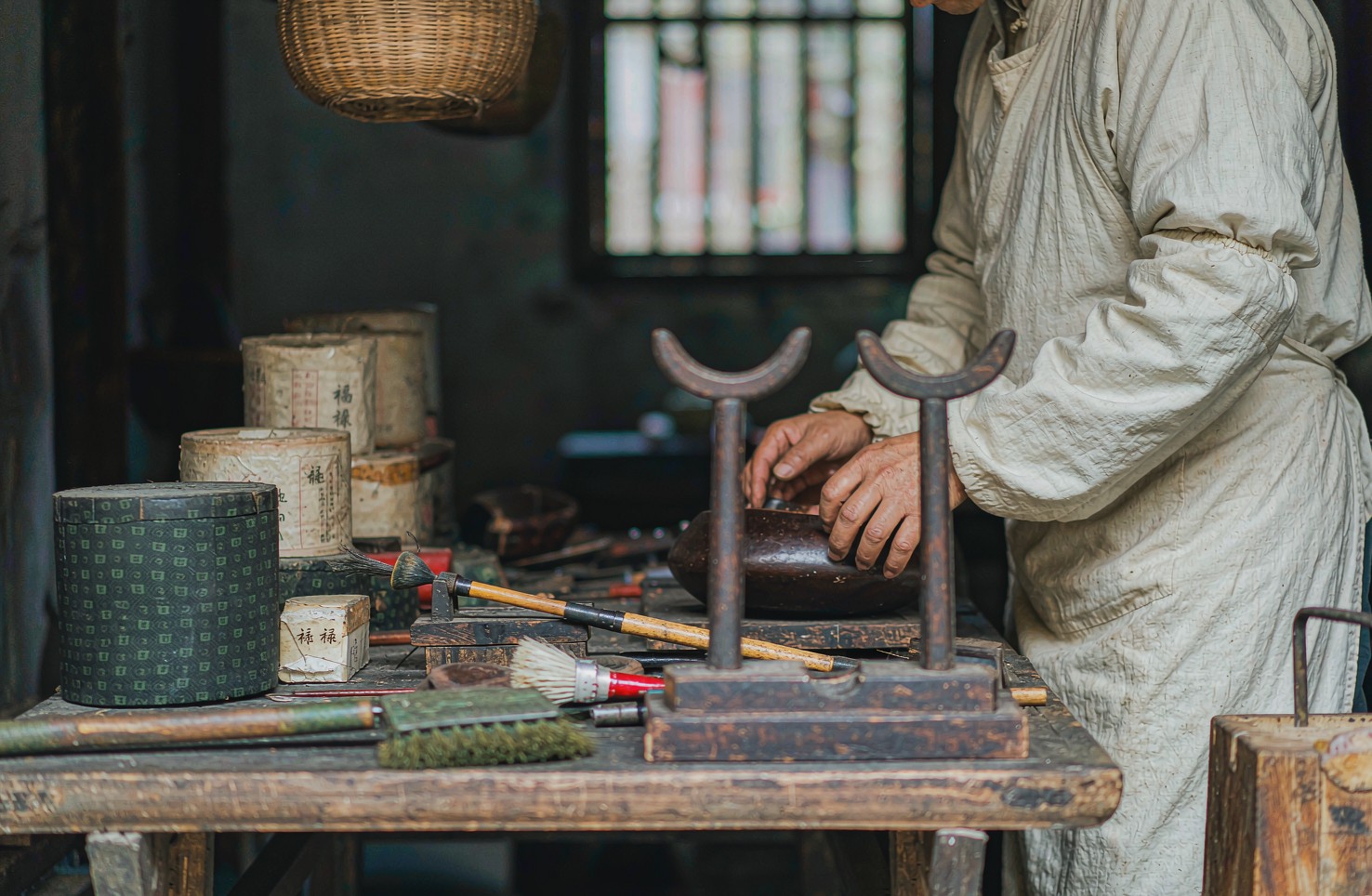
喂一批图给模型,几秒钟就能出一张"苗绣风"的纹样。有人觉得这是把传统纹样重新用起来,有人认为这是把别人一辈子的手艺免费拿走了。问题不好回答,说到底,真正难定的不是"像不像",而是数据从哪来、收益到哪去。今天我们不做判断,只把两边的理由摆出来。
韵和鸣 · 2026/10/24 · 56 阅读
机器开始学手艺:是给匠人搭把手,还是来接班
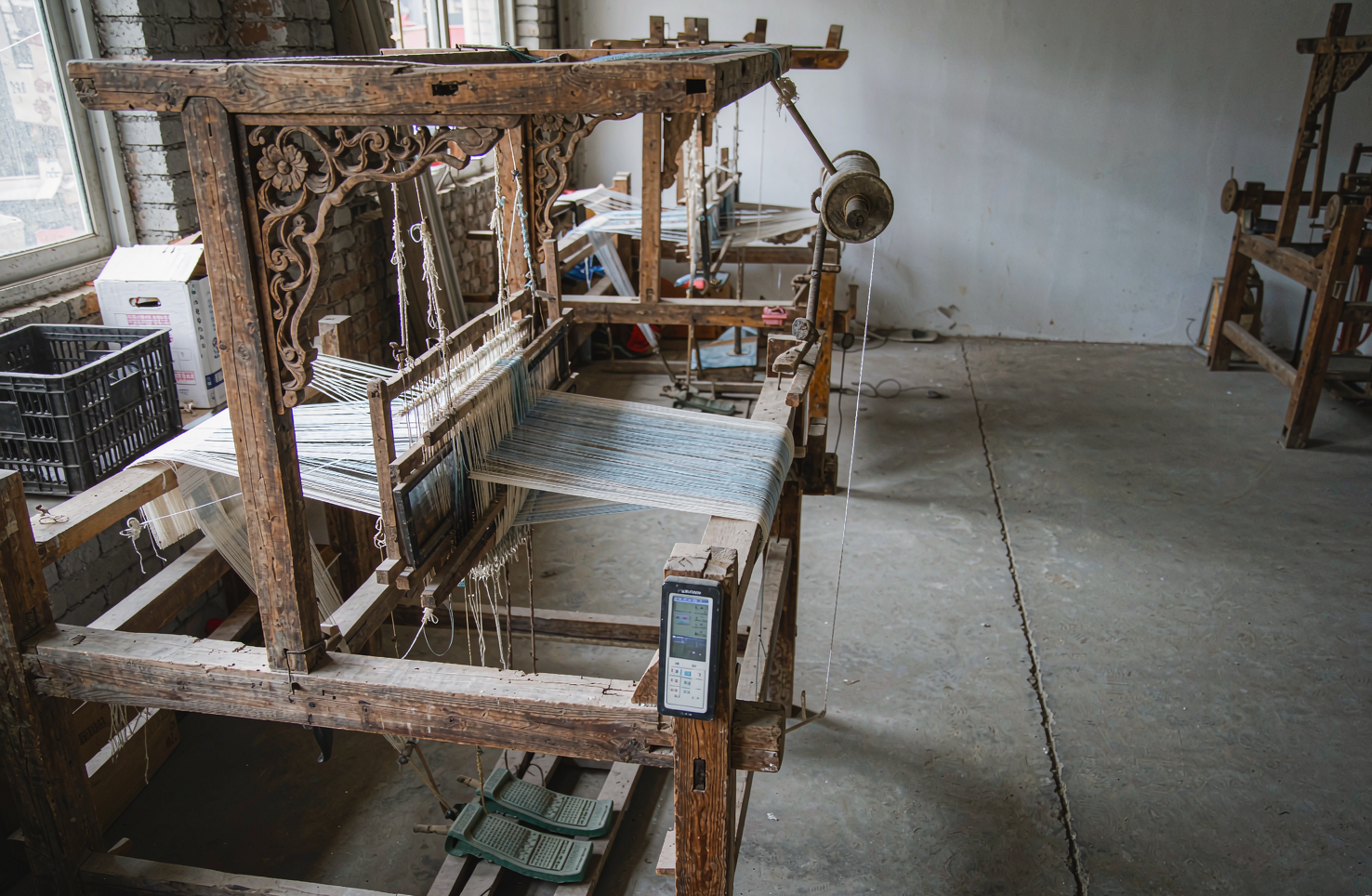
一段流传很广的画面里,一台机械臂正跟着非遗传承人"学艺"——学劈丝、捻线、穿针。看的人分成两拨:一拨说技术帮上了忙,一拨说来抢饭碗了。同一件事读出两种意思,关键在于用什么尺度去量。
韵和鸣 · 2026/10/9 · 55 阅读
年轻人不愿学老手艺,该怪年轻人,还是怪这门手艺?
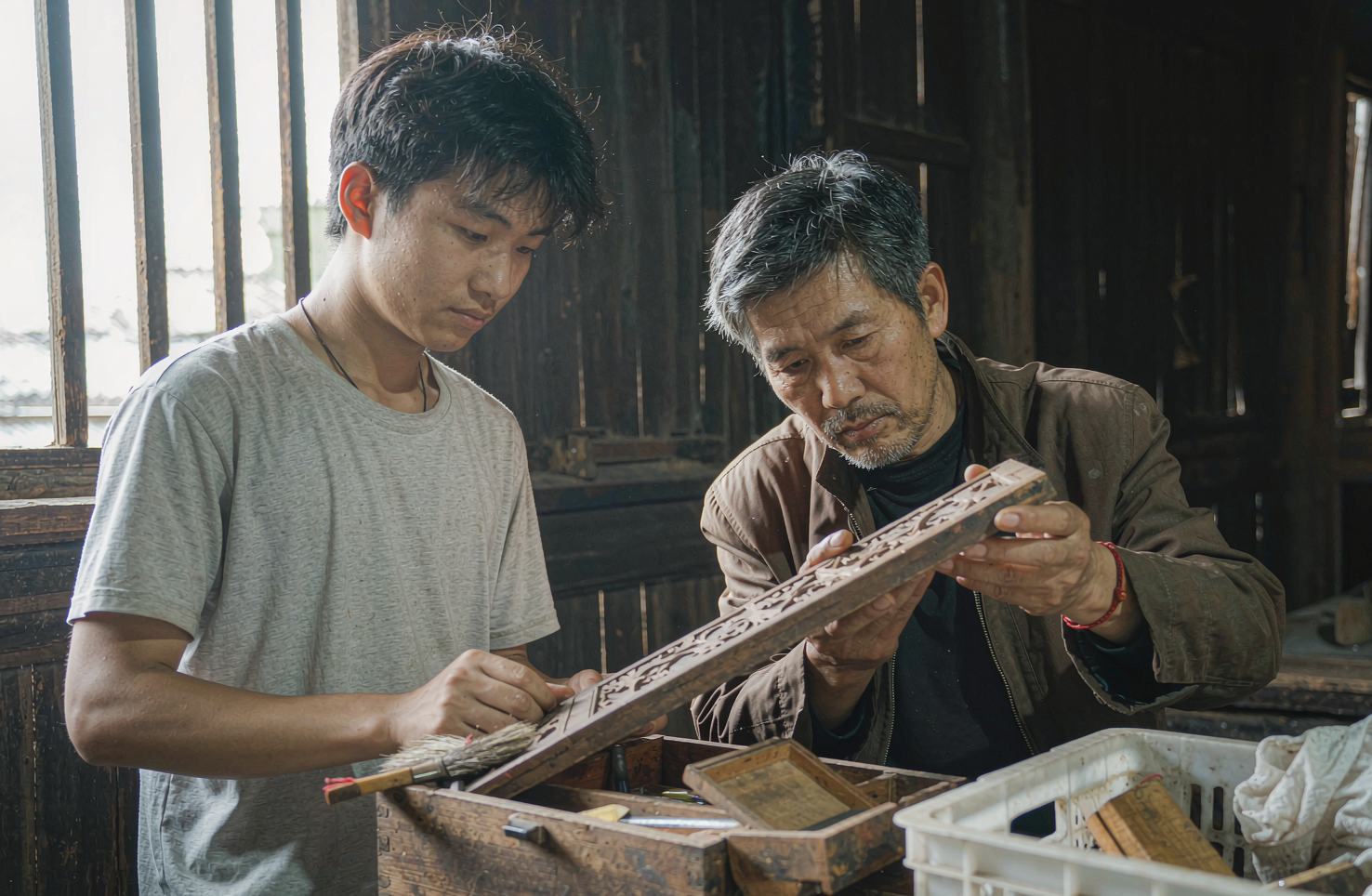
非遗传承里被讨论得最多的一句话是"后继乏人"。这句话往下追一层,就分成两条路:一条通向年轻人,说他们耐不住、看不上;一条通向他们面对的那门手艺,说它没能给出一条能活下去的路。这两条路,最近又吵起来了。
韵和鸣 · 2026/10/8 · 53 阅读
非遗创新只剩跨界联名和文创,是真突破还是路径依赖?
长假刚过,一场区域性非遗活动发布的"创新案例"名单在网上引来讨论:入选案例的路数出奇一致——不是和游戏影视做跨界,就是把老手艺搬进沉浸式演出,再就是开发一轮文创。有人叫好,也有人摇头:年年喊创新,怎么总围着老三样转?是突破,还是路径依赖?两边的话都摆出来。
韵和鸣 · 2026/10/13 · 43 阅读

大牌用非遗元素做联名:致敬,还是搬运?
非遗联名的争议不只在设计好不好看,更在是否说明技艺来处、尊重原意、让匠人或工坊署名并受益。文章呈现传播与订单机会、符号搬用风险两种观点,并提供判断合作是否真诚的具体观察点。
韵和鸣 · 2026/10/10 · 42 阅读
漆器为什么能埋八千年不坏
在博物馆做漆器研究与修复的研究员老周,桌上常年摆着两样东西:一段出土的漆皮残片,一只新做不久的平遥推光漆盘。他说这两样东西隔着八千年,却是同一种材料。这次对话,我们从"漆器为什么埋几千年不坏"聊起,聊到最后,其实是手艺对材料的理解问题。
韵和鸣 · 2026/10/14 · 64 阅读