游戏里出现青花瓷,电视剧讲起徽墨:非遗今年是怎么闯进流行文化的
韵和鸣 · 韵和鸣公众号 · 2026/10/28 12:00:00 · 3 阅读
10 月 21 日,2026 微博焕新非遗盛典在山东济南举行。八项年度荣誉里,最耐人寻味的是跨界那一类:电视剧《家业》深挖徽墨制作技艺,《主角》与专业秦腔院团联合创作,游戏《鸣潮》把景德镇青花瓷元素放进虚拟空间(据央广网 2026-10-22、人民政协网 2026-10-22 报道)。同一场晚会以国家级非遗鼓子秧歌节目《开染》启幕,其中"狗熊哆嗦毛"的动作此前在社交平台掀起模仿热潮。热闹之外有个更
▍一、先火起来的,是一段动作
鼓子秧歌是山东的民间舞蹈,入选国家级非物质文化遗产名录。让它今年被大量年轻人记住的,是《开染》里那个"狗熊哆嗦毛"的动作——肩膀与脖颈连续抖动,配合鼓点,看起来既笨拙又有劲。它在社交平台被反复模仿,模仿者多半说不出这项技艺的来龙去脉,却记住了动作本身。
这件事常被读成"又是一次浅薄的玩梗"。换个角度看,一门民间技艺的传播史本来就是这样推进的:先有身体,后有知识。人总要先被某个具体的东西吸引,才会去追问它从哪儿来。问题在于,追问的入口有没有人留。
一面靠墙立着的鼓,鼓面蒙着红布,旁边是一摞摞待用的绸带
▍二、影视、游戏、演唱会:跨界到底跨了什么
据上述两家媒体对盛典的报道,获评"年度非遗跨界传播作品"的包括电视剧、游戏与演唱会三类载体:一部剧以徽墨制作技艺作为叙事主线,一部剧与秦腔院团深度共创,一款游戏与景德镇联动,把青花瓷元素放进虚拟场景。
所谓"非遗跨界传播",指的是把非遗项目与影视、游戏、音乐等大众文化载体结合起来的传播方式。2026 微博焕新非遗盛典于 2026 年 10 月 21 日在山东济南举行,主题为"非遗新表达,远航向未来",当晚揭晓的八项年度荣誉中即包含这一类作品(据央广网 2026-10-22 报道)。
三类载体跨的方式并不一样。影视跨的是叙事,把一门手艺放进人物的命运里,观众记住的是人物,顺带记住了手艺。游戏跨的是空间,玩家可以走近、绕看、把玩一件器物,接触时长远超展柜前的一分钟。演唱会跨的是情绪,把非遗片段嵌进一场集体体验里。三者共同点是:手艺不再被摆在一个需要专门前往的地方,它出现在人本来就待着的地方。
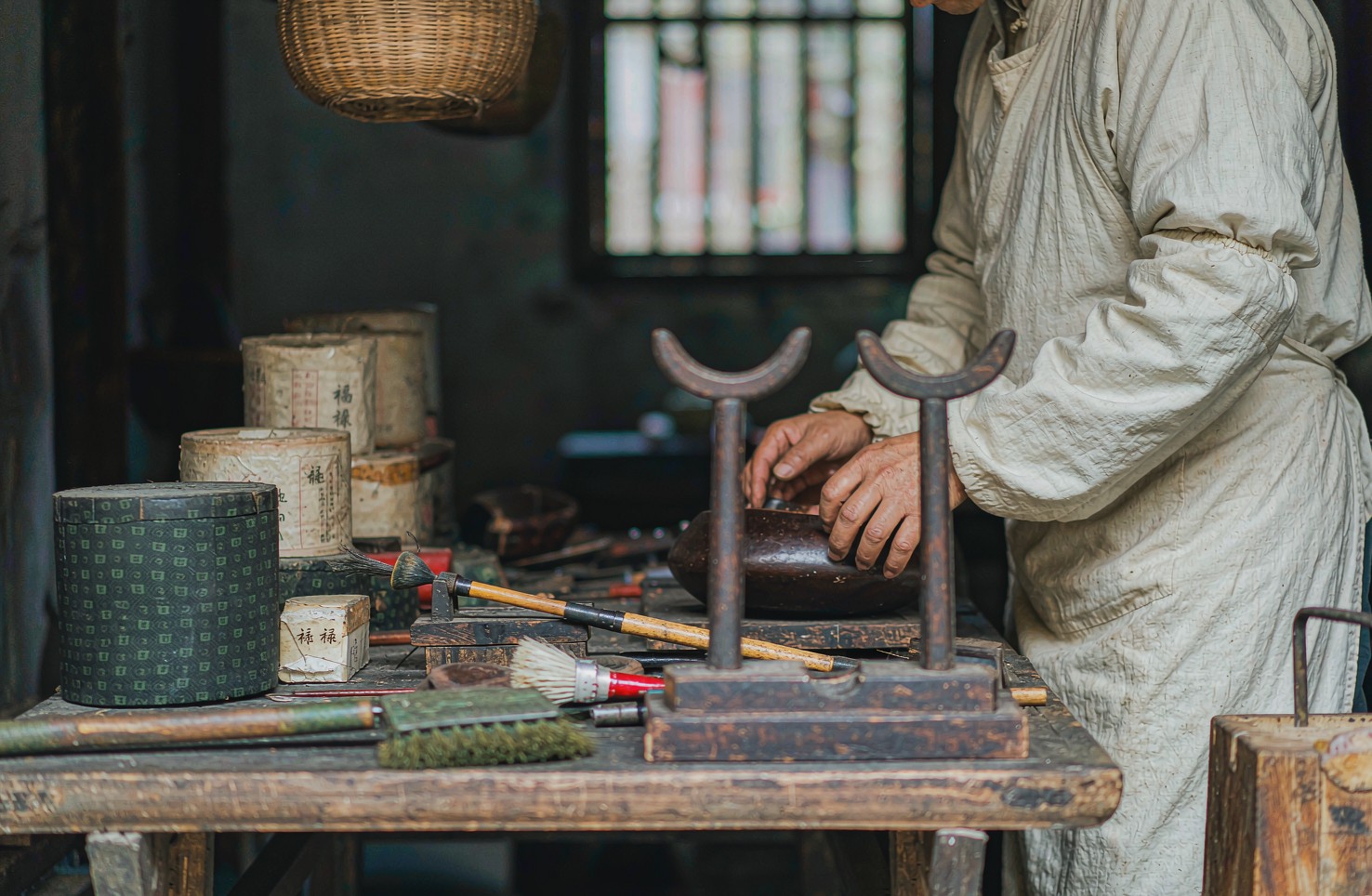
案面上的一锭墨与一方砚,旁边摊着几张写过的宣纸
▍三、被看见之后,手艺要接住什么
看见只是头一步。手艺要接住的东西有三样。
一是产能。 真实的手工产出有上限:一位师傅一天能做几件,一年能做几件,是可以算出来的账。屏幕那边的一夜爆红,撞上的是这条缓慢的曲线。
二是定价。 手工的成本结构与流水线完全不同,工时、报废率、等待期都算在里头。观众在屏幕上建立的好感,未必能直接换算成对价格的接受度。
中国非物质文化遗产保护协会会长王晓峰在盛典上表示:"新媒体不是非遗的旁观者,而是创造性转化、创新性发展的关键推手。让流量沉淀为持久的文化热度,让关注转化为传承的内生动力。"(据央广网 2026-10-22 报道)
三是出处。 这是最关键的一样。一件东西能不能讲清是谁做的、在哪做的、怎么做的,决定了屏幕上的好感最终落到谁手里。讲不清,流量就只是流量。
▍四、从屏幕回到案头
我们做这一行,看到的顺序恰好相反:先在老街深巷里见到人和工序,再想办法把这件事讲出去。品牌以山西平遥的推光漆器髹饰技艺起家,那门技艺的每一层大漆都要髹涂之后进阴干房慢慢干透,快不了。屏幕能做的是让更多人抬一次头,案头能做的是让人低头看清楚纹路是怎么走出来的。两件事缺一不可,而后者更慢。
墨要捶够次数才够细,瓷要入窑才见分晓,秦腔的一句腔要练多年。这些时间不会因为一段视频变短。手艺真正需要的,可能不是更多的曝光,而是曝光之后有人愿意按它的节奏等。
▍问答
问 | 非遗和游戏、影视联动,算不算真正的传承
答 | 算传播,不算传承本身。联动解决的是"被看见",传承要解决的是"有人接着做"。两者之间隔着三件事:有没有年轻人愿意学、学成之后能不能靠手艺生活、做出来的器物有没有人按合理价格买走。联动是入口,不是终点。
问 | 想了解一项非遗,除了看视频还能去哪儿
答 | 三条路最实在:查名录,国家级与省级的代表性项目名录公开可查,项目名称、编号与保护单位都有据可查;去工坊,实地能看到工序与工具,比任何镜头都直观;找会客厅,能上手摸到器物的重量与手感。视频适合入门,深入还得靠手和眼。
问 | 为什么手工器物的价格没法跟流水线货比
答 | 成本结构不同。手工那头的账是工时加报废率加等待期:每一道阴干、每一次入窑都要占时间,某一道失败则前面工时一并作废。流水线的账是设备折旧加原料加批量,越做越薄。两条曲线不会相交,比价本身就不成立。
问 | 韵和鸣做的"非遗经纪人",和这些跨界项目有什么不同
答 | 跨界项目解决的是让手艺被看见,我们解决的是让做手艺的人能安心做下去。韵和鸣以公益之心帮匠人做内容、做访谈、拍产品与视频,再把手艺译成多国语言,同时对接渠道与出海的机会;匠人专心做手艺,其余的事由品牌分担。曝光来了,总得有人站在匠人这边接住它。
▍说在最后
一门手艺被模仿、被改编、被放进游戏,都说明它还有人愿意碰。真正需要担心的从来不是被改动,而是无人提起。
你是在哪一次偶然里,头一回认真看一门老手艺的?留言告诉我们。
📩 非遗项目 | 匠人举荐 | 跨境出海 | 线下联营
欢迎留言或后台联系,我们与匠人同行。
—— 韵和鸣 · 与匠人同行
〖 热 〗
相关搜索 | RELATED SEARCHES
非遗 跨界 影视 游戏 · 鼓子秧歌 狗熊哆嗦毛 · 徽墨 制作技艺 · 景德镇 青花瓷 非遗 · 手工 器物 为什么 贵 · 非遗 经纪人
English
Guzi yangge is a folk dance from Shandong listed at national level. What made it stick with young audiences this year was the "bear shaking its fur" move in Opening the Dye: shoulders and neck shivering in sequence against the drum, awkward-looking and forceful at once. It has been imitated endlessly online. Most of those imitating it could not recount where the art comes from, yet the move itself lodged in memory.
The easy reading is that this is another shallow internet gag. Read it another way and the transmission of a folk art has always advanced like this: the body first, the knowledge later. People are drawn to something concrete before they ask where it came from. The question is whether anyone has left a door open for that asking.
A drum standing against a wall, its head covered in red cloth, with folded silk sashes stacked beside it
Film, Games, Concerts: What the Crossover Actually Carries
According to the two outlets' reports on the ceremony, the works honoured for cross-border communication span television, games and live music: one drama builds its narrative around Hui inkstick making, another is co-created with a Qinqiang troupe, and one game works with Jingdezhen to place blue-and-white inside a virtual setting.
Cross-border communication here means pairing heritage projects with mass-culture carriers such as film, games and music. The 2026 Weibo Intangible Heritage Renewal Ceremony was held in Jinan, Shandong, on 21 October 2026 under the theme "New Expressions of Heritage, Sailing Toward the Future"; among the eight annual honours announced that night was this category (reported by CNR.cn, 22 October 2026).
The three carriers cross in different ways. Film crosses through narrative, setting a craft inside a character's fate, so audiences remember the person and absorb the craft along the way. Games cross through space: players can approach, circle and handle an object, spending far longer with it than the minute spent at a display case. Concerts cross through mood, embedding heritage fragments in a collective experience. What they share is this: the craft no longer sits somewhere you must travel to visit. It appears where people already are.
An inkstick and an inkstone on a desk, several sheets of written-on Xuan paper spread nearby
After Being Seen, the Craft Has to Catch Something
Being seen is only the opening step. Three things have to be caught next.
Capacity. Genuine handmade output has a ceiling: how many pieces one maker can finish in a day, and in a year, is an arithmetic that can be done. Overnight attention on screen collides with that slow curve.
Pricing. The cost structure of handwork differs entirely from that of a production line: hours, spoilage and waiting all sit inside it. Goodwill built on a screen does not automatically convert into acceptance of a price.
Wang Xiaofeng, president of the China Intangible Cultural Heritage Protection Association, said at the ceremony that new media is not a bystander to intangible heritage but a key driver of its creative transformation and innovative development, adding that traffic should settle into lasting cultural warmth and attention should turn into an inner drive for transmission (reported by CNR.cn, 22 October 2026).
Origin. This is the decisive one. Whether an object can account for who made it, where and how decides who ultimately receives the goodwill built on screen. Without that account, traffic remains merely traffic.
Working in this field, we see the sequence in reverse: we meet the person and the process first, in old streets and deep lanes, and only then work out how to tell it. Screens can make more people look up once; the desk lets someone bend down and see how a line of pattern was laid. Both matter, and the second is slower.
Ink must be pounded enough times to be fine, porcelain must enter the kiln before anything is decided, and a single Qinqiang phrase takes years of practice. None of that time shrinks because of a video. What a craft truly needs may be less exposure than people willing, after exposure, to wait at its own pace.
Does linking heritage with games and film count as real transmission?
It counts as communication, not as transmission itself. A collaboration solves being seen; transmission solves someone carrying on. Between them lie three matters: whether young people are willing to learn, whether a learner can make a living at it, and whether the objects made find buyers at a fair price. Collaboration is the entrance, not the destination.
Beyond videos, where can one actually learn about a heritage item?
Three routes are most solid: consult the lists, since national and provincial representative lists are public, with project names, numbers and protecting bodies on record; visit workshops, where process and tools are visible in a way no camera matches; and find a salon space, where you can feel an object's weight in the hand. Video suits a beginning; depth still needs hands and eyes.
Why can't handmade objects be priced against factory goods?
The cost structures differ. Handwork accounts for hours plus spoilage plus waiting: every drying spell and every firing occupies time, and a failure at one stage voids the hours before it. A production line accounts for equipment depreciation, materials and volume, thinning as it scales. The two curves never meet, so the comparison itself does not hold.
How does YUNHEMING's "heritage agent" role differ from these crossover projects?
Crossover projects solve being seen; we solve being able to keep making. YUNHEMING helps makers with content, interviews, product and video shoots on a public-interest basis, translates their craft into other languages, and connects them to channels and export opportunities. The maker concentrates on the work; the brand carries the rest. When exposure arrives, someone has to stand on the maker's side to catch it.
A craft being imitated, adapted and placed inside a game all show that people still want to touch it. The thing to fear was never alteration. It was silence.
Which chance encounter first made you look properly at an old craft? Tell us below.
ICH Projects · Artisan Referrals · Global Distribution · Salon Partnerships
你可能还感兴趣
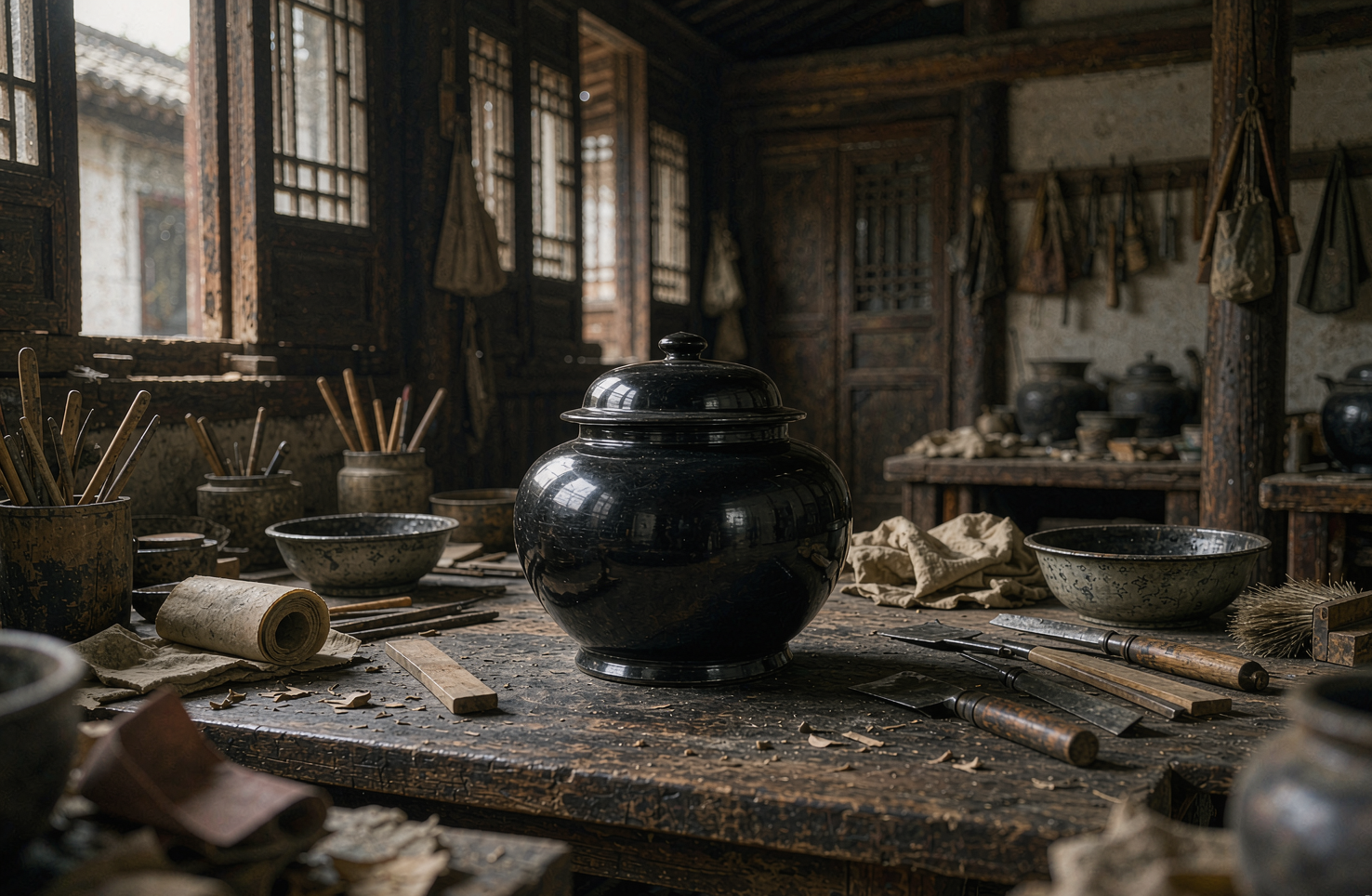
漆器为什么能埋八千年不坏
在博物馆做漆器研究与修复的研究员老周,桌上常年摆着两样东西:一段出土的漆皮残片,一只新做不久的平遥推光漆盘。他说这两样东西隔着八千年,却是同一种材料。这次对话,我们从"漆器为什么埋几千年不坏"聊起,聊到最后,其实是手艺对材料的理解问题。
韵和鸣 · 2026/10/14 · 64 阅读
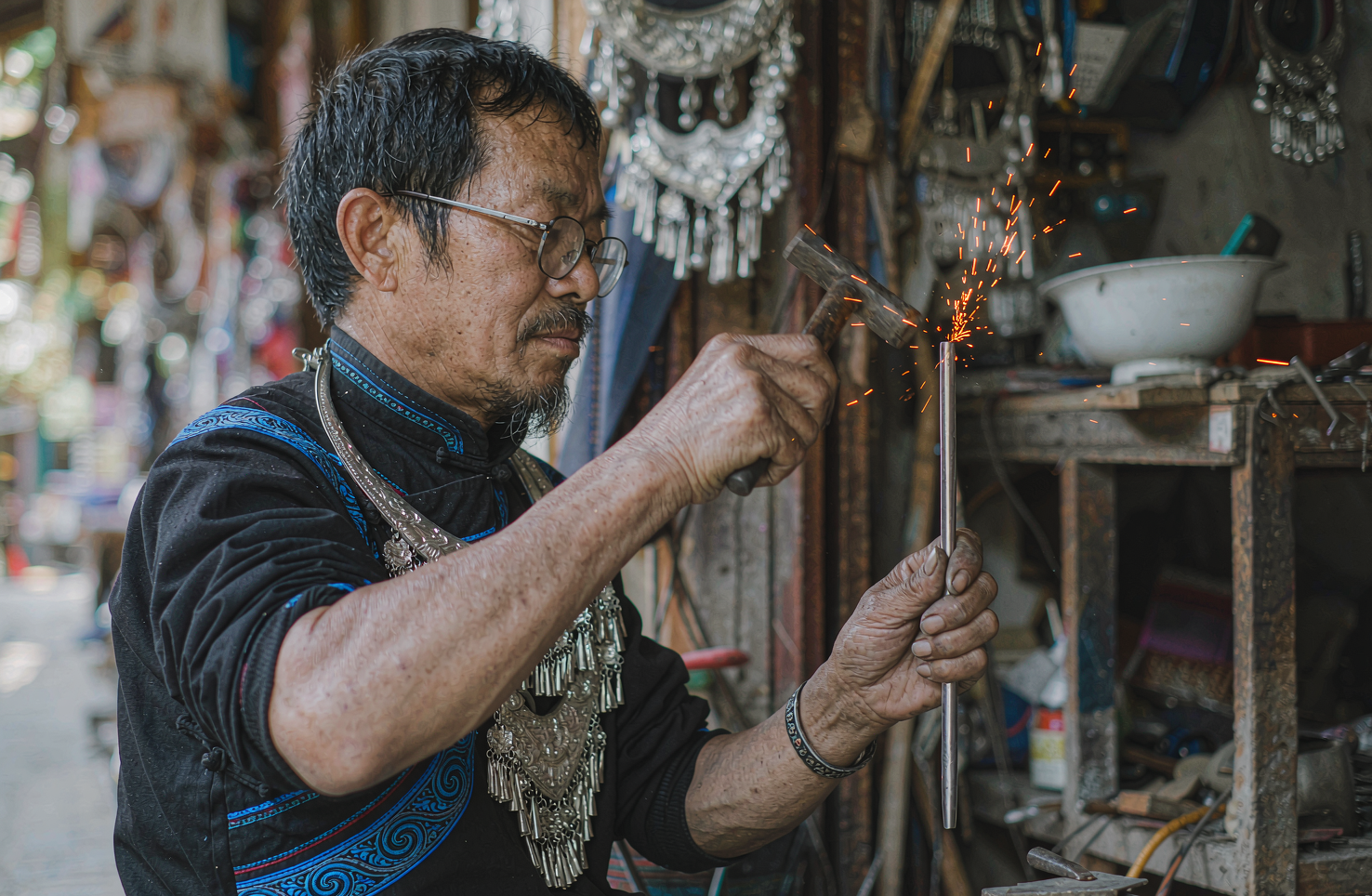
去贵州雷山,看一块银元如何变成一支银簪
在黔东南的苗寨里,银不只是一种首饰材料。它曾经是可以随时熔掉、重新打制的"存款",也是节日里一个女人身上最亮的那部分。关键在于,当一块老银元被放进坩埚,它要经过多少双手、多少道火,才重新成为一件能戴出门的东西。
韵和鸣 · 2026/10/9 · 60 阅读
AI 生成的"非遗纹样",算不算抄袭
喂一批图给模型,几秒钟就能出一张"苗绣风"的纹样。有人觉得这是把传统纹样重新用起来,有人认为这是把别人一辈子的手艺免费拿走了。问题不好回答,说到底,真正难定的不是"像不像",而是数据从哪来、收益到哪去。今天我们不做判断,只把两边的理由摆出来。
韵和鸣 · 2026/10/24 · 56 阅读
机器开始学手艺:是给匠人搭把手,还是来接班
一段流传很广的画面里,一台机械臂正跟着非遗传承人"学艺"——学劈丝、捻线、穿针。看的人分成两拨:一拨说技术帮上了忙,一拨说来抢饭碗了。同一件事读出两种意思,关键在于用什么尺度去量。
韵和鸣 · 2026/10/9 · 55 阅读
把"慢"做成一种体验:一间非遗会客厅的想法
我们习惯按功能给空间分类:吃饭的、购物的、办公的。但有一种很难归类——它在城市的闹处,不催你走,也不急着让你买单。关键在于,当"慢"被认真设计出来,它本身就可以是一种产品。
韵和鸣 · 2026/10/9 · 54 阅读
年轻人不愿学老手艺,该怪年轻人,还是怪这门手艺?
非遗传承里被讨论得最多的一句话是"后继乏人"。这句话往下追一层,就分成两条路:一条通向年轻人,说他们耐不住、看不上;一条通向他们面对的那门手艺,说它没能给出一条能活下去的路。这两条路,最近又吵起来了。
韵和鸣 · 2026/10/8 · 53 阅读