一方宋锦手包:从织机到日常,中间隔着二十多道工序
韵和鸣 · 韵和鸣公众号 · 2026/10/25 12:00:00 · 4 阅读
把宋锦做成一只手包,看起来是把大东西变小,实际上是把难处放大。大件可以靠幅面撑气场,小件没有退路——纹样裁在哪儿、边怎么收、衬里怎么配,全都摊在手掌心里给人看。判断一只宋锦小件好不好,看的就是这几处。说到底,小件不藏拙。
▍一、宋锦是什么锦
先把名字说清楚。宋锦是宋代发展起来的织锦,因主要产地在苏州,也称苏州宋锦。
2006 年,宋锦织造技艺被列入由文化和旅游部公布的国家级非物质文化遗产代表性项目名录,项目编号 Ⅷ-14,类别为传统技艺,申报地区为江苏省苏州市,保护单位为苏州丝绸博物馆。2009 年,它作为中国蚕桑丝织技艺的重要组成部分,被列入联合国教科文组织人类非物质文化遗产代表作名录。
它的织法有自己的脾气:以经线和纬线联合显花,应用彩抛换色的独特技艺,让织物表面的色线和组织层次更丰富。外观上以变化几何形为骨架,内填自然花卉与吉祥纹样,配和谐的地色,艳而不俗。
▍二、一只小包,卡在哪几处
据公开资料,传统宋锦从缫丝染色到织成产品,前后要经过二十多道工序。工序多,不等于做成小件就容易;恰恰相反,小件把每一道的误差都放大了。
织机上的经线与彩色纬线交叠,纹样在光下显出细密的层次
头一处是裁位。宋锦的纹样是有骨架的,几何形连续排布,裁在哪里决定成品好不好看。裁歪半格,花纹就在包面上断掉,看着像拼错了。这块料能出几只包,取决于纹样的循环大小,而不是取决于裁剪师傅手快不快。
第二处是边。丝织物裁开就散,边必须锁得住又不能硬。做得好的收边贴着包型走,摸上去是一整条线;做得糙的,边口会起毛、翘角,用上几次就显旧。
第三处是衬里与结构。宋锦本身是面料,不是结构材料。一只手包要立得住、装东西不变形,靠的是内衬与包型设计;这一层做得潦草,再好的锦也挂不住。
手包边口的车线与包角处理细节,缝线沿着转折处收得很紧
▍三、怎么挑:三看一摸
一看纹样是否完整:正面主花有没有被截断、左右是否对称。二看边口:车线是否匀、转角是否服帖、有没有起毛。三看衬里:拉开看内里是否平整、有没有多余的胶痕。最后摸一下手感——宋锦的手感是柔中带骨,不是软塌塌的一层。
还有一条不那么显眼但很实在:问清楚这块锦是谁织的、哪家作坊出的。能答上来的,通常对每道工序都有交代。
▍四、小件为什么值得认真做
大件挂在墙上,小件拿在手里。后者每天被摸、被塞进包里、被放在桌上,使用频率高得多,也更容易暴露问题。也正因为如此,一件做得好的宋锦小件,往往比一件大屏更能说明这门手艺现在的水准。
▍问答
问 | 宋锦和云锦、蜀锦有什么不一样
答 | 最直观的区别在显花方式与气质。宋锦以经线和纬线联合显花,用彩抛换色让色线和层次更丰富,格调古朴高雅,长期大量用于书画装裱与服饰;云锦以妆花、织金见长,富丽堂皇;蜀锦以经线起花为特点,纹样明快。三者都属中国织锦体系,气质各不相同。
问 | 宋锦制品日常怎么用、怎么养
答 | 避三样:暴晒、潮湿、尖锐摩擦。丝纤维怕紫外线,长期日晒会褪色发脆;梅雨季要干燥存放、避免霉斑;包角、边口是最容易磨的地方,装硬物时建议隔开。清洁交给专业织品护理,别自己下水洗。
问 | 怎么判断一块锦是手工织的还是机器织的
答 | 看反面与边缘。手工织造的反面线头与接头处理更随意自然,同一循环内的纹样会有极细微的松紧差异;机织物正反面都极规整、纹样分毫不差,边缘往往是热切或密锁边。此外,手工织的幅面通常较窄,价格里含的是工时。
问 | 韵和鸣收的器物,和景区里卖的纪念品有什么不一样
答 | 标准只有一条:器物必须出自真正的传承人之手、按传统工序手工完成。把非遗图案印到流水线商品上的做法,不在它的经营之列。判断时看三条——出处要真、人来路要明、核心工序要守得住手工完成。是不是真作,看它敢不敢把每件东西的来历讲清。
▍说在最后
一门织锦能不能走进日常,不取决于它被做成多大,而取决于做成小件之后,那些藏在幅面里的讲究还剩下多少。
你手上有没有一只用了很多年的小件?评论区说说它现在是什么样子。
📩 非遗项目 | 匠人举荐 | 跨境出海 | 线下联营
欢迎留言或后台联系,我们与匠人同行。
—— 韵和鸣 · 与匠人同行
〖 器 〗
相关搜索 | RELATED SEARCHES
宋锦 是什么 特点 · 宋锦 云锦 蜀锦 区别 · 宋锦 手包 怎么挑 · 宋锦 织造技艺 非遗 年份 · 真丝 织锦 怎么保养 · 手工织锦 机织 怎么分辨
English
Start with the name. Song brocade is the brocade that developed in the Song dynasty, and because it is chiefly made in Suzhou it is also called Suzhou Song brocade.
In 2006 the weaving of Song brocade was inscribed on the national list of representative intangible cultural heritage items published by the Ministry of Culture and Tourism, item number VIII-14, in the traditional crafts category, proposed by Suzhou in Jiangsu, with the Suzhou Silk Museum as protecting body. In 2009, as an important part of China's sericulture and silk weaving, it was inscribed on UNESCO's representative list of the intangible cultural heritage of humanity.
Its weave has a temperament of its own: warp and weft show the pattern together, and the distinctive technique of changing colour by throwing the weft enriches both the coloured threads and the structural layers. Visually it uses shifting geometric frames filled with natural flowers and auspicious motifs over a harmonious ground, bright without being vulgar.
According to public sources, traditional Song brocade passes through more than twenty stages from reeling and dyeing to finished cloth. Many stages do not make a small piece easy; on the contrary, smallness magnifies the error in each one.
Warp threads and coloured wefts crossing on the loom, the pattern showing fine layers under light
The first is where to cut. Song brocade patterns have a skeleton, with geometric units repeating, and where you cut decides whether the result looks right. Half a unit off and the motif breaks across the face of the pouch, looking mismatched. How many pouches a length yields depends on the repeat of the pattern, not on how quick the cutter is.
The second is the edge. Silk frays the moment it is cut, so an edge must hold without going stiff. Well done, the finishing follows the form and feels like a single line; done roughly, the mouth fuzzes and lifts at the corners and looks worn after a few uses.
The third is lining and structure. Brocade is a face fabric, not a structural one. For a pouch to stand and keep its shape when filled depends on the interlining and the design; if that layer is sloppy, no quality of brocade will hold it up.
Detail of the pouch's stitched mouth and corner, the seam drawing tight along the turn
Look first at whether the pattern is complete, whether the main motif is cut off and whether the two sides balance. Second, look at the edge: whether stitching is even, whether corners sit flat, whether there is fuzzing. Third, look inside: whether the lining lies flat and whether excess glue shows. Finally touch it, since Song brocade feels supple with a backbone rather than limp.
One more point is less visible but solid: ask who wove the brocade and which workshop it came from. Whoever can answer usually has an account of every stage.
Large pieces hang on a wall; small ones are held. The latter are touched daily, dropped into bags and set on desks, used far more often and far more likely to show their faults. For that reason a well-made small brocade piece often says more about the current standard of the craft than a large panel does.
How does Song brocade differ from Yunjin and Shu brocade?
The most visible difference lies in how the pattern appears and in temperament. Song brocade shows pattern through warp and weft together, using weft colour changes to enrich threads and layers, with an antique and restrained manner, long used for scroll mounting and clothing; Yunjin is known for ornamented gold and brocaded colour and looks sumptuous; Shu brocade raises its pattern on the warp with a brisker look. All three belong to the Chinese brocade family with distinct characters.
How should Song brocade be used and cared for daily?
Avoid three things: strong sun, damp and sharp friction. Silk fibre fears ultraviolet light and fades and brittles under long exposure; store dry through the rainy season to avoid mildew; corners and edges wear first, so separate them from hard objects. Leave cleaning to textile specialists rather than washing it yourself.
How can one tell whether a brocade was hand-woven or machine-made?
Study the back and the selvedge. Hand weaving leaves thread ends and joins treated more freely, with very slight variation in tension within one repeat; machine cloth is regular on both faces with patterns identical to the thread, and edges are usually heat-cut or tightly overlocked. Hand-woven cloth also tends to come narrower, and its price carries the hours.
How do the pieces YUNHEMING takes differ from souvenirs sold at scenic spots?
There is only one standard: the object must come from the hands of a genuine bearer and be completed by hand according to the traditional process. Printing heritage patterns onto production-line goods is not part of what we do. The test has three parts: the provenance must be real, the maker must be identifiable, and the core stages must remain handwork. Whether it is genuine shows in whether each piece's origin can be stated plainly.
Whether a brocade can enter daily life depends not on how large it is made but on how much of the care hidden in the full width survives once it is cut down small.
ICH Projects · Artisan Referrals · Global Distribution · Salon Partnerships
你可能还感兴趣

一件漆器该有多重,手感不会说谎
严选器物,看纹样、看款识、看证书,都是明面上的事。但有一道标准写不进任何参数表——上手。同一尺寸的两只漆盘,一只压手温润,一只轻飘干瘪,差别从何而来?这次把"分量"这件事拆开讲。说到底,重量是工序的记账本。
韵和鸣 · 2026/10/14 · 52 阅读
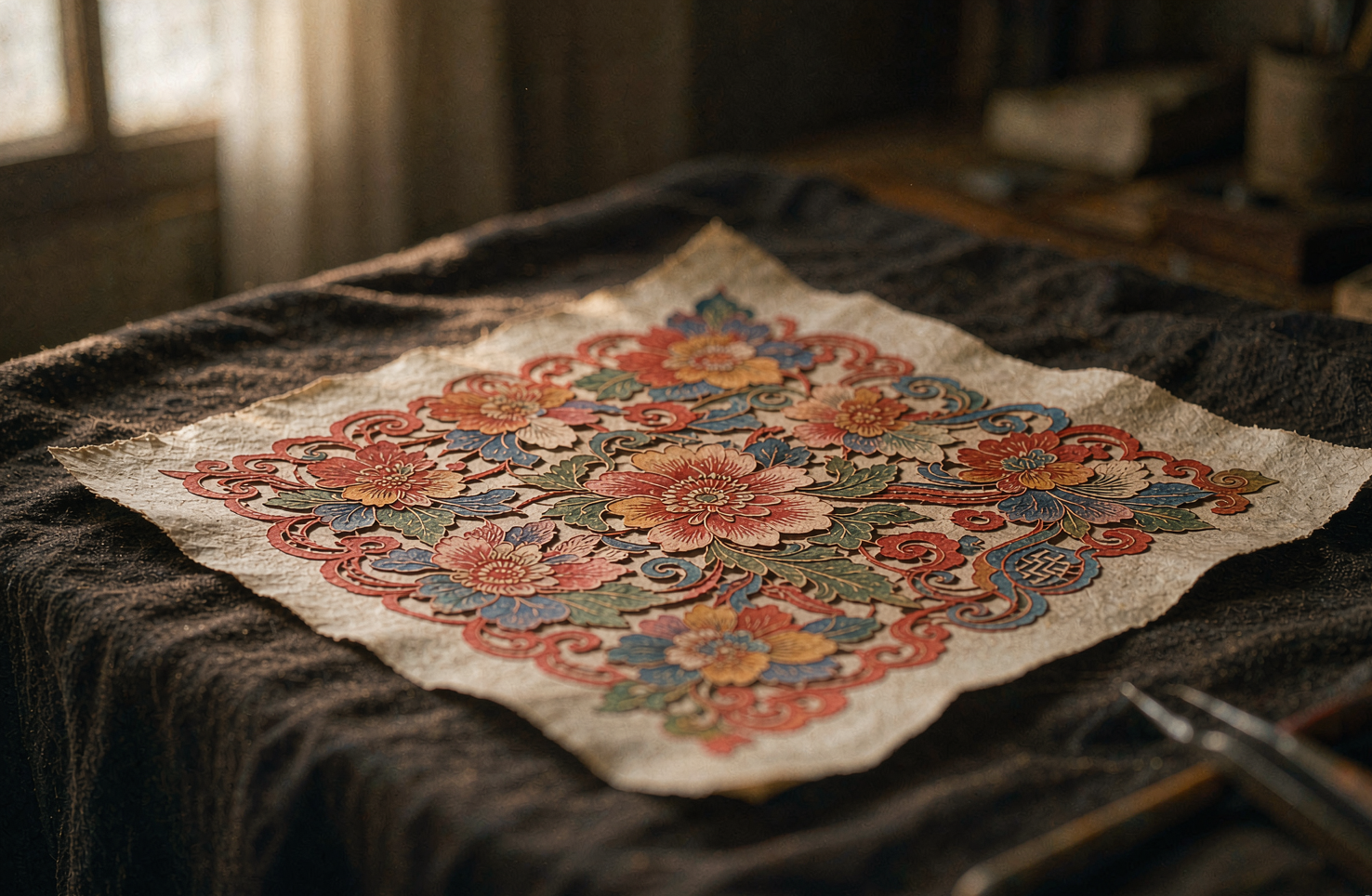
一张蔚县剪纸,彩色的刻刀活
严选录这一期看一张不太一样的剪纸:它不用剪刀,用刻刀;不止红色,还带着点染出来的粉与绿。河北张家口蔚县的剪纸,是剪纸大家族里"反着来"的一支——别处以剪为主、以红为正,蔚县以刻代剪、以点彩上色。说到底,这两个"反着来"的本质,是蔚县人把剪纸从窗前的女红,做成了作坊里的分工手艺:看懂了这一点,才算看懂了这张纸。
韵和鸣 · 2026/10/13 · 48 阅读
一盏博山琉璃:颜色是炉火给的,不是颜料调的
博山琉璃的颜色由矿石、着色配方和炉温共同形成,鸡油黄等色料并非烧成后涂在表面。文章介绍挑料、吹制、塑型、灯工和内画,说明流纹、气泡与壁厚如何反映手工过程,并提供观察颜色、过渡和口沿的选器方法。
韵和鸣 · 2026/10/12 · 46 阅读
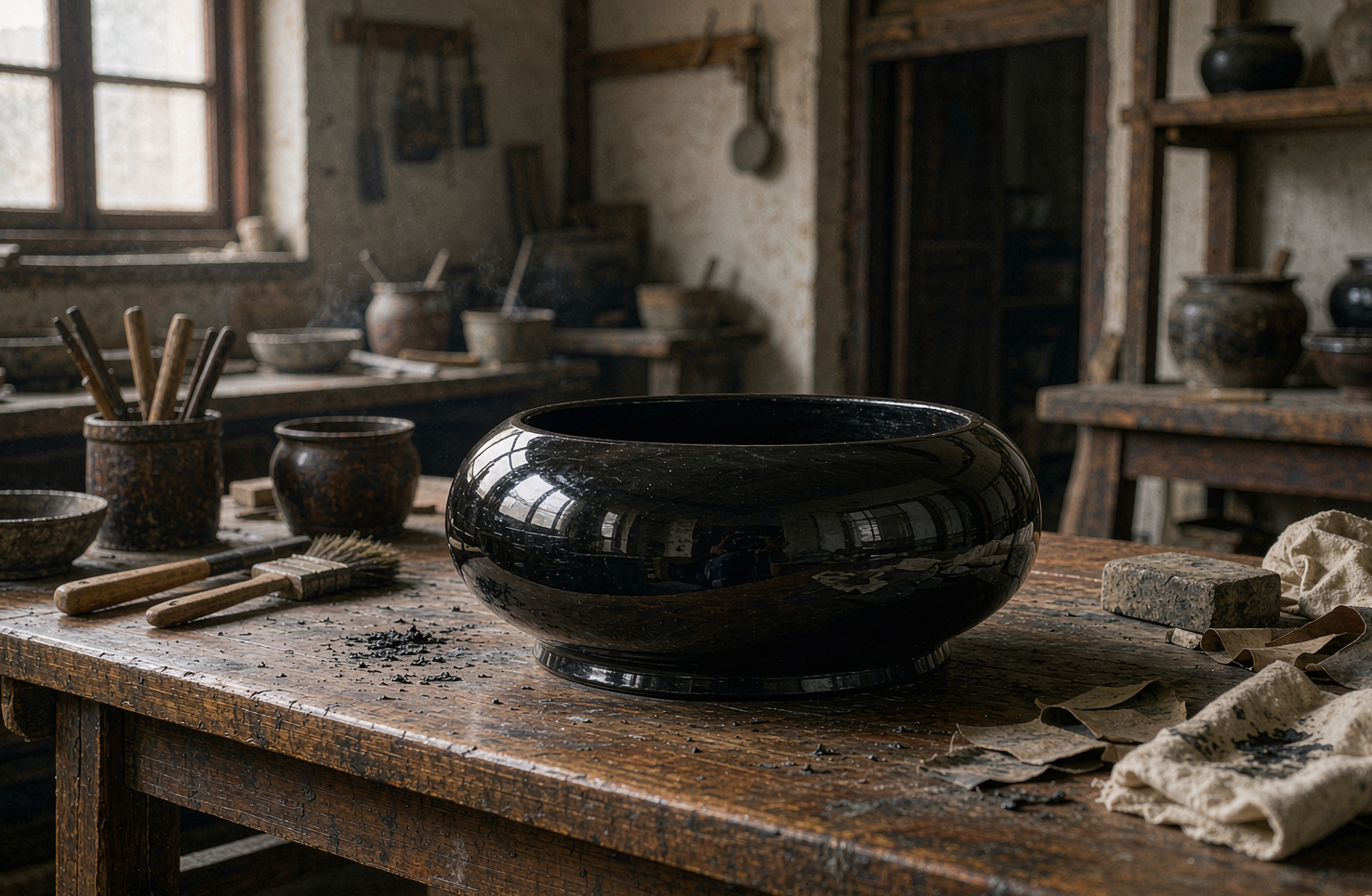
平金开黑:金与黑,为什么这么耐看
平金开黑以黑漆为底、金线为饰,关键在于黑底的推光质量、金线的稳定和留白的分寸。文章介绍相关工具与工序,并从线条、光泽、使用和来源等方面说明如何观察描金漆器,避免只用金的多少判断价值。
韵和鸣 · 2026/10/10 · 45 阅读
一枚漆书签:小物件为什么反而更考验手艺
漆书签体量小,却同时暴露胎体稳定、漆层附着、边缘打磨与日常耐用度。挑选时先看薄厚与侧面,再摸边缘和转角,比只看纹样更能判断小件工序是否扎实,也值得问清售后修复。
韵和鸣 · 2026/10/24 · 43 阅读

竹编漆艺茶席:两种非遗,如何在同一张桌上共生
一张茶席上,常常同时摆着竹编的垫、漆艺的托。它们来自两门毫不相干的手艺,却在同一片茶汤边安静相处。共生这件事,比"混搭"难得多。
韵和鸣 · 2026/10/2 · 42 阅读