手艺被录进数据库之后,手上的那点感觉还剩下什么
韵和鸣 · 韵和鸣公众号 · 2026/10/25 12:00:00 · 3 阅读
10 月 19 日下午,2026 景德镇论坛的一场平行论坛上,来自泰国清迈、丹麦、巴哈马等地的嘉宾讨论了一个不太好答的问题:数字技术不断发展,手工艺不可替代的价值是什么。据江西日报·大江新闻 2026 年 10 月 20 日报道,清迈的做法是建立数字数据库,记录传统技法、地方知识与匠人故事。手艺正在被大量地记录,但被记录下来的,是不是手艺的全部?
▍一方:先记下来,才谈得上留下来
赞成的一边,理由压得很低。老手艺最怕的未必是没人学,是没人知道它曾经存在过。一位老匠人走了,他手上那套分寸如果不曾留下任何记录,就等于从未发生。
"十五五"这五年里,第二次全国非遗普查将要启动,家底要先摸清——这是国务院新闻办公室 2026 年 10 月 20 日新闻发布会通报的内容。
普查、建档、数据库,解决的正是"家底不清"这个老问题。记录还能降低门槛:年轻人不必先拜师三年才知道这门手艺大概长什么样,可以先看见,再决定要不要靠近。
▍另一方:能存进硬盘的,多半不是最贵的那部分
反对的这一边,话更难讲。手艺里最难学的部分,往往进不了数据库。
漆要等到什么程度才能磨,靠的是手指按下去的那点回弹;刻刀走到哪个位置该收力,靠的是耳朵听到的那一声变化。这些东西,写下来是"凭经验判断"五个字,做出来是几百次做坏换来的。视频能拍到动作,拍不到力度;图片能拍到纹样,拍不到手感。
更值得警惕的是,一旦"被记录"被当成"被保护",保护工作就容易停在硬盘里。档案越来越厚,会做的人越来越少,这笔账算下来并不好看。
▍还有一个谁都没答上来的问题
在景德镇那场论坛上,嘉宾们倾向于"大胆拥抱科技,善用数字工具",但共识之后仍留着一个空缺:工具能放大什么,又替代不了什么。眼下没人划得清这条线。
▍问答
问 | 非遗数字化记录,能不能代替口传心授
答 | 代替不了,但能托底。数字化记录擅长保存可见的部分:工序顺序、工具形制、纹样谱系、匠人口述的经历。口传心授传递的是不可见的部分:力度的分寸、时机的判断、失败前的预感。两者是上下铺的关系,不是替代关系。
问 | 想学一门手艺,可以从视频和资料学起吗
答 | 可以学知识,不适合学手上功夫。资料能帮你判断自己想不想学、这门手艺是什么来路;但动手的部分必须有老师在旁边纠正,否则错一次就会把错动作练熟。建议先用资料入门,再找正规传习所或传承人办的班。
问 | 韵和鸣会帮匠人做记录和内容吗
答 | 做,而且是长期做。团队跑在各地的老街深巷里,把老师的工序一段一段拍下来、写下来;线上还有多语言直播与多国语言翻译,让海外读者也听得懂这门手艺。匠人专心做手艺,剩下的交给我们。
▍说在最后
档案能留住手艺的样子,留不住手艺的手感。这两件事本来就不冲突,怕的是把前者当成了后者。
你站哪一边?手艺被完整记录下来,就算被保护了吗?说说你的理由。
📩 非遗项目 | 匠人举荐 | 跨境出海 | 线下联营
欢迎留言或后台联系,我们与匠人同行。
—— 韵和鸣 · 与匠人同行
〖 辩 〗
English
One Side: Record It First, Then Talk About Keeping It
Those in favour keep their reasoning low to the ground. What an old craft fears may not be that nobody learns it but that nobody knew it existed. When a master dies, if the judgement in his hands left no record, it is as though it never happened.
A second nationwide survey of intangible cultural heritage will be launched during the coming five-year period, and the first task is to establish what exists; this was announced at the press conference of the State Council Information Office on 20 October 2026.
Surveys, archives and databases address precisely the old problem of not knowing what one has. Recording also lowers the barrier, since young people need not spend three years as apprentices before glimpsing what a craft looks like, and can see first, then decide whether to come closer.
The Other Side: What Fits on a Disk Is Rarely the Most Valuable Part
The opposing case is harder to make. What is hardest to learn in a craft often does not enter a database.
Whether lacquer is ready to be polished is decided by the slight spring under a fingertip; where a graver should ease off is decided by a change in the sound. Written down, these become the phrase judged by experience; learned, they cost hundreds of ruined pieces. Video captures the movement but not the pressure; a photograph captures the pattern but not the feel in the hand.
What deserves more caution is that once being recorded is treated as being protected, protection tends to stop at the hard disk. Archives grow thicker while the number of people who can do the work shrinks, and that balance does not read well.
At the Jingdezhen forum, guests leaned towards embracing technology boldly and using digital tools well, yet a gap remained after the consensus: what tools can amplify and what they cannot replace. For now nobody has drawn that line clearly.
Can digital documentation of heritage replace oral teaching?
It cannot replace it, but it can hold the floor. Digital records keep what is visible: the order of stages, the shape of tools, pattern lineages, and the experiences makers narrate. Oral teaching passes what is invisible: how much force, when to act, the premonition before a failure. The two are bunk beds, not substitutes.
Can one begin learning a craft from videos and written material?
You can learn the knowledge, but not the hand. Material helps you decide whether you want this craft and where it comes from, while the manual part needs a teacher alongside to correct you, since one wrong practice makes the wrong movement habitual. Start with reading, then join a recognised training house or a class run by a bearer.
Does YUNHEMING help makers with documentation and content?
We do, and we have done it for a long while. The team travels the old streets and deep lanes of different regions, filming and writing down a master's process stage by stage; online there are multilingual livestreams and translation into several languages so that overseas readers can follow the craft too. The maker concentrates on the work and the rest is left to us.
An archive can keep the shape of a craft but not the feel of it. The two were never in conflict; the danger is mistaking the first for the second.
ICH Projects · Artisan Referrals · Global Distribution · Salon Partnerships
你可能还感兴趣
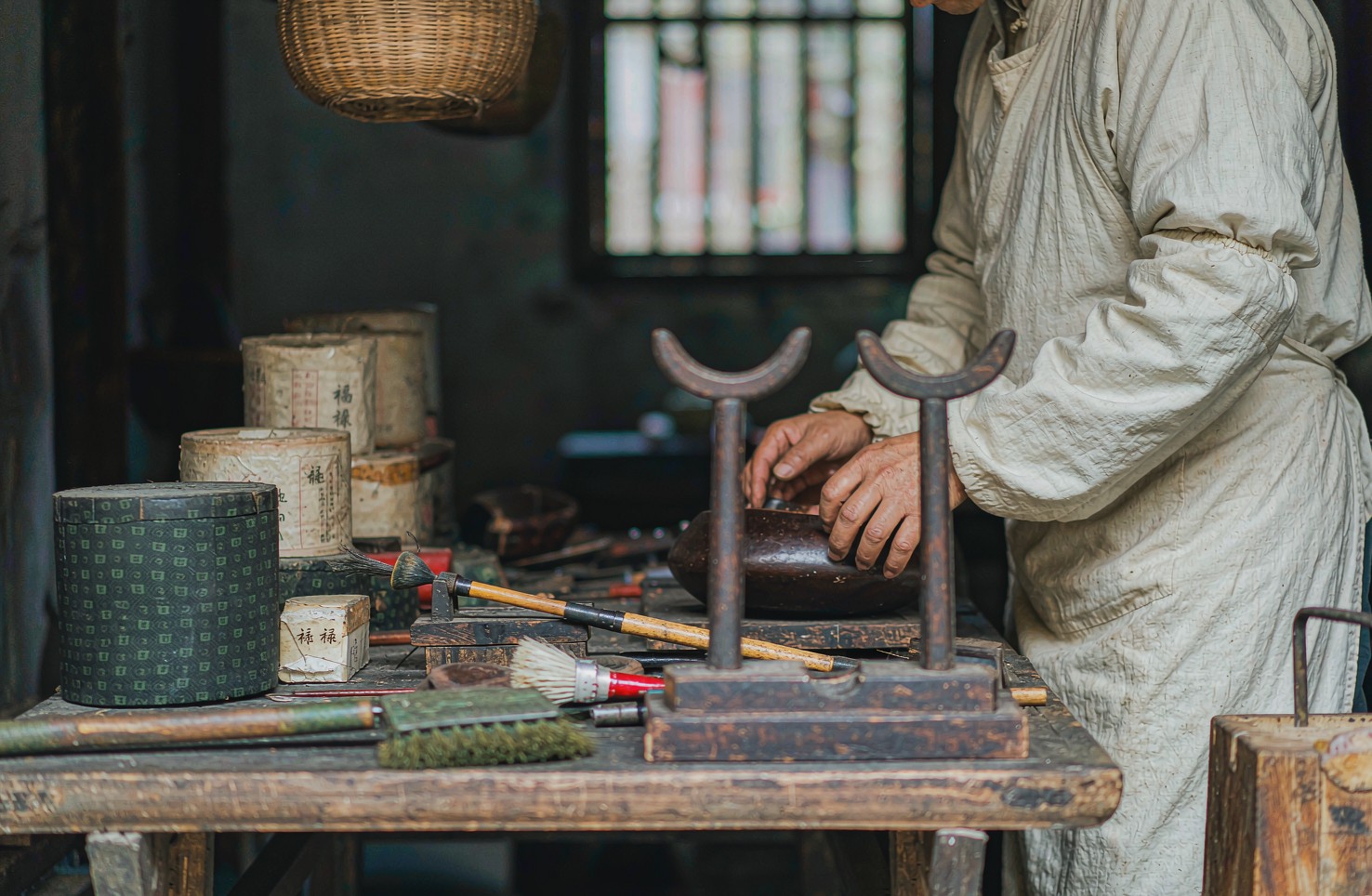
AI 生成的"非遗纹样",算不算抄袭
喂一批图给模型,几秒钟就能出一张"苗绣风"的纹样。有人觉得这是把传统纹样重新用起来,有人认为这是把别人一辈子的手艺免费拿走了。问题不好回答,说到底,真正难定的不是"像不像",而是数据从哪来、收益到哪去。今天我们不做判断,只把两边的理由摆出来。
韵和鸣 · 2026/10/24 · 56 阅读
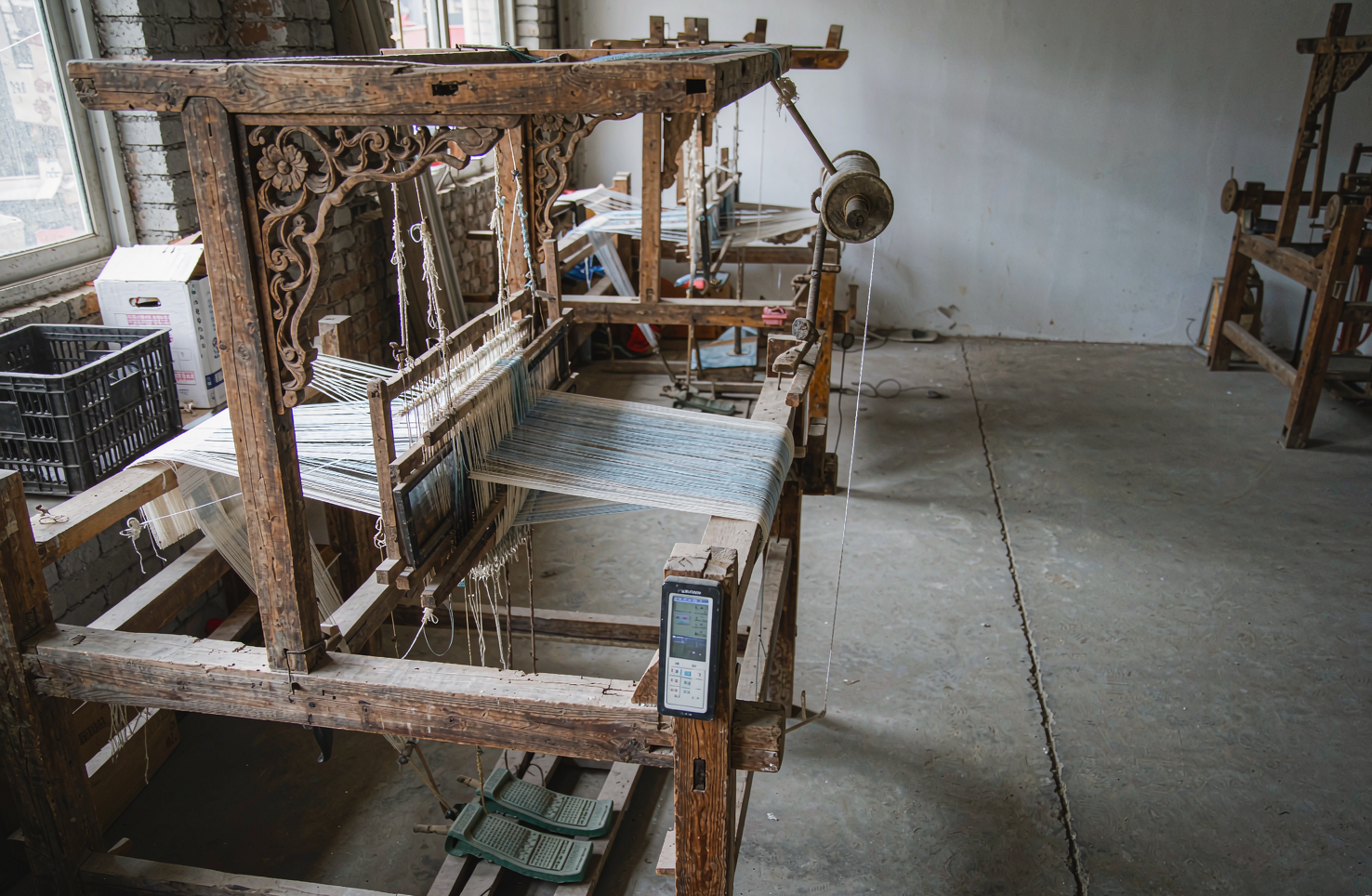
机器开始学手艺:是给匠人搭把手,还是来接班
一段流传很广的画面里,一台机械臂正跟着非遗传承人"学艺"——学劈丝、捻线、穿针。看的人分成两拨:一拨说技术帮上了忙,一拨说来抢饭碗了。同一件事读出两种意思,关键在于用什么尺度去量。
韵和鸣 · 2026/10/9 · 55 阅读
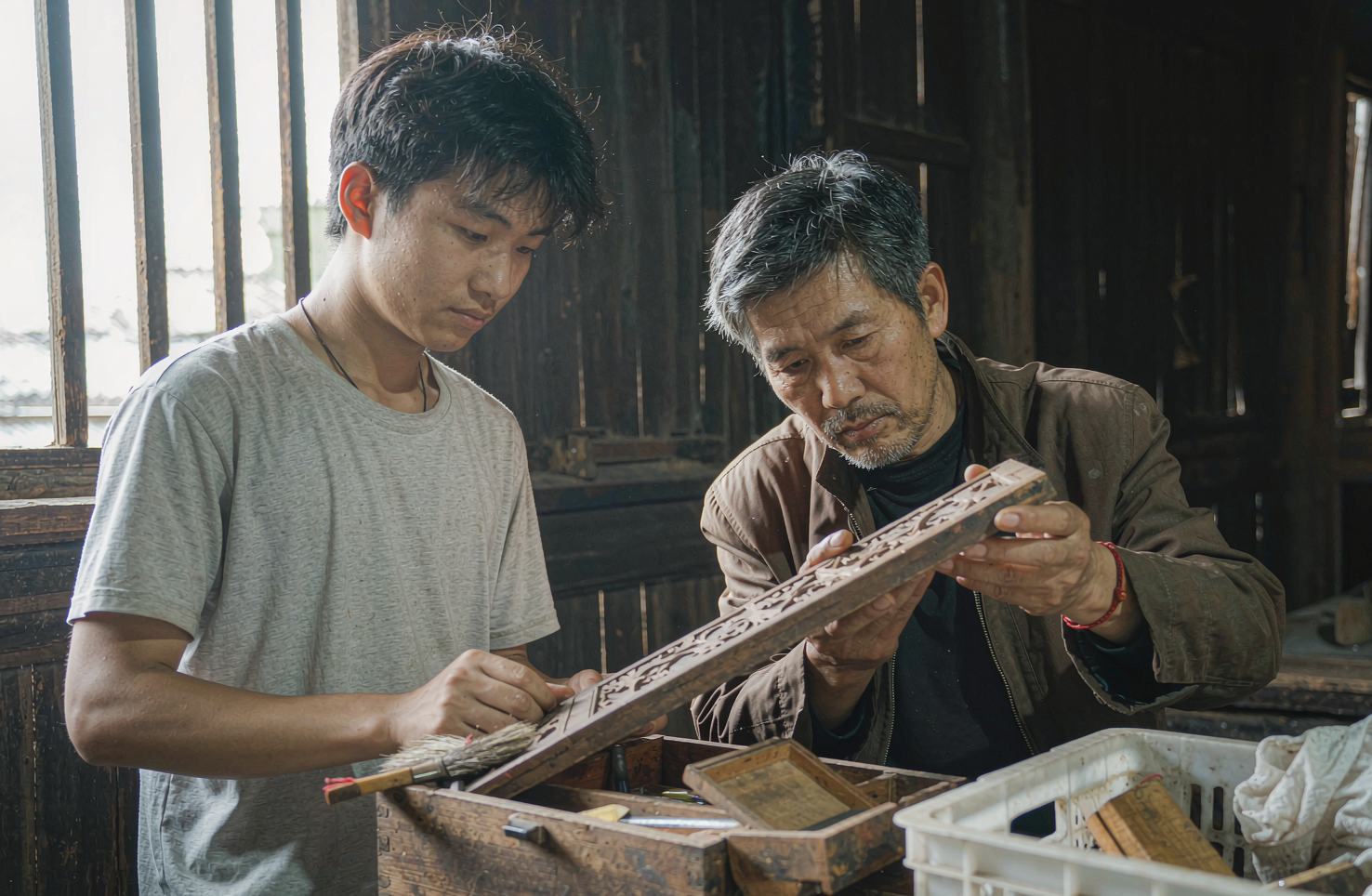
年轻人不愿学老手艺,该怪年轻人,还是怪这门手艺?
非遗传承里被讨论得最多的一句话是"后继乏人"。这句话往下追一层,就分成两条路:一条通向年轻人,说他们耐不住、看不上;一条通向他们面对的那门手艺,说它没能给出一条能活下去的路。这两条路,最近又吵起来了。
韵和鸣 · 2026/10/8 · 53 阅读
非遗创新只剩跨界联名和文创,是真突破还是路径依赖?
长假刚过,一场区域性非遗活动发布的"创新案例"名单在网上引来讨论:入选案例的路数出奇一致——不是和游戏影视做跨界,就是把老手艺搬进沉浸式演出,再就是开发一轮文创。有人叫好,也有人摇头:年年喊创新,怎么总围着老三样转?是突破,还是路径依赖?两边的话都摆出来。
韵和鸣 · 2026/10/13 · 43 阅读

大牌用非遗元素做联名:致敬,还是搬运?
非遗联名的争议不只在设计好不好看,更在是否说明技艺来处、尊重原意、让匠人或工坊署名并受益。文章呈现传播与订单机会、符号搬用风险两种观点,并提供判断合作是否真诚的具体观察点。
韵和鸣 · 2026/10/10 · 42 阅读
漆器为什么能埋八千年不坏
在博物馆做漆器研究与修复的研究员老周,桌上常年摆着两样东西:一段出土的漆皮残片,一只新做不久的平遥推光漆盘。他说这两样东西隔着八千年,却是同一种材料。这次对话,我们从"漆器为什么埋几千年不坏"聊起,聊到最后,其实是手艺对材料的理解问题。
韵和鸣 · 2026/10/14 · 64 阅读