7 位传承人拿到出海奖之后:非遗被看见,离被买到还有几步
韵和鸣 · 韵和鸣公众号 · 2026/10/25 12:00:00 · 5 阅读
10 月 21 日晚上,济南有一场颁给非遗的典礼,奖杯里有一个名字很扎眼——"年度海外传播贡献非遗传承人",一共 7 位。据央广网 2026 年 10 月 22 日报道,济南皮影戏传承人李娟、景德镇青花瓷制作技艺传承人程林曜、山西乔氏珐华陶瓷技艺传承人乔琳等 7 位传承人获评。老手艺被看见,当然是好事;但被看见和被买到之间,还隔着翻译、交付与署名这三道坎。
▍一、一份名单里,藏着三个方向
这份荣誉有意思的地方,不在人数,在构成。皮影是表演与造型的手艺,青花瓷是窑火里出来的器物,珐华陶瓷则是山西本土的低温釉陶——三种东西,三种活法,却被放在同一个"海外传播"的筐里。
放在几年前,这份名单大概会以"技艺门类"来分:陶瓷归陶瓷,织绣归织绣,表演归表演。现在评的是传播效果——谁把手艺讲到了海外,谁的名字就出现在上面。评选口径的这一挪,其实说明了一件事:非遗走向外面的过程中,最难的不是做出来,是讲出去。
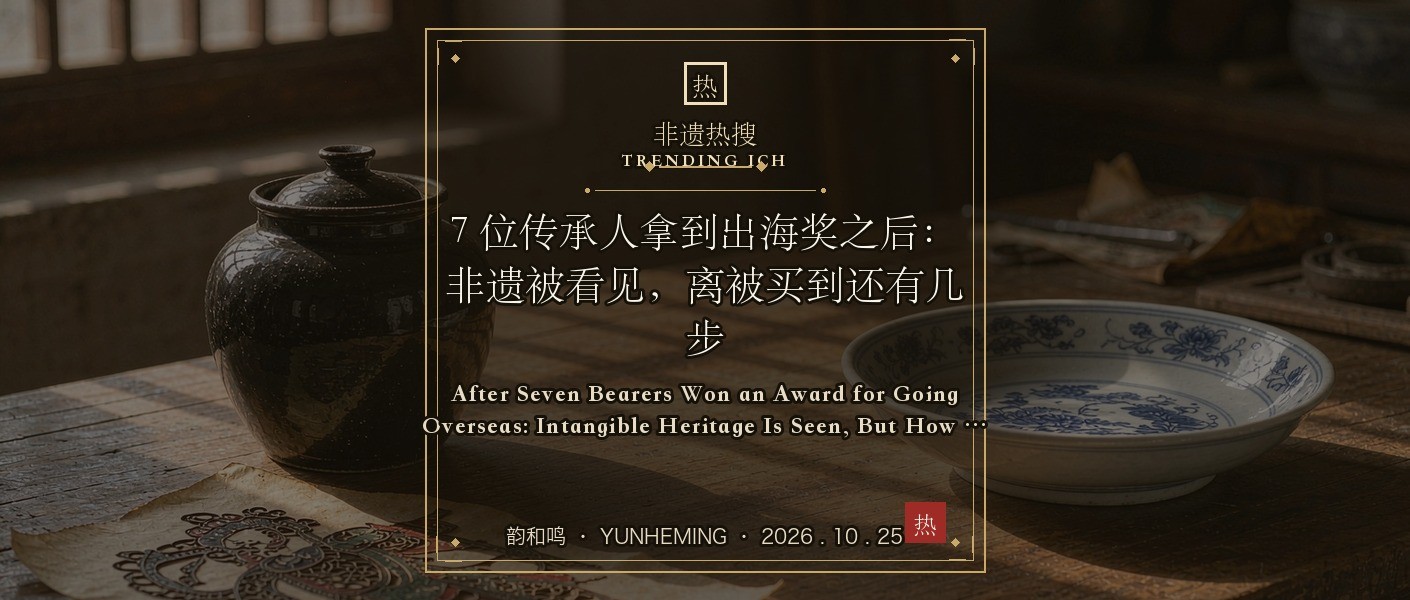
展台上的黑釉与青花器物并置,釉面在侧光下泛出不同的反光
这说明一件事:海外用户并不只对中国某一种手工艺感兴趣,他们感兴趣的是"这套东西背后的一整套生活"。皮影讲的是故事怎么被演出来,青花讲的是泥土怎么变成釉下的蓝,珐华讲的是晋地窑工怎么处理铅釉的流动。故事讲得越具体,器物越站得住。
▍二、被看见之后的三道坎
热度不是订单。从"海外用户刷到了"到"东西到了他手上",中间至少有三道坎。
据 2026 年 10 月 20 日国务院新闻办公室新闻发布会介绍,"十五五"时期将深入实施非遗工坊提质增效计划,推动刺绣、扎染、木雕、竹编等项目从"指尖技艺"转化为"指尖经济"。
头一道坎是翻译。这里的翻译不是把中文换成英文,而是把语境搬过去:这件器物原本用在哪儿、为什么是这个颜色、匠人为什么要在这里停一刀。译语言容易,译语境难。
第二道坎是交付。手工器物的产能有限,跨境链路要解决的却是包装、时效、破损与售后——一件易碎的陶瓷,从窑口到海外客厅,中间每一环都要有人负责。
备货区的器物正被逐件套上缓冲材料,准备装箱
第三道坎是署名。谁做的、谁卖的、收益怎么分,写在明处的合作才经得起追问。这也是为什么我们一直把"联名"和"贴牌"分得很清楚:匠人的名字与手艺,本身就是作品的一部分。
▍三、珐华这一类,为什么容易被误读
名单里的山西珐华陶瓷,是个很典型的例子。它用的是低温釉,釉色在烧成时会自然流动、聚集成块,紫、绿、黄、蓝常常挤在一件器物上。习惯了单色釉与极简器型的观众,头一眼容易把它看成"热闹"。
可一旦知道它长期用在庙宇屋脊与民间陈设上,要的是远看有势、近看有纹,那层"热闹"立刻就有了来处。这就是语境的力量——同一件器物,讲与不讲,能差出一整个价格区间。
▍四、热闹之后,留给手艺的是什么
典礼之外,还有一件更朴素的事:这 7 位传承人的订单有没有变多,学徒有没有变多,村里有没有多出两间工坊。这些数字不在奖杯上,但它们才是手艺真正的体温。
我们做非遗出海的看法很直白:曝光是起点,不是终点。把手艺讲清楚、把器物送到位、把名字署明白,这三件事做完,热闹才算真的落进了匠人的日子。
▍问答
问 | 非遗产品在海外真的有市场吗
答 | 有,但市场挑的不是"中国元素"这四个字,而是能不能讲清楚。据 2026 年 10 月 20 日国新办新闻发布会介绍,我国各级非遗代表性项目超过 10 万项;真正走得远的,往往是那些能说清产地、工序与匠人的器物。买家开口问的头一句通常不是"多少钱",而是"这是谁做的"。
问 | 中国非遗出海,最难的是哪一步
答 | 不是物流,是语境。海关、包装、时效都有成熟方案,难的是让一个没见过这门手艺的人理解它为什么长这样:颜色为什么这么重、纹样为什么这么排、器型为什么这么用。语境翻译不到位,器物就只剩下一个"漂亮"的评价,价格也就撑不住。
问 | 海外买家怎么判断一件中国手作是不是真的手工
答 | 看三处:一是痕迹,手工做的边角与纹样有细微差异,同款两件不会一模一样;二是工序说明,能讲清每道工序在做什么的,通常做不了假;三是来源,敢把出自哪位匠人之手写出来的,可信度更高。过于规整、件件相同的,多半来自模具。
问 | 韵和鸣做非遗出海,和其他卖家有什么不一样
答 | 两点:一是只做真非遗手工品,不卖把纹样印上流水线商品的"文创";二是有自己的跨境供应链底子,从选品、内容到履约是一条完整的链。产品出口欧美、日韩、新加坡等市场,出海不是新故事,而是起家就在做的事。
▍说在最后
一个奖杯能带来的,是一次被看见;能留下的,是接下来有多少人真的把器物带回家。前者靠传播,后者靠链条,两件事缺一不可。
你见过哪一门中国手艺在海外被讲得最清楚?评论区留一门,我们去找来讲。
📩 非遗项目 | 匠人举荐 | 跨境出海 | 线下联营
欢迎留言或后台联系,我们与匠人同行。
—— 韵和鸣 · 与匠人同行
〖 热 〗
相关搜索 | RELATED SEARCHES
非遗 出海 为什么 难 · 中国 手工艺 海外市场 怎么样 · 山西 珐华陶瓷 是什么 · 非遗 传承人 海外传播 · 手工 器物 怎么判断 真假 · 韵和鸣 非遗出海
English
What makes this honour interesting is not the number of people but its composition. Shadow puppetry is a craft of performance and form, blue-and-white comes out of the kiln, and fahua is a low-fired glazed ceramic native to Shanxi. Three kinds of work, three ways of living, all placed in the same basket marked overseas communication.
A few years ago a list like this would have been sorted by craft category: ceramics with ceramics, embroidery with embroidery, performance with performance. What is being judged now is the effect of communication: whoever has carried a craft to overseas audiences sees their name on it. That shift in criteria says something: in taking heritage outward, the hard part is not making it but telling it.
Black-glazed and blue-and-white vessels side by side on a display table, their glazes catching the side light differently
This says one thing: overseas audiences are not interested in a single Chinese craft but in a whole way of life behind it. Shadow puppetry is about how a story is performed, blue-and-white about how clay turns to blue under glaze, fahua about how Shanxi kiln hands managed the flow of a lead glaze. The more concrete the telling, the more firmly the object stands.
Attention is not an order. Between an overseas viewer scrolling past and the object arriving in their hands lie at least three gaps.
According to the press conference held by the State Council Information Office on 20 October 2026, the coming five-year period will deepen the plan to raise the quality and effectiveness of heritage workshops, turning embroidery, tie-dye, wood carving and bamboo weaving from skills at the fingertips into an economy at the fingertips.
The first gap is translation, and not the kind that swaps Chinese for English. It means carrying the context across: where this object was originally used, why it carries this colour, why the maker stops the knife here. Language is easy to translate; context is not.
The second gap is delivery. Handmade objects have limited capacity, while a cross-border chain must solve packaging, timing, breakage and after-sales. A fragile ceramic travelling from kiln to an overseas living room needs someone accountable at every link.
Vessels in the packing area being fitted one by one with cushioning before boxing
The third gap is attribution. Who made it, who sold it, how proceeds are shared: only a collaboration written in the open survives being questioned. That is why we keep co-signing strictly apart from mere labelling, since the maker's name and craft are part of the work itself.
Shanxi fahua ceramics on that list is a typical case. It uses a low-fired glaze that flows and gathers as it matures, so purple, green, yellow and blue often crowd onto a single piece. Viewers used to monochrome glazes and minimal forms tend to read it at first glance as merely busy.
Once you know it long served temple roofs and household display, needing presence seen from afar and pattern seen up close, that busyness acquires a reason. This is the power of context: the same object, told or untold, can differ by a whole price band.
After the Noise, What Is Left for the Craft
Beyond the ceremony lies something plainer: whether orders grew for these seven, whether apprentices grew, whether a village gained two more workshops. Those numbers are not engraved on the trophy, yet they are the true temperature of a craft.
Our view of taking heritage overseas is plain: exposure is the starting point, not the finish. Only when the craft is clearly told, the object safely delivered and the name honestly signed has the noise truly landed in a maker's life.
Is there really a market overseas for heritage products?
There is, but what the market picks is not the phrase Chinese element; it is whether the story can be told clearly. According to the State Council Information Office press conference of 20 October 2026, China counts over 100,000 representative heritage items at various levels, and those that travel furthest tend to be objects whose origin, process and maker can be stated. A buyer's first question is usually not the price but who made it.
What is the hardest step in taking Chinese heritage overseas?
Not logistics but context. Customs, packing and timing all have mature solutions; what is hard is helping someone who has never met the craft understand why it looks this way, why the colour is so strong, why the pattern is ordered so, why the form is used so. Where context fails to cross, the object earns only the word pretty, and the price cannot hold.
How does an overseas buyer tell whether a Chinese handmade piece is genuinely handmade?
Look at three things: traces, since hand-finished edges and patterns vary slightly and no two pieces of a design are identical; process, since anyone who can explain what each stage does is rarely faking; and provenance, since naming the maker raises credibility. Pieces that are perfectly uniform, one exactly like the next, usually come from a mould.
What makes YUNHEMING's approach to heritage exports different?
Two things: we sell only authentic handmade heritage works, not merchandise with heritage patterns printed on production lines, and we rest on our own cross-border supply chain, so selection, content and fulfilment form one continuous line. Our pieces go to markets in Europe, the Americas, Japan, Korea and Singapore, and going overseas is not a new story but what we have done from the start.
A trophy brings one thing: being seen once. What it leaves behind is how many people then actually carry the object home. The first depends on communication, the second on the chain, and neither works alone.
ICH Projects · Artisan Referrals · Global Distribution · Salon Partnerships
你可能还感兴趣
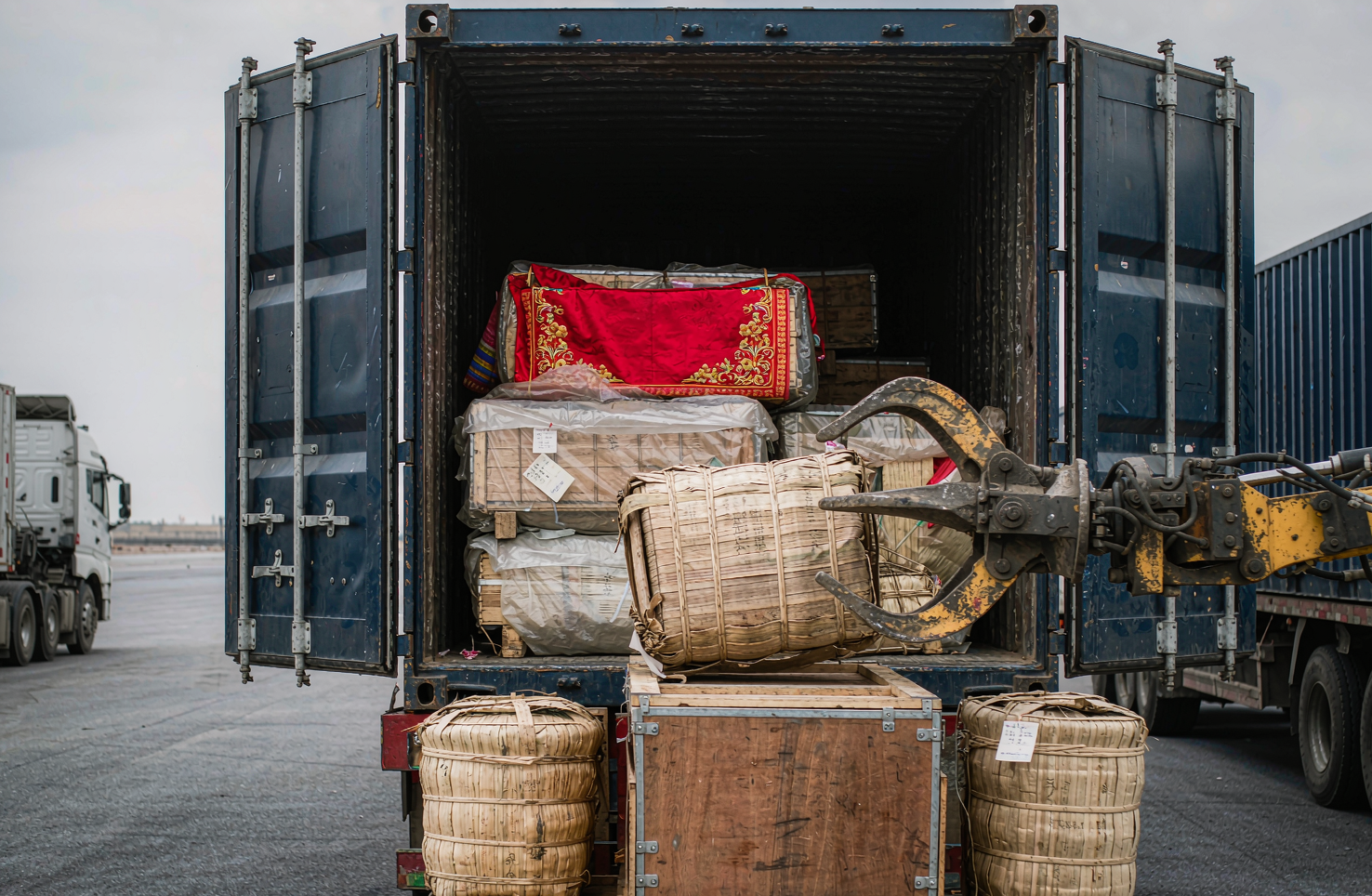
中欧班列上的非遗:慢一点,但走得远
非遗器物出海要在空运、海运与中欧班列之间权衡速度、成本和稳定性。对高工时、易碎、怕潮的手作而言,包装、防护、海外仓及发货报关等环节的安排,比单纯求快更能守住器物与资金。
韵和鸣 · 2026/10/8 · 60 阅读
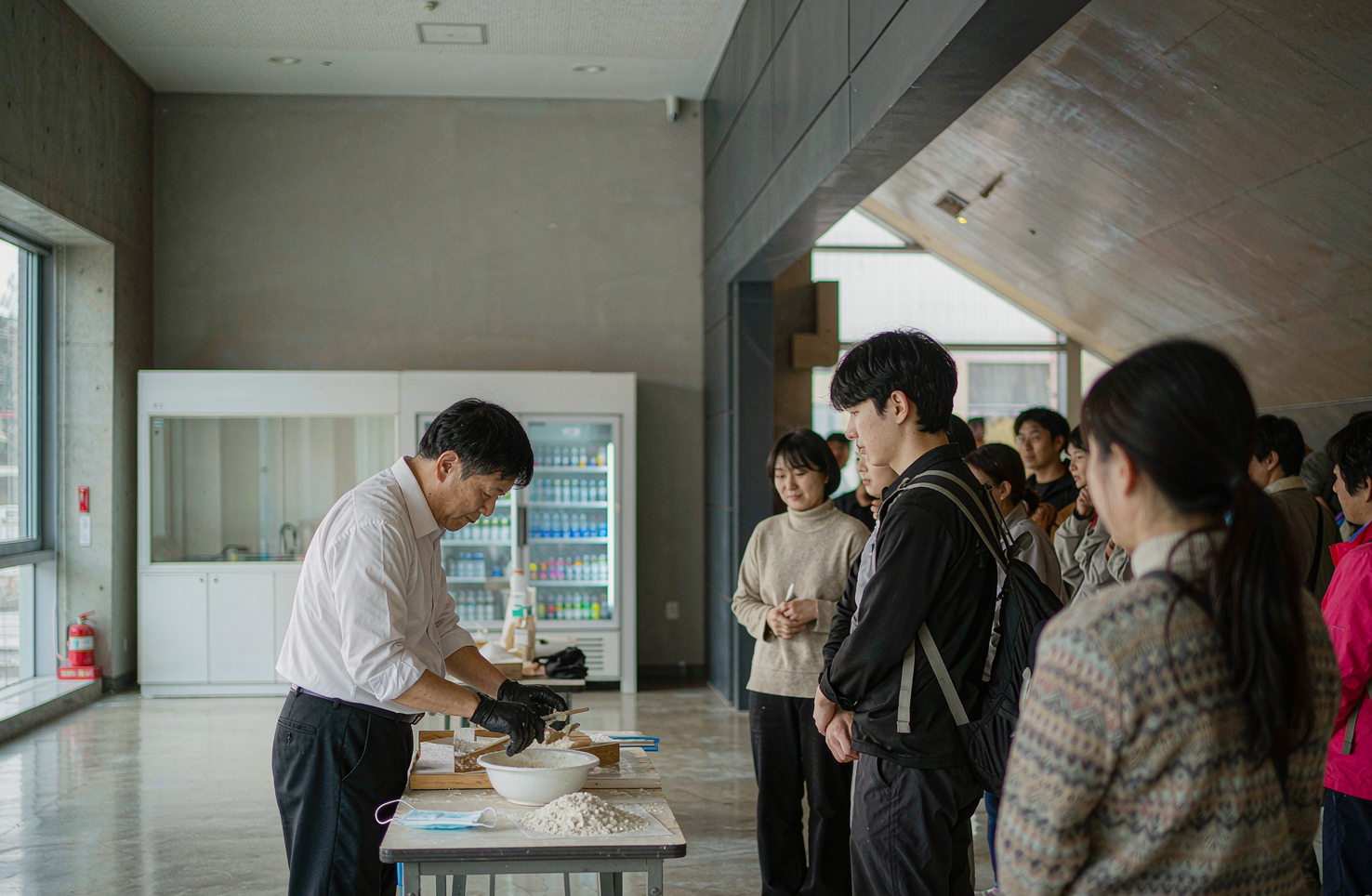
韩国的非遗保护:从"文化财"到活态传承
看世界怎么保护非遗,韩国常被提到,也常被简单化。它有一套自己的名词——"文化财""无形文化财""保有者"。关键在于,这套名词背后不只是一份名单,而是一整套"怎么把手艺交下去"的制度。
韵和鸣 · 2026/10/9 · 54 阅读

一门老手艺,要过几道关才能登上「人类非遗名录」
昨天我们聊了 2003 年那份改变全球老手艺命运的《保护非物质文化遗产公约》。今天接着往下问:公约建立了名录,那一门手艺要经历什么,才能把自己的名字写上去?
韵和鸣 · 2026/10/3 · 50 阅读

穆拉诺与博山:隔着七千公里的两座炉火之城
穆拉诺因作坊迁聚形成玻璃产业,博山则依托当地矿石与供料、匠人传统发展琉璃。文章比较两地产业聚集和原产地表达的路径,说明传承既需要师傅与学徒的密度,也需要把制作地点、来源和标准讲清楚。
韵和鸣 · 2026/10/12 · 49 阅读

"非遗"这个词,各国怎么叫、怎么理解
中文非遗、日本无形文化财及法国工艺大师等称呼,对应不同的认定单位与保护重心。比较这些体系,关键不在逐字互译,而在看名录、个人与社区分别承担什么角色,以及传承如何发生。
韵和鸣 · 2026/10/24 · 48 阅读

一件平遥漆器,如何走到海外客人家中
一件平遥漆器出海,要先讲清材质、工艺与来路,再经过合规、报关、物流、海外仓和末端配送。文章结合已有政策与跨境电商安排,说明多语种说明和养护提示同样重要:物流负责抵达,清楚的信息负责建立信任。
韵和鸣 · 2026/10/5 · 47 阅读