一位老漆匠的四十年:什么变了,什么没变
韵和鸣 · 韵和鸣公众号 · 2026/10/24 12:00:00 · 13 阅读
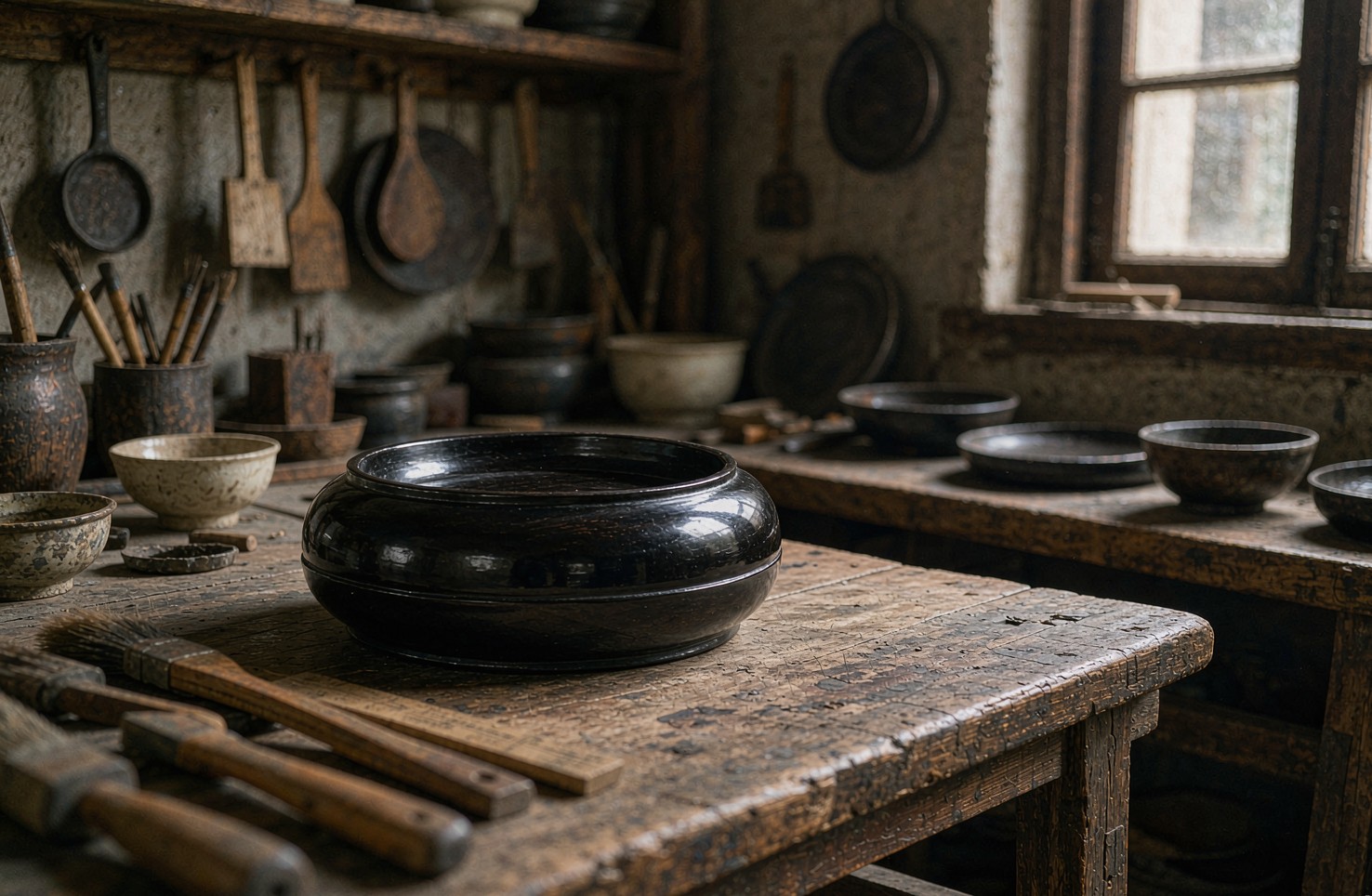
在平遥,做漆的人不太愿意谈"艺术",他们更常说今天是几道漆、明天能不能磨。我们把几位老师傅的说法合在一处,试着回答一个问题:四十年下来,这门手艺到底什么地方变了,什么地方一步都没动。答案和想象不太一样——变的多是工具与市场,没变的恰恰是最贵的那部分。说到底,卡住这门手艺的不是设备,是等待。
▍一、学徒的头几年,练的不是手艺
问到入门,老师傅说的头一句话通常是:先学熬。这里的"熬"指的不是熬漆,是熬性子。新来的徒弟很长时间里做不了髹涂,做的是配灰、打磨、扫地、看阴干房——这些活的共同点是不能出错,但看不出功劳。
打磨中的漆面半成品,表面泛着一层均匀的哑光
熬过这一段才有第二关:手上的分寸。髹漆讲究薄而匀,厚了会皱,薄了盖不住底;打磨讲究"见光即止",多磨一下就把前面的漆层磨穿。这两件事没有仪器能替你判断,只能靠做坏过几十次。老漆匠说得很实在:报废过的东西,才是真正的学费。
▍二、变的是工具和市场,没变的是等它干
四十年里,工具的改进是实实在在的:
2006 年,平遥推光漆器髹饰技艺被列入由文化和旅游部公布的国家级非物质文化遗产代表性项目名录。所谓推光,即用手掌蘸油与细灰反复摩擦,让光从漆层里透出来,而不是浮在表面。
除此之外,砂纸的目数细了,打磨的效率高了;有些辅助环节可以用机器先做一遍,人的手只接最后那一道。工坊的取暖和通风条件也比过去好,冬天不再只能停工。
但有一件事谁也没能改掉——漆要自己干。生漆的干燥依赖特定的温湿环境,需要放进专门的阴干房里等,快不得。师傅们常说,一道漆进去,隔天能不能磨,不看你想多快,只看它肯不肯。所以一件漆器的周期,从来不由客户的时间表决定,而由阴干房决定。
阴干房一角,层层架板上的漆器半成品正处在等待中
变化更大的其实是买方。过去来订货的多是单位和老主顾,看的是器型和结实;现在不少人开口先问的是纹样好不好拍照。这个变化不算坏,但它带来一个新难题:拍照好看的部分容易被加重,不容易被看见的部分——比如披麻挂灰做没做足——开始有人悄悄省。
▍三、带徒以后,他最较真的是哪一行
从学徒到带徒,最容易松口的地方其实不是完整性,而是进度。老师傅的做法很笨也很有效:每一件东西出工坊之前,都要过他眼睛一次;不满意就返工,不管赶不赶交给谁。他给徒弟讲得最多的一句不是怎么做得更漂亮,而是——别让我替你把这道工序做了。
▍问答
问 | 平遥推光漆器髹饰技艺,为什么周期特别长
答 | 因为核心工序依赖反复髹涂与阴干。公开资料介绍的平遥推光漆器核心工序包括披麻挂灰、多层髹涂、手工推光等。每一层都要等干透再打磨修整、再上下一层,天气与湿度不合适时等待还会更长。这个时间省不掉,省掉就意味着层数不足或漆膜未干透。
问 | 手工推光和机器抛光,成品差别在哪
答 | 差别在光。手工推光是手掌蘸油与细灰反复摩擦,光从漆层里透出来,转动时有深浅变化,看着润而不刺眼;机器抛光效率高,但容易把温度带起来,得到的往往是一层表面亮,缺少那种由内而外的厚度感。上手摸也有区别,手工推光的边角处理更柔。
问 | 想学漆器,最该先了解什么
答 | 先了解时间成本和身体成本。时间上,一件器物往往要跨数月;身体上,生漆会让一部分人过敏,需要先确认自己能不能耐受。再之后才是基本功:配灰、髹涂、打磨的顺序和每一层的判断标准。建议从正规传习所或院校相关专业入手,别拿零散资料自学头一道。
问 | 韵和鸣怎么让老师的手留在器物里
答 | 靠三条约束。一是器物均与非遗老师联名,不是贴牌,出自谁的手写在明处;二是核心工序必须手工完成,这是选品时的硬门槛;三是支持回收,器物出了问题回来能修,而不是一次性买卖。我们相信匠人更好,韵和鸣才会更好。
▍说在最后
四十年里,他看着这门手艺从没人问津到有人排队,也看着一些同行为了赶工期把工序拆掉。他自己没拆,理由朴素:手艺是靠一遍遍做对的,不是靠说服别人得来的。这句话,值得所有做器物的人放在案头。
你还想听哪一门手艺的老师傅讲讲他的入门那几年?评论区点出一门,我们去找。
📩 非遗项目 | 匠人举荐 | 跨境出海 | 线下联营
欢迎留言或后台联系,我们与匠人同行。
—— 韵和鸣 · 与匠人同行
〖 匠 〗
相关搜索 | RELATED SEARCHES
平遥推光漆器 髹饰技艺 工序 · 阴干房 作用 是什么 · 手工推光 和 机器抛光 区别 · 生漆 过敏 注意 · 漆器 制作周期 多久 · 韵和鸣 联名 匠人
English
Asked how beginners start, a master usually says first: learn to endure. Endure here does not mean boiling lacquer but tempering judgement. For a long while an apprentice does not apply lacquer; they mix ground coats, sand, sweep and watch the drying room. What these tasks share is that they allow no mistakes and show no credit.
A semi-finished lacquer surface mid-polishing, its sheen an even matte
Only past that comes the second hurdle: judgement in the hand. Lacquer must go on thin and even, since thick it wrinkles and thin it fails to cover; polishing follows the rule to stop the moment the shine appears, because one stroke too many cuts through earlier coats. No instrument decides either; only having ruined dozens does. As one master put it plainly, what you spoiled was the real tuition.
Tools and Markets Changed; Waiting for It to Dry Did Not
In 2006 the Pingyao polished lacquer technique was inscribed on the national list of representative intangible cultural heritage items published by the Ministry of Culture and Tourism. Hand-polishing means rubbing the surface repeatedly with oil and fine ash in the palm, so that light seems to rise from within the film rather than sit on top of it.
Over forty years the tools have genuinely improved. Sandpaper comes in finer grits and polishing is more efficient; some auxiliary stages can be run through a machine first, leaving only the last pass to the hand. Heating and ventilation in workshops are better too, and winter no longer forces a stop.
One thing nobody has managed to change is that lacquer dries on its own terms. Raw lacquer cures under particular warmth and humidity, needing time in a dedicated drying room, and that cannot be hurried. Masters often say that whether a coat can be polished the next day depends not on how urgently you wish it but on whether it is willing. The cycle of a lacquer object has therefore never been set by the customer's calendar but by the drying room.
A corner of the drying room, where half-finished lacquer pieces rest on tiered racks
What has changed more is the buyer. Orders once came from institutions and long-standing patrons, who looked at form and sturdiness; many now ask first whether the pattern photographs well. That is not bad in itself, but it brings a new problem: the photogenic parts get emphasised while invisible ones, such as whether the hemp-and-ground-coat layers were fully applied, quietly begin to be skipped.
Once He Took Apprentices, Which Line Did He Hold Hardest
From apprentice to teacher, the place most easily let go is pace rather than completeness. The old master's method is clumsy and effective: everything leaving the workshop passes under his eye once; if it is not right it goes back, whoever is waiting. What he repeated most to apprentices was not how to make it prettier but: do not make me redo this stage for you.
Why does the Pingyao polished lacquer technique take so long?
Because its core depends on repeated coats and slow drying. Public sources describe the central stages as applying hemp and ground coats, multiple layers of lacquer, and hand-polishing. Each layer must dry through before being polished and trued, and unsuitable weather lengthens the wait further. This time cannot be cut; cutting it means too few layers or a film that never fully cured.
What separates hand-polishing from machine buffing?
The difference is in the light. Hand-polishing rubs the surface with oil and fine ash in the palm until the shine seems to come from within the film, shifting in depth as you turn it, moist rather than glaring. Machine buffing is efficient but tends to raise temperature, producing a surface gloss without that sense of depth from inside. It differs to the touch as well: edges finished by hand are softer.
What should one learn first before studying lacquer?
Learn the cost in time and the cost to the body first. An object often spans several months, and raw lacquer causes a reaction in some people, so tolerance must be established early. Only then come the fundamentals: the order of ground mixing, coating and polishing, and how to judge each layer. Start through a recognised training house or a relevant college programme rather than teaching yourself the first coat from written material.
How does YUNHEMING keep the maker's hand in the work?
Three commitments hold it. First, every piece is co-signed with the maker rather than merely labelled, and whose hands made it is stated openly. Second, the core stages must be completed by hand, which is a hard threshold in selection. Third, we support take-back, so a damaged object can return for repair instead of being a one-off sale. We believe that only when makers do better does YUNHEMING do better.
In forty years he watched this craft go from being ignored to having people queue for it, and watched some peers strip out stages to meet deadlines. He did not, for a simple reason: a craft is built by doing it right again and again, not by persuading others. That sentence belongs above every maker's bench.
ICH Projects · Artisan Referrals · Global Distribution · Salon Partnerships
你可能还感兴趣
漆器为什么能埋八千年不坏
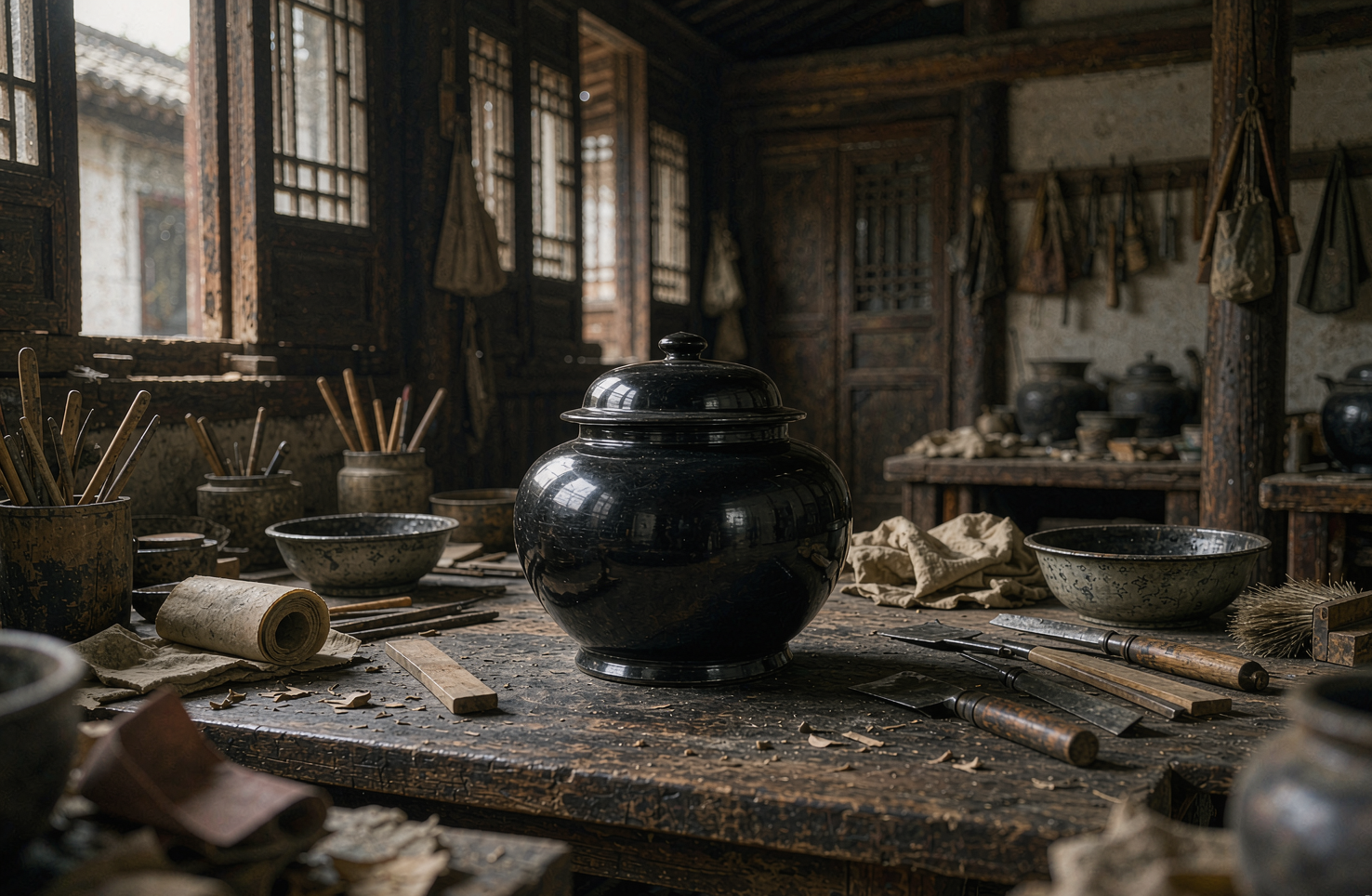
在博物馆做漆器研究与修复的研究员老周,桌上常年摆着两样东西:一段出土的漆皮残片,一只新做不久的平遥推光漆盘。他说这两样东西隔着八千年,却是同一种材料。这次对话,我们从"漆器为什么埋几千年不坏"聊起,聊到最后,其实是手艺对材料的理解问题。
韵和鸣 · 2026/10/14 · 30 阅读
一方宋锦里,藏着宋人的审美秩序
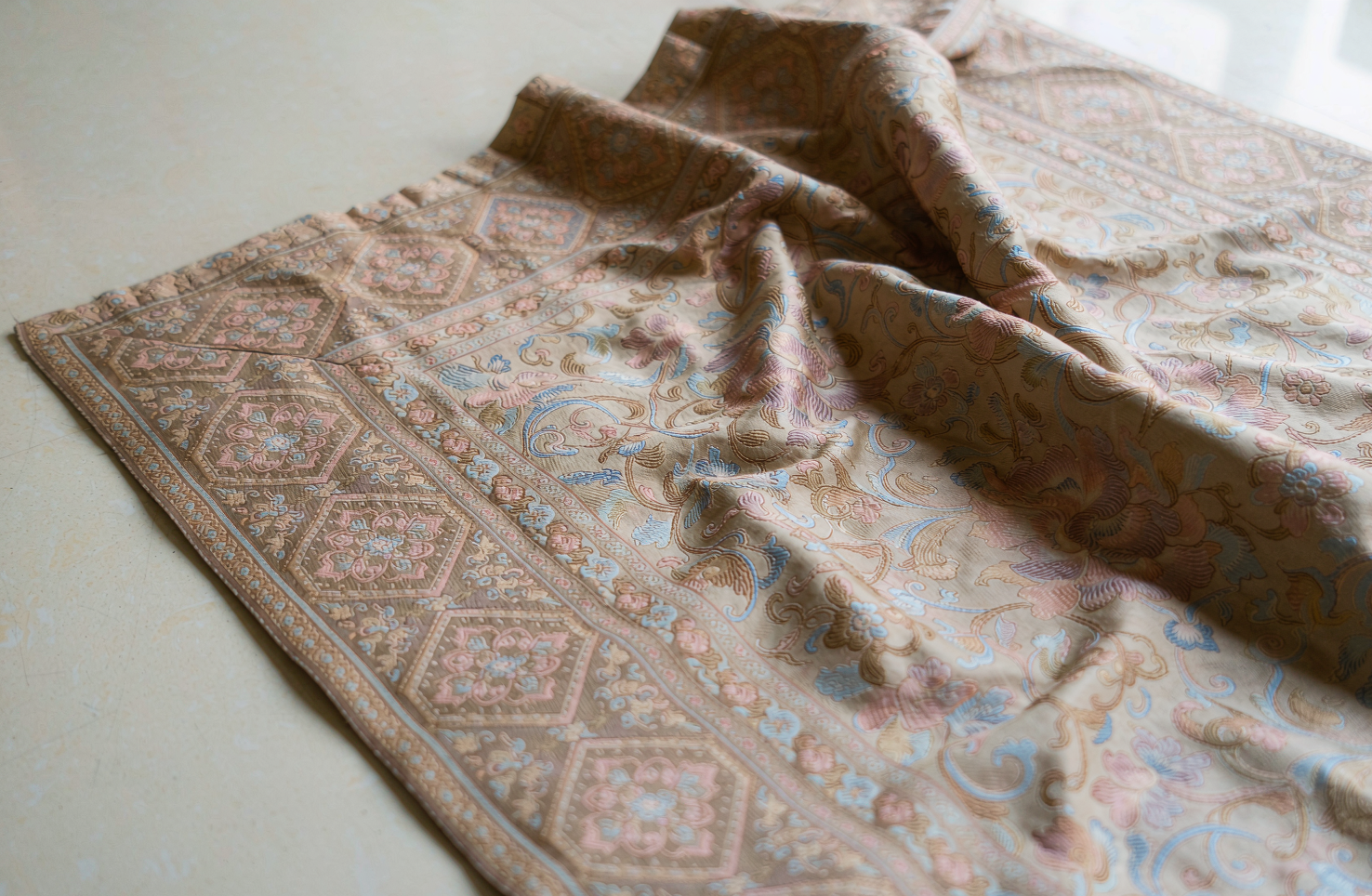
初见宋锦,我的反应不是"好看",而是"安静"。它不像人们想象里的锦那样满身是光。带我看锦的老师傅说,正是这份安静,最难织。
韵和鸣 · 2026/10/8 · 25 阅读
一位漆器匠人的失败清单,那些没做成的器物
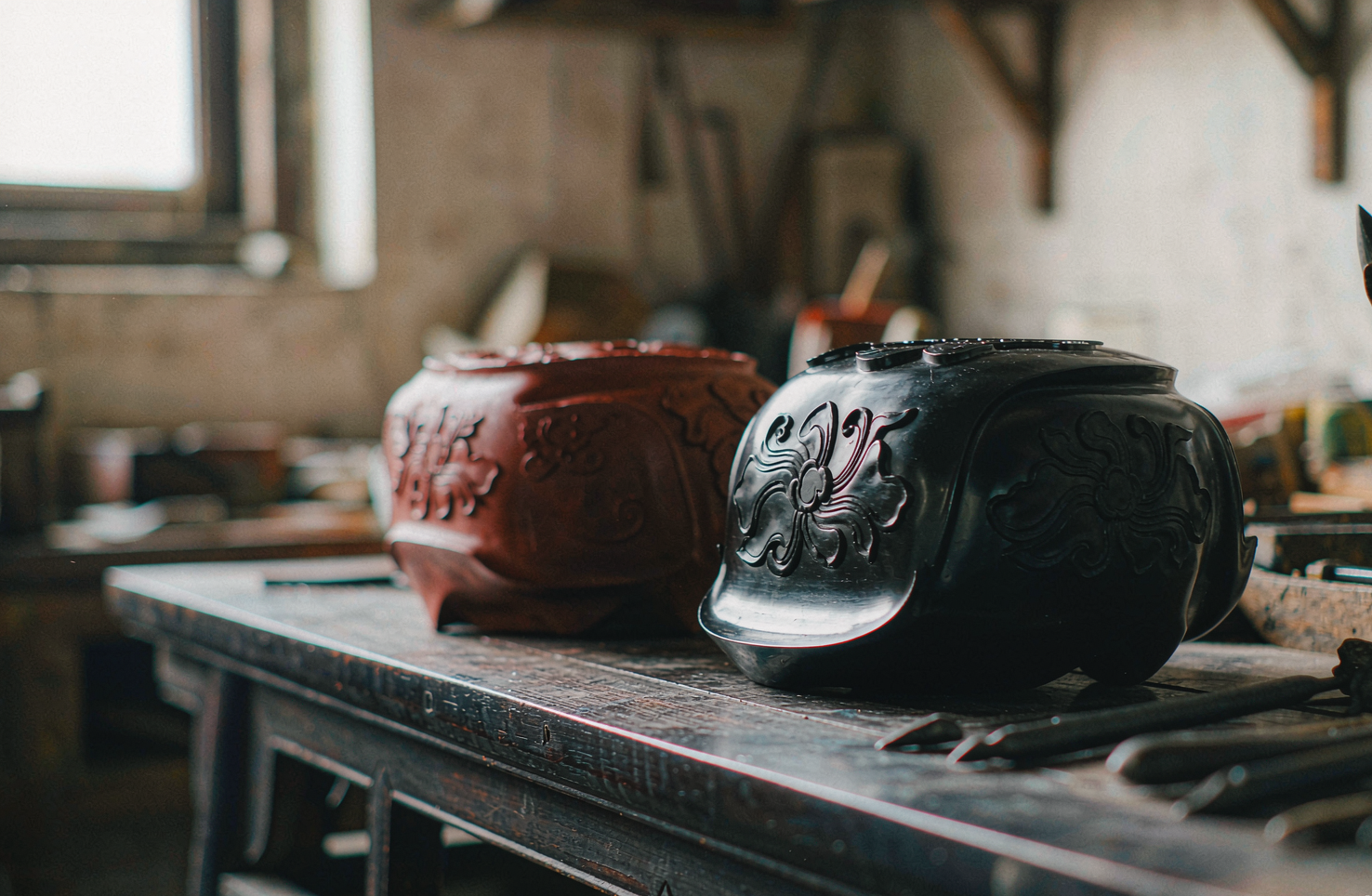
一间漆坊的账,通常记的是卖出了多少件;平遥一位做了三十多年推光漆器的老师傅,却另有一个本子,专记做坏了多少件。失败清单这门"倒着记的账",恰恰是手艺扎实与否的底细——器物耐看的那一面,是从废品堆里刨出来的。
韵和鸣 · 2026/10/12 · 22 阅读
一位苏绣绣娘谈配色:机器调不出的那层灰
苏州的绣坊里,一个上午常常只做一件事:配灰。不是调颜料,是把几股不同颜色的丝线并在一起,看它们在光下合不合。绣娘说,机器能把颜色调得很准,可准不等于对——苏绣要的那层灰,是跟着光线走的。
韵和鸣 · 2026/10/20 · 19 阅读
十六岁学艺,他如今想让漆器走进年轻人的家
在平遥,学漆艺的人正在换代。老匠人把五十年的功夫交给徒弟,年轻教师把漆带进课堂。一门千年手艺要传下去,卡住的往往不是技法。
韵和鸣 · 2026/10/2 · 19 阅读
去贵州雷山,看一块银元如何变成一支银簪
在黔东南的苗寨里,银不只是一种首饰材料。它曾经是可以随时熔掉、重新打制的"存款",也是节日里一个女人身上最亮的那部分。关键在于,当一块老银元被放进坩埚,它要经过多少双手、多少道火,才重新成为一件能戴出门的东西。
韵和鸣 · 2026/10/9 · 42 阅读