景德镇手工制瓷技艺:一座城,一套七十二手的工序
韵和鸣 · 韵和鸣公众号 · 2026/10/23 12:00:00 · 6 阅读
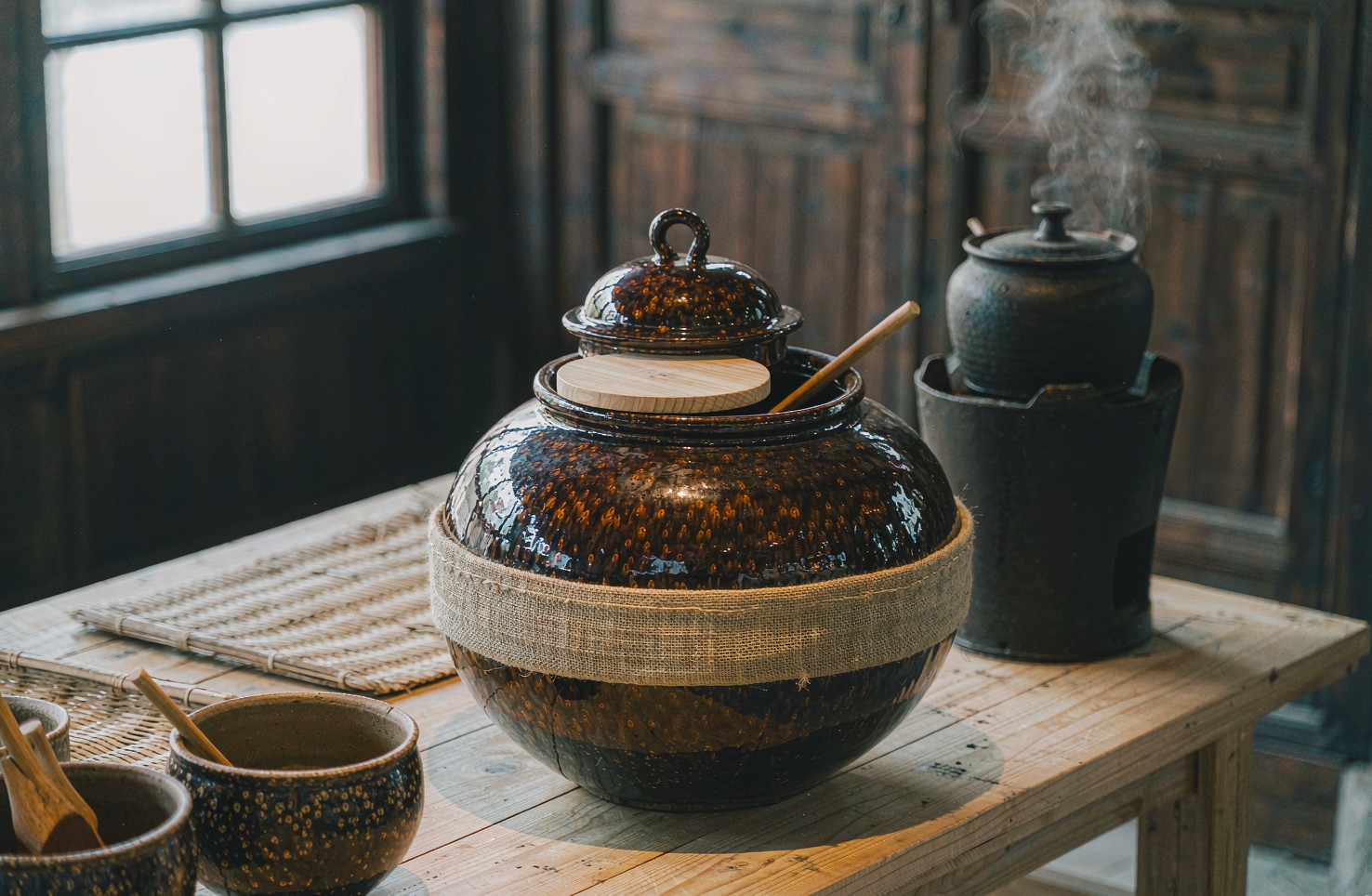
在全国首批二十四座历史文化名城里,景德镇是少有地凭本地物产入选的一座。据中国非物质文化遗产网,景德镇手工制瓷技艺于 2006 年列入国家级非物质文化遗产名录,项目编号 Ⅷ-7,属传统技艺类,保护单位为景德镇市手工制瓷技艺研究保护中心。这座城的立市之本,是一门把泥土烧成磬声的技艺。
▍一、起源地:为什么偏偏是景德镇
景德镇在江西东北部,昌江穿城而过。它成为瓷都,靠三样东西凑在一起:周边的高岭土与瓷石、漫山可作燃料的松柴、连通鄱阳湖与长江的水路。做瓷的土、烧瓷的柴、运瓷的船,都在方圆几十里内备齐。
依水而建的老窑作街区,水路曾决定瓷器能走多远
▍二、历史背景:从五代到明清的一条上升线
据文旅部与中国非物质文化遗产网公开资料,景德镇自五代开始生产瓷器,宋、元两代迅速发展,至明、清时在珠山设御厂,成为全国的制瓷中心。重要成型工序在宋代已初步建立;到元代,又发明了瓷石加高岭土的"二元配方法"及青花釉下彩绘技术。
明、清两代,制瓷手工技艺体系基本完善。宋应星在《天工开物》里写下那句被反复引用的话:"共计一坯之力,过手七十二,方克成器。其中微细节目,尚不能尽也。"
▍三、工艺特色:五道工序,每一道换个工种
所谓手工制瓷,核心工序可粗分为拉坯、利坯、画坯、施釉与烧窑:拉坯把泥做成雏形;利坯把粗坯旋削到厚薄均匀;画坯用青花料在生坯上作画;施釉通过蘸、荡、吹给坯体披一层玻璃质;最后是烧窑。
拉坯机上正在成型的泥坯,器物的厚薄在这一步定下基调
元代那一步"二元配方"值得单说。此前单一瓷石做大器容易塌陷变形,掺入高岭土后耐火度提高,大件才立得住。这是材料层面的改进,却决定了后来青花大瓶能不能做出来。
▍四、文化价值:四句话的评价,和一个行业的分工观
景德镇瓷素有"白如玉、明如镜、薄如纸、声如磬"之说,四句分别讲釉色、光泽、胎体与声音。其中"声如磬"最易被忽略,却最能说明目标:器物是要被敲响的,声音里藏着烧成温度与胎釉结合的状态。
更深一层在那"七十二手"里:一套高度分工的体系,每个人的手艺都很窄,几十双手才凑成一件。这是把个人手艺变成产业能力的办法。
▍五、传承现状:保留下来的部分,与正在淡去的部分
据中国非物质文化遗产网项目说明,随着瓷业机械化不断发展,景德镇瓷业习俗已开始淡化;传统手工制瓷虽部分保留,其中一大部分仍在流失,亟待抢救与保护。
另一面是手工与机器长期共存:规模化日用瓷交给生产线,仿古与定制创作仍在工作台完成,许多作坊同时保留两种能力。真正的课题或许不是"机器取代手工",而是分工体系散了之后,谁来把那七十二双手重新攒起来。
▍问答
问 | 景德镇手工制瓷技艺是哪一级非遗,什么时候列入的
答 | 国家级。据中国非物质文化遗产网,该项目于 2006 年公布为国家级非物质文化遗产代表性项目,项目编号 Ⅷ-7,类别为传统技艺,申报地区为江西省景德镇市,保护单位是景德镇市手工制瓷技艺研究保护中心。
问 | 手工做的瓷器和机器做的,日常能看出来吗
答 | 能。看胎体厚薄变化与底足处理——手工拉坯利坯有细微差异,同一批件的重量与弧线不会完全一致;机器上浆成型的器物则整齐到没有余地。另看画工,手绘青花笔触有轻重与接笔,贴花与印花重复感很强。
问 | 韵和鸣收瓷器吗?景德镇的手工瓷在你们品类里吗
答 | 瓷是六大品类之一。品牌以平遥推光漆器髹饰技艺起家,如今整合的是漆、竹、绣、银、锦、瓷多个非遗品类,器物都与非遗老师联名。标准不分产地:必须是真正的非遗手工品、只与传承人本人合作、工序守得住手工完成。景德镇手工制瓷是这门技艺里很扎实的一个方向。
▍说在最后
一座城因为一种土而得名,一门手艺因为七十二双手而成了体系。今天我们记住的多半是成品的样子,容易被忘掉的是那套把几十个人的窄手艺拼起来的办法。如果你手上有一件景德镇的手工瓷,欢迎说说它的来历。
📩 非遗项目 | 匠人举荐 | 跨境出海 | 线下联营
欢迎留言或后台联系,我们与匠人同行。
—— 韵和鸣 · 与匠人同行
〖 遗 〗
相关搜索 | RELATED SEARCHES
景德镇 手工制瓷 非遗 级别 · 景德镇 手工瓷 怎么 辨别 · 二元配方 是什么 · 国家级非遗 景德镇 · 手工瓷器 日常怎么用 · 韵和鸣 瓷器
English
Jingdezhen lies in the north-east of Jiangxi, with the Chang River running through it. Three things came together to make it the porcelain capital: kaolin and porcelain stone in the surrounding hills, pine for fuel on every slope, and river transport linking the Chang to Poyang Lake and the Yangtze. Clay, fuel and shipping all sit within a few dozen li of each other.
An old kiln district built along the water; the river once decided how far porcelain could travel
History: A Rising Line from the Five Dynasties to the Qing
According to public sources from the Ministry of Culture and Tourism and the national heritage website, Jingdezhen began producing porcelain in the Five Dynasties, developed rapidly through Song and Yuan, and by Ming and Qing had an imperial factory at Zhushan, becoming the porcelain centre of the country. The principal forming stages were established in the Song; the Yuan added the binary formula of porcelain stone plus kaolin, and underglaze blue-and-white painting.
Through the Ming and Qing the handcraft system was essentially complete. Song Yingxing wrote in his Tiangong Kaiwu the line so often quoted: the full labour of one blank passes through seventy-two hands before it can become a vessel, and even then the finer details cannot be fully described.
The Technique: Five Stages, Each a Different Trade
The handcraft divides roughly into throwing, trimming, painting, glazing and firing. Throwing shapes the clay on the wheel into a rough form; trimming turns the coarse blank on the wheel until the wall is even inside and out; painting draws onto the unfired body with cobalt pigment; glazing clothes it in a glassy layer by dipping, pouring or blowing; and the last stage is the kiln.
A clay body taking shape on the wheel; its thickness is set at this stage
The Yuan binary formula deserves a note of its own. With porcelain stone alone, large vessels slumped and deformed in the kiln; adding kaolin raised refractoriness and let substantial pieces hold their shape. It was a change at the level of material, yet it decided whether large blue-and-white vases and jars could be made at all.
Cultural Value: A Description in Four Phrases, and an Idea of Division
Jingdezhen ware is long described as white as jade, bright as a mirror, thin as paper and resonant as a chime. The four phrases cover glaze colour, sheen, body and sound, and the last is the most easily overlooked though it says most about the aim: a vessel is meant to be struck, and its tone carries the firing temperature and how body and glaze have joined.
A second layer of value sits inside those seventy-two hands. It implies a production system of extreme division: each person's competence is narrow, and it takes dozens of pairs of hands to complete one object. This way of organising is how individual skill becomes industrial capacity.
Where It Stands: What Remains and What Is Fading
According to the item description on the national heritage website, as mechanised ceramic production has grown, the customs of the Jingdezhen trade have begun to fade; though part of the traditional handcraft has been retained and developed, a large portion continues to be lost and disappear, urgently requiring rescue and protection.
The other side of the picture is that hand and machine have long coexisted. Everyday tableware at scale goes to the production line, while reproduction antiques, art ware and bespoke work still leave the workbench, and many workshops keep both capacities. The real question for the craft may not be whether machines replace hands, but who reassembles those seventy-two hands once the system of division has come apart.
At what level is Jingdezhen handmade porcelain listed, and when?
National level. Per the China Intangible Cultural Heritage website, the item was published in 2006 in the first national list of representative items, number VIII-7, under traditional craftsmanship, submitted by Jingdezhen City in Jiangxi Province, with the Jingdezhen Handmade Porcelain Technique Research and Protection Centre as its safeguarding body.
Can you tell handmade porcelain from machine-made in daily use?
Yes. Look at how the body thickness varies and how the foot is finished: throwing and trimming by hand leave slight differences, so weight and curve are never identical across a batch, whereas slip-cast pieces are uniform to the point of having no slack left. Look also at the painting: hand-painted blue-and-white shows weight in the brush and joins, while decals and prints repeat strongly.
Does YUNHEMING take porcelain, and is Jingdezhen handmade ware among its categories?
Porcelain is one of the six families. The brand began with the Pingyao polished lacquer technique and now brings together lacquer, bamboo, embroidery, silver, woven silk and porcelain, with each piece co-signed with its maker. Origin is not the criterion: the work must be genuine heritage handcraft, made with the bearers themselves, by processes that remain hand-completed. Jingdezhen handmade porcelain is one of the solid directions within that craft.
A city named for a kind of clay, a craft made into a system by seventy-two pairs of hands. What we remember today is mostly the finished object; what is easily forgotten is the method that assembled dozens of narrow competences. If you own a piece of handmade porcelain from Jingdezhen, tell us where it came from.
ICH Projects · Artisan Referrals · Global Distribution · Salon Partnerships
你可能还感兴趣
苗族银饰锻制技艺:三十多道工序,做一身能走路的银
在贵州黔东南的一些村寨,姑娘出嫁或过节的盛装上,银的分量可以用秤称。这些银不光是装饰,还记着一个支系的来历。今天我们给它做一张完整的名片:叫什么、从哪来、怎么做。说到底,一身银的重量里,称得出一个家族的准备。
韵和鸣 · 2026/10/24 · 29 阅读
一件漆器该有多重,手感不会说谎
严选器物,看纹样、看款识、看证书,都是明面上的事。但有一道标准写不进任何参数表——上手。同一尺寸的两只漆盘,一只压手温润,一只轻飘干瘪,差别从何而来?这次把"分量"这件事拆开讲。说到底,重量是工序的记账本。
韵和鸣 · 2026/10/14 · 25 阅读
一件非遗手作凭什么"值":把时间的账算一遍
谈非遗手作,绕不开一个字:值。有人觉得贵得离谱,有人觉得便宜得可疑。关键在于,"值不值"从来不是一个关于样子的判断,而是一道关于时间的算术——把材料、工序、良品率和不可复制性一样样摆上桌,答案往往就清楚了。
韵和鸣 · 2026/10/9 · 21 阅读
一面屏风,如何成为一个家的「眼」
老房子里,屏风从来不只是挡一挡。它决定你一进门先看哪里。四面墙的屋子有了屏风,才像有了一个"眼"。
韵和鸣 · 2026/10/8 · 21 阅读
一张蔚县剪纸,彩色的刻刀活
严选录这一期看一张不太一样的剪纸:它不用剪刀,用刻刀;不止红色,还带着点染出来的粉与绿。河北张家口蔚县的剪纸,是剪纸大家族里"反着来"的一支——别处以剪为主、以红为正,蔚县以刻代剪、以点彩上色。说到底,这两个"反着来"的本质,是蔚县人把剪纸从窗前的女红,做成了作坊里的分工手艺:看懂了这一点,才算看懂了这张纸。
韵和鸣 · 2026/10/13 · 19 阅读
一盏博山琉璃:颜色是炉火给的,不是颜料调的
说到底,琉璃与玻璃的分界,不在透明不透明,而在颜色从哪来。在山东博山,一盏鸡油黄琉璃的颜色长在料里、生在炉里,出炉之后再不改色。这是严选录这一期想讲清楚的事。
韵和鸣 · 2026/10/12 · 19 阅读