缂丝:一寸缂丝一寸金的织中之圣
韵和鸣 · 韵和鸣公众号 · 2026/10/22 12:00:00 · 4 阅读
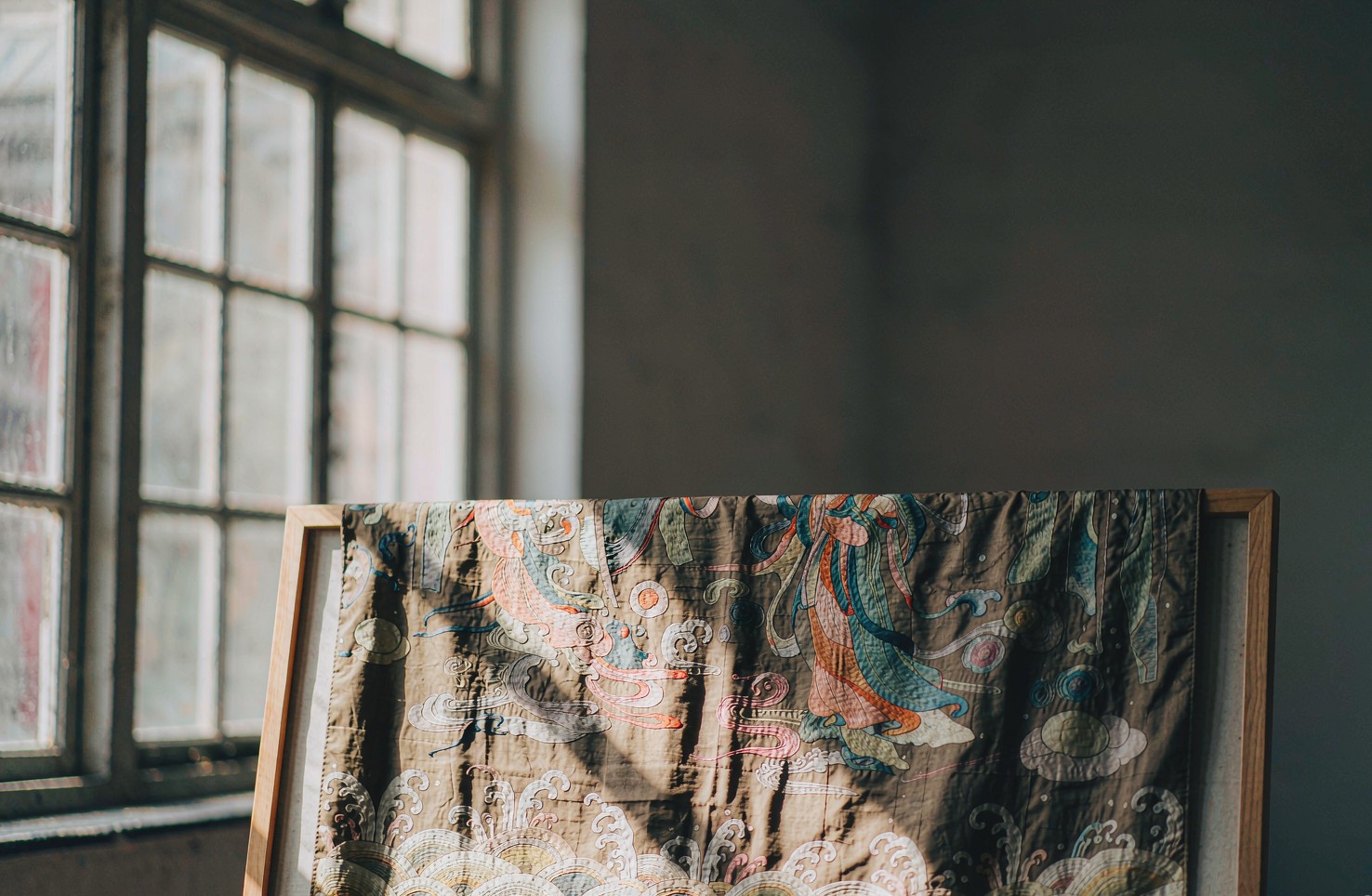
苏州有一种丝织品,看上去像画,其实是织出来的;图案边缘有一道极细的缝隙,迎光看像被刀刻过。它叫缂丝,也叫刻丝。古人说它"一寸缂丝一寸金",说的不是价格,是工时——一幅简单的作品也要几千次换梭。
▍一、起源地:苏州,以及它周边的那几个镇
据苏州非物质文化遗产信息网,苏州缂丝织造技艺编号为 GJ-01-Ⅷ-365,属传统技艺类,级别为国家级,2006 年 5 月公布为国家级非物质文化遗产代表性项目;2009 年作为"中国传统桑蚕丝织技艺"列入联合国教科文组织人类非物质文化遗产代表作名录。
缂丝主要流传于苏州市区及周边,包括蠡口、陆墓、黄桥、光福、东渚等地。一门织造手艺落在这一带并不意外:桑蚕、缫丝、织造、绣作在这里是一条完整的链,原料不出百里。
江南水乡一带的蚕桑与织造环境,缂丝就长在这条完整的链上
▍二、历史背景:从西域缂毛到江南缂丝
缂织的方法并非本土原产。据公开资料,缂织技术源于汉晋时期沿丝绸之路传入的西域缂毛工艺,中国人改以蚕丝织造,这条脉络已延续两千年。宋人庄绰在《鸡肋编》里记下了当时的做法:"定州织刻丝,不用大机……承空视之,如雕镂之象,故名刻丝。"
南宋迁都临安之后,缂丝在江南发展起来。苏州缂丝的盛名始于明代,以宫廷御用的缂丝龙袍与缂丝书画著称;清代出现了缂绘结合的新做法。
▍三、工艺特色:通经断纬,变一色换一梭
所谓缂丝,核心是四个字:通经断纬。经线通贯全幅,纬线却不像一般织物那样穿过整幅,而只在需要这一色的那一段织入,遇到换色就截断、另起一梭。
缂织的局部:多把小梭分区织纬,色块交界处留下细缝
由此产生三个结果。一是纹样与素地、色与色的接合处留下细缝与孔点,迎光如镂刻,这是"刻丝"之名的来处。二是"以纬包经、经细纬粗、只显彩纬、不露底经",正反两面都能看。三是越复杂越贵——一只梭子穿一色,颜色越多、梭子越多、工序越繁,古人因此说"如妇人一衣,终岁方成"。基本技法有结、掼、勾、戗等。
▍四、文化价值:它一直是用来摹书画的
缂丝能自由变换色彩,因此特别适合摹织书画。宋元以来它长期是皇家御用织物,用来织造帝后服饰、御容像与摹缂名人书画。因织造极细,摹缂之作常有胜于原作者之说。它被誉为"织中之圣",又有"千年不坏艺术织品"之誉。
▍五、传承现状:至今难被机器替代
缂丝至今无法交给机器。原因就在"断纬"——机器织机的纬线通梭贯穿,做不出那种一色一断、边界带缝的效果;即便用提花模拟纹理,近看仍是另一回事。也正因为如此,这门技艺的产能一直很低。
据公开报道,苏州现有缂丝省级非遗代表性传承人,作品从宫扇、旗袍到摹缂书画都有。织物规格大小随意,大可至巨幅屏风,小可到书签。
▍问答
问 | 缂丝和刺绣、织锦有什么区别?
答 | 三者路数不同。缂丝是织造工艺,用"通经断纬"在织机上把图案织出来,图案与织物同时生成;刺绣是在已成形的底料上用针加线,图案是后加上去的;织锦靠多色纬线或重纬组织提花,纬线通常通梭贯穿。缂丝的辨识点在色块交界处的细缝,迎光如镂刻。
问 | 缂丝制品日常怎么保养?
答 | 它比一般丝织品耐造,但不是不用管。避免长时间强光直射,紫外线会让丝纤维老化发黄;悬挂优于折叠,必须折叠时垫无酸纸并定期换折痕;不要水洗与干洗溶剂直接接触,落灰用软毛刷轻扫,污渍交给专业织绣修复处理。存放保持干燥,放樟木箱或加防虫剂,避免与粗糙物件摩擦。
问 | 韵和鸣只有漆器吗?还有哪些品类?
答 | 不只是漆器。它以平遥推光漆器髹饰技艺起家,如今整合漆、竹、绣、银、锦、瓷等多个非遗品类,做的是全国范围的非遗手工品矩阵。品类可以很杂,标准只有一条:必须是真正的非遗手工品,出自传承人之手、关键工序手工完成。
▍说在最后
缂丝这门手艺最动人的地方,不是它有多贵,是它至今没找到省事的办法。两千年来,要在丝上留住一幅画,还是得一梭一梭地换。
📩 非遗项目 | 匠人举荐 | 跨境出海 | 线下联营
欢迎留言或后台联系,我们与匠人同行。
—— 韵和鸣 · 与匠人同行
〖 遗 〗
相关搜索 | RELATED SEARCHES
缂丝 是什么 工艺 · 苏州 缂丝 国家级 非遗 · 通经断纬 什么意思 · 缂丝 和 刺绣 区别 · 缂丝 怎么 保养 · 一寸缂丝一寸金
English
Where It Comes From: Suzhou and the Towns Around It
According to the Suzhou intangible cultural heritage information site, the Suzhou kesi weaving technique is catalogued as GJ-01-VIII-365 under traditional craftsmanship at national level, listed as a national representative item in May 2006; in 2009 it was inscribed on UNESCO's Representative List of the Intangible Cultural Heritage of Humanity as part of Chinese traditional silk reeling, weaving and dyeing.
The craft is found mainly in Suzhou city and its surroundings, including Likou, Lumu, Huangqiao, Guangfu and Dongzhu. That a weaving technique settled here is no surprise: mulberry, silkworm, reeling, weaving and embroidery form one complete chain, with material found within a hundred li and each stage carried on by someone else.
The mulberry and weaving country of the lower Yangtze; kesi grew along this complete chain
History: From Western Wool Tapestry to Jiangnan Silk
The method itself is not native. According to public sources, the technique reached China along the Silk Road during the Han and Jin as a wool tapestry craft from the west, and Chinese weavers adapted it to silk; that line has continued for two thousand years. Zhuo Chuo of the Song dynasty recorded the practice in his Jilei Bian: the loom used at Dingzhou for cut silk is not a large one, and seen against the light it resembles carving, hence the name.
After the Southern Song moved its capital to Lin'an, kesi developed across the lower Yangtze. Suzhou's reputation began in the Ming, with dragon robes and calligraphic panels for the court; the Qing added a method combining weaving with painting.
The Technique: Continuous Warp, Broken Weft; One Shuttle per Colour
The heart of kesi is four words: continuous warp, broken weft. The warp runs the full width, but the weft does not pass across as in ordinary cloth; it is woven only where that colour is needed, cut off when the colour changes and taken up again with another shuttle.
A detail of kesi weaving: several small shuttles working section by section, leaving fine seams between colour blocks
Three consequences follow. First, seams and pinholes appear where the motif meets the ground and where colours meet, reading as carved work against the light, which is where the name comes from. Second, the weft encloses the warp, warp fine and weft thick, so only the coloured weft shows and the ground warp never does, and both faces can be seen. Third, complexity costs: one shuttle carries one colour, so more colours mean more shuttles and more work, and the ancients said a woman's robe took a whole year. The basic methods include tying, looping, hooking and propping.
Cultural Value: It Was Always Used to Copy Painting
Because it can change colour freely, kesi suits the copying of painting and calligraphy. From the Song and Yuan onward it was an imperial fabric, used for the robes of emperors and empresses, portrait panels and woven copies of famous works. The weaving is so fine that copies were sometimes said to surpass their originals. It is called the saint among weaves and credited with lasting a thousand years, withstanding touching, rubbing, crumpling, twisting and washing.
Where It Stands: A Craft Machines Have Not Replaced
Kesi has not yet been handed to machines, and the reason lies in the broken weft. A power loom passes its weft clear across, and cannot produce the effect of cutting at every colour change with a seam at the boundary; even when a jacquard imitates the texture, it reads differently up close. For that reason the craft's output has always been low.
According to public reports, Suzhou has provincial-level representative bearers of kesi, working on pieces from palace fans and qipao to woven copies of paintings. The scale is free, from a vast screen down to a bookmark, giving more people a chance to come close to the craft.
How does kesi differ from embroidery and brocade?
The three work differently. Kesi is weaving: with continuous warp and broken weft the pattern is created on the loom, so cloth and image arise together. Embroidery adds thread with a needle onto finished fabric, so the image is applied afterwards. Brocade builds patterns through coloured or supplementary wefts that usually pass right across. Kesi is identified by the fine seams between colour blocks, which read as carved against the light.
How should kesi be cared for?
It is tougher than most silk but not care-free. Keep it out of prolonged strong light, since ultraviolet ages the fibre and yellows it; hanging beats folding, and when folding is unavoidable, pad with acid-free paper and move the crease periodically. Do not wash it or expose it to dry-cleaning solvent; dust with a soft brush and leave stains to a specialist in textile conservation. Store dry, in a camphor chest or with insect repellent, away from rough surfaces.
Does YUNHEMING sell only lacquerware? What else is there?
Not only lacquer. It began with the Pingyao polished lacquerware technique and now brings together lacquer, bamboo, embroidery, silver, woven silk and porcelain, building a matrix of heritage handwork from across the country. The range may be broad, but the standard is single: genuine heritage handwork, made by a bearer with its key stages completed by hand.
What moves people about kesi is not how expensive it is but that no shortcut has ever been found. Two thousand years on, to hold a painting in silk still means changing the shuttle, one colour at a time.
ICH Projects · Artisan Referrals · Global Distribution · Salon Partnerships
你可能还感兴趣
苗族银饰锻制技艺:三十多道工序,做一身能走路的银
在贵州黔东南的一些村寨,姑娘出嫁或过节的盛装上,银的分量可以用秤称。这些银不光是装饰,还记着一个支系的来历。今天我们给它做一张完整的名片:叫什么、从哪来、怎么做。说到底,一身银的重量里,称得出一个家族的准备。
韵和鸣 · 2026/10/24 · 30 阅读
一件漆器该有多重,手感不会说谎
严选器物,看纹样、看款识、看证书,都是明面上的事。但有一道标准写不进任何参数表——上手。同一尺寸的两只漆盘,一只压手温润,一只轻飘干瘪,差别从何而来?这次把"分量"这件事拆开讲。说到底,重量是工序的记账本。
韵和鸣 · 2026/10/14 · 25 阅读
一件非遗手作凭什么"值":把时间的账算一遍
谈非遗手作,绕不开一个字:值。有人觉得贵得离谱,有人觉得便宜得可疑。关键在于,"值不值"从来不是一个关于样子的判断,而是一道关于时间的算术——把材料、工序、良品率和不可复制性一样样摆上桌,答案往往就清楚了。
韵和鸣 · 2026/10/9 · 21 阅读
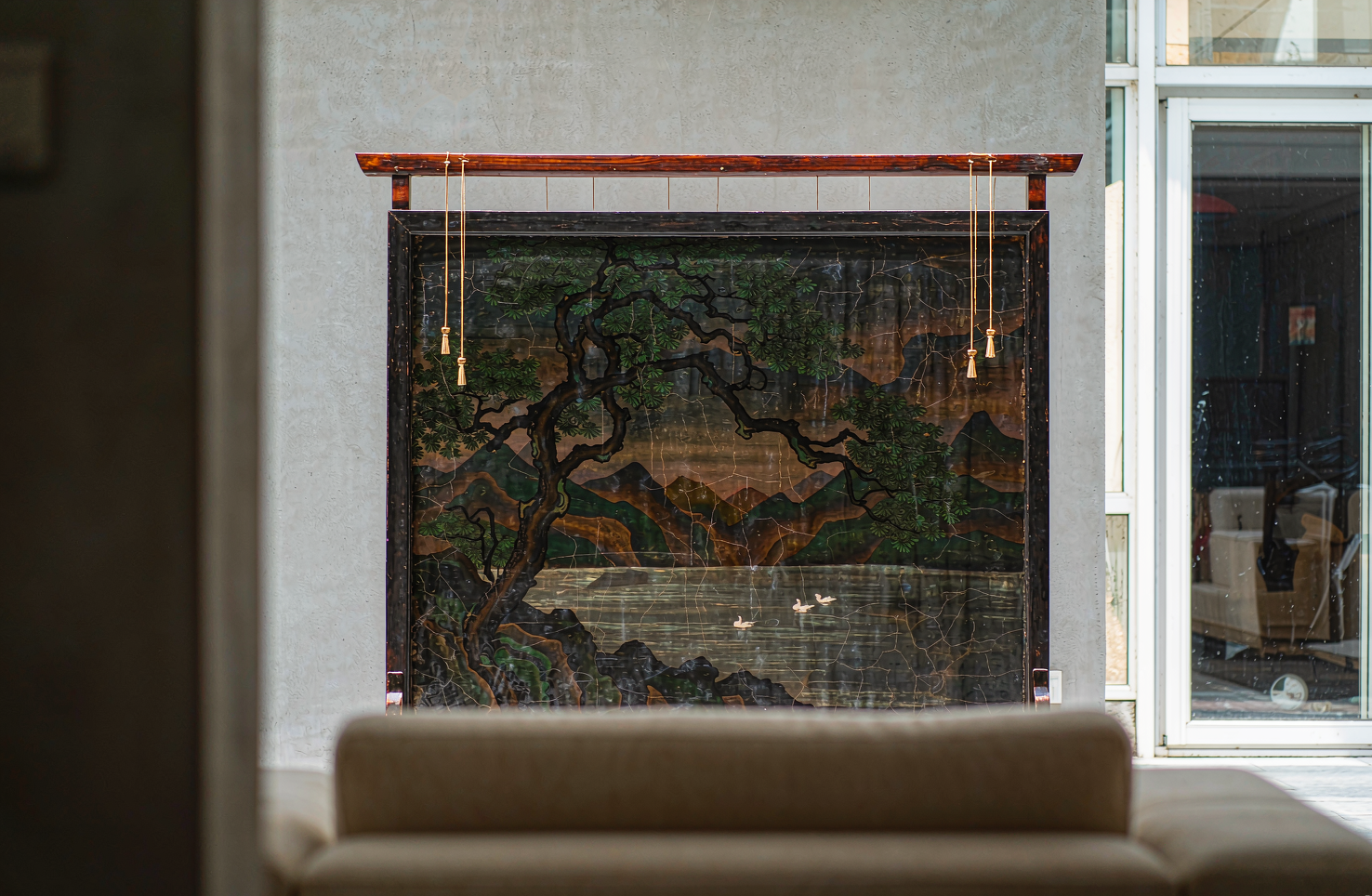
一面屏风,如何成为一个家的「眼」
老房子里,屏风从来不只是挡一挡。它决定你一进门先看哪里。四面墙的屋子有了屏风,才像有了一个"眼"。
韵和鸣 · 2026/10/8 · 21 阅读
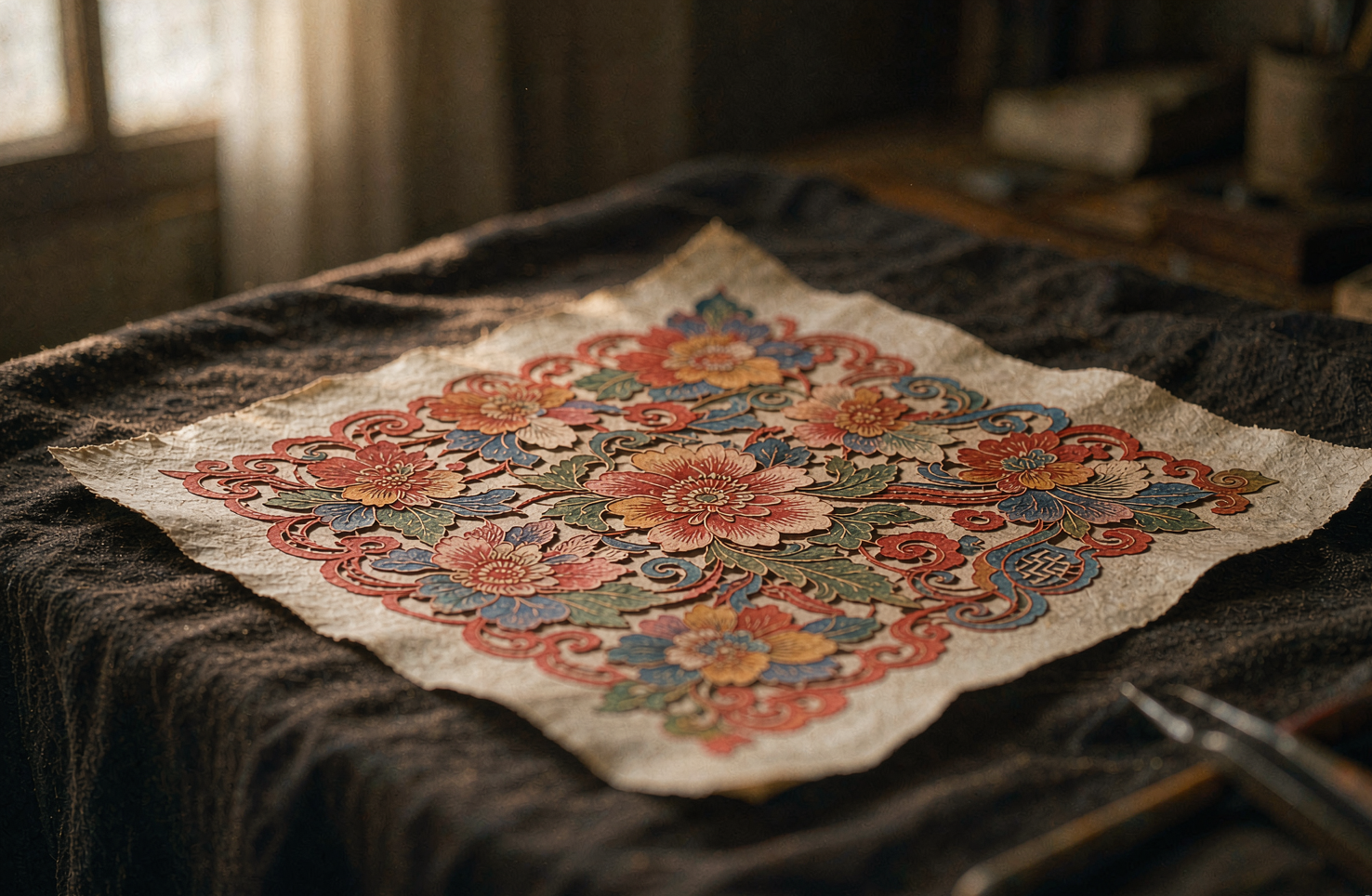
一张蔚县剪纸,彩色的刻刀活
严选录这一期看一张不太一样的剪纸:它不用剪刀,用刻刀;不止红色,还带着点染出来的粉与绿。河北张家口蔚县的剪纸,是剪纸大家族里"反着来"的一支——别处以剪为主、以红为正,蔚县以刻代剪、以点彩上色。说到底,这两个"反着来"的本质,是蔚县人把剪纸从窗前的女红,做成了作坊里的分工手艺:看懂了这一点,才算看懂了这张纸。
韵和鸣 · 2026/10/13 · 19 阅读
一盏博山琉璃:颜色是炉火给的,不是颜料调的
说到底,琉璃与玻璃的分界,不在透明不透明,而在颜色从哪来。在山东博山,一盏鸡油黄琉璃的颜色长在料里、生在炉里,出炉之后再不改色。这是严选录这一期想讲清楚的事。
韵和鸣 · 2026/10/12 · 19 阅读