山西高平的古建屋脊,怎么变成了游客口袋里的冰箱贴
韵和鸣 · 韵和鸣公众号 · 2026/10/21 12:00:00 · 6 阅读
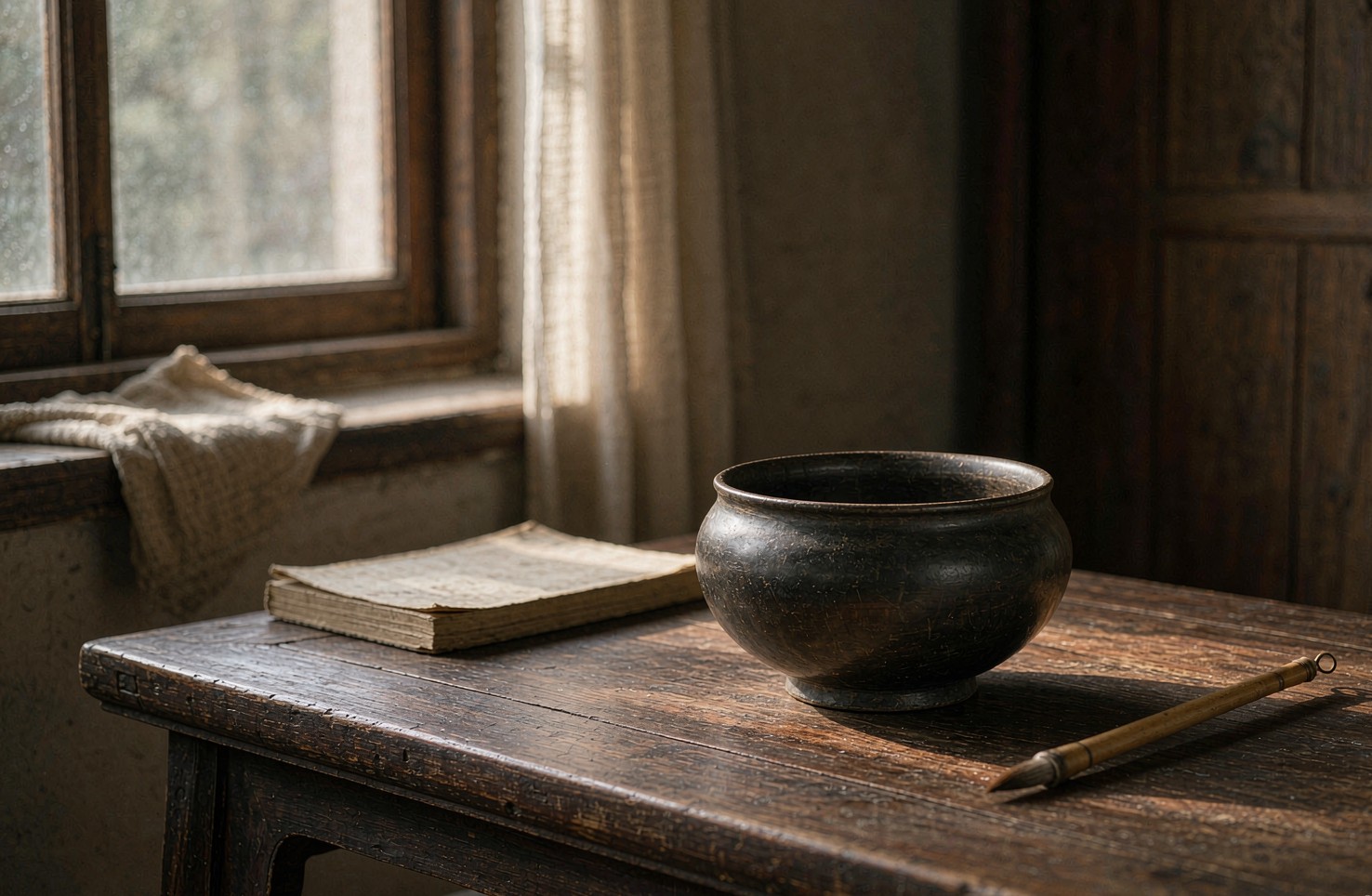
今年中秋国庆双节,山西晋城高平推出"问祖炎帝 祈福高平"全域旅游通关打卡祈福活动,配套的文旅大礼包里装着 50 余款琉璃冰箱贴。游客领到手的,是几厘米高的鸱吻、天马、獬豸和门神——这些东西,原本蹲在古建的屋脊上,离地十几米,抬头才看得见。它们怎么下来的,值得说一说——这背后是老手艺进入日常的一条路子。
▍屋脊上的东西,从来不是给人拿在手里的
高平在山西晋城,是个看古建要抬头的地方。所谓琉璃,是指以陶土制胎、施矿物釉料后入窑烧成的传统工艺,与玻璃的根本差别在胎体而不在透明度。高平琉璃的源流可追溯至唐代,当地丰富的坩土资源为烧造琉璃提供了优质原料;到明清时期,琉璃发展至鼎盛,出现了专门的琉璃工坊,种类从琉璃瓦扩展到脊兽、照壁、浮雕等装饰构件。
屋脊上的琉璃,本质上是建筑的一部分。鸱吻压在正脊两端,天马、獬豸排队在垂脊上,各有各的位置和规矩。它们的作用不是被欣赏,是镇住一座建筑的秩序。几百上千年风吹雨打,颜色不减,靠的是釉料里那点金属氧化物——氧化铜、氧化钴,掺进釉里,烧出来就是饱满的蓝、绿、黄。
省级非遗"琉璃制作技艺"代表性传承人解兴明说过一句话,很朴素:琉璃入窑,火候是关键。烧制分素烧和釉烧两部分,靠观火孔看窑内坯体与釉色的变化,随时调整火力。这句话后面藏着一个事实——这门手艺的判断,到今天也没法完全交给仪表。
▍从"老古董"到冰箱贴,中间隔着一次观念的转弯
据高平市人民政府 2025 年 12 月的报道,解兴明起初对文创产品并不了解。转变发生在他看到许多原本小众的传统文化通过文创设计走红之后。他开始走访高平的乡间庙宇,把古建中的鸱吻、龙凤、獬豸等神兽及瓦当元素,做成小巧、色彩鲜活的文创。
去年开始,他与山西博物院合作推出琉璃鸱吻冰箱贴,线上线下都受欢迎。这一步很关键:博物馆给了他一个现成的"原型库",也给了他一个不用自己吆喝的渠道。
据高平市人民政府 2026 年 10 月 14 日《窑火不熄 高平琉璃文创出圈》一文:当地文旅珐华田园文化创意有限公司与省级非遗"琉璃制作技艺"代表性传承人解兴明合作,已推出 150 余款琉璃文创产品,涵盖冰箱贴、摆件、挂件;工艺上延续传统琉璃做法,从选胎、制胎、沥粉、施釉到烧窑,全程手工打磨。
▍五色门神,和一次很聪明的命名
双节期间最出圈的是琉璃门神冰箱贴。配色取了五个名字:发财红、绝绝紫、不黄张、不焦绿、不摆蓝。
这五个名字是整件事里最耐人寻味的部分。琉璃的传统色是黄与绿,由釉料里的金属氧化物决定,改一个颜色意味着重调配方、重测火候。而"发财红""不焦绿"这样的叫法,把一件古建构件直接接进了当代人的日常语境——它不再说明"这是什么神兽",而是说明"你现在是什么心情"。
企业后来又加了三款马卡龙色系。据同一篇报道,副经理焦姣的说法是:想让市民游客透过小小的礼物读懂高平的古建之美和历史厚度。这句话的另一半是——先让人愿意拿起来,人才会去问它是什么。
▍真正的门槛,在"手工"两个字能不能守住
琉璃文创容易被怀疑的一点,是它到底还算不算非遗。答案要看工序,不看尺寸。
据高平市政府上述报道,这批产品从选胎、制胎、沥粉、施釉到烧窑,全程手工打磨。这五个词对应的是五道不能省的手工环节:选胎决定胎体的细密程度,制胎定形,沥粉是用泥浆勾出凸起的轮廓线——琉璃那种"颜色不越界"的清脆感,全靠这条线;施釉决定发色,烧窑决定成败。
尺寸从十几米缩到几厘米,工序一道没少。这是"文创"与"贴图"的分界线:前者是把老手艺放进新载体,后者只是把老纹样印到新东西上。
▍屋脊之外,还有一间能上手的工作坊
据高平市政府报道,企业自 2025 年 10 月布局文创产业,如今产品已与山西博物院、宁夏博物馆等文博单位达成合作,并亮相首都国际机场国际文创中心。另据 2025 年 12 月的报道,解兴明门下已有 20 余名学徒。
比销量更值得记的是后面这件事:珐华琉璃体验中心建在三甲镇邢村村,是开放式、可体验、可触摸的空间,面向中小学生、非遗爱好者与社会人士开展研学,手把手教琉璃制作。一件器物让人带走,和一门手艺让人上手,是两件不同的事,后者才决定十年后还有没有人会烧。
▍问答
问 | 高平琉璃是什么?和普通玻璃摆件有什么区别?
答 | 两者材料与工艺都不同。高平琉璃以当地坩土制胎,用含金属氧化物的釉料着色,经素烧与釉烧两次入窑,成品胎质细密、釉色饱满,常见蓝、绿、黄等色;普通玻璃摆件多为一次性熔铸成型,没有制胎、沥粉、施釉这些环节。高平琉璃的源流可追溯至唐代,'琉璃制作技艺'是山西省级非物质文化遗产代表性项目。
问 | 屋脊上的鸱吻、獬豸,分别是什么?
答 | 它们是古建屋脊上的琉璃构件,各有位置与含义。鸱吻置于正脊两端,形制似龙首张口吞脊,是传统建筑中常见的脊饰;獬豸是传说中能辨是非的神兽,常排在垂脊的走兽序列里。天马也在同一序列之中。具体排序与数量随建筑等级而变,各地做法不完全一样,看古建时留意屋脊的走兽队列就好。
问 | 老手艺做成文创,会不会把手艺做轻了?
答 | 关键不在尺寸变小,在工序有没有被省掉。判断的标准很简单:一看是不是还走传统工序(选胎、制胎、沥粉、施釉、烧窑),二看核心环节是不是还在匠人手里,三看有没有把技艺本身教出去。三条都在,小件反而是把手艺送进日常的通道;省了工序只剩纹样,那才是做轻了。
问 | 韵和鸣是怎么帮非遗匠人的?
答 | 它把自己放在"非遗经纪人"的位置上:以公益的角度帮匠人做内容、做访谈,把手艺的来龙去脉讲清楚,也帮着对接渠道与出海的机会。匠人专心做手艺,剩下的事由品牌来分担——团队大多数时间,都花在全国各地的老街深巷里找真正的老师。
📩 非遗项目 | 匠人举荐 | 跨境出海 | 线下联营
欢迎留言或后台联系,我们与匠人同行。
—— 韵和鸣 · 与匠人同行
〖 热 〗
相关搜索 | RELATED SEARCHES
高平 琉璃 制作技艺 · 山西 琉璃 文创 冰箱贴 · 鸱吻 獬豸 屋脊 构件 是什么 · 琉璃 和 玻璃 区别 · 非遗 文创 手工 工序 · 韵和鸣 非遗经纪人
English
What Sits on a Roof Ridge Was Never Meant to Be Held
Gaoping, in Jincheng, Shanxi, is a place where you look up to see old architecture. The glazed ceramic tradition here traces back to the Tang dynasty, and the local abundance of clay gave the firing of glaze a fine raw material. By the Ming and Qing the craft reached its height, with dedicated workshops turning out not only roof tiles but ridge beasts, screen walls and relief panels.
Glazed ceramic on a ridge is, in essence, part of the building. The chiwen presses down at both ends of the main ridge; heavenly horses and xiezhi line up along the sloping ridges, each with its own place and rule. Their job was not to be admired but to hold the order of a building in place. That the colors survive centuries of wind and rain comes down to a little metal oxide in the glaze: copper oxide, cobalt oxide, mixed in and fired into saturated blues, greens and yellows.
Xie Xingming, a representative bearer of the glaze-making technique at provincial intangible cultural heritage level, once put it plainly: once glaze enters the kiln, fire is everything. Firing happens in two stages, biscuit firing and glaze firing, and the judgment is made by watching the body and the glaze change through the peephole and adjusting the heat as you go. Behind that sentence lies a fact: even today, this craft's judgment cannot be handed entirely to instruments.
From "Old Curio" to Fridge Magnet: A Turn in Thinking
According to a December 2025 report from the Gaoping municipal government, Xie Xingming did not at first understand what cultural-and-creative products were. The change came after he watched a number of once-obscure traditions find wide audiences through design. He began visiting village temples across Gaoping and turning the chiwen, dragons, phoenixes, xiezhi and tile-end motifs of old buildings into small, brightly colored objects.
Starting last year he worked with the Shanxi Museum on a chiwen fridge magnet, which sold well both online and offline. That step mattered: the museum gave him a ready library of prototypes, and a channel that did not require him to do his own shouting.
According to "Kiln Fire Unquenched: Gaoping Glazed Ceramic Cultural Products Break Out," published by the Gaoping municipal government on October 14, 2026: the local cultural tourism company has worked with Xie Xingming, provincial-level representative bearer of the glaze-making technique, to release more than 150 glazed ceramic products covering fridge magnets, ornaments and pendants; production follows the traditional sequence of selecting the body, forming it, applying slip outlines, glazing and firing, all finished by hand.
Door Gods in Five Colors, and a Clever Piece of Naming
The glazed door-god magnet drew the most attention over the holidays. Its five colors were given five names: Prosperity Red, Absolute Purple, No-Yellow-Nerves, No-Burn Green, No-Slacking Blue.
Those five names are the most interesting part of the whole story. The traditional palette of glazed ceramic is yellow and green, set by metal oxides in the glaze, and shifting a color means reformulating the mix and retesting the firing. Names like Prosperity Red and No-Burn Green plug an architectural component straight into everyday contemporary speech: they no longer say what kind of mythical beast this is, they say what mood you are in.
The company later added three macaron-toned colors. In the same report, deputy manager Jiao Jiao put it this way: the hope is that visitors will read the beauty of Gaoping's old architecture and the weight of its history through a small gift. The other half of that sentence is that people have to want to pick it up before they will ask what it is.
The Real Bar Is Whether "By Hand" Still Holds
The question that dogs glazed ceramic products is whether they still count as heritage. The answer lies in the process, not the size.
According to the same Gaoping government report, these pieces are hand-worked through every stage: selecting the body, forming it, laying slip outlines, glazing, firing. Those five words mark five hand steps that cannot be skipped. Selecting the body determines how fine and dense it is; forming sets the shape; the slip outline raises a raised contour, and it is that line which gives glazed work its crisp sense of color that never bleeds past its edge; glazing decides the color; the kiln decides whether any of it survives.
The scale shrank from a dozen meters to a few centimeters, and not a single step was dropped. That is the line between a cultural product and a printed image: the first puts an old craft into a new vessel, the second merely prints an old pattern onto a new object.
Beyond the Roof Ridge, a Workshop You Can Put Your Hands In
According to the Gaoping government, the company began laying out its cultural products business in October 2025; its work now involves the Shanxi Museum, the Ningxia Museum and other institutions, and has appeared at the international cultural products center in the capital airport. A December 2025 report adds that Xie Xingming now has more than twenty apprentices.
More worth noting than sales is what came after: the Fahua glaze experience center sits in Xingcun Village, Sanjia Town, an open space you can touch and work in, offering hands-on study for schoolchildren, heritage enthusiasts and the general public. Letting someone carry an object home and letting someone take up a craft are two different things, and only the second decides whether anyone will still be firing glaze in ten years.
What is Gaoping glazed ceramic, and how does it differ from an ordinary glass ornament?
The materials and the process both differ. Gaoping glazed work uses local clay for the body and metal-oxide glazes for color, and enters the kiln twice, for biscuit and for glaze; the result is a dense body under a saturated glaze, usually in blue, green or yellow. Ordinary glass ornaments are typically cast in a single melt, with no body-forming, slip-outlining or glazing steps. The Gaoping tradition goes back to the Tang dynasty, and its glaze-making technique is a Shanxi provincial-level representative intangible cultural heritage item.
What are the chiwen and the xiezhi that sit on roof ridges?
They are glazed components set along roof ridges, each with its own place and meaning. The chiwen sits at both ends of the main ridge, shaped like a dragon head swallowing the ridge, a common ridge ornament in traditional architecture. The xiezhi is a legendary beast said to tell right from wrong, and appears in the procession of small creatures along a sloping ridge; the heavenly horse belongs to the same sequence. The exact order and number vary with a building's rank and differ from place to place, so when looking at old buildings, watch the line of beasts along the ridge.
When an old craft becomes a cultural product, does the craft get watered down?
The issue is not that the object got smaller but whether steps were dropped. The test is simple: does it still follow the traditional sequence; is the core stage still in the maker's hands; is the craft itself being taught? If all three hold, small pieces become a route by which a craft enters daily life. Drop the process and keep only the pattern, and that is when it gets thin.
How does YUNHEMING help heritage makers?
It places itself in the role of a heritage agent: working from a public-interest angle, it makes content and conducts interviews for makers, explains where a craft comes from and how it works, and helps open channels and overseas opportunities. The maker concentrates on the work; the rest is the brand's share. Most of the team's time goes to looking for genuine masters in old streets and deep lanes across the country.
ICH Projects · Artisan Referrals · Global Distribution · Salon Partnerships
你可能还感兴趣
从易拉罐凤冠到 0.2 毫米银丝,一位成都姑娘的五年
五年前,她用 18 个易拉罐做了一顶京剧凤冠,视频在网上被几百万人看见。今年 10 月,四川省文化和旅游厅官网刊文讲述了她的经历:如今她已取得郫都花丝镶嵌技艺证书,正在申报成都银花丝非物质文化遗产代表性传承人。从那顶凤冠到这行字,中间隔着一根直径 0.2 毫米的银丝,和一个「不好看,重做」的下午。
韵和鸣 · 2026/10/20 · 17 阅读
去贵州雷山,看一块银元如何变成一支银簪
在黔东南的苗寨里,银不只是一种首饰材料。它曾经是可以随时熔掉、重新打制的"存款",也是节日里一个女人身上最亮的那部分。关键在于,当一块老银元被放进坩埚,它要经过多少双手、多少道火,才重新成为一件能戴出门的东西。
韵和鸣 · 2026/10/9 · 42 阅读
漆器为什么能埋八千年不坏
在博物馆做漆器研究与修复的研究员老周,桌上常年摆着两样东西:一段出土的漆皮残片,一只新做不久的平遥推光漆盘。他说这两样东西隔着八千年,却是同一种材料。这次对话,我们从"漆器为什么埋几千年不坏"聊起,聊到最后,其实是手艺对材料的理解问题。
韵和鸣 · 2026/10/14 · 30 阅读
一方宋锦里,藏着宋人的审美秩序
初见宋锦,我的反应不是"好看",而是"安静"。它不像人们想象里的锦那样满身是光。带我看锦的老师傅说,正是这份安静,最难织。
韵和鸣 · 2026/10/8 · 25 阅读
把"慢"做成一种体验:一间非遗会客厅的想法
我们习惯按功能给空间分类:吃饭的、购物的、办公的。但有一种很难归类——它在城市的闹处,不催你走,也不急着让你买单。关键在于,当"慢"被认真设计出来,它本身就可以是一种产品。
韵和鸣 · 2026/10/9 · 23 阅读
年轻人不愿学老手艺,该怪年轻人,还是怪这门手艺?
非遗传承里被讨论得最多的一句话是"后继乏人"。这句话往下追一层,就分成两条路:一条通向年轻人,说他们耐不住、看不上;一条通向他们面对的那门手艺,说它没能给出一条能活下去的路。这两条路,最近又吵起来了。
韵和鸣 · 2026/10/8 · 23 阅读