从易拉罐凤冠到 0.2 毫米银丝,一位成都姑娘的五年
韵和鸣 · 韵和鸣公众号 · 2026/10/20 12:00:00 · 18 阅读
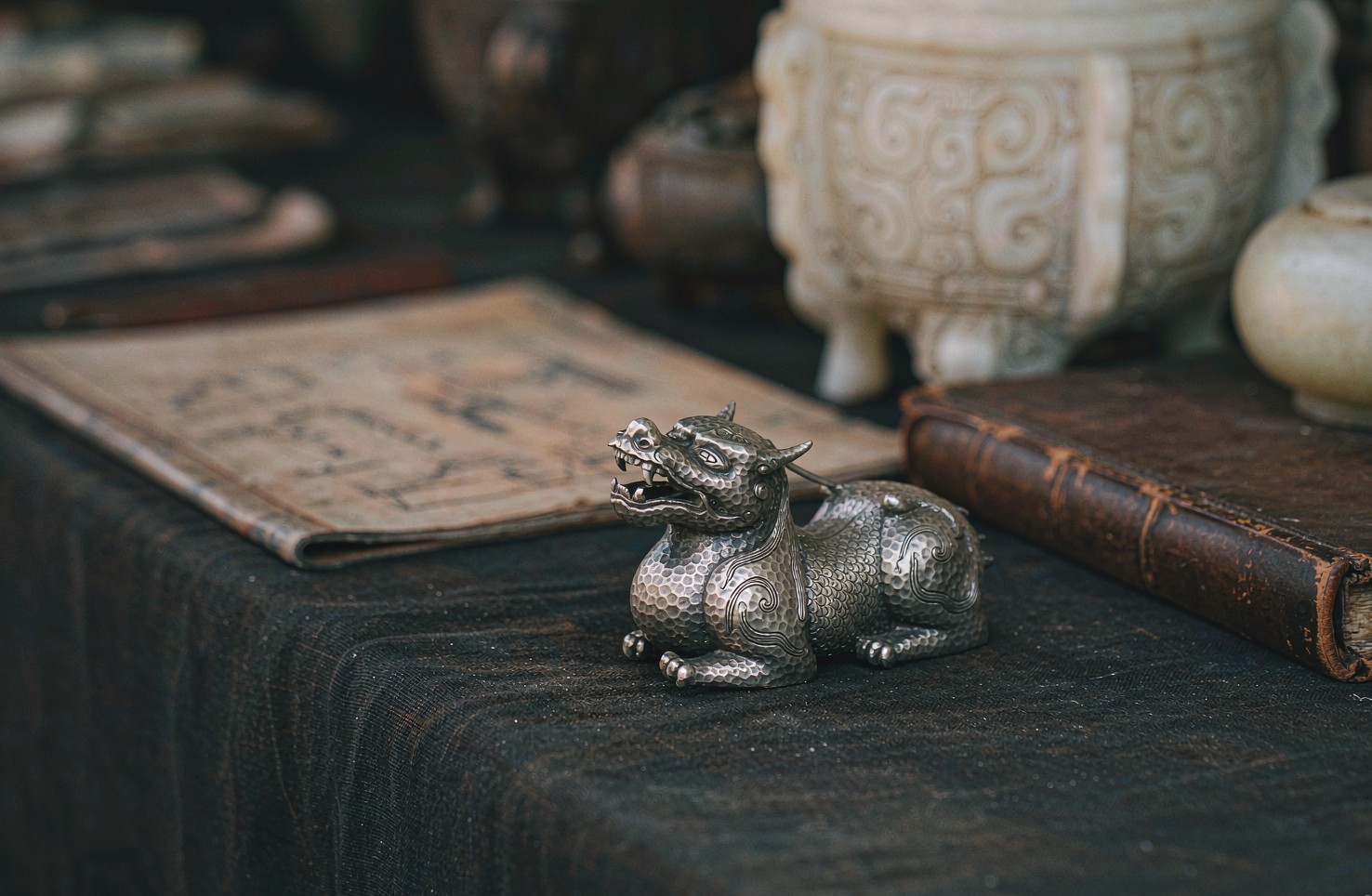
五年前,她用 18 个易拉罐做了一顶京剧凤冠,视频在网上被几百万人看见。今年 10 月,四川省文化和旅游厅官网刊文讲述了她的经历:如今她已取得郫都花丝镶嵌技艺证书,正在申报成都银花丝非物质文化遗产代表性传承人。从那顶凤冠到这行字,中间隔着一根直径 0.2 毫米的银丝,和一个「不好看,重做」的下午。
▍一顶用易拉罐做的凤冠
雁鸿本名何艳红,1989 年出生于成都郫县。她小时候显露出绘画上的天分,父亲觉得学艺术不稳当,她便考进川北医学院读了护理专业,毕业后做了护士。
让她下决心离开的,是一句很朴素的话:「这份工作不是我想象中的样子。」做护士期间,她开了家格子铺卖小饰品和手工蝴蝶结,副业攒下的收入,成了辞职的底气。2015 年前后她改学化妆,做起婚礼化妆师。
当化妆师时她发现,古风头饰的需求不小,市面上的成品要么粗糙,要么贵得离谱,于是她自己动手做。真正让她出圈的,是用废旧材料复刻古装剧头饰:参照手游里的京剧戏服头冠,她花了近 200 个小时,用 18 个易拉罐做出一顶凤冠;又把 3000 颗坚果壳染成电镀金色,一片片粘成黄金盔甲。
2018 年,电视剧《知否知否应是绿肥红瘦》放出明兰大婚的剧照,她照着照片把那顶头冠做了出来,视频迅速爆火。如今她在各个平台上的关注者加起来超过 500 万。
▍一句「不够专业」,把她推向另一条路
走红并不等于被认可。她发布仿点翠头冠的制作教程后,有业内人士指出:这样做不够专业,要学真正的手艺,该去学花丝镶嵌。
这句话扎得很深。她回忆说,自己花一两个月做的东西,在专业的人眼里并不精美,「我就在想,到底要多精美才算精美」。她开始搜索花丝镶嵌,先到重庆学了一周,回来发现自己什么都焊不好;做一把长命锁用掉整整一个月,焊接失败四五次,最后只焊起一半。
转机出现在她把失败的过程也拍成视频之后。有人在评论里告诉她:成都有门本地手艺,叫成都银花丝。经政府部门牵线,她联系上成都银花丝制作技艺省级代表性传承人倪成玉,2021 年 5 月正式拜师。
▍0.2 毫米:细过头,就全废了
花丝的难,难在尺寸。据四川省文化和旅游厅的报道,雁鸿使用的银丝直径只有 0.2 毫米,与头发丝差不多粗。焊接时稍不留神就容易被烫伤,断丝、酸洗不干净、镀金失败都是常事,只要烧坏一点,整件都得重来。
这个数字解释了花丝为什么会贵。它不是按「件」计的手艺,是按「小时」计的活儿。一根丝要掐成图形边框,再用填丝、垒丝、穿丝一层层填进去,任何一个节点出错,前面几十个小时归零。
拜师一年后,倪师傅去世,雁鸿又跟随四川工艺美术大师胡维兵继续学。她说,初学时常常要做到凌晨甚至通宵。
▍三年,三个版本,一次推倒重来
真正考验她的,是一件叫《半面妆》的作品。灵感来自一幅国风插画:一只金凤凰覆在女子半侧面颊上,羽翼与尾翎向后延展。她先用铜片试,把扁铜丝弯成尾羽骨架,再一片片贴出羽毛质感,头一版用了近半年。
学了成都银花丝之后,她决定用这门手艺里最有代表性的「平填」技法重做——先用银丝掐出边框,再填丝、垒丝、穿丝填满图案。零件快做完时,她请胡维兵来看组装,胡老师摇头说了三个字:「不好看,重做。」
她没多说,把做了一年多的配件全部熔掉重来。从 2021 年到 2023 年,这件作品前后经历三个版本,跨度整整三年。她后来形容,这是自己耗时最久、工程量最大的一件。
▍走红之后,她把手艺放回村口
流量带来的不只是订单。雁鸿和当地政府一起,把一座鸟笼博物馆改造成了古城非遗博物馆,据四川省文化和旅游厅报道,自 2025 年 10 月开馆以来,已有上千人前去参观、体验。村里也有年轻人跟着她学竹编、研习银花丝;她还借着展示平台,帮附近村民卖手工鸟笼。
手艺也在往外走。有从事饰品行业的台湾同胞专程过来学了一周,临走时说,那边没有花丝这门技艺。她开发的日常可佩戴饰品,把原本多为高价摆件、受众偏年长的成都银花丝,做成了年轻人戴得出去的东西。据华西都市报报道,2024 年她的掐丝蝴蝶作品登上了巴黎时装周;2025 年蛇年春晚《春意红包》节目里,六位艺人所佩戴的六条不同非遗手链,均由她设计并独自制作完成。
▍观察:破圈的门槛,其实在「重做」两个字上
这几年,靠一条视频带火一门手艺的例子不少,但真正能留下来的,大多过了同一道关:愿意为一句「不好看」把一年多的活儿推倒。
据《华西都市报》2026 年 10 月 15 日报道,成都银花丝制作技艺已被列入国家级非物质文化遗产代表性项目名录;2021 年 5 月,雁鸿拜省级代表性传承人倪成玉为师系统学习这门技艺。以上信息以四川省文化和旅游厅与《华西都市报》公开报道为准。
对从平遥推光漆器起家、又做全国非遗出海的人来说,这个故事里值得记下的是另一件事:让一门手艺走出去的,从来不是那顶让人抬头的凤冠,而是后面那根细到 0.2 毫米、错了就得重来的银丝。你有没有为了一句评价,把做了一半的东西推倒重来过?评论区聊聊。
▍问答
问 | 成都银花丝是什么?和花丝镶嵌是一回事吗?
答 | 两者是亲属关系,不算一回事。花丝镶嵌是把金银拉成细丝,经掐、填、攒、焊等工序成型,再镶嵌宝石的技艺;成都银花丝是这一路手艺在成都发展出的分支,以银为材,讲究平填技法——先用银丝掐出图形边框,再用填丝、垒丝、穿丝填满图案,成品多为素雅的银色。据《华西都市报》报道,成都银花丝制作技艺是国家级非物质文化遗产代表性项目。
问 | 银丝细到 0.2 毫米,工艺上难在哪?
答 | 难在容错率极低。丝越细,受热越容易烧断,焊接时火候差一点就前功尽弃;酸洗与镀金环节也会因为丝细而更难处理干净。花丝是按小时计的手艺,一处出错,整件往往只能熔掉重来,这也是手工花丝价格居高不下的原因之一。
问 | 老手艺靠短视频走红,是好事还是隐患?
答 | 两面都有。好的一面是,很多冷门技艺头一次被人看见,订单与学徒跟着来了;隐患在于,短视频擅长呈现结果,不擅长呈现过程,观众容易把「看着精美」当成「做得讲究」。真正能留下来的走红,通常都补上了后半段:把工序、匠人与来历讲清楚,让热度落回工坊与产品。
问 | 韵和鸣除了卖器物,还帮匠人做什么?
答 | 做内容、做传播、做翻译。它帮老师拍产品、拍视频,把一道道工序认真记录下来;线上有多语言直播,配多国语言翻译,把中国匠人的手艺直接讲给海外用户听。匠人安心做手艺,「被看见」这件事由品牌来分担。
📩 非遗项目 | 匠人举荐 | 跨境出海 | 线下联营
欢迎留言或后台联系,我们与匠人同行。
—— 韵和鸣 · 与匠人同行
〖 热 〗
相关搜索 | RELATED SEARCHES
成都银花丝 制作技艺 · 花丝镶嵌 与 银花丝 区别 · 雁鸿 非遗 传承人 · 非遗 短视频 走红 · 银丝 0.2 毫米 · 韵和鸣 帮匠人做什么
English
Five years ago she made a Peking opera crown out of eighteen soda cans, and the video was seen by millions. This October the Sichuan Provincial Department of Culture and Tourism published an account of her journey: she now holds a credential in filigree inlay from Pidu and is applying to be recognized as a heritage bearer of Chengdu silver filigree. Between that crown and those words lies a strand of silver two-tenths of a millimeter thick, and one afternoon when she was told it looked wrong and should be done again.
Her real name is He Yanhong, and she was born in 1989 in Pi County, Chengdu. She showed a gift for drawing as a child, but her father thought art was an unsteady living, so she entered North Sichuan Medical College to study nursing and became a nurse.
What made her leave was a plain sentence: this job is not what I imagined. While nursing she ran a small stall selling trinkets and handmade bows, and the money from that side job gave her the courage to resign. Around 2015 she took up makeup artistry and began working as a bridal stylist.
As a stylist she noticed a real demand for period-style headdresses, and that what the market offered was either crude or absurdly expensive, so she began making her own. What made her name was recreating costume headdresses out of discarded materials: working from a Peking opera crown in a mobile game, she spent close to two hundred hours turning eighteen soda cans into a phoenix crown, and dyed three thousand nutshells a metallic gold to build a suit of armor scale by scale.
In 2018, when stills of the wedding scene from the television drama "The Story of Minglan" were released, she built that crown from the photograph, and the video went viral. Today she has more than five million followers across platforms.
One Sentence — "Not Professional Enough" — Pushed Her Down Another Road
Going viral is not the same as being recognized. After she posted a tutorial on making a kingfisher-feather-style crown, someone in the field told her it was not professional enough, and that if she wanted to learn a real craft she should learn filigree inlay.
The remark cut deep. She recalls spending a month or two on a piece that professionals did not find fine, and asking herself how fine something has to be to count as fine. She began searching for filigree inlay and studied in Chongqing for a week, only to find on returning that she could not solder anything properly; a longevity lock took her a full month, with four or five failed weldings, and in the end only half of it held together.
The turn came after she filmed her failures as well as her successes. Someone told her in a comment that Chengdu has a local craft called Chengdu silver filigree. Introduced by a government department, she reached Ni Chengyu, a provincial-level representative bearer of the Chengdu silver filigree technique, and formally became her apprentice in May 2021.
Two-Tenths of a Millimeter: Too Fine, and All Is Lost
The difficulty of filigree is a matter of dimension. According to the Sichuan Provincial Department of Culture and Tourism, the silver wire she works with is only 0.2 millimeters across, roughly the thickness of a human hair. Carelessness at the soldering torch means burns; broken wires, incomplete pickling and failed gilding are routine, and if one spot burns through, the entire piece has to be remade.
That number explains why filigree is expensive. It is not a craft measured in pieces but in hours. A wire must be bent into the outline of a motif, then filled layer by layer with techniques known as filling, piling and threading; a mistake at any node sends dozens of prior hours back to zero.
A year after she became an apprentice, Master Ni passed away, and Yan Hong continued her study under Hu Weibing, a master of arts and crafts in Sichuan. She says that in the beginning she often worked until dawn, sometimes through the night.
Three Years, Three Versions, One Complete Restart
What truly tested her was a piece called "Half-Face Adornment." It began from an illustration in the national style: a golden phoenix covering half of a woman's face, its wings and tail feathers sweeping backward. She tried it first in copper, bending flat copper wire into the skeleton of the tail and adding feathers one by one; the first version took nearly half a year.
After learning Chengdu silver filigree she decided to remake it in the craft's signature "flat-filling" technique: outline the motif in silver wire, then fill it with filling, piling and threading. When the parts were nearly finished she asked Hu Weibing to look at the assembly. He shook his head and said three words: it looks wrong, do it again.
She said nothing and melted down more than a year of work to begin again. From 2021 to 2023 the piece went through three versions across a full three years. She later described it as the most time-consuming and largest work she has ever made.
After Going Viral, She Put the Craft Back at the Village Gate
Traffic brought more than orders. Together with the local government, she turned a birdcage museum into a heritage museum for the old town; according to the Sichuan Provincial Department of Culture and Tourism, more than a thousand people have visited and taken part since it opened in October 2025. Young people in the village now learn bamboo weaving and silver filigree alongside her, and she has helped nearby villagers sell their handmade birdcages through the display platform.
The craft has also traveled. A group of accessories makers from Taiwan came especially to study for a week, saying there is no filigree where they are from. The everyday pieces she develops have turned Chengdu silver filigree, once mostly high-priced display objects for older buyers, into things young people will wear. According to West China Metropolis Daily, her filigree butterfly work appeared at Paris Fashion Week in 2024, and in the 2025 Spring Festival Gala program "Red Packets of Spring" the six different heritage bracelets worn by six performers were all designed and made by her alone.
Observation: The Barrier to Breaking Out Is Really the Word "Again"
There have been plenty of crafts made famous by a single video in recent years, but the ones that last have usually passed the same gate: willing to tear down more than a year of work because someone said it looks wrong.
According to West China Metropolis Daily of October 15, 2026, the Chengdu silver filigree technique is a national-level representative intangible cultural heritage item of Chengdu; in May 2021, Yan Hong became the apprentice of Ni Chengyu, a provincial-level representative bearer, to study the craft systematically. This information follows public reporting by the Sichuan Provincial Department of Culture and Tourism and West China Metropolis Daily.
For a brand that began with Pingyao polished lacquerware and now takes heritage from across China abroad, what is worth keeping from this story is something else: what carries a craft outward was never the crown that makes people look up, but the wire behind it, thin to two-tenths of a millimeter, that has to be remade the moment it goes wrong. Have you ever torn down something half-finished because of one remark? Tell us in the comments.
What is Chengdu silver filigree, and is it the same as filigree inlay?
The two are related but not identical. Filigree inlay draws gold or silver into fine wire, shapes it through pinching, filling, assembling and soldering, then sets gems into it; Chengdu silver filigree is the branch this family of crafts developed in Chengdu, working in silver and known for its flat-filling technique, in which a wire outline is filled with filling, piling and threading. The finished pieces are mostly plain silver. According to West China Metropolis Daily, the Chengdu silver filigree technique is a national-level representative intangible cultural heritage item.
Silver wire as thin as 0.2 millimeters — where does the difficulty lie?
The difficulty is the tiny margin for error. The finer the wire, the easier it burns through when heated, and a small difference at the torch undoes everything; pickling and gilding are also harder to carry out cleanly on wire this thin. Filigree is a craft measured in hours, and a single fault usually means melting the piece down and starting over, which is one reason handmade filigree stays expensive.
When an old craft goes viral on short video, is that good or risky?
Both. On the good side, obscure crafts are seen for the first time and orders and apprentices follow. The risk is that short video shows results well and processes poorly, so viewers take "looks exquisite" to mean "made with care." The viral moments that last are usually the ones that add the second half: explaining the process, the maker and the provenance, so attention falls back onto the workshop and the work.
Beyond selling objects, what does YUNHEMING do for makers?
Content, communication, translation. It films products and videos for the masters and records each stage of the process carefully; online it runs multilingual livestreams with translation into several languages, carrying Chinese makers' craft directly to overseas audiences. The maker can concentrate on the work; being seen is the brand's share of the burden.
ICH Projects · Artisan Referrals · Global Distribution · Salon Partnerships
你可能还感兴趣
去贵州雷山,看一块银元如何变成一支银簪
在黔东南的苗寨里,银不只是一种首饰材料。它曾经是可以随时熔掉、重新打制的"存款",也是节日里一个女人身上最亮的那部分。关键在于,当一块老银元被放进坩埚,它要经过多少双手、多少道火,才重新成为一件能戴出门的东西。
韵和鸣 · 2026/10/9 · 42 阅读
漆器为什么能埋八千年不坏
在博物馆做漆器研究与修复的研究员老周,桌上常年摆着两样东西:一段出土的漆皮残片,一只新做不久的平遥推光漆盘。他说这两样东西隔着八千年,却是同一种材料。这次对话,我们从"漆器为什么埋几千年不坏"聊起,聊到最后,其实是手艺对材料的理解问题。
韵和鸣 · 2026/10/14 · 30 阅读
一方宋锦里,藏着宋人的审美秩序
初见宋锦,我的反应不是"好看",而是"安静"。它不像人们想象里的锦那样满身是光。带我看锦的老师傅说,正是这份安静,最难织。
韵和鸣 · 2026/10/8 · 25 阅读
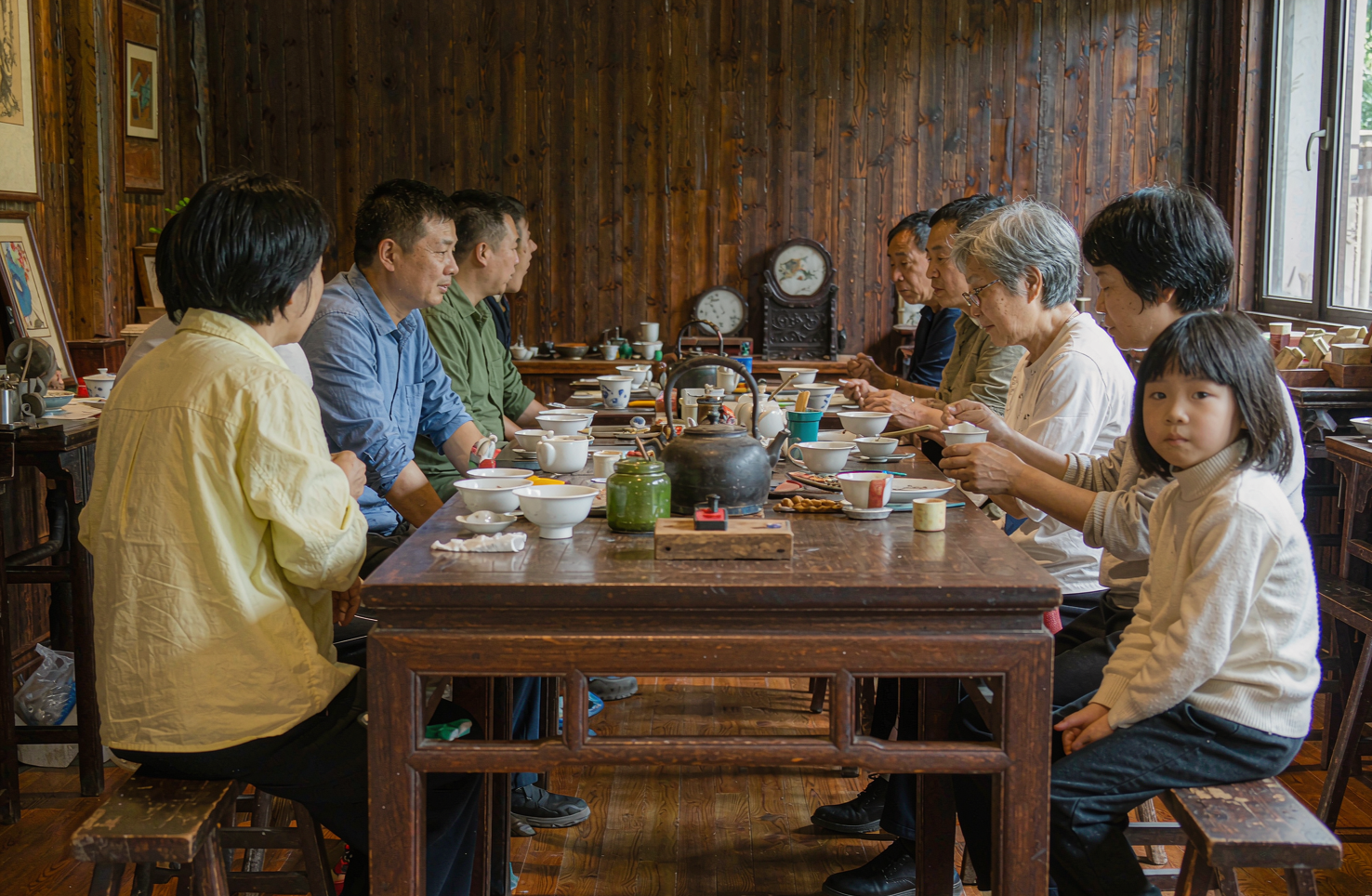
把"慢"做成一种体验:一间非遗会客厅的想法
我们习惯按功能给空间分类:吃饭的、购物的、办公的。但有一种很难归类——它在城市的闹处,不催你走,也不急着让你买单。关键在于,当"慢"被认真设计出来,它本身就可以是一种产品。
韵和鸣 · 2026/10/9 · 24 阅读
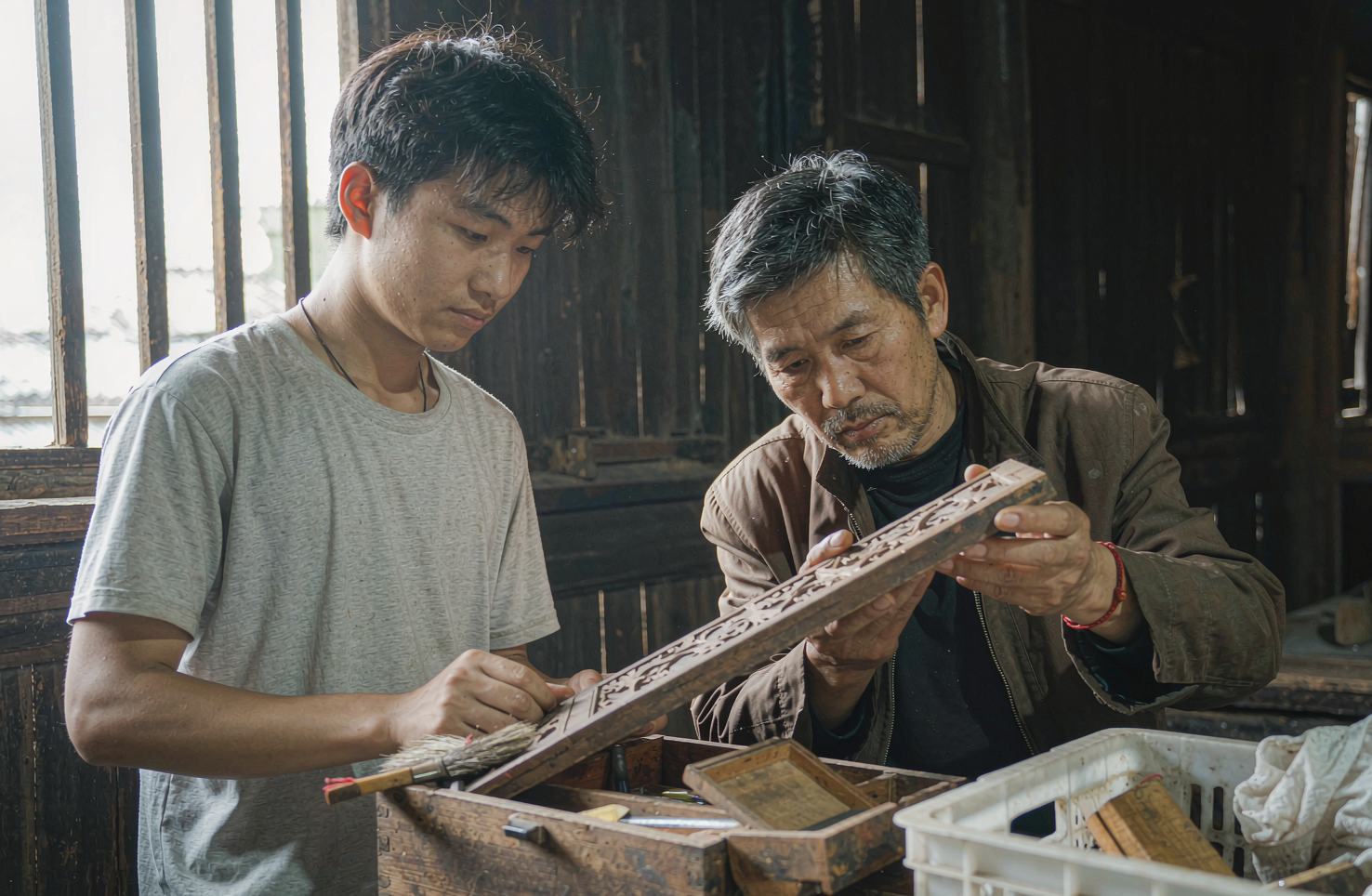
年轻人不愿学老手艺,该怪年轻人,还是怪这门手艺?
非遗传承里被讨论得最多的一句话是"后继乏人"。这句话往下追一层,就分成两条路:一条通向年轻人,说他们耐不住、看不上;一条通向他们面对的那门手艺,说它没能给出一条能活下去的路。这两条路,最近又吵起来了。
韵和鸣 · 2026/10/8 · 24 阅读
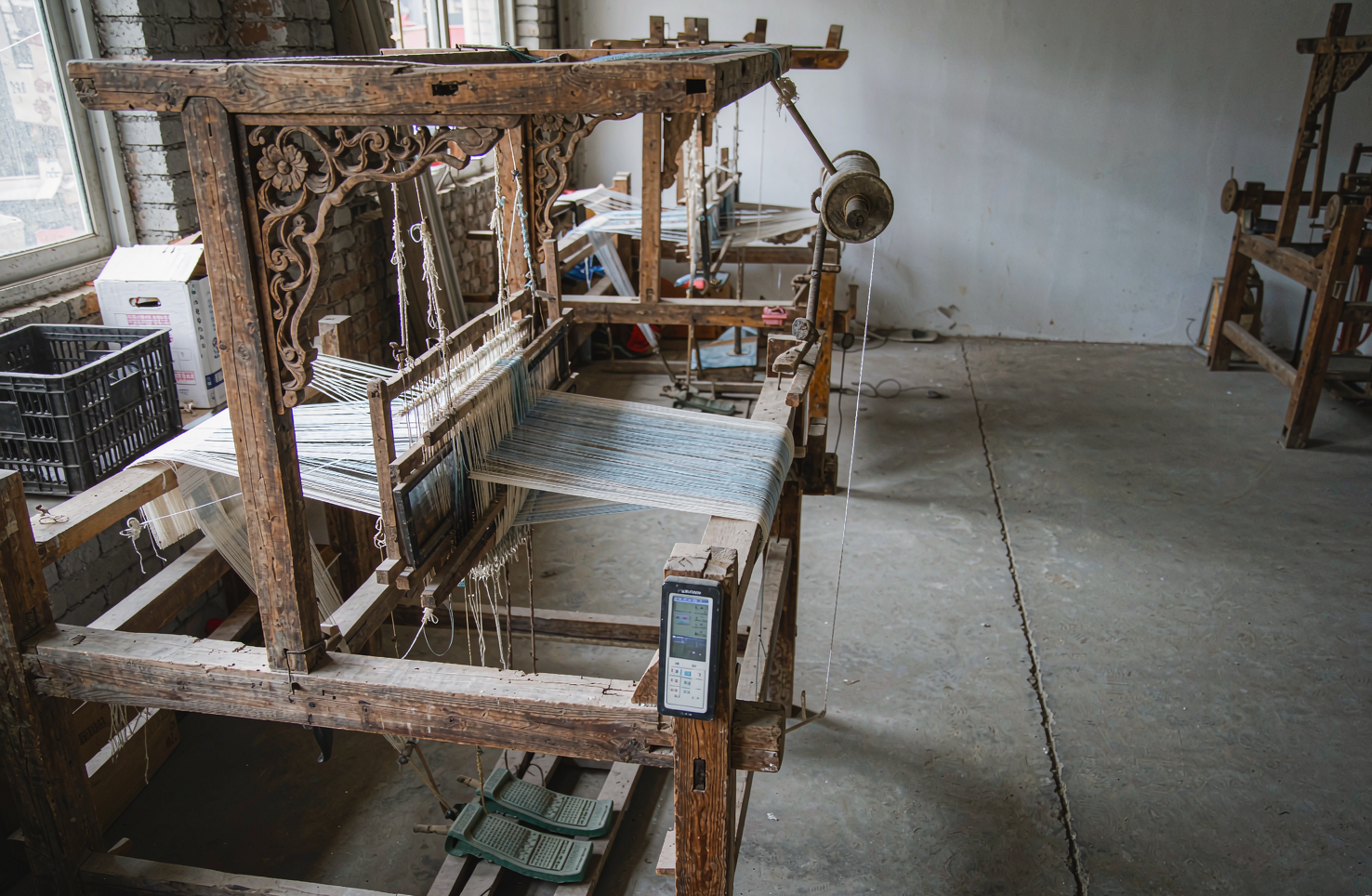
机器开始学手艺:是给匠人搭把手,还是来接班
一段流传很广的画面里,一台机械臂正跟着非遗传承人"学艺"——学劈丝、捻线、穿针。看的人分成两拨:一拨说技术帮上了忙,一拨说来抢饭碗了。同一件事读出两种意思,关键在于用什么尺度去量。
韵和鸣 · 2026/10/9 · 23 阅读