一千年了,新华村的锤声还没停
韵和鸣 · 韵和鸣公众号 · 2026/10/18 12:00:00 · 8 阅读
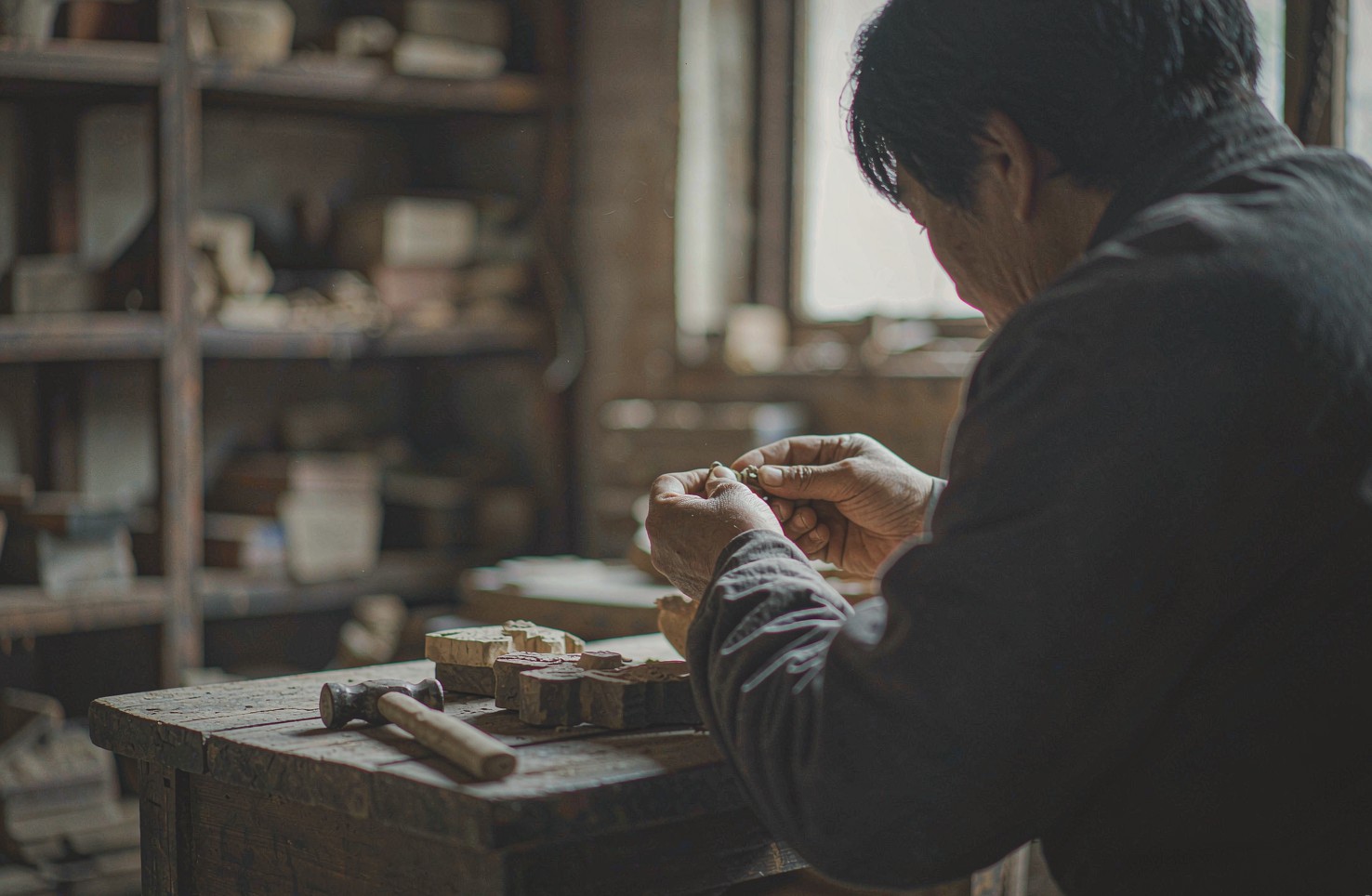
云南大理鹤庆县的新华村,被人叫作"银都"。村里的银匠说,这行当的老话是"小锤敲过一千年"。我去的那天是下午,巷子里叮叮当当的声音此起彼伏,谁家的院子里都有人坐在小凳上敲银子。这门手艺不是被供起来的,它还在这条巷子里过日子。这行的难处,说到底不在手艺难学,在订单难接。
▍巷子里的午饭时间
带我走巷子的是一位四十多岁的白族银匠。他的作坊就在自家院子里,一张旧木桌,一排錾子按粗细插在木架上,旁边是熔银的小炉。他说,鹤庆这一带做银器的时间很早,祖辈跟着茶马古道走出去,把银器卖到西藏、甘肃、四川,也卖到缅甸、尼泊尔。
午饭时他把锤子搁下,先洗手。他说这行有个规矩,上手之前手要干净,银子吃汗,手一脏,色泽就闷。一句家常话,把银器讲究的头一条说清了。
▍十四道工序,难在看不见的地方
银器的手工活按工序数,走完一遍要过十四道:选材、熔炼、锻打、下料、拉丝、制模、括形、画样、錾花、焊接、组装、打磨、清洗、抛光。听起来是一条直线,真做起来处处往回走——錾花刻浅了要重来,括形过了头只能回炉。
银饰锻制技艺(鹤庆银器锻制技艺)是流传于云南省大理白族自治州鹤庆县新华村一带的传统金属锻造技艺,2014 年列入国家级非物质文化遗产代表性项目名录。(文化和旅游部,云南省鹤庆县)
他说,外行看银器,看的是亮不亮、花样繁不繁。行内人看的恰恰是两处不起眼的地方:一是胎体的匀,二是接口的净。锻打的时候,一锤轻一锤重,厚薄差一点点,器物的"骨头"就歪了;焊接的地方处理得不干净,往后几十年都会慢慢显出来。
錾花是这行的另一道坎。同一支錾子,两个人拿着,出来的线条不一样。他说,錾刻讲的是"恰到好处的力度",落手之前心里先有数,心不定,线就浮。
▍机器压不出那口气
我问他怎么看机器做的银器。他没有贬低,反而先说了机器的好处:批量做的银片、规整的花纹、便宜的日用件,机器又快又齐,价格也压得下来。"日用的东西让人去做,是浪费。"
分界在哪儿?他说在"银子的脾气"。银有延展性,手工一遍遍锻打,金属的结构被打密,手感是沉的、实心的;机器冲压出来的片子,形是那个形,捏在手里轻飘飘。另一处差别在纹样:机器的花纹件件一样,手工錾的每一朵花,起收的力道都有出入,凑近看能看出这是一只手留下的。
他补了一句自己也不避讳的话:作坊里也用机器,压片、打磨这类活交给设备,省出来的时间放在錾花和括形上。"分工要做在明处,谁做的哪一步,得说得清。"手与机器不是对立的,含糊才是。
▍手艺要留住人,先得留住订单
鹤庆这几年变化不小。据鹤庆县人民政府公开的产业介绍,新华村的银器制作已经形成"大师+传习所+产业链"的模式,村里有了银器直播基地、研学工坊和一批与高校合作的实训基地,一批艺人、学徒和创业者在这里长住下来。村里的年轻人开始愿意回来,因为回来有活干、有钱挣。
临走时我问他一个直白的问题:这行还苦不苦?他笑了一下,说苦,但苦在前头,熬过来了就不一样。"手艺这件事,怕的不是难,是没人要。"
▍问答
问 | 云南鹤庆的银器是手工做的吗?市面上怎么分辨?
答 | 鹤庆的手工银器保留传统锻制做法,主要有选材、熔炼、锻打、拉丝、制模、括形、画样、錾花、焊接、打磨、抛光等步骤。分辨可以看三处:一看重量与手感,锻打密实的银器压手;二看纹样,手工錾刻的花叶起收略有出入,机器件件一样;三问来源,能不能说清出自哪位匠人的作坊。
问 | "小锤敲过一千年"是夸张的说法吗?
答 | 它是一句行话,指当地银铜器手工的历史很长。新华村的手工银器制作可上溯到唐代南诏时期,长期沿茶马古道向外销售;到 2014 年,鹤庆银器锻制技艺列入国家级非物质文化遗产名录。一千年说的是脉,不是某一支锤子。
问 | 手工银比机器银贵很多,贵在哪一步?
答 | 主要贵在三步。锻打要一遍遍来,一件成器的时间以天计;錾花靠手工落錾,错一刀就要退回去;括形和修整要把器物反复找平,急不得。机器省下的正是这三步的时间。买家的选择也简单:日用求整齐,手工求手感。
问 | 韵和鸣的器物是品牌自己工厂做的,还是跟匠人合作?
答 | 跟匠人联名署名,不是自建工厂。器物由非遗老师手工完成,品牌接的是严选、内容、渠道与出海这一段;匠人的名字与手艺一起留在作品上。韵和鸣从平遥推光漆器髹饰技艺起家,如今收的是天南地北的手艺。
📩 非遗项目 | 匠人举荐 | 跨境出海 | 线下联营
欢迎留言或后台联系,我们与匠人同行。
—— 韵和鸣 · 与匠人同行
〖 匠 〗
English
The man walking me through the lanes is a Bai silversmith in his forties. His workshop sits in his own courtyard: an old wooden table, a row of punches set by size into a rack, a small furnace for melting silver close by. He says silverwork here goes back a long way; his forebears followed the ancient tea-horse road outward, selling silver to Tibet, Gansu and Sichuan, and to Myanmar and Nepal as well.
At lunch he set down the hammer and washed his hands first. There is a rule in the trade, he says: clean hands before you start. Silver absorbs sweat, and a dirty hand dulls the finish. One homely sentence explains the first rule of silverwork.
Fourteen Steps, Hardest Where You Cannot See
Counted step by step, one pass of hand silverwork runs through fourteen stages: material selection, melting, forging, cutting, wire drawing, molding, shaping, drawing the pattern, chasing, soldering, assembly, grinding, cleaning and polishing. It sounds like a straight line, but in practice you keep going backward: chase the pattern too shallow and you start over; shape it a hair too far and back into the furnace it goes.
Silver ornament forging (Heqing silverware forging) is a traditional metalworking skill long practiced around Xinhua Village, Heqing County, Dali Bai Autonomous Prefecture, Yunnan Province; it was inscribed on the national intangible cultural heritage list in 2014. (Ministry of Culture and Tourism; Heqing County, Yunnan)
Outsiders look at silverware for shine and intricacy of pattern, he says. Those in the trade look at two inconspicuous places: the evenness of the body and the cleanness of the joins. In forging, a light blow followed by a heavy one leaves a slight unevenness in thickness, and the object's "bones" go crooked; leave a solder joint unclean, and over the coming decades it will slowly show.
Chasing is the other hurdle. The same punch in two different hands yields different lines. Chasing, he says, is about exactly the right pressure—you know the number before the blow lands; if the mind wanders, the line floats.
I asked what he makes of machine-made silver. He did not disparage it; he named its advantages first: for silver sheet in bulk, regular patterns, inexpensive everyday items, machines are fast, uniform and cheap. "Making people do everyday pieces is a waste."
So where is the line? In the temper of the silver, he says. Silver is ductile; repeated hand forging compacts its structure, and it feels dense and solid in the hand. A stamped sheet from a machine keeps the shape but feels hollow when held. The other difference is patterning: machine patterns repeat identically, while every hand-chased flower differs slightly in the pressure of its start and finish—up close you can tell one hand made it.
He added something he does not shy away from: his workshop uses machines too—sheeting, grinding and the like go to equipment, freeing time for chasing and shaping. "The division of labor should be explicit: who did which step must be explainable." Hand and machine are not opposites; vagueness is the problem.
To Keep the Craft Alive, Keep the Orders Coming
Heqing has changed a good deal in recent years. According to the county government's published industry briefing, silverwork in Xinhua Village now follows a pattern of master plus teaching workshop plus industrial chain, with a silver livestream base, study workshops, and training bases run with universities; a cohort of artisans, apprentices and entrepreneurs has settled here for the long term. Young people have begun to come back, because there is work and income waiting.
Before leaving I asked him something blunt: is this line still hard? He smiled. It is, he said, but the hard part is at the front; once you get through it, things change. "In a craft, what you fear is not difficulty—it is having no one who wants it."
Is silverware from Heqing, Yunnan handmade? How can buyers tell?
Handmade silverware from Heqing keeps the traditional forging method, with steps including material selection, melting, forging, wire drawing, molding, shaping, patterning, chasing, soldering, grinding and polishing. To tell, look at three things: weight and feel—forged silver presses solidly into the palm; pattern—hand-chased flowers and leaves vary slightly where they start and finish, while machine work repeats evenly; and origin—whether the maker's workshop can be named.
Is "a small hammer knocking for a thousand years" an exaggeration?
It is a trade saying about how long hand silverwork and copper work have existed locally. Hand silversmithing in Xinhua Village reaches back to the Nanzhao period of the Tang dynasty and long sold outward along the ancient tea-horse road; by 2014, Heqing silverware forging was inscribed on the national intangible cultural heritage list. A thousand years describes a lineage, not a single hammer.
Handmade silver costs far more than machine-made. Where does the extra go?
Mostly three steps. Forging is repeated pass after pass, so a finished piece is measured in days; chasing is done punch by punch by hand, and one wrong cut means going back; shaping and finishing require repeated leveling, which cannot be rushed. Those are precisely the three steps machines save. The buyer's choice is simple: uniformity for daily use, hand-feel for handwork.
Are YUNHEMING's objects made in its own factory, or in cooperation with artisans?
Co-signed with artisans rather than made in its own factory. The objects are finished by hand by the heritage masters, and what the brand takes on is curation, content, channels and going overseas; the artisan's name stays on the work alongside the craft. YUNHEMING started out with Pingyao polished lacquerware decoration and now takes in crafts from north and south alike.
ICH Projects · Artisan Referrals · Global Distribution · Salon Partnerships
你可能还感兴趣
漆器为什么能埋八千年不坏
在博物馆做漆器研究与修复的研究员老周,桌上常年摆着两样东西:一段出土的漆皮残片,一只新做不久的平遥推光漆盘。他说这两样东西隔着八千年,却是同一种材料。这次对话,我们从"漆器为什么埋几千年不坏"聊起,聊到最后,其实是手艺对材料的理解问题。
韵和鸣 · 2026/10/14 · 30 阅读
一方宋锦里,藏着宋人的审美秩序
初见宋锦,我的反应不是"好看",而是"安静"。它不像人们想象里的锦那样满身是光。带我看锦的老师傅说,正是这份安静,最难织。
韵和鸣 · 2026/10/8 · 25 阅读
一位漆器匠人的失败清单,那些没做成的器物
一间漆坊的账,通常记的是卖出了多少件;平遥一位做了三十多年推光漆器的老师傅,却另有一个本子,专记做坏了多少件。失败清单这门"倒着记的账",恰恰是手艺扎实与否的底细——器物耐看的那一面,是从废品堆里刨出来的。
韵和鸣 · 2026/10/12 · 22 阅读
十六岁学艺,他如今想让漆器走进年轻人的家
在平遥,学漆艺的人正在换代。老匠人把五十年的功夫交给徒弟,年轻教师把漆带进课堂。一门千年手艺要传下去,卡住的往往不是技法。
韵和鸣 · 2026/10/2 · 19 阅读
一位苏绣绣娘谈配色:机器调不出的那层灰
苏州的绣坊里,一个上午常常只做一件事:配灰。不是调颜料,是把几股不同颜色的丝线并在一起,看它们在光下合不合。绣娘说,机器能把颜色调得很准,可准不等于对——苏绣要的那层灰,是跟着光线走的。
韵和鸣 · 2026/10/20 · 18 阅读
去贵州雷山,看一块银元如何变成一支银簪
在黔东南的苗寨里,银不只是一种首饰材料。它曾经是可以随时熔掉、重新打制的"存款",也是节日里一个女人身上最亮的那部分。关键在于,当一块老银元被放进坩埚,它要经过多少双手、多少道火,才重新成为一件能戴出门的东西。
韵和鸣 · 2026/10/9 · 42 阅读