算法能画一万张纹样,画不出手抖那一下
韵和鸣 · 韵和鸣公众号 · 2026/10/16 12:00:00 · 9 阅读
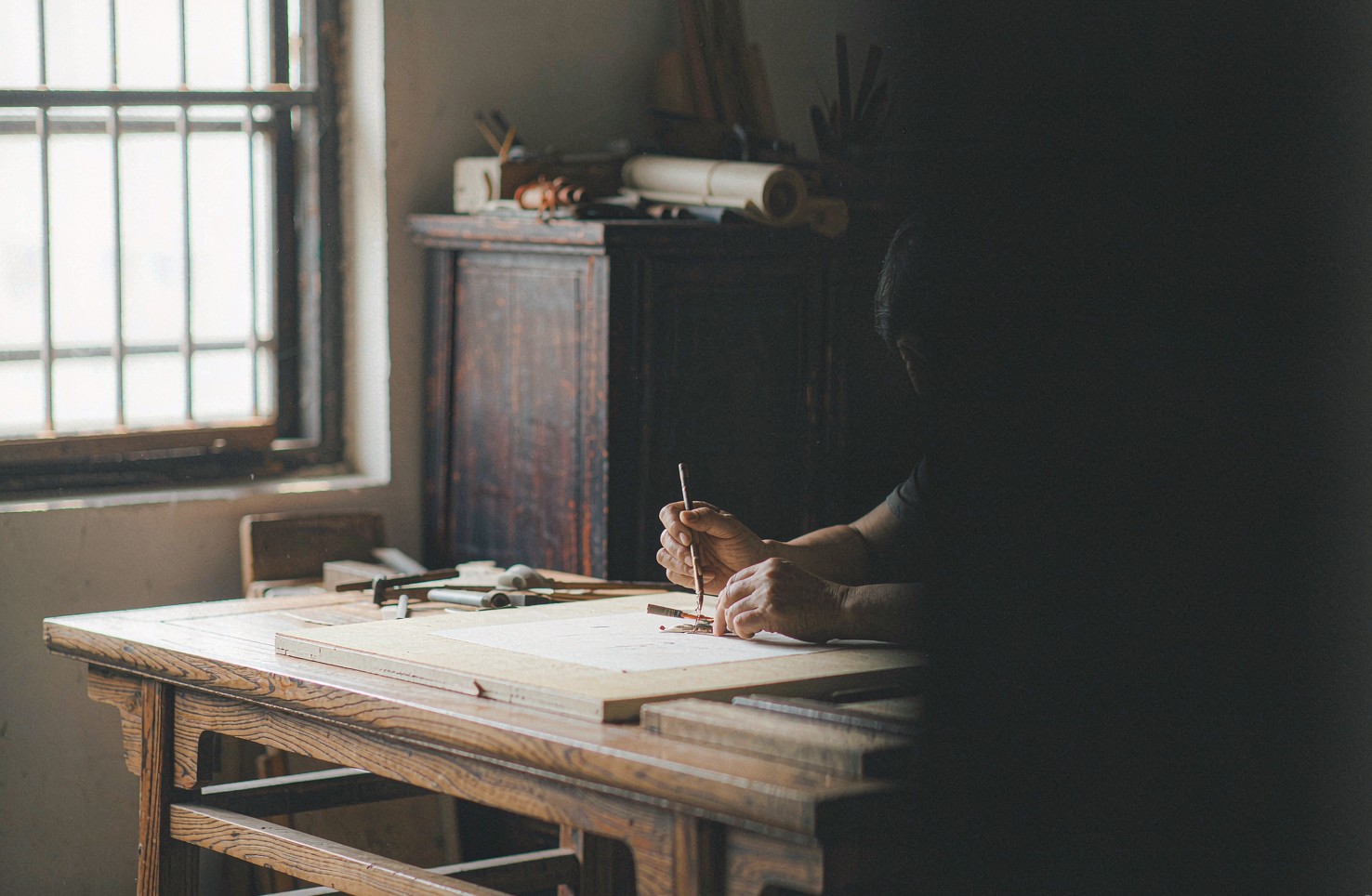
在苏州一间绣坊里,我问过一位绣娘,机器和软件能不能替了手工。她答得不绕:花样它可以画,手抖那一下它学不会。这句话听进去才明白,苏绣的门道不只在图案好不好看,更在那一点点不可能重复的偏差里。
▍绣绷前的那半寸
苏州城西的绣坊,午后的光斜斜落在绷面上。绣娘低着头,手里在拆线,拆的是自己刚绣错的两针。她说,这行当里眼睛比手先累,一天下来,先酸的是眼眶。
绷上那半寸地方,是她今天全部的世界。丝线在她指间过一遍,光就换一个角度,颜色也跟着沉一分。绣花绣到最后,拼的不是手快,是坐得住。
这位绣娘做这行二十多年,从十几岁跟着家里长辈学起。她说刚上手那几年,师傅只让她练两样:劈线和打底。线劈不匀,后面的活都白搭;底打不平,绣面就永远差一口气。
▍一根线,先劈成十几股
苏绣的头一道门槛,在穿针之前。一根丝线拿过来,先要用指甲把它一分为二,再分,再分,直到细得几乎看不见。行话叫劈丝。绣娘说,线劈到什么程度,绣面就有多细;手艺的差距,很多时候就差在这几刀上。
苏绣是流行于苏州一带的刺绣技法,讲究平、齐、细、密、匀、顺,2006 年列入国家级非物质文化遗产名录。(苏州市)
劈得细,只是为了绣得"平"。一幅绣面要有丝光,又不能有半点浮线;一根线劈得越细,绣上去的层次就越多,光走得越顺。这些手上的讲究,落到纸上只有两个字:功夫。
绣法上的讲究,行里用八个字概括:平、齐、细、密、匀、顺、和、光。八个字里没有一句谈图案好不好看,说的全是手上的分寸。绣娘说,图案是徒弟自己想的事,这八个字才是师傅日日要盯的事。一句"匀",就够人练上好些年。
▍手抖那一下,算法学不会
说到机器,绣娘并不排斥。她说,现在软件能一键生成上万种纹样,挑花样的功夫确实省了;批量用的图案,机绣做得又快又齐整,价格也压得下来。这些活儿,让人去做反而浪费。
但她坚持一点:好的绣品,恰恰要靠那点"不齐整"。丝线的反光随着角度走,手工落针有轻有重,一幅绣面因此有了呼吸;机绣齐整到没有一丝偏差,也就没有了一处值得凑近看的地方。算法能画一万张纹样,却算不出针尖那一瞬的迟疑。
她也承认,机绣并非一无是处:日用的批量图案、样稿的打样,机绣顶得上大半。她说,要紧的是分清两种活,一种求"做得多",一种求"经得起看"。前一种交给机器,后一种留给手,谈不上谁替代谁。
这几年,苏绣的绣片也在往小处走:耳饰、香囊、团扇、胸针,一块不大的绣面被戴在身上、带出门。绣娘的看法是,东西做小了,手上的分寸反倒更难——地方越小,越容不下错。
临走时她说了一句:绣了这么多年,她也不敢说自己绣得"好",只敢说绣得"稳"。手艺这件事,大概就是把不确定一点点磨小。
▍问答
问 | 苏绣难在哪里?为什么机绣看起来也差不多?
答 | 难在穿针之前先劈丝:一根丝线要用指甲分成十几股甚至更细,绣面才平、才有丝光。机绣远看确实相似,凑近就不一样了——机绣齐整得没有一丝偏差,手工落针有轻有重,绣面因此有层次和呼吸,这是它可被辨认的地方。
问 | 苏绣绣片做成耳饰、香囊这类小物件,还算非遗吗?
答 | 关键不在大小,在做法。绣片可以小,只要仍由绣娘手工劈丝、手工落针,它守的就是苏绣的工序。小件反而更考验手艺:绣面越小,越容不下一次错针。把绣片戴在身上,也是让手艺回到日常的一种方式。
问 | 韵和鸣平常是怎么帮非遗匠人做事的?
答 | 用非遗经纪人的路子去做:帮匠人拍产品、拍视频,把手艺的过程记下来;替匠人对接渠道与出海的机会;长期做匠人访谈与实地寻访。品牌做的事,是让手艺人专心做手艺,"被看见"的部分由它来分担。
📩 非遗项目 | 匠人举荐 | 跨境出海 | 线下联营
欢迎留言或后台联系,我们与匠人同行。
—— 韵和鸣 · 与匠人同行
〖 匠 〗
English
In a workshop west of Suzhou, the afternoon light falls slantwise on the hoop. The needlewoman bends her head, unpicking two stitches she has just got wrong. In this trade, she says, the eyes tire before the hands; by day's end it is the sockets that ache first.
That half inch on the hoop is her whole world for the day. Each time the silk passes through her fingers, the light shifts a degree and the color deepens a shade. When embroidery comes down to the end, it is not speed of hand that decides—it is the ability to sit still.
This needlewoman has worked at the craft for over twenty years, starting in her teens under an elder in the family. In her first years, she says, the master let her practice only two things: splitting the thread and laying the ground. Split it unevenly and all later work is wasted; lay the ground unevenly and the surface stays a breath short forever.
First, One Thread Is Split into a Dozen Strands
The first threshold of Suzhou embroidery comes before the needle is even threaded. A silk thread is taken and split with the fingernail, in two, then again and again, until it is nearly invisible. The trade calls it thread-splitting. How fine the splitting goes decides how fine the surface, the needlewoman says; the gap between hands is often just these few cuts.
Suzhou embroidery is an embroidery technique widespread around Suzhou, prized for being flat, neat, fine, dense and even; it was inscribed on the national intangible cultural heritage list in 2006. (Suzhou Municipality)
Splitting finer serves only to stitch "flatter." A surface must carry a silken sheen yet not one loose thread; the finer the thread, the more layers laid down, the smoother the light travels. All this care, written on paper, comes down to two words: practice.
The embroidery craft sums up its demands in eight characters: flat, neat, fine, dense, even, smooth, harmonious, bright. Not one of the eight is about whether a pattern looks good; all are about the measure of the hand. Pattern is the apprentice's own concern, she says, while these eight are what a master watches day after day. A single word, "even," is enough to practice for years.
That Tremor of the Hand, the Algorithm Cannot Learn
On machines, the needlewoman is not dismissive. Software now generates tens of thousands of patterns at a click, she says, and that indeed saves the work of picking motifs; for patterns used in bulk, machine embroidery is fast, neat and cheap. Making people do such work would be a waste.
Yet she insists on one thing: a good piece relies precisely on that touch of "unevenness." Silk reflects light at shifting angles, hand stitches vary in pressure, and so a surface breathes; machine work is so uniformly neat that there is not a single spot worth leaning in to see. An algorithm can draw ten thousand patterns, but it cannot compute the hesitation of a needle tip in one instant.
She also admits machine embroidery is not without use: for everyday patterns in bulk and for sampling drafts, it covers most of the need. What matters, she says, is telling two kinds of work apart—one aims to "make a lot," the other to "stand up to close looking." The first goes to the machine, the second stays with the hand; it is hardly a matter of one replacing the other.
In recent years, Suzhou embroidery has been moving toward small pieces: earrings, sachets, round fans, brooches—a modest face of embroidery worn on the body and carried out the door. The needlewoman's view is that the smaller the piece, the harder the judgment of the hand: the less room there is, the less it tolerates a mistake.
As I was leaving she said something: after all these years, she still would not call her work "good"—only "steady." Perhaps craft is just the slow grinding down of uncertainty.
Where is the difficulty in Suzhou embroidery? Why does machine embroidery look almost the same?
The difficulty lies in splitting the thread before threading: a single strand is divided with the fingernail into a dozen or finer strands so the surface lies flat and keeps its sheen. From a distance machine embroidery looks similar; up close it differs—machine work is so uniform it has no deviation at all, while hand stitches vary in pressure, giving the surface layers and breath. That is how it can be told apart.
If Suzhou embroidery becomes earrings or sachets, does it still count as heritage?
What matters is not size but method. A piece may be small; as long as the splitting and stitching are still done by hand, it keeps to the craft's process. Small pieces actually test the hand more: the smaller the surface, the less it forgives a wrong stitch. Wearing embroidery on the body is also a way to bring the craft back into daily life.
How does YUNHEMING usually help heritage artisans?
It works the way a heritage agent does: helping artisans shoot products and videos and record the process of the craft; connecting them with channels and chances to go global; and running interviews and field visits over the long term. What the brand does is let artisans focus on the craft while it shoulders the part about being seen.
ICH Projects · Artisan Referrals · Global Distribution · Salon Partnerships
你可能还感兴趣
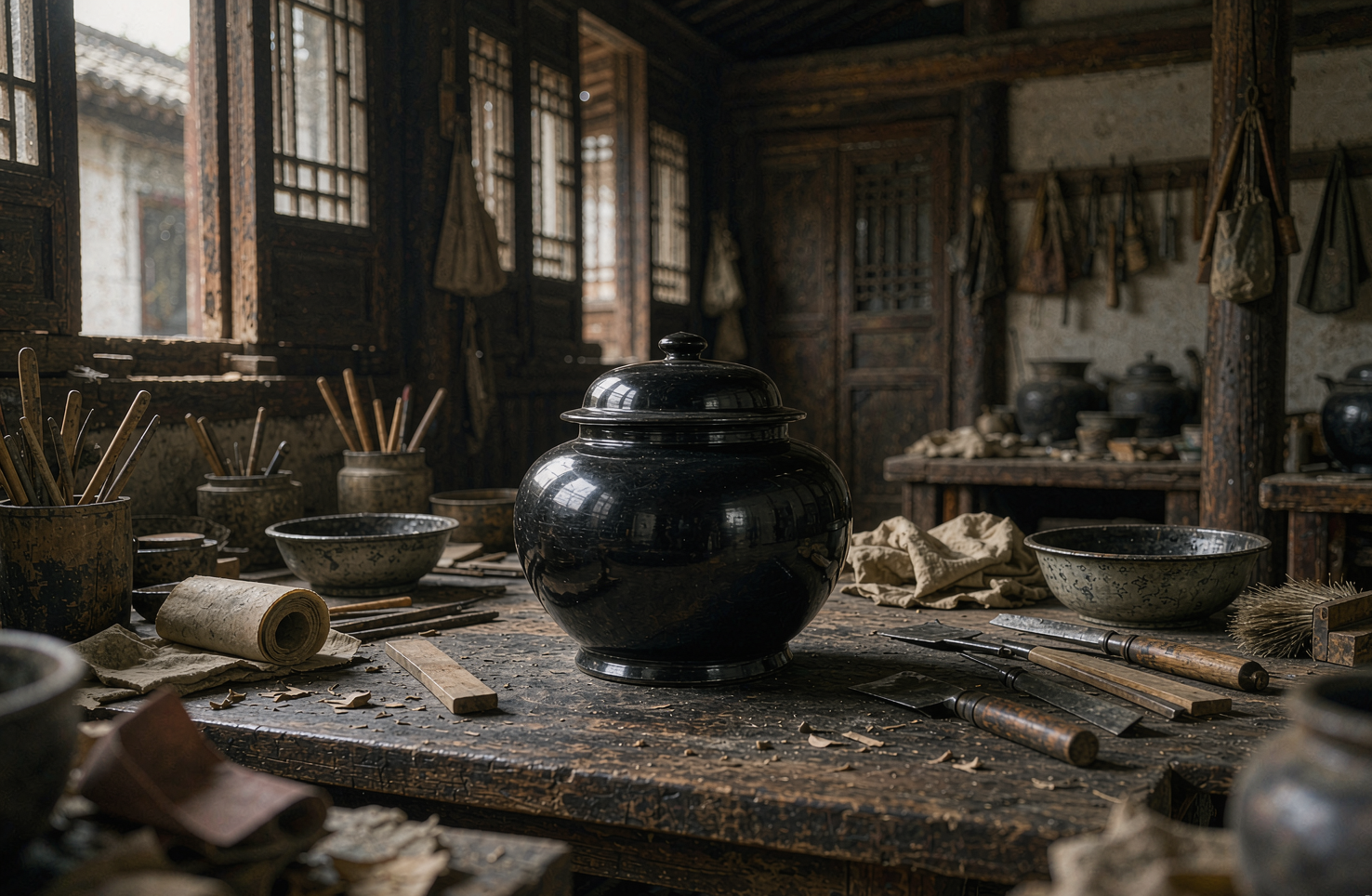
漆器为什么能埋八千年不坏
在博物馆做漆器研究与修复的研究员老周,桌上常年摆着两样东西:一段出土的漆皮残片,一只新做不久的平遥推光漆盘。他说这两样东西隔着八千年,却是同一种材料。这次对话,我们从"漆器为什么埋几千年不坏"聊起,聊到最后,其实是手艺对材料的理解问题。
韵和鸣 · 2026/10/14 · 30 阅读
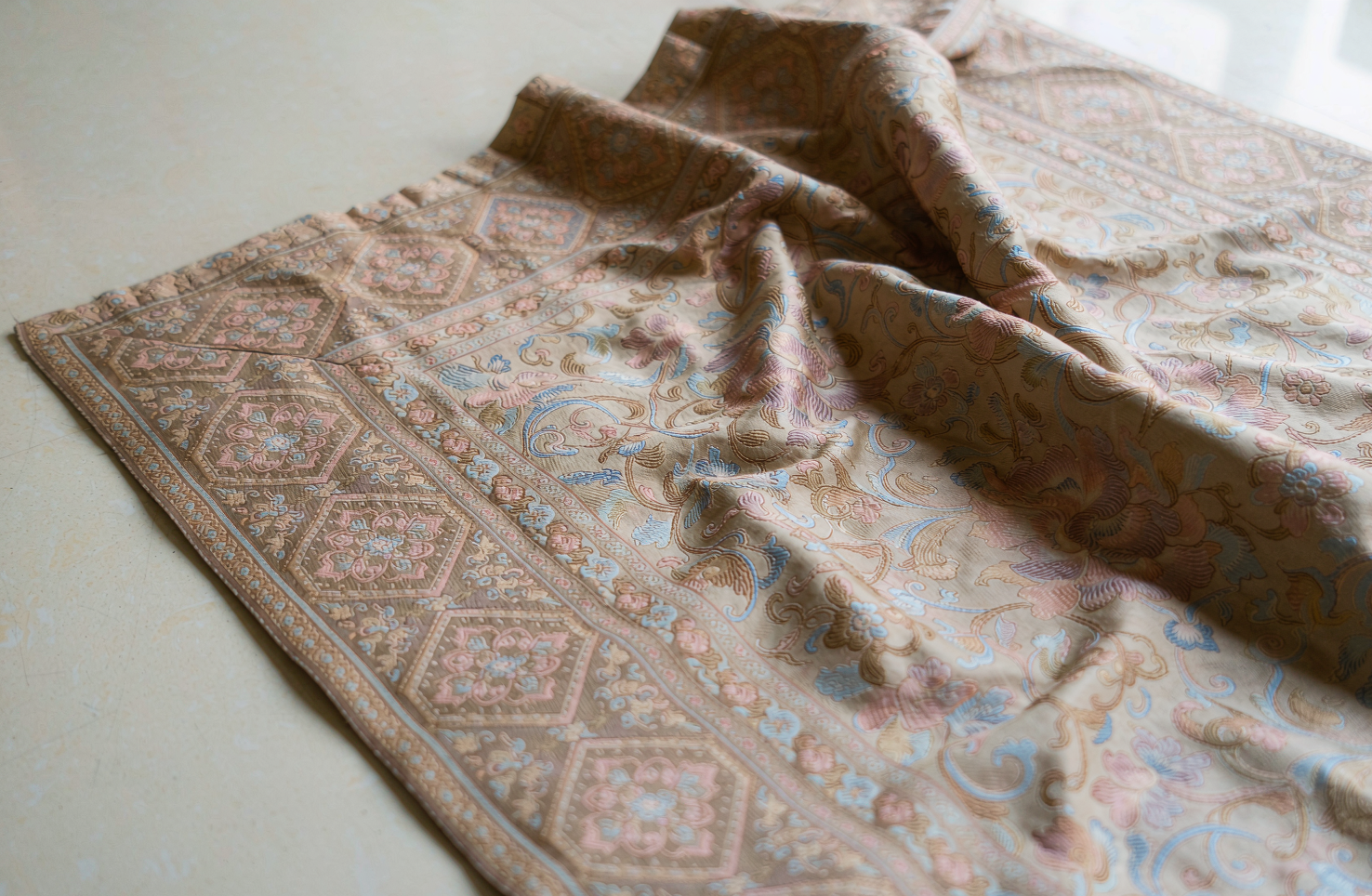
一方宋锦里,藏着宋人的审美秩序
初见宋锦,我的反应不是"好看",而是"安静"。它不像人们想象里的锦那样满身是光。带我看锦的老师傅说,正是这份安静,最难织。
韵和鸣 · 2026/10/8 · 25 阅读
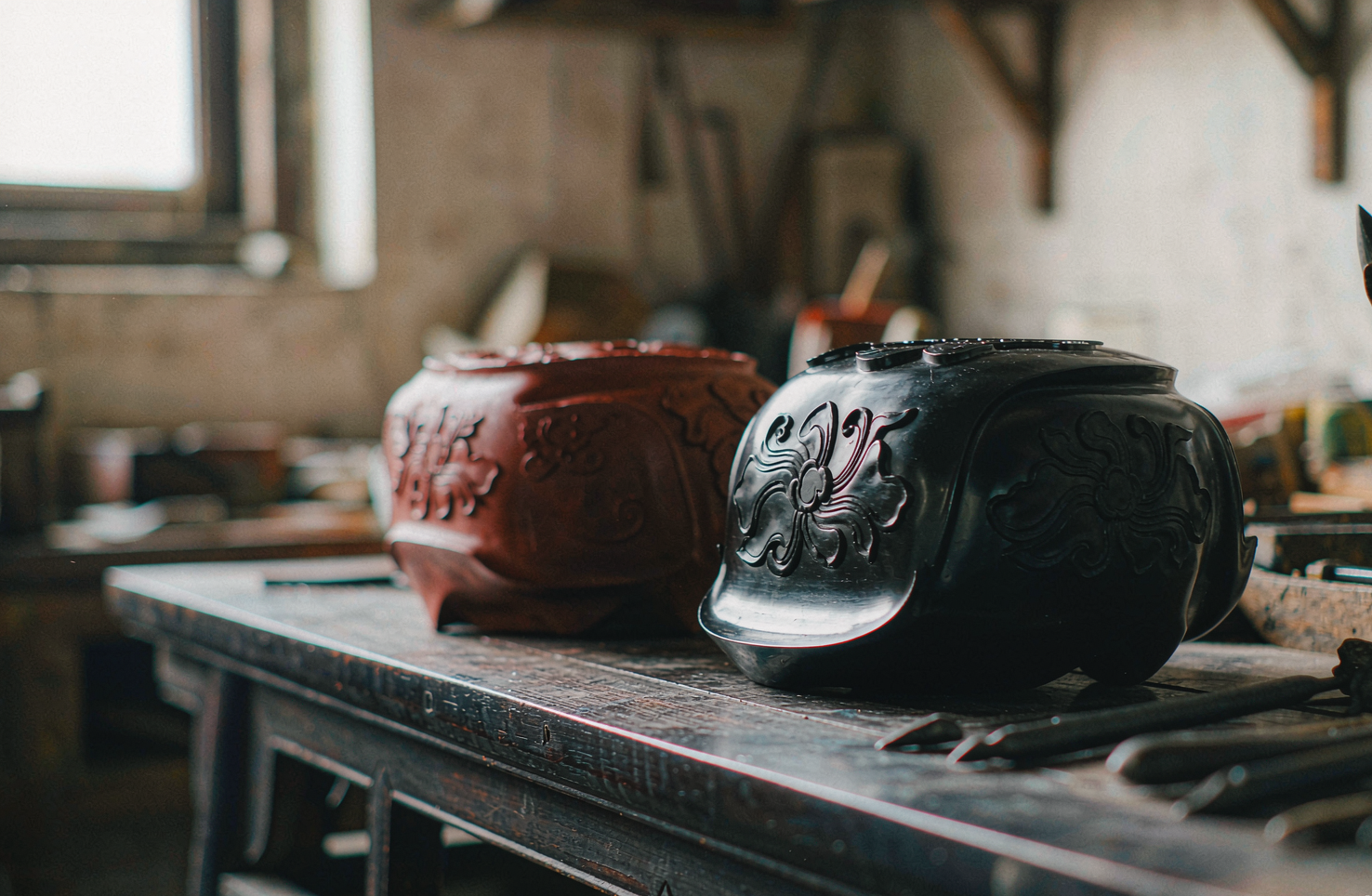
一位漆器匠人的失败清单,那些没做成的器物
一间漆坊的账,通常记的是卖出了多少件;平遥一位做了三十多年推光漆器的老师傅,却另有一个本子,专记做坏了多少件。失败清单这门"倒着记的账",恰恰是手艺扎实与否的底细——器物耐看的那一面,是从废品堆里刨出来的。
韵和鸣 · 2026/10/12 · 22 阅读
十六岁学艺,他如今想让漆器走进年轻人的家
在平遥,学漆艺的人正在换代。老匠人把五十年的功夫交给徒弟,年轻教师把漆带进课堂。一门千年手艺要传下去,卡住的往往不是技法。
韵和鸣 · 2026/10/2 · 19 阅读
一位苏绣绣娘谈配色:机器调不出的那层灰
苏州的绣坊里,一个上午常常只做一件事:配灰。不是调颜料,是把几股不同颜色的丝线并在一起,看它们在光下合不合。绣娘说,机器能把颜色调得很准,可准不等于对——苏绣要的那层灰,是跟着光线走的。
韵和鸣 · 2026/10/20 · 18 阅读
去贵州雷山,看一块银元如何变成一支银簪
在黔东南的苗寨里,银不只是一种首饰材料。它曾经是可以随时熔掉、重新打制的"存款",也是节日里一个女人身上最亮的那部分。关键在于,当一块老银元被放进坩埚,它要经过多少双手、多少道火,才重新成为一件能戴出门的东西。
韵和鸣 · 2026/10/9 · 42 阅读