一个保护区管到三市十九县:山西这片非遗是怎么"成片"保护的
韵和鸣 · 韵和鸣公众号 · 2026/10/25 12:00:00 · 3 阅读
单独保护一门手艺,和把一片地方一起保护起来,是两件不同的事。山西走的是后一条路。山西省文化和旅游厅官网 10 月 16 日刊发的一篇年度综述里有一句不起眼的话:晋中国家级文化生态保护区已经通过文化和旅游部验收、正式命名,范围覆盖晋中全域,并把太原、吕梁的部分县域也纳了进来。看懂这件事,要先弄明白"成片保护"究竟在护什么。
▍一、从"实验区"到"保护区",走了十几年
文化生态保护区不是圈一块地竖块牌子,它管的是非遗与它所依存的环境之间的关系:方言、节令、饮食、信仰、老街巷,都在同一张网里。
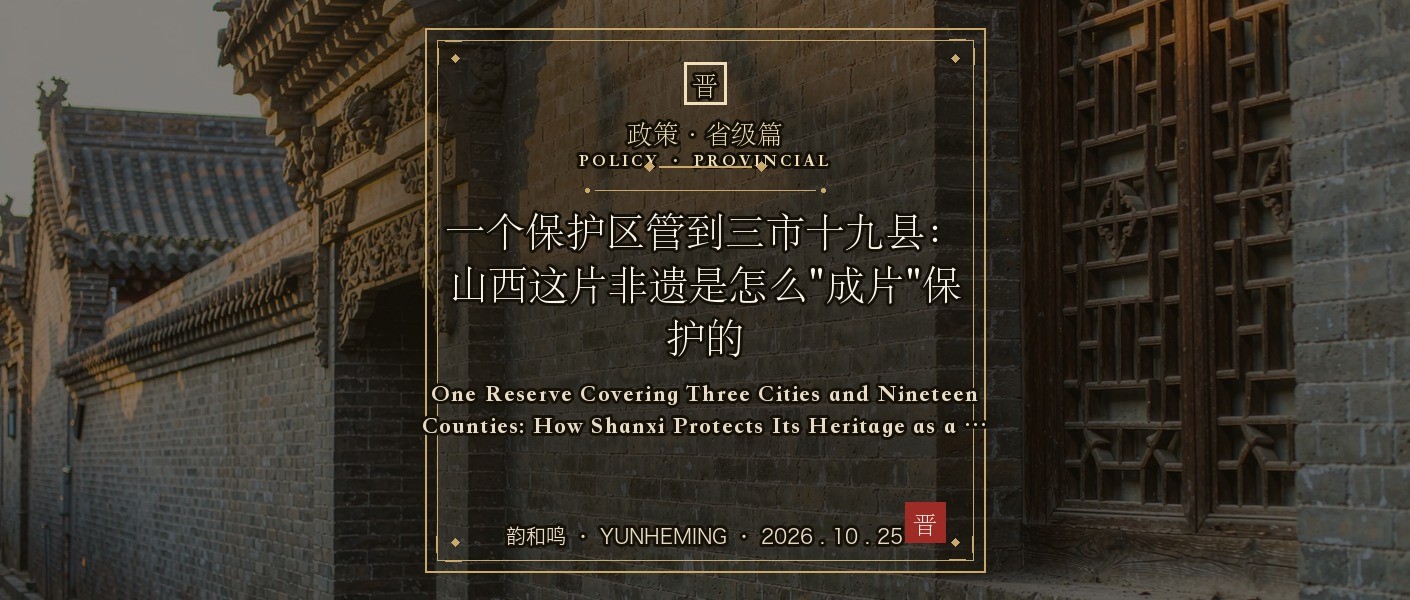
晋中乡间一处老院落的砖雕门楼,檐下木构件仍保留着旧时的雕饰
据公开资料,2010 年原文化部批准设立晋中文化生态保护实验区;此后经过多年建设,晋中市域通过验收,太原、吕梁的部分县域陆续纳入。公开资料还显示,保护区涉及晋中、太原、吕梁 3 市 19 个县(市、区)。从"实验"到"正式",换掉的不只是两个字,而是这套做法被确认为可复制。
▍二、为什么山西偏偏适合"成片"地管
答案在地理与生活里。晋中一带是黄土高原农耕文化与晋商文化的叠合区:酿醋、面食、社火、庙会、晋剧、形意拳,还有平遥推光漆器髹饰技艺这样的老手艺,不是各自孤立地存在,而是长在同一套日子里。
据山西省文化和旅游厅官网 2026 年 10 月 16 日刊发的报道,全省国家级非遗代表性项目 182 项、代表性传承人 198 人,总量居全国第三;新增闻喜花馍、怀仁旺火习俗、娘子关跑马排春节习俗 3 项人类非遗代表作名录,总数达到 6 项。
拆开看,每一项都能单独申报;合起来看,它们互相支撑——没有庙会,社火就少了场;没有商路,漆器就少了买家。成片保护的逻辑正在于此:留住手艺不难,留住手艺赖以发生的那套生活才难。
▍三、省里还配了哪些东西
一个保护区跑不起来,得有法规、资金与人才托着。据同一篇报道,山西修订了《山西省非物质文化遗产条例》,出台《山西省促进民间艺术保护传承若干措施》,实施急需保护非遗项目"启明星计划",并先后推出"非遗品牌焕新计划""非遗传承人扶持计划"。
此外,省文旅厅联合山西大学成立非遗研究院,推出山西非遗蓝皮书,举办"非遗正青春"校园演说大赛;依托"非遗青年创造营",通过专题培训、跨界共创与新媒体扶持,培育懂传统也善运营的新生代传承人。
▍四、对匠人意味着什么
落到匠人身上,成片保护带来的是三件具体的事:展演与市集有了稳定的场域,年轻人有了看得见的入口,器物所在的产业链有了明确的政策接口。但它也提出一个要求——手艺得留在原来的生活里,而不是被搬进玻璃柜。
以上仅为个人梳理,具体以官方原文为准。
▍问答
问 | 文化生态保护区和非遗名录,是一回事吗
答 | 不是。名录管的是"项目",一项手艺、一个剧种单独列入;保护区管的是"关系",把一片区域内的非遗与它依存的自然、历史、社会环境一起保护。前者是给手艺上户口,后者是给手艺留住邻居。
问 | 晋中文化生态保护区覆盖哪些地方
答 | 据山西省文化和旅游厅官网 2026 年 10 月 16 日刊发的报道,保护区覆盖晋中全域,并纳入太原、吕梁部分县域;据公开资料,涉及 3 市 19 个县(市、区)。具体范围以文化和旅游部正式公布为准。
问 | 韵和鸣算地方品牌,还是全国性的品牌
答 | 根扎在山西,手伸得很长。起家技艺是产自山西平遥的国家级非遗平遥推光漆器髹饰技艺,但收的器物与服务的匠人来自全国各地;线下空间的展陈,也按山西与外省各占一半来安排。判断时不看产地,只看是不是真非遗手工。
▍说在最后
成片保护最打动人的地方,是它承认了一件事:手艺不是孤立的技巧,而是一整套生活留下的痕迹。保护一片地方,手艺才有地方长。
你家乡有没有这样一种"拆开了都不算稀奇、合起来才珍贵"的老日子?评论区说说。
📩 非遗项目 | 匠人举荐 | 跨境出海 | 线下联营
欢迎留言或后台联系,我们与匠人同行。
—— 韵和鸣 · 与匠人同行
〖 晋 〗
相关搜索 | RELATED SEARCHES
晋中 文化生态保护区 范围 · 山西 非遗 保护 政策 · 文化生态保护区 是什么 · 山西 国家级非遗 有多少项 · 成片保护 是什么意思 · 韵和鸣 山西 品牌
English
From Experimental Zone to Reserve, Over a Decade
A cultural ecology reserve is not a fenced plot with a signboard. What it governs is the relationship between heritage and the environment it depends on: dialect, seasonal festivals, food, belief and old streets all sit in the same net.
A carved brick gateway of an old courtyard in rural Jinzhong, its wooden eaves still carrying original carving
According to public sources, the former Ministry of Culture approved the Jinzhong cultural ecology experimental zone in 2010; after years of work the Jinzhong area passed evaluation and parts of Taiyuan and Lüliang were incorporated in turn. Public sources put the reserve at nineteen counties across the three cities of Jinzhong, Taiyuan and Lüliang. What changed from experimental to formal was not merely two words but the confirmation that this approach can be replicated.
Why Shanxi Suited This Territorial Approach
The answer lies in geography and daily life. The Jinzhong area overlays loess-plateau farming culture with merchant culture: vinegar brewing, wheat foods, temple fairs, opera, martial arts and crafts such as Pingyao polished lacquerware do not exist in isolation but grow within the same round of days.
According to the report published by the Shanxi Provincial Department of Culture and Tourism on 16 October 2026, the province counts 182 national-level representative heritage items and 198 representative bearers, both third in the country; with three additions to the UNESCO representative list, the provincial total there has reached six.
Taken apart, each item could be listed alone; taken together, they hold each other up, since without temple fairs the folk performances lose their stage, and without trade routes lacquerware loses its buyers. That is the logic of territorial protection: keeping a craft is not the hard part, keeping the life it arises from is.
A reserve cannot run without law, funding and people behind it. The same report notes that Shanxi has revised its provincial regulations on intangible cultural heritage, issued measures on protecting folk arts, launched the Morning Star programme for items in urgent need, and rolled out plans for brand renewal and bearer support.
Beyond that, the provincial department set up a heritage research institute with Shanxi University, published a heritage blue book and run a campus speaking contest, while the youth creators' camp trains a new generation of bearers who know tradition and can also run a business.
For makers, territorial protection brings three concrete things: a steady venue for performance and markets, a visible doorway for young people, and a policy handle on the industry around the objects. It also makes one demand: the craft must stay inside the life it came from rather than be moved into a glass case.
The above is only a personal reading; the official text remains the authority.
Are a cultural ecology reserve and a heritage list the same thing?
No. A list governs items, inscribing a single craft or opera form; a reserve governs relationships, protecting heritage in an area together with the natural, historical and social setting it depends on. The first gives a craft a registration; the second keeps its neighbours.
Which areas does the Jinzhong cultural ecology reserve cover?
According to the report published by the Shanxi Provincial Department of Culture and Tourism on 16 October 2026, the reserve covers all of Jinzhong and incorporates parts of Taiyuan and Lüliang, with public sources putting it at nineteen counties across three cities. The ministry's official publication governs the precise scope.
Is YUNHEMING a regional brand or a national one?
Its roots are in Shanxi and its reach is long. The craft it began with is Pingyao polished lacquerware from Shanxi, yet the objects it takes and the makers it serve come from all over the country, and offline displays are arranged half from Shanxi and half from elsewhere. The test ignores origin and asks only whether the work is genuine handmade heritage.
What moves one most about territorial protection is its admission that a craft is not an isolated technique but the trace left by a whole way of living. Protect the place, and the craft has somewhere to grow.
ICH Projects · Artisan Referrals · Global Distribution · Salon Partnerships
你可能还感兴趣
从 700 万到 1219 万:山西给非遗的钱,多在了哪
山西省级非遗保护专项资金从年度预算到传承人补助均有明确安排,资金还与展销、线路和品牌计划配合。文章厘清投入方向及其边界:经费能支持保护与传习,却不能单独保证手艺留住学徒、进入生活。
韵和鸣 · 2026/10/8 · 74 阅读
山西非遗条例修订:36 条,说清了几件事
新修订的《山西省非物质文化遗产条例》经山西省人大常委会表决通过。全文 36 条,不设章节,篇幅不长,读下来却比想象中实在——它把"保护什么、谁来保护、怎么用"这几件事,一条一条摆在了明面上。
韵和鸣 · 2026/10/5 · 48 阅读

「山西非遗好物」四个字,背后是一整套动作
近两年,山西的省级文旅文件里反复出现一个词:「山西非遗好物」。它听起来像个活动名称,拆开看却是一串具体动作——建目录、办消费季、推动非遗进商圈、把带头人、农户与商业品牌串成一条链。这一篇只梳理省级层面的公开表述,看看这套动作想解决什么问题。
韵和鸣 · 2026/10/20 · 47 阅读

专业镇的新文件,平遥的漆坊能用上哪几条
说到底,这份文件对老手艺的意义,不在"给了多少钱",而在"把产业的路修到了镇上"。2026 年 1 月,山西省人民政府办公厅印发《山西省支持专业镇高质量发展若干措施》(晋政办发〔2026〕3号),取代 2022 年失效的旧政策。平遥推光漆器,恰好在名单里。
韵和鸣 · 2026/10/12 · 46 阅读

一门手艺的背后,政策怎么把人接住
前面几期,我们把国家、省、市三级的新文件挨个捋了一遍。这一轮收个口:不解读新文件,只看一条贯穿四级政策的暗线——人。名录、工坊、产业,说到底都要有人去做;而这一轮政策最值得记下的变化,是把"支持传承人"从一句原则,拆成了看得见的台阶。
韵和鸣 · 2026/10/14 · 58 阅读

一座县城,为什么要为一门手艺专门立法
晋中为平遥推光漆器髹饰技艺制定专门的地方性法规,把技艺保护、市场规范与资源支持写入制度。文章结合专业镇、产业园、传习所和人才培养,说明立法如何托住产业,也指出法规不能替代匠人的手上功夫。
韵和鸣 · 2026/10/2 · 57 阅读