一方苏绣小饰品:小件为什么更难藏拙
韵和鸣 · 韵和鸣公众号 · 2026/10/22 12:00:00 · 5 阅读
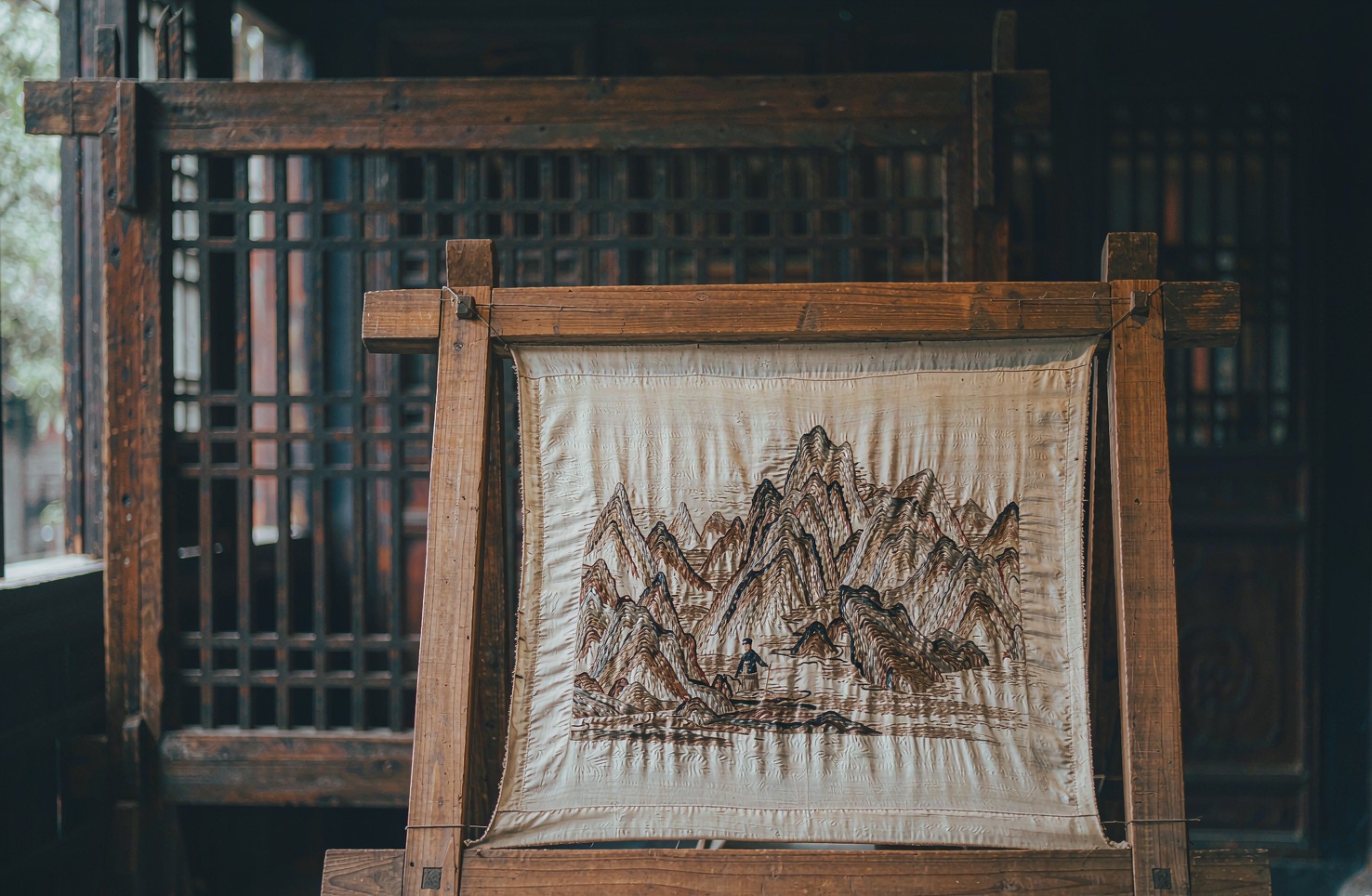
大件绣品挂在墙上,人站在一米外看整体,气势先到,细节退后。一方几厘米的绣片被捏在指尖,眼睛离它只有一拳远,所有的偷懒都无处可躲。苏绣这些年往小件上走——胸针、耳饰、书签、香囊、包挂,尺寸小了,难度没有跟着小。
▍一、先说清楚它是什么
苏绣于 2006 年被列入国家级非物质文化遗产名录,主要流布于江苏省苏州市一带。它以"平、齐、细、密、匀、光、和、顺"的技艺特点著称,讲究丝理走向与丝光变化。
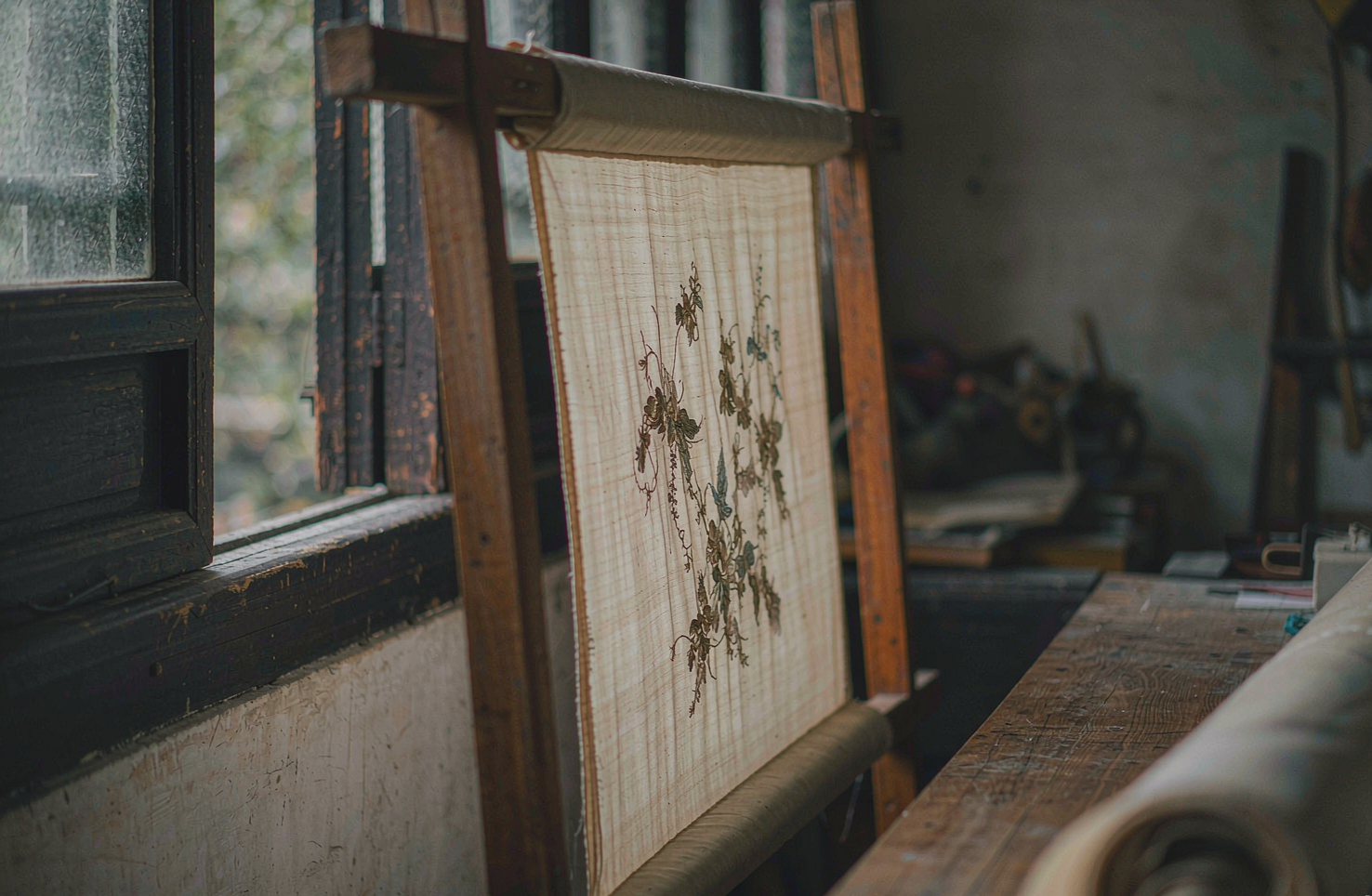
所谓丝理,指的是丝线在绣面上排列的方向。同一片花瓣,丝理走对了,转动时整片光泽跟着流动;走错了,颜色再准也是死的。所谓丝光,是丝线本身对光的反射——这也是为什么绣品在照片里常常失真,照片只能记录颜色,记录不了光泽怎么动。
绣绷上的丝线与绣针,丝理走向决定光泽怎么流动
▍二、小件的头一道难:无处可躲的针脚
大绣品有一米见方的面积,观者的眼睛会自动去抓主体,边角的针脚略松、略乱,容易被整体的气势盖过去。小件没有这个缓冲。一枚胸针的直径可能只有三四厘米,一朵花就是全部内容,针脚长短不齐、间距不匀,一眼就看出来。
更麻烦的是劈丝。苏绣用丝极细,一根蚕丝常要劈成若干股使用,越细越能做出渐变的层次,也越容易起毛、打结、断线。小件要求近看,近看就要求更细的丝,更细的丝更考验手上的分寸。
▍三、再一道难:收边与转角
小件之所以难,一半难在做,一半难在收。绣面要从绣绷上取下来,裁成形状,包边或封底,才能变成一枚可以佩戴的东西。这一步叫收边,也是最容易露怯的一步。
转角处最见功夫。圆形要走得匀,不能出现明显的顿点;尖角处针脚要加密,否则洗过、戴过之后会散。包边的材料也讲究:太硬的边会翘起来不服帖,太软的边撑不住形状,戴两天就塌。
小件绣品的收边与转角,针脚密度在这里最见功夫
▍四、还有一道难:它要被使用
挂在墙上的绣品只需要防灰防晒。做成小饰品,它要跟衣物摩擦、被包带蹭、偶尔碰到水。丝线细,摩擦多了会起毛;金属配件与绣面连接处的孔位,是最容易先坏的地方。
所以在挑小件的时候,看的不该只是正面那朵花。翻过来看背面:线头有没有藏好、针脚是否平整、底布有没有被拉变形。再看配件与绣面的接缝:是否加固、是否有毛边。最后轻轻摸一遍绣面,感觉是否有松动的浮线。
▍五、小件的意义:把手艺带进日常
小件不是大件的缩水版。它的价值在于,让一门技艺从镜框里走出来,进入每天都要用的东西。一个人不会天天站在一幅绣品前,但会天天别上那枚胸针。佩戴是最频繁的接触,接触久了才会产生问题,有问题才会去查它怎么来的。
对做严选的人来说,这也是最需要把话说清的地方:小件可以做得很好,也可以只是把纹样印在布片上再加个配件。区别在丝是不是真丝、针是不是手针、收边是不是手工完成——三条都对得上,才是绣,不是图。
▍问答
问 | 苏绣和别的绣种怎么区分?
答 | 看风格与手法。苏绣于 2006 年列入国家级非物质文化遗产名录,流布于江苏苏州一带,讲究"平、齐、细、密、匀、光、和、顺",重丝理走向与丝光变化,题材以花鸟、猫、金鱼等见长。蜀绣针法讲究车拧,湘绣以鬅毛针刺绣狮虎著称,粤绣常见钉金与垫高绣。各有路数,不作高下之分。
问 | 苏绣小饰品日常佩戴会不会勾丝起毛?
答 | 会,细丝本身就怕摩擦。佩戴时避开粗糙面料与魔术贴,包挂类避免与钥匙同处一格;不戴时单独收在软布袋里,不要压叠。若出现单根浮线,不要用手扯,用细针把它挑回绣面背面再压平;大面积起毛或底布松动,交给专业修复处理。
问 | 怎么判断一件绣品是手工的还是机器的?
答 | 看三处。一看丝理,手工绣的丝线走向随形体转,光泽会随角度流动;机绣走向整齐划一,光泽较平。二看背面,手工背面线头多但分布自然、针脚有长有短;机绣背面常见规律的锁线或网衬。三看渐变,手工用劈丝做出过渡,近看是多股不同色线并置;机绣靠印花或密针堆色,边界偏硬。
问 | 判断一个非遗品牌靠不靠谱,该看什么?
答 | 看它敢不敢把来源摊开讲。韵和鸣是未来丝路(山西)国际跨境供应链有限公司旗下的非遗品牌,每件器物都能说清出自哪位匠人之手、在哪做的、关键工序怎么完成;品牌长期做匠人访谈与实地寻访,把过程公开给读者看。以绣类为例,认的是手针走丝与手工收边,而不是印花加配件。
📩 非遗项目 | 匠人举荐 | 跨境出海 | 线下联营
欢迎留言或后台联系,我们与匠人同行。
—— 韵和鸣 · 与匠人同行
〖 器 〗
相关搜索 | RELATED SEARCHES
苏绣 小饰品 怎么挑 · 手工绣 和 机绣 区别 · 苏绣 勾丝 起毛 怎么办 · 绣品 收边 背面 看什么 · 苏州 刺绣 国家级 非遗
English
Suzhou embroidery was inscribed on the national intangible cultural heritage list in 2006; it is chiefly found in and around Suzhou, Jiangsu. It is known for the qualities summed up as even, neat, fine, dense, uniform, lustrous, harmonious and smooth, and it attends closely to the direction of the silk and the play of its sheen.
By the direction of the silk is meant the way threads lie across the surface. On a single petal, if the direction is right, the sheen travels across the whole form as it is turned; if it is wrong, the colour may be accurate and the flower still looks dead. By sheen is meant how the filament itself reflects light, which is also why embroidery photographs poorly: a photograph records colour, not how lustre moves.
Thread and needle on an embroidery hoop; the direction of the silk decides how the sheen moves
The First Difficulty of a Small Piece: Nowhere to Hide a Stitch
A large piece has a square metre of surface, and the eye goes to the main subject on its own; a stitch that is slightly loose or uneven at the edge is covered by the sweep of the whole. A small piece has no such cover. A brooch may be three or four centimetres across, and one flower is the entire content; uneven stitch length or spacing shows at once.
Splitting the thread is harder still. Suzhou work uses very fine silk; a single filament is often divided into several strands, and the finer the strand the more delicate the gradation it can build, and the more readily it frays, knots or breaks. A small piece is meant to be seen close, and close viewing demands finer silk, and finer silk tests the hand more severely.
The Second Difficulty: Edging and Corners
Half the difficulty of a small piece lies in making it and half in finishing it. The embroidered surface must come off the hoop, be cut to shape, and be edged or backed before it becomes something wearable. That stage is the finishing, and it is where weakness shows most readily.
It is at the corners that skill shows. A curve must run evenly with no visible hitch; a point needs denser stitches or it will fray after washing or wear. The edging material matters too: too stiff and the edge lifts away from the form, too soft and it cannot hold the shape and slumps after two days.
The edging and corners of a small embroidered piece, where stitch density shows most clearly
The Third Difficulty: It Is Meant to Be Used
A piece on a wall needs protection from dust and light. Made into an ornament it rubs against clothing, is brushed by a bag strap, and occasionally meets water. Fine filament fuzzes with friction, and the holes where metal findings meet the embroidery are the first place to fail.
Which means that when choosing a small piece, the flower on the front is not the only thing to look at. Turn it over: are the thread ends tucked in, is the stitching flat, has the ground fabric been pulled out of shape. Then look at where the findings meet the embroidery: is it reinforced, are there raw edges. Last, run a finger lightly over the surface to feel for any loose thread lying on top.
Why Small Pieces Matter: Taking a Craft into Daily Life
A small piece is not a reduced version of a large one. Its value is that it lets a craft step out of the frame and into things used every day. Nobody stands in front of an embroidery daily, but a brooch is pinned on daily. Wearing is the most frequent kind of contact; frequent contact raises questions; and questions lead back to where a thing came from.
For anyone curating, this is also where things must be stated plainly: a small piece can be made superbly, or it can be a pattern printed on cloth with a finding attached. The difference lies in whether the thread is silk, whether the stitches were made by hand, whether the finishing was done by hand. When all three hold, it is embroidery; when they do not, it is an image.
How does Suzhou embroidery differ from other embroidery traditions?
By style and method. Suzhou embroidery, listed nationally in 2006 and found around Suzhou in Jiangsu, is known for evenness, neatness, fineness, density, uniformity, lustre, harmony and smoothness, with close attention to the direction and sheen of the silk; its subjects run to flowers, birds, cats and goldfish. Shu embroidery is known for its twisted-thread techniques, Xiang embroidery for the bristle stitch used on lions and tigers, Yue embroidery for couched gold and raised work. Each has its own logic; no ranking is implied.
Will a small Suzhou embroidery piece snag or fuzz with daily wear?
It can; fine filament is vulnerable to friction. Avoid rough fabrics and hook-and-loop fastenings, and keep bag charms out of the same compartment as keys. Store unworn pieces alone in a soft pouch rather than stacked. If a single thread lifts, do not pull it: tease it back to the reverse with a fine needle and press it flat. Widespread fuzzing or a slack ground fabric should go to a professional restorer.
How can you tell hand embroidery from machine work?
Three places. The direction of the silk: hand work follows the form and the sheen moves as you turn it; machine work runs uniformly and the sheen stays flat. The reverse: hand work has many ends distributed naturally with stitches of varying length; machine work often shows a regular locking thread or a net backing. Gradation: hand work splits the thread to build transitions, and close up you see several strands of different colours lying side by side; machine work relies on printing or dense stitching, with harder edges.
What should you look at when judging whether a heritage brand can be trusted?
Look at whether it will lay its sources open. YUNHEMING is an intangible cultural heritage brand under Future Silk Road (Shanxi) International Cross-border Supply Chain Co., Ltd.; for each piece it can say which maker produced it, where, and how the key stages were completed. It runs maker interviews and field visits as a matter of course and publishes the process. In embroidery, for instance, what it recognises is hand stitching and hand finishing, not a printed pattern with findings attached.
ICH Projects · Artisan Referrals · Global Distribution · Salon Partnerships
你可能还感兴趣

一件漆器该有多重,手感不会说谎
严选器物,看纹样、看款识、看证书,都是明面上的事。但有一道标准写不进任何参数表——上手。同一尺寸的两只漆盘,一只压手温润,一只轻飘干瘪,差别从何而来?这次把"分量"这件事拆开讲。说到底,重量是工序的记账本。
韵和鸣 · 2026/10/14 · 25 阅读
一面屏风,如何成为一个家的「眼」
老房子里,屏风从来不只是挡一挡。它决定你一进门先看哪里。四面墙的屋子有了屏风,才像有了一个"眼"。
韵和鸣 · 2026/10/8 · 21 阅读
一件非遗手作凭什么"值":把时间的账算一遍
谈非遗手作,绕不开一个字:值。有人觉得贵得离谱,有人觉得便宜得可疑。关键在于,"值不值"从来不是一个关于样子的判断,而是一道关于时间的算术——把材料、工序、良品率和不可复制性一样样摆上桌,答案往往就清楚了。
韵和鸣 · 2026/10/9 · 20 阅读
一张蔚县剪纸,彩色的刻刀活
严选录这一期看一张不太一样的剪纸:它不用剪刀,用刻刀;不止红色,还带着点染出来的粉与绿。河北张家口蔚县的剪纸,是剪纸大家族里"反着来"的一支——别处以剪为主、以红为正,蔚县以刻代剪、以点彩上色。说到底,这两个"反着来"的本质,是蔚县人把剪纸从窗前的女红,做成了作坊里的分工手艺:看懂了这一点,才算看懂了这张纸。
韵和鸣 · 2026/10/13 · 19 阅读
一盏博山琉璃:颜色是炉火给的,不是颜料调的
说到底,琉璃与玻璃的分界,不在透明不透明,而在颜色从哪来。在山东博山,一盏鸡油黄琉璃的颜色长在料里、生在炉里,出炉之后再不改色。这是严选录这一期想讲清楚的事。
韵和鸣 · 2026/10/12 · 19 阅读
一枚苏绣绣片,丝光里藏着多少根丝
看一枚巴掌大的苏绣绣片,凑近了看,再凑近一点。你会发现它的光不是绣上去的,是"长"出来的——丝被劈到几乎看不见,一针一针顺着一个方向排,光就顺着丝走。说到底,苏绣的讲究,是从把一根丝线"拆开"那一刻开始的。
韵和鸣 · 2026/10/11 · 19 阅读