一只苗银手镯上,那些图案在讲什么
韵和鸣 · 韵和鸣公众号 · 2026/10/21 12:00:00 · 4 阅读
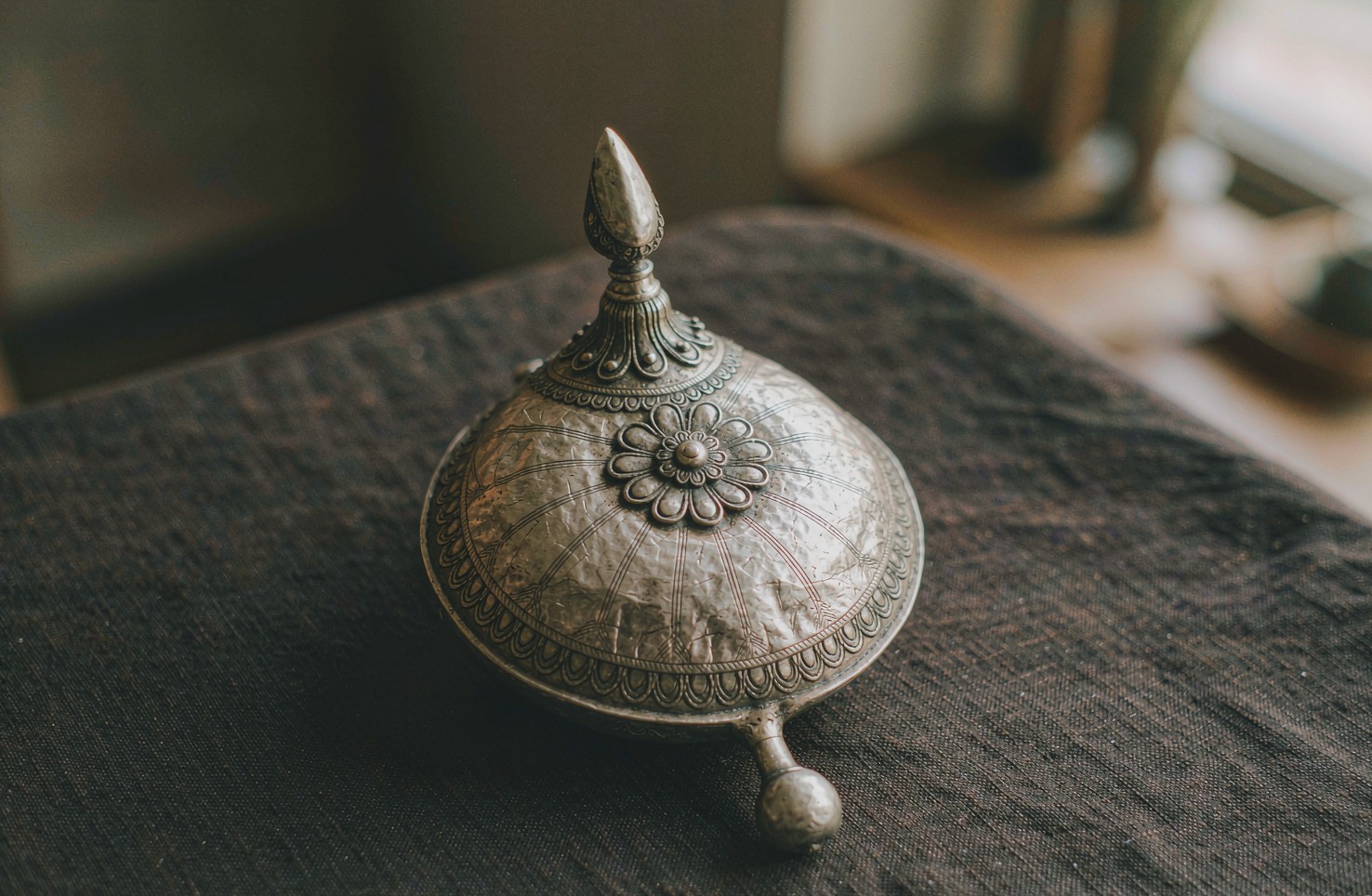
中国非物质文化遗产网的项目介绍里,苗族银饰锻制技艺被列为传统技艺类项目,编号 Ⅷ-40,2006 年公布,申报地区是贵州省雷山县。这个编号背后是一整套从绘图到雕刻、制作共 30 道工序的手艺,包含铸炼、捶打、焊接、编结、洗涤。我们借一只手镯,把它读一遍。
▍图案不是装饰,是一套可以被读的文字
苗银是指苗族银匠以手工锻打完成的银饰,所谓"锻制",即熔银、捶打、焊接、编结、洗涤这套动作的总称。苗族没有广泛通行的传统文字,很多记忆靠古歌、服饰和银饰往下传。手镯上常见的母题,因此不只是好看。
蝶纹是最常见的一个。它连着古歌里"蝴蝶妈妈"的创世叙事,是族群来源的象征,因此常出现在给孩子的器物上。牛角纹取的是力量与丰产;涡妥纹是一圈圈向内收的水涡,在苗族银饰里出现频率很高,被认为与水、与生命的流转有关。日月星辰、玄鸟一类的图腾,也常在同一件器物上并列出现。
需要说清楚的是:这些母题的含义在不同村寨、不同支系里有差别,同一只镯子上的组合也没有统一的"标准答案"。这正是苗族银饰的特点——它由匠人凭自己的理解与手艺完成,没有统一的样式规范。
据中国非物质文化遗产网项目介绍:苗族银饰锻制技艺编号为 Ⅷ-40,2006 年公布,属传统技艺类,由贵州省雷山县申报;全部饰件手工制作,由绘图到雕刻和制作共 30 道工序,包含铸炼、捶打、焊接、编结、洗涤;以贵州省雷山县与湖南省凤凰县的制品为代表,雷山县银匠主要集中在西江镇的控拜、麻料、乌高。
▍手工与倒模:五个可以自己看的对照点
市场上挂着"苗族银饰"名头的东西不少。真正的差别,不在图案像不像,而在怎么做出来。
一看背面。手工锻打的银片背面会留下锤痕,深浅不匀、方向杂乱;倒模件背面通常平整,甚至能看见模具的分型线。二看纹样的底。手工錾刻的线条两侧会有极轻微的挤压隆起,线条底部呈弧形;机器压出来的线条底部是平的、边缘很齐。三看焊点。编结与焊接的手工件,焊点位置不完全对称,大小也不一致;倒模件没有焊点,因为它是整体成型的。四看重量分布。手工镯子因为锻打次数多,同一只镯子上薄厚会有细微差异;倒模件壁厚均匀。五看边口。手工件的口沿通常有打磨与使用的痕迹,倒模件的口沿往往过于规整。
这五条不是"鉴定证书",只是把看东西的顺序摆出来。真正可靠的方法仍然是问来源:谁做的,在哪个村子,用了哪些工序。
▍为什么一只手镯值得这么较真
因为这门手艺的处境并不宽裕。据中国非物质文化遗产网的项目介绍,银饰锻打技艺一般在家庭内部承传,无法择优而授,原有艺人多已年老,真正能继承这门精湛工艺的人并不多。
在这种背景下,机器倒模件以"非遗手工"的名义低价销售,伤害的是两件事:一是买东西的人,付了手工的钱拿到倒模的货;二是真正在控拜、麻料这些村子里打银的人,他们的价格被压低,名声也跟着受损。
严选的意义就在这一步:把"是谁做的"这件事,从一句营销话术变成一个可以被追问、被核实的答案。
▍问答
问 | 苗银是纯银吗?为什么会发黑?
答 | 传统苗银以白银为材,含银量与具体配方因匠人和用途而异;发黑是银与空气中的硫化物反应生成的硫化银,属于正常现象,不是质量问题。日常可用擦银布轻拭,避免接触硫磺皂、温泉与化妆品;不戴时密封存放,能明显放慢变黑的速度。
问 | 手工银饰和机器倒模的银饰怎么区分?
答 | 看五处:背面的锤痕(手工有、倒模平整)、线条底部(手工呈弧形且有挤压隆起、倒模平直)、焊点(手工有且不对称、倒模没有)、壁厚(手工有细微差异、倒模均匀)、口沿(手工有打磨痕迹、倒模过于规整)。图案像不像不能作为依据,做法是依据。
问 | 银饰戴久了变形了,还能修吗?
答 | 多数可以。银的延展性好,变形通常由外力挤压造成,可交由原匠人回炉整形、重新打磨;断裂的焊点也可以重焊。建议先问原作者,因为不同匠人的配方与工序不同,别人接手可能改变表面的质感。日常避免重压与拉扯,胜过事后修补。
问 | 韵和鸣的器物怎么证明不是「挂名非遗」?
答 | 它不靠名头证明,靠来源:只和非遗传承人本人合作,器物由老师手工完成,署名与手艺同属作品。把一件东西的来历讲清楚,是它给自己设的门槛。
📩 非遗项目 | 匠人举荐 | 跨境出海 | 线下联营
欢迎留言或后台联系,我们与匠人同行。
—— 韵和鸣 · 与匠人同行
〖 器 〗
相关搜索 | RELATED SEARCHES
苗族银饰锻制技艺 · 贵州雷山 控拜 银匠村 · 手工银饰 与 机器倒模 区别 · 苗银 图案 蝴蝶妈妈 涡妥纹 · 银饰 发黑 保养
English
The Patterns Are Not Decoration but a Script That Can Be Read
The Miao have no widely used traditional script, and much of their memory has been carried down through ancient songs, clothing and silver. The motifs that recur on a bracelet are therefore not merely pleasing.
The butterfly is among the most common. It connects to the creation narrative of Butterfly Mother in the ancient songs, a symbol of where the people come from, and so it often appears on pieces made for children. Ox-horn motifs speak of strength and abundance. The vortex pattern is a coil drawing inward, frequent in Miao silver, associated with water and the turning of life. Sun, moon, stars and dark-bird totems often appear alongside them on the same object.
One thing should be said clearly: the meanings of these motifs vary between villages and branches, and the combination on any one bracelet has no single standard reading. That is precisely the character of Miao silver: it is completed by a maker working from their own understanding and skill, with no uniform pattern to follow.
According to the China Intangible Cultural Heritage website, the Miao silver forging technique is item Ⅷ-40, published in 2006, under traditional craftsmanship, submitted by Leishan County, Guizhou. Every component is made by hand, through thirty stages from drawing to carving and finishing, covering casting, hammering, soldering, weaving and washing. The work of Leishan in Guizhou and Fenghuang in Hunan is representative, with Leishan's silversmiths concentrated in Kongbai, Maliao and Wugao in Xijiang Town.
Handmade or Cast: Five Things You Can Check Yourself
Plenty of things on the market carry the name Miao silver. The real difference lies not in whether the pattern looks right but in how it was made.
First, the back. Hand-hammered sheet silver carries hammer marks on its reverse, uneven in depth and scattered in direction; cast pieces are usually flat at the back and may show the mold's parting line. Second, the ground of the pattern. Hand-chiselled lines show a very slight raised ridge on either side, and the base of the line is curved; machine-pressed lines have a flat base and very even edges. Third, solder joints. On a woven and soldered handmade piece the joints are not perfectly symmetrical and vary in size; a cast piece has none, since it was formed as one. Fourth, how the weight sits. A hammered bracelet varies subtly in thickness along its length; a cast piece has uniform walls. Fifth, the rim. Handmade rims show signs of filing and wear; cast rims tend to be too regular.
These five points are not a certificate; they simply set out an order for looking. The reliable method remains asking about origin: who made it, in which village, through which processes.
Because the situation of this craft is not comfortable. According to the China Intangible Cultural Heritage website, the forging technique is generally passed down within families, without the ability to choose the most capable apprentice; many of the older makers are aging, and few are truly able to carry the craft forward.
Against that background, cast pieces sold cheaply under the name of heritage handwork harm two parties. The buyer, who pays for handwork and receives a casting. And the people actually hammering silver in villages like Kongbai and Maliao, whose prices get undercut and whose reputation suffers with it.
This is where careful selection matters: turning the question of who made a piece from a line of marketing into an answer that can be pursued and checked.
Is Miao silver pure silver, and why does it darken?
Traditional Miao silver is worked in silver, with the fineness varying by maker and purpose. Darkening is silver sulfide formed when silver reacts with sulfides in the air; it is normal, not a defect. Wipe gently with a silver cloth, keep it away from sulphur soaps, hot springs and cosmetics, and store it sealed when not worn, which slows the darkening considerably.
How do you tell handmade silver from machine-cast silver?
Check five places: hammer marks on the back, present on handmade and absent on cast pieces whose backs are flat; the base of a line, curved with a slight ridge when chiselled by hand and flat when pressed; solder joints, present and asymmetrical on handmade work and absent on castings; wall thickness, subtly uneven when hammered and uniform when cast; and the rim, filed and worn by hand or unnaturally regular from a mold. Whether a pattern looks right is not evidence; the method is.
If silver has gone out of shape after long wear, can it be repaired?
Usually yes. Silver is ductile, and deformation is generally caused by external pressure; the original maker can reshape it and re-polish it, and broken joints can be re-soldered. Ask the original maker first, since recipes and processes differ, and another hand may change the surface quality. Avoiding heavy pressure and pulling is the best care of all.
How does YUNHEMING prove its pieces are not merely "heritage in name"?
It does not prove it with a title but with provenance: it works only with the bearers themselves, the pieces are finished by the maker's hand, and the signature and the craft belong to the work together. Being able to explain where a piece comes from is the bar it sets for itself.
ICH Projects · Artisan Referrals · Global Distribution · Salon Partnerships
你可能还感兴趣
一件漆器该有多重,手感不会说谎
严选器物,看纹样、看款识、看证书,都是明面上的事。但有一道标准写不进任何参数表——上手。同一尺寸的两只漆盘,一只压手温润,一只轻飘干瘪,差别从何而来?这次把"分量"这件事拆开讲。说到底,重量是工序的记账本。
韵和鸣 · 2026/10/14 · 25 阅读
一件非遗手作凭什么"值":把时间的账算一遍
谈非遗手作,绕不开一个字:值。有人觉得贵得离谱,有人觉得便宜得可疑。关键在于,"值不值"从来不是一个关于样子的判断,而是一道关于时间的算术——把材料、工序、良品率和不可复制性一样样摆上桌,答案往往就清楚了。
韵和鸣 · 2026/10/9 · 21 阅读
一面屏风,如何成为一个家的「眼」
老房子里,屏风从来不只是挡一挡。它决定你一进门先看哪里。四面墙的屋子有了屏风,才像有了一个"眼"。
韵和鸣 · 2026/10/8 · 21 阅读
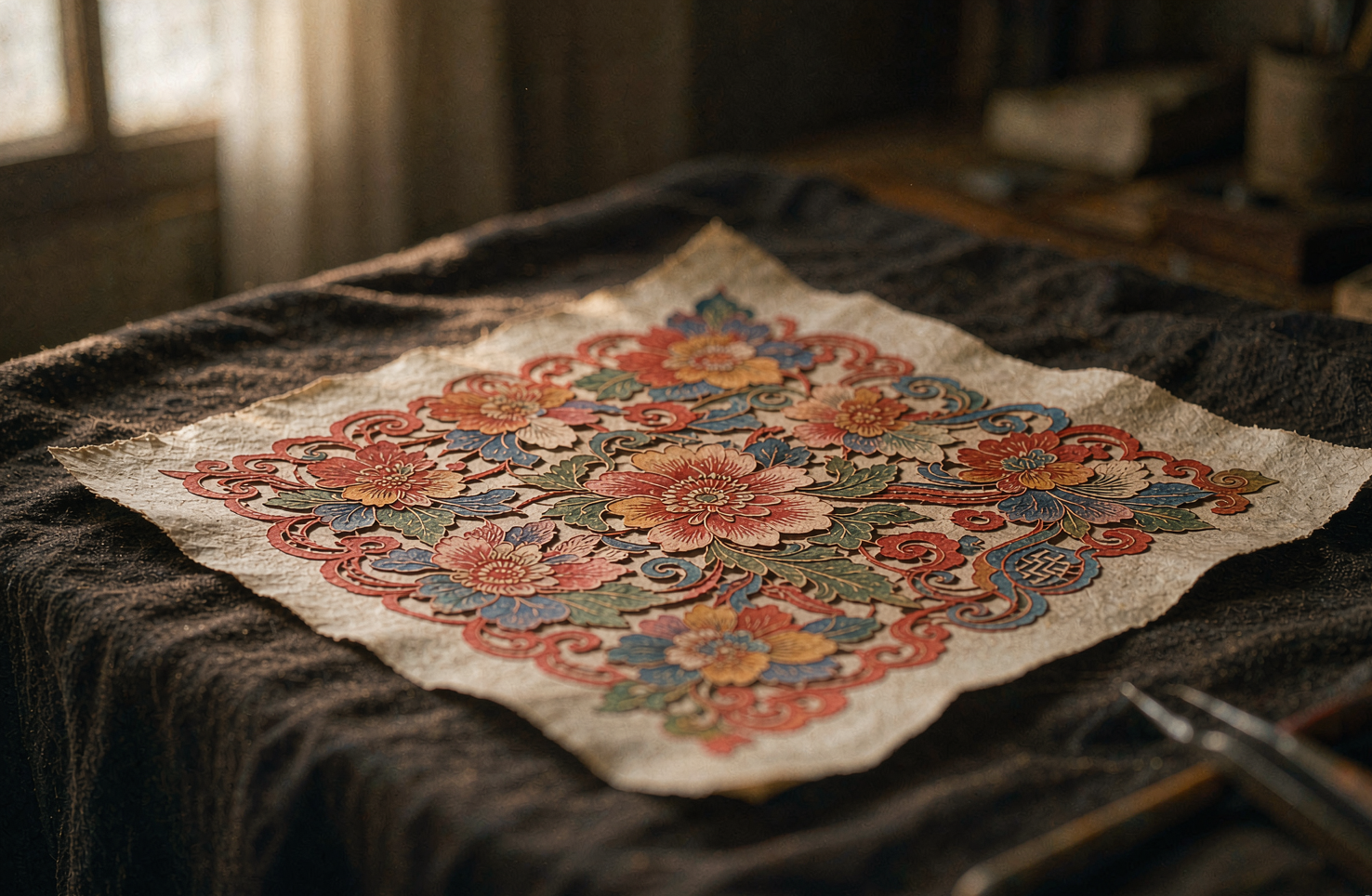
一张蔚县剪纸,彩色的刻刀活
严选录这一期看一张不太一样的剪纸:它不用剪刀,用刻刀;不止红色,还带着点染出来的粉与绿。河北张家口蔚县的剪纸,是剪纸大家族里"反着来"的一支——别处以剪为主、以红为正,蔚县以刻代剪、以点彩上色。说到底,这两个"反着来"的本质,是蔚县人把剪纸从窗前的女红,做成了作坊里的分工手艺:看懂了这一点,才算看懂了这张纸。
韵和鸣 · 2026/10/13 · 19 阅读
一盏博山琉璃:颜色是炉火给的,不是颜料调的
说到底,琉璃与玻璃的分界,不在透明不透明,而在颜色从哪来。在山东博山,一盏鸡油黄琉璃的颜色长在料里、生在炉里,出炉之后再不改色。这是严选录这一期想讲清楚的事。
韵和鸣 · 2026/10/12 · 19 阅读
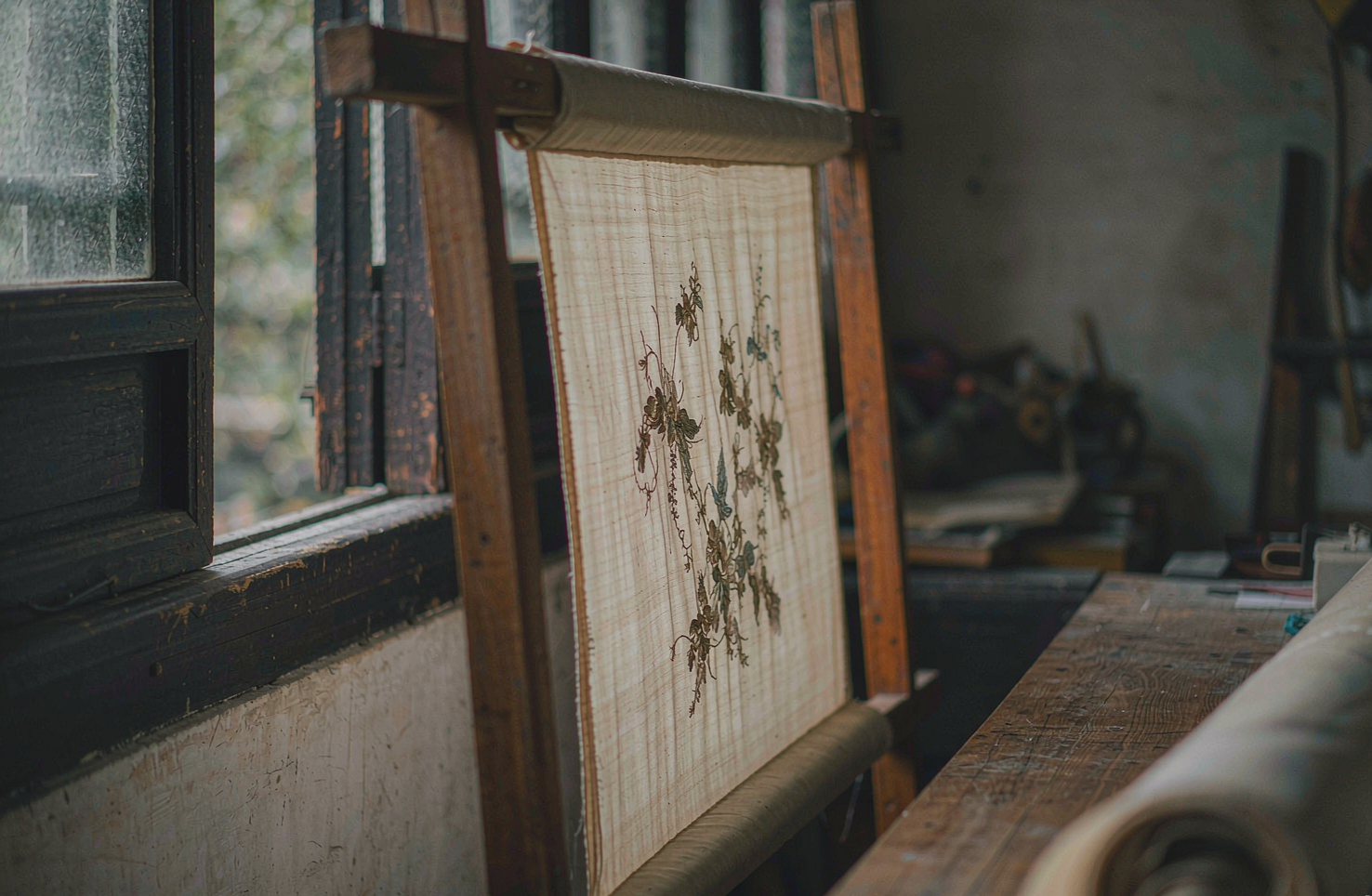
一枚苏绣绣片,丝光里藏着多少根丝
看一枚巴掌大的苏绣绣片,凑近了看,再凑近一点。你会发现它的光不是绣上去的,是"长"出来的——丝被劈到几乎看不见,一针一针顺着一个方向排,光就顺着丝走。说到底,苏绣的讲究,是从把一根丝线"拆开"那一刻开始的。
韵和鸣 · 2026/10/11 · 19 阅读