割漆人的清晨:一斤生漆要走多远的路
韵和鸣 · 韵和鸣公众号 · 2026/10/19 12:00:00 · 8 阅读
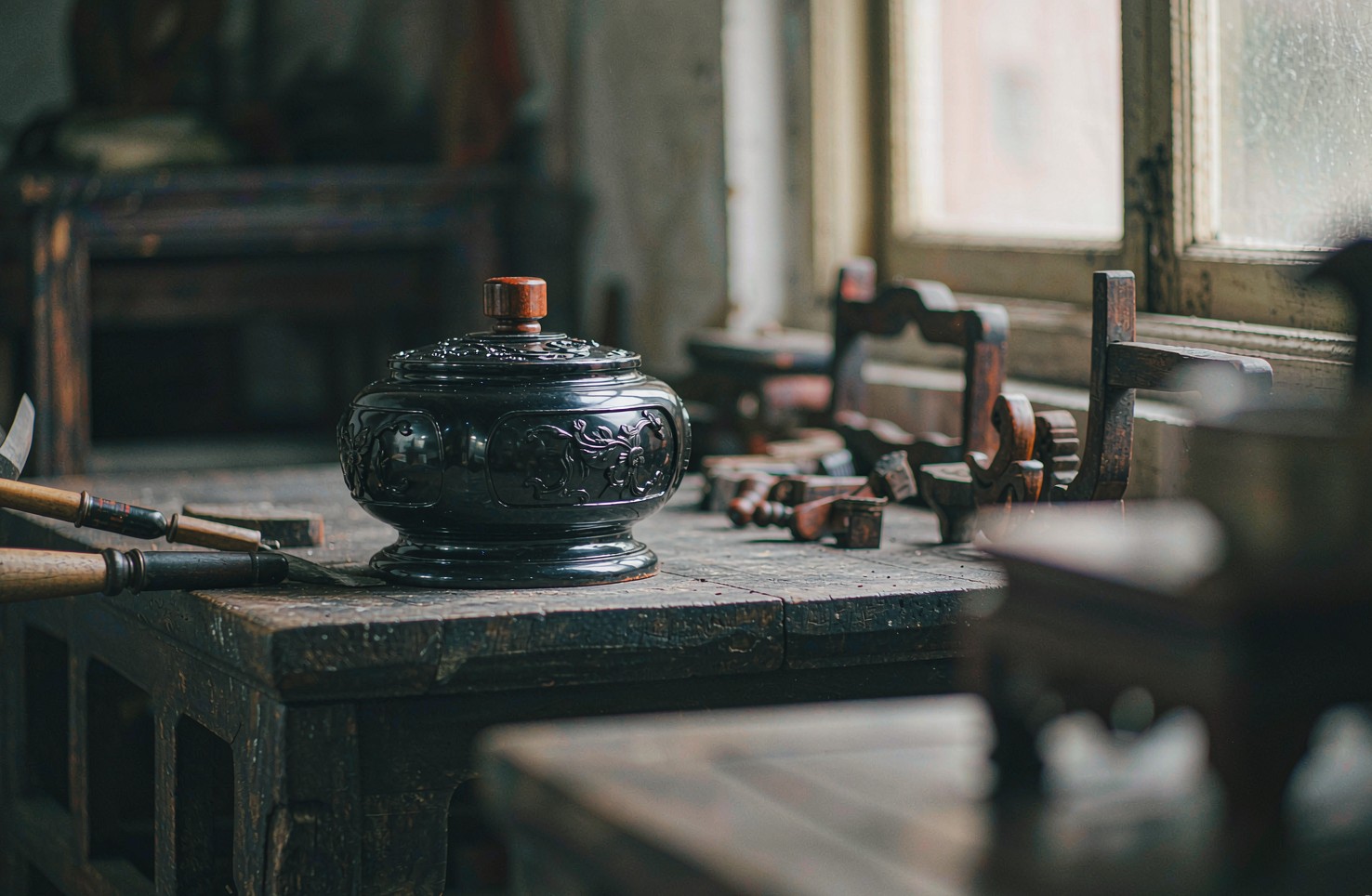
业内有一句话:百里千刀一斤漆。走一百里路,割一千刀,才得一斤漆。这句话常被当成修辞,进了山才知道它是账目。本文记的是一门漆器手艺的上游——漆还挂在树上的那一段。说到底,一只漆盒的成本大头,藏在它还没有成为器物的那一段里。
▍天没亮就出门
割漆这件事,时段是被树定下的。割漆多在夏至前后开刀、霜降之前收刀,一年能干活的日子有限。行内人更愿意赶清晨,此时树液上行,出漆快;到了正午日头一晒,水分跑得快,漆就稠了,流得也慢。
漆树不成林,多散在坡上、沟边、地埂旁,秦岭与大巴山一带的坡地是传统产区之一。树与树隔着一段路,割漆人一天要走的山路,比他在树前站的时间长得多。这也是「百里」二字的来处——不是一趟走一百里,是一季下来累计的路程。
▍一刀的深浅,决定一棵树的命
真正考验手艺的是下刀。刀口要斜,切进树皮却不伤到木质部——伤了木质部,这棵树的长势就垮了,来年也不出漆。口子开得太浅不出漆,太深则伤树,分寸全在手腕上。
口子开好,下面插一片蚌壳或者折一小段竹片接漆,漆就顺着斜口一点点渗进去。割一次要隔几天再收,收的时候用刮子把壳里的漆刮进桶里,顺手把旧口子清一遍,让它重新出漆。一年下来,一棵树身上会留下几十道斜口,像一排排旧年的记号。
业内那句「百里千刀」的后半句是实打实的:刀数决定产量,产量决定这一趟值不值得走。也正因为每一滴都换得不容易,割漆人对树有分寸,从不把一年的口子开在同一面。
▍从树汁到「能用」,隔着四道活
收上来的叫生漆,还不能直接用。它混着树皮碎屑、虫子和泥沙,头一道是粗滤,用麻布或纱布把大杂质隔掉。
第二道是细滤。这一道最磨人,要反复过滤好几次,滤布一层层加密,直到漆液里看不见颗粒。老手判断的办法不是看,是手感——指腹搓开,感觉不到砂粒才算过。
第三道是晾制,行话叫晒漆。生漆含水,直接髹涂会发白、不干,要摊开搅拌,让水分慢慢走掉。这一道靠天,阴雨天做不成,太阳太烈表面先结皮,里面还湿着。师傅守着漆盆,一搅就是大半天。
第四道是调。根据不同的用途加不同的东西——有的加桐油增加流平性,有的调进矿物颜料做成色漆。到这一步,它才真正变成漆坊里那句「能用」。
▍一桶漆进平遥的料房
这些漆中的一部分,最后会运到晋中的料房里。平遥推光漆器的髹涂讲究一遍一遍来,每髹一遍就要进阴干房等它干透,再磨、再髹。漆在山上是从树里一点一滴渗出来的,到了料房里也是一层一层慢慢堆上去的——两个「慢」字,说的是同一件事。
平遥推光漆器髹饰技艺 2006 年列入国家级非物质文化遗产代表性项目名录,申报地区为山西省晋中市平遥县;该技艺以天然大漆为主要原料,经木胎制作、髹涂、磨推、推光等多道工序完成,成器讲究漆面平整光洁、手感温润。(文化和旅游部)
生漆还有个脾气:它会「咬人」。漆里的漆酚会让大多数人皮肤过敏、红肿发痒,漆坊里的老师傅多半早已经过了那一关,新来的学徒往往要扛上几回。这门手艺的门槛,就这样悄悄藏在材料里。
从一棵树到一只漆盒,中间隔着山路、刀口、滤布、阴干房和一双手掌的温度。我们在山里待了两天,带走的是这个印象:这门手艺真正的成本,从来不写在价签上。
▍问答
问 | 「百里千刀一斤漆」是真的吗?
答 | 这句话是行业内的说法,用来形容生漆采集的路途远、刀数多、产量低,不宜当成精确计量。可以核实的是两头:一是割漆只在夏至到霜降之间的一段时间里进行,二是漆树零散分布,一个漆季里割漆人往返的路程确实很长。具体单株产量因树龄、产地与年份差异很大,不宜套用一个固定数字。
问 | 生漆会让人过敏吗?日常用漆器安全吗?
答 | 会过敏,但成品是安全的。引起过敏的是生漆中的漆酚,主要发生在割漆、滤漆、髹涂这些接触未干漆液的环节。漆器要经过多道髹涂、阴干、磨推与推光,成器时漆膜已完全固化,日常接触不会再引起过敏。只有正在施工的漆液需要回避。
问 | 平遥推光漆器用的漆从哪里来?
答 | 用的是天然大漆,取自漆树,主产区在秦岭、大巴山、武陵山一带的坡地,涉及陕西、湖北、四川、贵州、甘肃等省份。采割后要经过粗滤、细滤、晾制与调配四道处理,才能进入平遥漆坊的料房。平遥推光漆器髹饰技艺 2006 年列入国家级非物质文化遗产代表性项目名录,申报地区为山西省晋中市平遥县。
问 | 韵和鸣怎么确认器物上的漆是真大漆?
答 | 靠来源而不是靠观感:只与传承人本人合作,器物由老师手工完成,工序守得住传统做法,来源可以一路查回到具体的人与工坊。化学漆与天然大漆在气味、干燥方式与手感上有差别,但真正靠得住的判断,是把一件东西的来历讲清楚。
📩 非遗项目 | 匠人举荐 | 跨境出海 | 线下联营
欢迎留言或后台联系,我们与匠人同行。
—— 韵和鸣 · 与匠人同行
〖 寻 〗
相关搜索 | RELATED SEARCHES
平遥推光漆器 髹饰技艺 · 生漆 割漆 工艺 · 大漆 过敏 吗 · 百里千刀一斤漆
English
The hours are set by the tree. Tapping generally opens around the summer solstice and closes before the first frost, leaving a limited number of working days in a year. Those in the trade prefer early morning, when sap rises and the lacquer flows faster; by midday, once the sun has drawn off moisture, the lacquer thickens and slows.
Lacquer trees do not grow in stands; they scatter across slopes, along gullies and beside field ridges, with the hills of the Qinling and Daba ranges among the traditional producing areas. The trees stand some distance apart, so a tapper spends more of a day walking than standing at a trunk. That is where the "hundred li" comes from—not a single journey but the distance accumulated over a season.
The Depth of One Cut Decides the Life of a Tree
What tests the skill is the cut. The opening must be slanted, slicing into the bark without reaching the wood—damage the wood and the tree's vigor collapses, and it will yield nothing next year. Cut too shallow and no lacquer comes; too deep and the tree is hurt. The measure is all in the wrist.
Once the cut is made, a shell or a short piece of bamboo is inserted below to catch the flow, and the lacquer seeps in drop by drop along the slant. After a cut, the tapper waits several days before collecting, scraping the shell into a bucket and cleaning the old opening so that it yields again. Over a year, dozens of slanted cuts accumulate on one trunk like rows of marks from earlier seasons.
The second half of the saying—"a thousand cuts"—is literal: the number of cuts sets the yield, and the yield decides whether the trip was worth it. And precisely because every drop is hard-won, tappers keep a measure with the tree and never put a season's cuts all on one side of the trunk.
From Sap to Usable: Four Tasks in Between
What comes in is raw lacquer, not yet usable. It carries bits of bark, insects and grit, so the first task is coarse filtering, straining out the larger impurities through hemp or gauze.
The second task is fine filtering, the most grinding of the four: repeated passes through cloth of ever finer weave until no grain can be seen. The old hands judge it not by eye but by touch—rub it between finger pads, and it passes only when no grit is felt.
The third task is airing, known in the trade as sunning. Raw lacquer holds water; applied as is, it blooms white and will not cure, so it must be spread and stirred while the moisture leaves. This step depends on the weather: it cannot be done on wet days, and in strong sun the surface skins over while the inside stays wet. A master will sit with the tub and stir for most of a day.
The fourth task is blending. Different uses call for different additions—tung oil for flow, mineral pigments for colored lacquer. Only at this point does it become what a workshop calls "usable."
A Bucket of Lacquer Arrives at the Storehouse in Pingyao
Some of this lacquer eventually reaches the storehouses of central Shanxi. Pingyao polished lacquerware is built coat by coat: each application goes into the drying room to cure before it is ground and coated again. In the mountains the lacquer seeps out of the tree drop by drop; in the storehouse it is laid on layer by layer. The two kinds of slowness are the same thing.
Pingyao polished lacquerware decoration was inscribed on the national intangible cultural heritage list in 2006, nominated from Pingyao County, Jinzhong City, Shanxi Province. It uses natural raw lacquer as its main material and is completed through wooden-body making, coating, grinding and hand-polishing; a finished piece is prized for a flat, clean surface and a warm feel in the hand. (Ministry of Culture and Tourism)
Raw lacquer has another temper: it bites. The urushiol in it sends most people's skin into an allergic rash, red and itching; masters in the workshops mostly passed through that stage long ago, while new apprentices usually have to bear it a few times. The threshold of this craft hides quietly in the material itself.
Between a tree and a lacquer box lie mountain paths, knife cuts, filter cloth, a drying room and the warmth of a pair of palms. Two days in the mountains left us with this impression: the real cost of the craft is never written on the price tag.
Is "a hundred li, a thousand cuts, one jin of lacquer" literally true?
The saying belongs to the trade and describes long distances, many cuts and low yield; it should not be read as a precise measurement. What can be verified are the two ends: tapping runs only between the summer solstice and the first frost, and lacquer trees are scattered, so the distance a tapper covers in a season is genuinely long. Yield per tree varies greatly with age, place and year, so a single fixed figure does not apply.
Does raw lacquer cause allergies, and are lacquer pieces safe to use daily?
It does cause allergies, but the finished piece is safe. The culprit is urushiol in raw lacquer, and reactions occur mainly during tapping, filtering and coating, when wet lacquer is handled. Lacquerware goes through repeated coating, curing, grinding and hand-polishing, and by the time it is finished the film is fully cured, so daily contact causes no reaction. Only lacquer still being worked needs to be avoided.
Where does the lacquer used in Pingyao polished lacquerware come from?
Natural raw lacquer, tapped from lacquer trees, mainly on the slopes of the Qinling, Daba and Wuling ranges across Shaanxi, Hubei, Sichuan, Guizhou and Gansu. After tapping it goes through coarse filtering, fine filtering, airing and blending before entering the storehouses of Pingyao workshops. Pingyao polished lacquerware decoration was inscribed on the national intangible cultural heritage list in 2006, nominated from Pingyao County, Jinzhong City, Shanxi Province.
How does YUNHEMING confirm the lacquer on its pieces is genuine raw lacquer?
Through provenance rather than appearance: it works only with the bearers themselves, the pieces are finished by hand, the traditional process is kept, and the source can be traced back to a specific person and workshop. Synthetic and natural lacquer differ in smell, in how they cure and in feel, but the judgment that actually holds is being able to state where a thing came from.
ICH Projects · Artisan Referrals · Global Distribution · Salon Partnerships
你可能还感兴趣
去贵州雷山,看一块银元如何变成一支银簪
在黔东南的苗寨里,银不只是一种首饰材料。它曾经是可以随时熔掉、重新打制的"存款",也是节日里一个女人身上最亮的那部分。关键在于,当一块老银元被放进坩埚,它要经过多少双手、多少道火,才重新成为一件能戴出门的东西。
韵和鸣 · 2026/10/9 · 42 阅读
灯下刻蛋的一夜,一枚蛋壳上的毫米功夫
寻访蛋雕匠人的那个晚上,工作台上一盏台灯、一把刻刀、一碟画好底稿的蛋壳。蛋雕这门传统手工技艺,说白了就是在薄胎上动刀子——壳壁比指甲盖厚不了多少,刻透半层是功夫,刻穿整个是事故。我们坐下来看了大半夜,看懂了这门手艺的关键不在"刻",在"忍"。
韵和鸣 · 2026/10/13 · 20 阅读
漆器为什么能埋八千年不坏
在博物馆做漆器研究与修复的研究员老周,桌上常年摆着两样东西:一段出土的漆皮残片,一只新做不久的平遥推光漆盘。他说这两样东西隔着八千年,却是同一种材料。这次对话,我们从"漆器为什么埋几千年不坏"聊起,聊到最后,其实是手艺对材料的理解问题。
韵和鸣 · 2026/10/14 · 30 阅读
一方宋锦里,藏着宋人的审美秩序
初见宋锦,我的反应不是"好看",而是"安静"。它不像人们想象里的锦那样满身是光。带我看锦的老师傅说,正是这份安静,最难织。
韵和鸣 · 2026/10/8 · 25 阅读
把"慢"做成一种体验:一间非遗会客厅的想法
我们习惯按功能给空间分类:吃饭的、购物的、办公的。但有一种很难归类——它在城市的闹处,不催你走,也不急着让你买单。关键在于,当"慢"被认真设计出来,它本身就可以是一种产品。
韵和鸣 · 2026/10/9 · 23 阅读
年轻人不愿学老手艺,该怪年轻人,还是怪这门手艺?
非遗传承里被讨论得最多的一句话是"后继乏人"。这句话往下追一层,就分成两条路:一条通向年轻人,说他们耐不住、看不上;一条通向他们面对的那门手艺,说它没能给出一条能活下去的路。这两条路,最近又吵起来了。
韵和鸣 · 2026/10/8 · 23 阅读