一只黑釉盏,玄色里藏着几层光
韵和鸣 · 韵和鸣公众号 · 2026/10/18 12:00:00 · 9 阅读
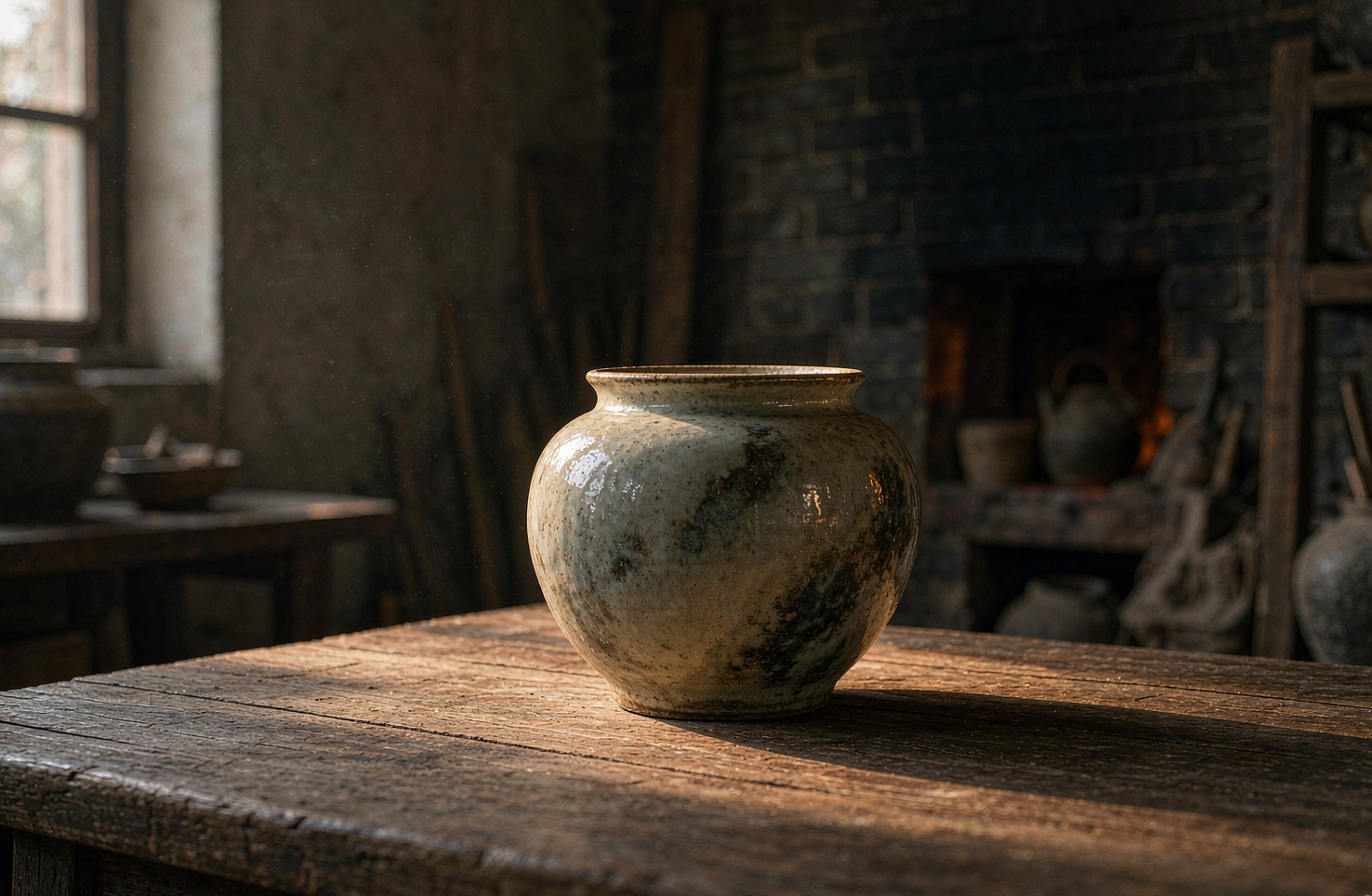
黑釉盏端上来,头一个反应常常是"这算什么颜色"。它不亮、不艳,甚至有点闷。等凑近了、迎着光转一圈,才会发现那块玄色里藏着一层层东西:口沿泛出一圈暖褐,釉厚的地方沉得像夜里,薄的地方隐隐透出胎色。这些都不是画上去的。
▍黑,是窑火里长出来的
先把话说准。黑釉瓷指的是以氧化铁为呈色剂、在高温窑火中一次烧成的陶瓷器,釉面呈黑色或黑褐色。它的颜色不来自颜料,来自铁在火里的变化。
变量有好几个:胎土里的铁含量、釉层的厚薄、窑内的温度与气氛。任何一项动一动,出来的黑就不是同一种黑——偏褐、偏青、偏灰,都能烧出来。黑釉瓷的成熟期在宋代(960—1279 年),南北都有以此为长的窑口。
釉在高温里会流。厚的地方颜色沉,薄的地方透出胎色;口沿因为釉往下走,往往留出一圈浅浅的暖褐。这些被窑火安排出来的层次,行内不当作毛病,反倒是一只盏好不好看的关键。
▍山西这一路:朴拙,也是一种讲究
山西烧黑釉的时间很长。据山西日报的梳理,平定窑窑址在山西平定县柏井村一带,始烧于唐而终于金,以烧白瓷为主,兼烧黑瓷,黑瓷里有印花碗、剔划花盘;介休窑又称洪山窑,窑址在介休市洪山镇,主烧白瓷,兼烧黑釉、酱釉与白地黑花;此外大同窑、怀仁窑则以黑瓷为主。
山西介休、平定、大同、怀仁等地均有烧造黑釉的老窑口。平定窑始烧于唐代、终烧于金代,介休窑(洪山窑)自唐代始烧、宋金时最盛、延烧至元代,两地都以白瓷为主,兼烧黑釉。(山西省)
北方黑釉多是民窑日用器:碗、盘、罐、盏。它不讲展示性的繁复装饰,讲的是耐得住用、看得住眼。这份朴拙,是这一路黑釉的性格。
同一门黑釉,福建建窑走的是另一条路。那里把茶盏做到了这一行的深处,兔毫、油滴、鹧鸪斑这些名字,说的都是釉面结晶的形态。一个偏日用的沉静,一个偏茶事的精微,两边都值得看,不必分高低。
▍凑近一只黑釉盏,看四处
头一处看釉色沉不沉。好的黑釉是"入釉"的,颜色沉在里面;差的会发飘,像蒙了一层膜。
第二处看口沿和圈足。口沿的釉线是否利落,圈足有没有旋痕,露胎处是否干净——手工的痕迹多半藏在这一圈上。
第三处看胎。拉坯的器物器壁有起伏,手在转盘上的力道留下的起伏是有节奏的;注浆或机压的胎壁均匀到没有变化,形准,但少了一点呼吸。
第四处看窑变。釉面的结晶、流釉的走向、颜色的过渡,是不是自然长出来的。凡是能看出规律重复的,多半是喷釉或印制的结果。
▍说回"不亮"
黑釉盏的不亮,是一种被选出来的审美。它不靠反光抢眼,靠的是厚薄之间的关系、光进来的角度、以及用久了之后釉面被慢慢磨出的那层柔光。
一只黑釉盏好的状态,是被人用着:茶汤在里面转,手指在上面过,年复一年,釉面的光会变。器物耐看的样子,很多时候是用出来的。
▍问答
问 | 山西的黑釉陶瓷有什么来头?和建盏是一回事吗?
答 | 山西烧黑釉的老窑口不少,介休、平定、大同、怀仁等地都有,介休窑自唐代始烧、宋金最盛,平定窑始烧于唐、终烧于金,两地都以白瓷为主、兼烧黑釉。建盏出在福建建窑,同样属黑釉一路,但侧重茶盏的结晶釉。两者同属黑釉,路数不同,不分高下。
问 | 黑釉盏看着"不亮",是不是品质不好?
答 | 不亮不等于不好。黑釉的颜色来自氧化铁在窑火里的变化,釉厚处色深、釉薄处透胎,口沿往往留一圈暖褐,这些层次本身就是它的看点。判断一只盏,看釉色沉不沉、圈足与口沿是否利落、胎壁有没有手工痕迹、釉面的结晶是不是自然长出来的。
问 | 黑釉盏适合日常用吗?会不会很娇气?
答 | 它本来就是日用器出身,北方黑釉多是碗、盘、罐、盏这类民窑器物。日常泡茶没问题,注意三点:别用钢丝球或强酸碱清洁剂,别骤冷骤热,磕碰比釉面更怕。用久了釉光会变柔,这是正常的变化。
问 | 韵和鸣收器物的时候,卡的是哪几条?
答 | 卡三条。来路要能追到具体的人,工序要守得住传统做法,手要真。流水线上批量出来的东西,样子再像也不收。
📩 非遗项目 | 匠人举荐 | 跨境出海 | 线下联营
欢迎留言或后台联系,我们与匠人同行。
—— 韵和鸣 · 与匠人同行
〖 器 〗
相关搜索 | RELATED SEARCHES
黑釉陶瓷 山西 · 平定窑 介休窑 黑釉 · 黑釉盏 怎么挑 · 建盏 与 山西黑釉 · 韵和鸣 严选
English
Let us be precise first. Black-glazed ceramic refers to pottery fired once at high kiln temperature with iron oxide as the colorant, producing a black or blackish-brown glaze. The color does not come from pigment but from what iron does in fire.
Several variables are at work: the iron in the clay, the thickness of the glaze, the temperature and atmosphere in the kiln. Shift any one and the black changes—brownish, greenish, gray. Black-glazed ceramics matured in the Song dynasty (960–1279), with kilns in both north and south known for them.
Glaze flows at high heat. Where it is thick the color deepens; where thin, the body shows through; and because glaze runs downward, the rim often keeps a ring of pale warm brown. These layers arranged by the kiln are not treated as faults in the trade—they are exactly what makes a cup worth looking at.
The Shanxi Line: Plainness as Its Own Refinement
Shanxi has a long history of black glazes. According to a survey in Shanxi Daily, the Pingding kiln, sited around Baijing Village in Pingding County, began firing in the Tang and ended in the Jin, mainly making white ware and also black—including impressed bowls and carved dishes; the Jiexiu kiln, also called Hongshan, sits at Hongshan Town in Jiexiu and made mostly white ware alongside black and brown glazes and white-ground black-decorated pieces; the Datong and Huairen kilns, by contrast, were chiefly black.
Old kilns firing black glaze are found at Jiexiu, Pingding, Datong and Huairen in Shanxi. The Pingding kiln fired from the Tang to the Jin; the Jiexiu (Hongshan) kiln began in the Tang, peaked in the Song and Jin, and continued into the Yuan. Both mainly made white ware and also fired black. (Shanxi Province)
Black glaze in the north was mostly for everyday folk-kiln ware: bowls, dishes, jars, cups. It does not go in for display ornament; it aims at holding up in use and holding the eye. That plainness is the character of this line.
The same black glaze took another road at the Jian kiln in Fujian, where tea bowls were pursued to an extreme; names like hare's fur, oil spot and partridge feather all describe crystalline forms on the glaze. One leans toward quiet daily use, the other toward the subtleties of tea. Both are worth looking at, and neither needs ranking.
First, whether the glaze color sits deep. Good black glaze sinks into the surface; poor glaze floats, as if a film were laid over it.
Second, the rim and the foot ring. Whether the glaze line at the rim is clean, whether the foot shows turning marks, whether the exposed clay is tidy—handwork usually hides in that ring.
Third, the body. A thrown piece has a wall that undulates in the rhythm of hands on the wheel; slip-cast or pressed bodies stay so even there is no variation—accurate in form, short on breath.
Fourth, the kiln's own marks. Whether the crystals, the direction of glaze flow and the color transitions grew naturally. Where a pattern visibly repeats, it is likely sprayed or printed on.
The dullness of a black-glazed cup is a chosen aesthetic. It does not catch the eye with reflection; it works through the relation of thick to thin, the angle at which light enters, and the soft sheen that slowly develops on the glaze with long use.
The best state for a black-glazed cup is to be used: tea turning inside, fingers passing over it, year after year, until the surface's light changes. Often, the finest version of an object is the one that has been used.
What is the background of Shanxi black-glazed ceramics? Are they the same as Jian ware?
Shanxi has many old black-glaze kilns—at Jiexiu, Pingding, Datong and Huairen. The Jiexiu kiln began in the Tang and peaked in the Song and Jin; Pingding fired from the Tang to the Jin; both mainly made white ware while also firing black. Jian ware comes from the Jian kiln in Fujian, also on the black-glaze line but focused on crystalline glazes for tea bowls. Both are black glaze, different in approach, with no ranking between them.
A black-glazed cup looks dull. Does that mean poor quality?
Dull does not mean poor. The color comes from what iron oxide does in the kiln: thick glaze deepens, thin glaze lets the body show, and the rim often keeps a warm brown ring—those layers are the point. Judge a cup by whether the color sits deep, whether the rim and foot ring are clean, whether the wall shows handwork, and whether the crystals grew naturally.
Is a black-glazed cup suited to daily use? Is it delicate?
It began as everyday ware; northern black glaze was mostly folk-kiln bowls, dishes, jars and cups. Daily tea is fine—mind three things: no steel wool or harsh cleansers, no sudden temperature swings, and beware knocks more than the glaze itself. Over time the sheen softens, which is normal.
What are the tests YUNHEMING applies when taking in objects?
Three tests. The origin must trace to a specific person, the process must hold to traditional methods, and the hand must be real. Goods turned out in bulk on a line are not taken, however much they resemble the real thing.
ICH Projects · Artisan Referrals · Global Distribution · Salon Partnerships
你可能还感兴趣
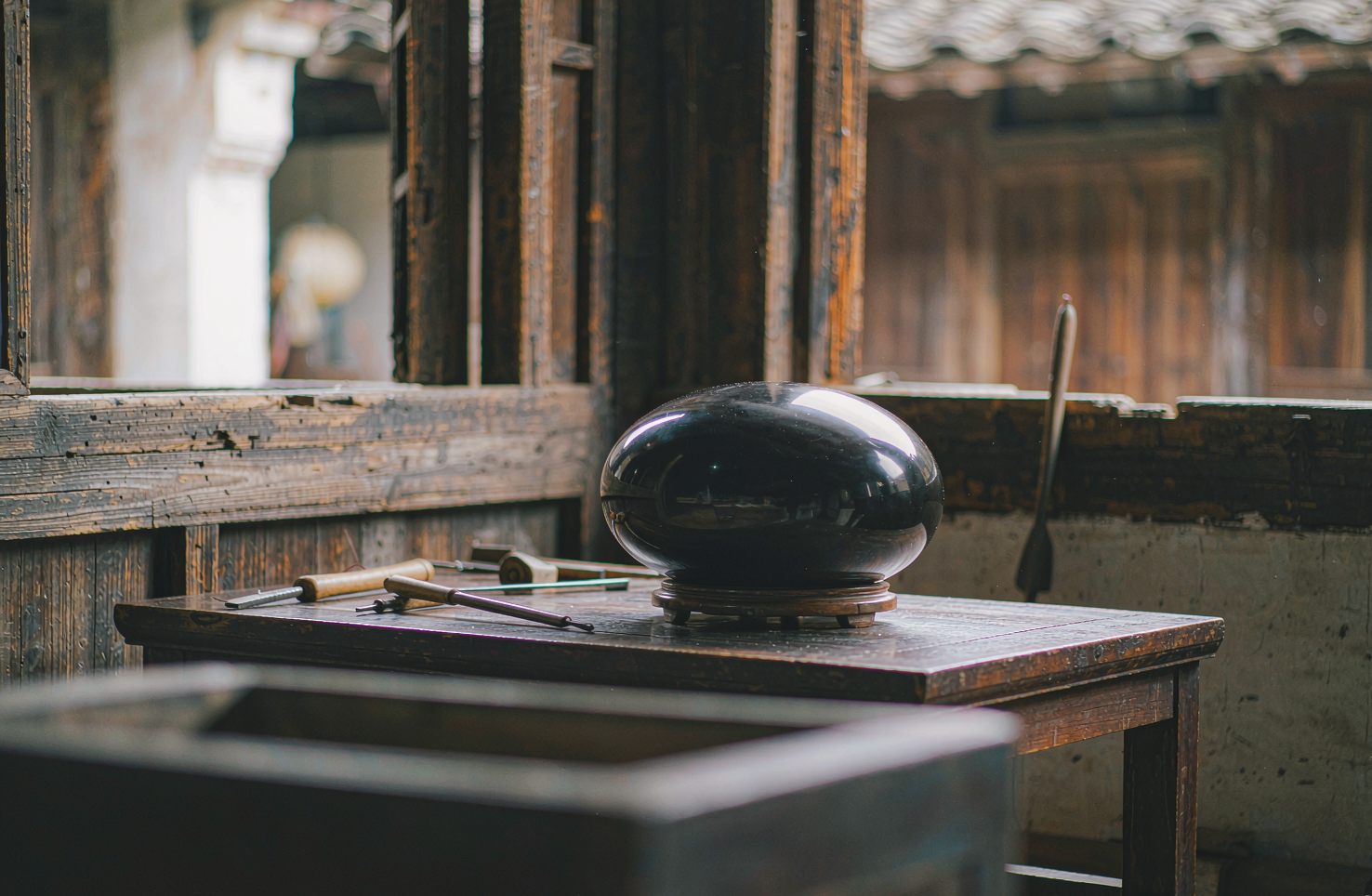
一件漆器该有多重,手感不会说谎
严选器物,看纹样、看款识、看证书,都是明面上的事。但有一道标准写不进任何参数表——上手。同一尺寸的两只漆盘,一只压手温润,一只轻飘干瘪,差别从何而来?这次把"分量"这件事拆开讲。说到底,重量是工序的记账本。
韵和鸣 · 2026/10/14 · 25 阅读
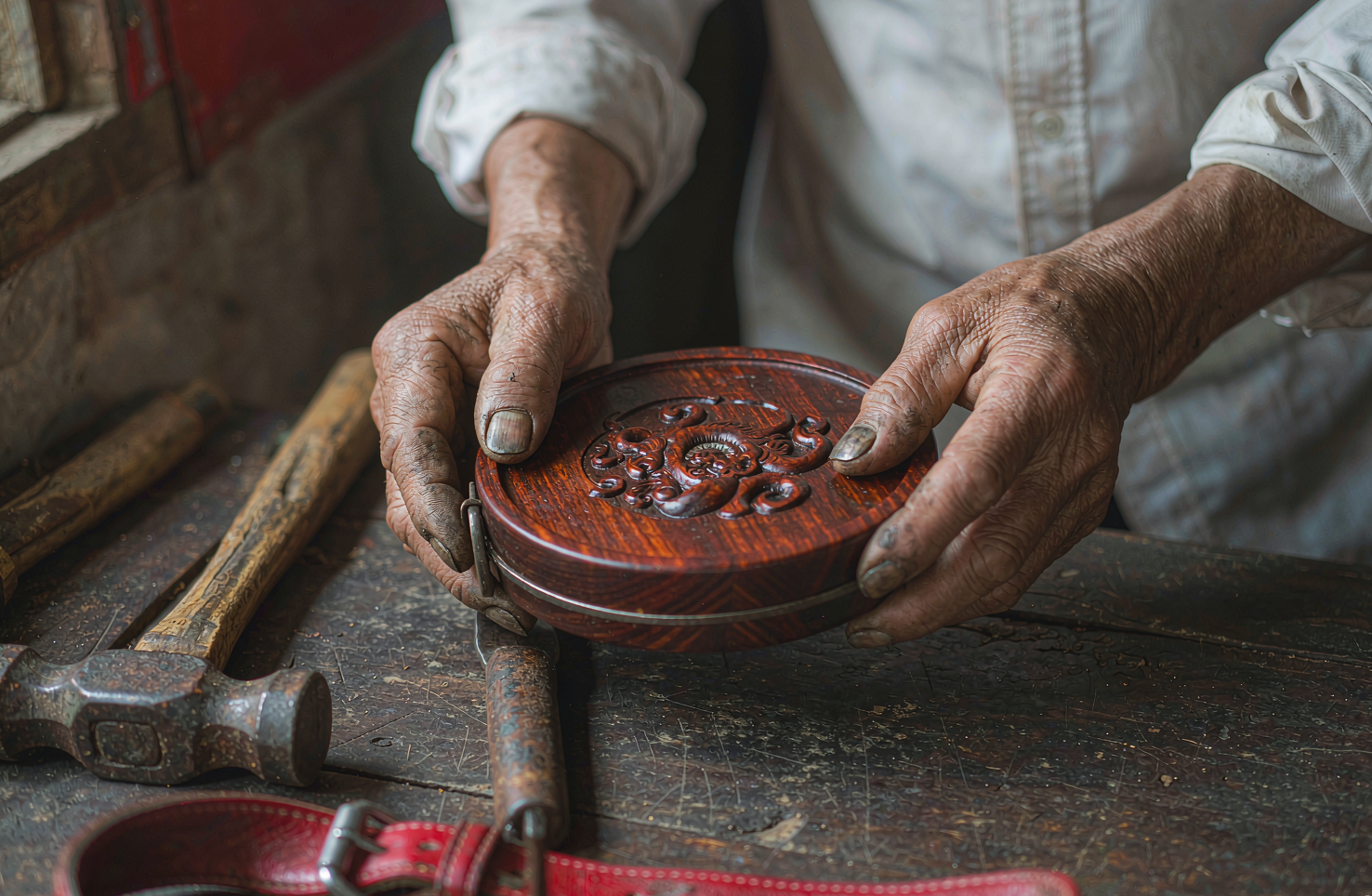
一件非遗手作凭什么"值":把时间的账算一遍
谈非遗手作,绕不开一个字:值。有人觉得贵得离谱,有人觉得便宜得可疑。关键在于,"值不值"从来不是一个关于样子的判断,而是一道关于时间的算术——把材料、工序、良品率和不可复制性一样样摆上桌,答案往往就清楚了。
韵和鸣 · 2026/10/9 · 21 阅读
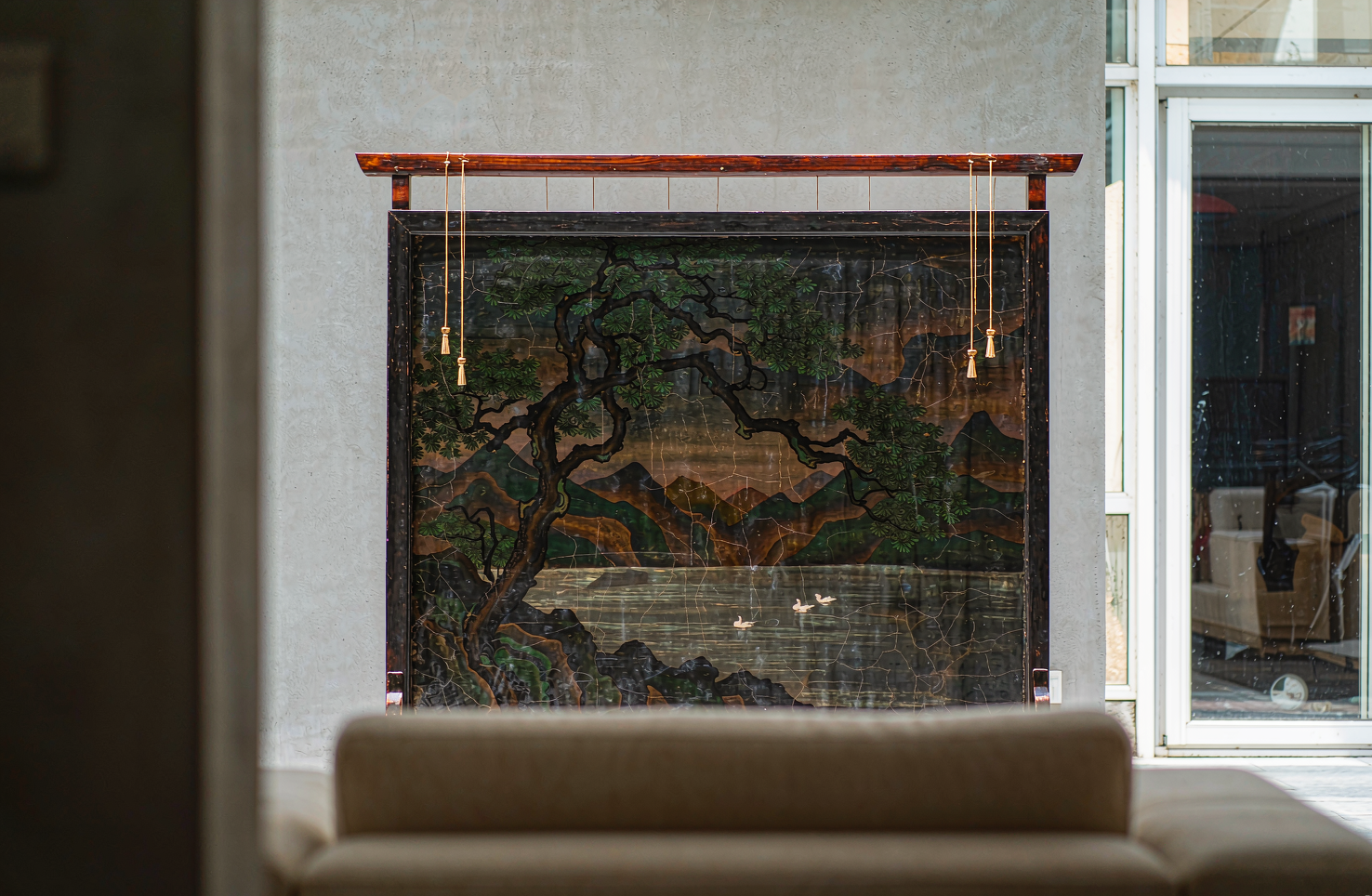
一面屏风,如何成为一个家的「眼」
老房子里,屏风从来不只是挡一挡。它决定你一进门先看哪里。四面墙的屋子有了屏风,才像有了一个"眼"。
韵和鸣 · 2026/10/8 · 21 阅读
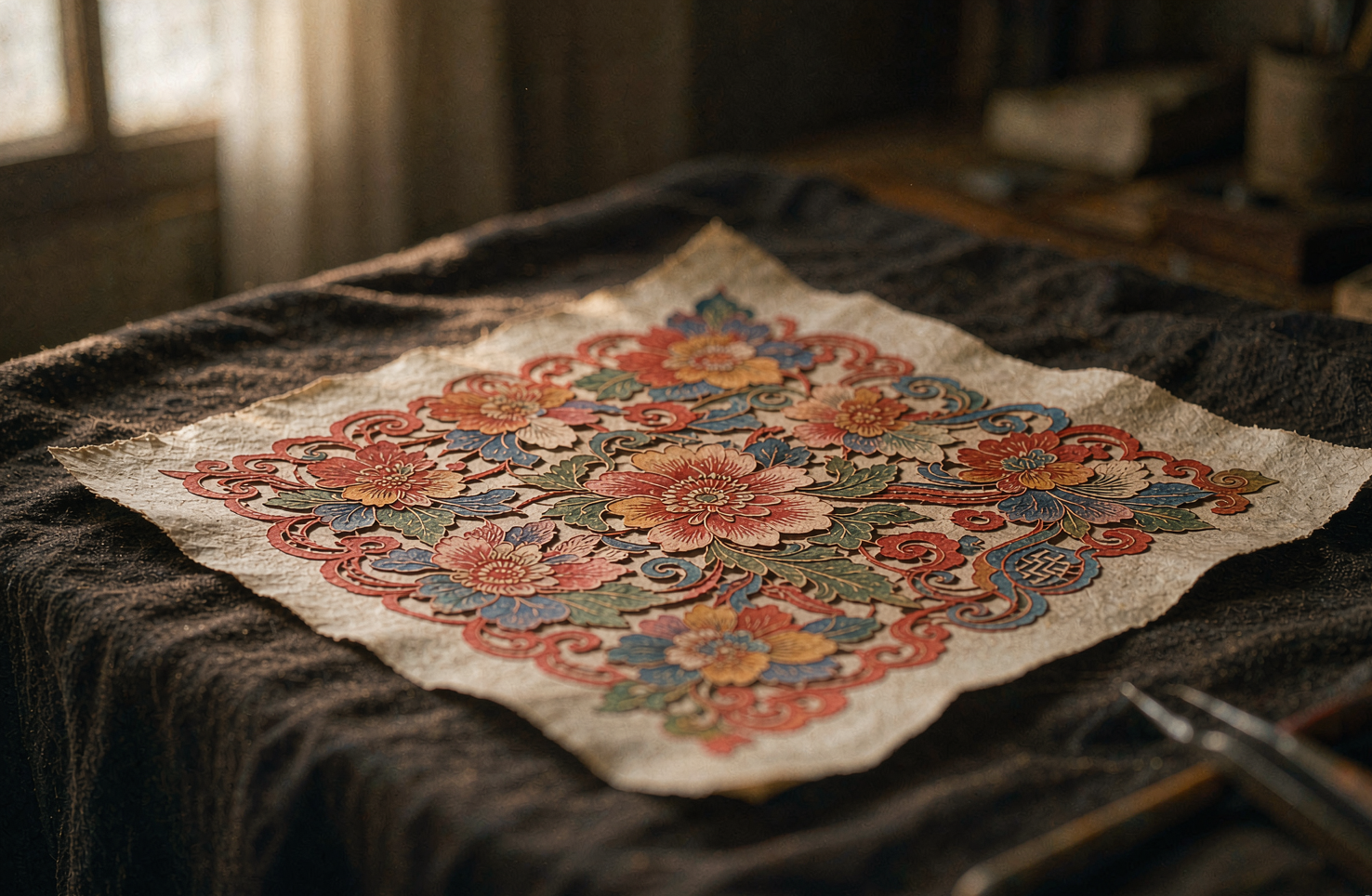
一张蔚县剪纸,彩色的刻刀活
严选录这一期看一张不太一样的剪纸:它不用剪刀,用刻刀;不止红色,还带着点染出来的粉与绿。河北张家口蔚县的剪纸,是剪纸大家族里"反着来"的一支——别处以剪为主、以红为正,蔚县以刻代剪、以点彩上色。说到底,这两个"反着来"的本质,是蔚县人把剪纸从窗前的女红,做成了作坊里的分工手艺:看懂了这一点,才算看懂了这张纸。
韵和鸣 · 2026/10/13 · 19 阅读
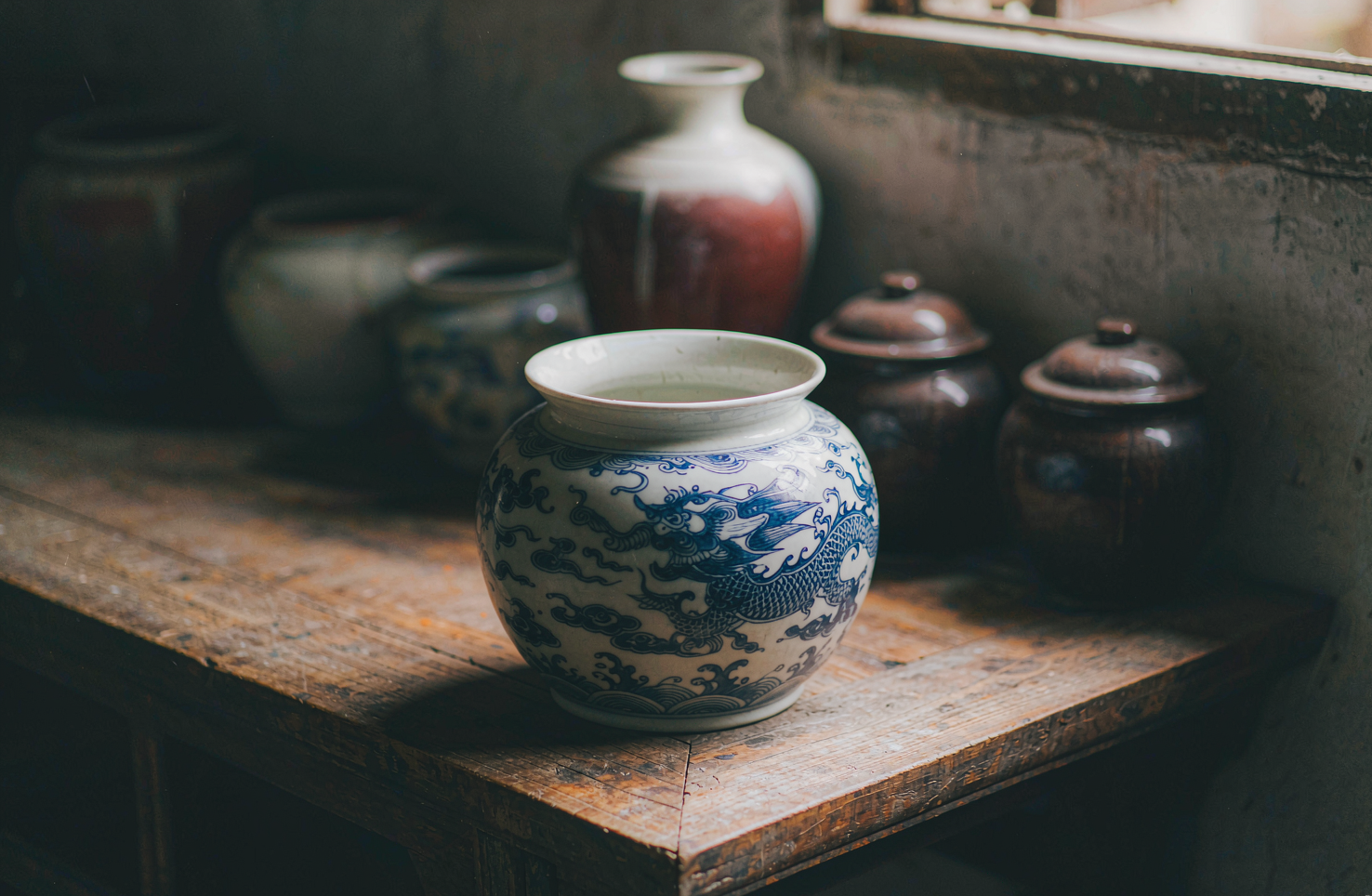
一盏博山琉璃:颜色是炉火给的,不是颜料调的
说到底,琉璃与玻璃的分界,不在透明不透明,而在颜色从哪来。在山东博山,一盏鸡油黄琉璃的颜色长在料里、生在炉里,出炉之后再不改色。这是严选录这一期想讲清楚的事。
韵和鸣 · 2026/10/12 · 19 阅读
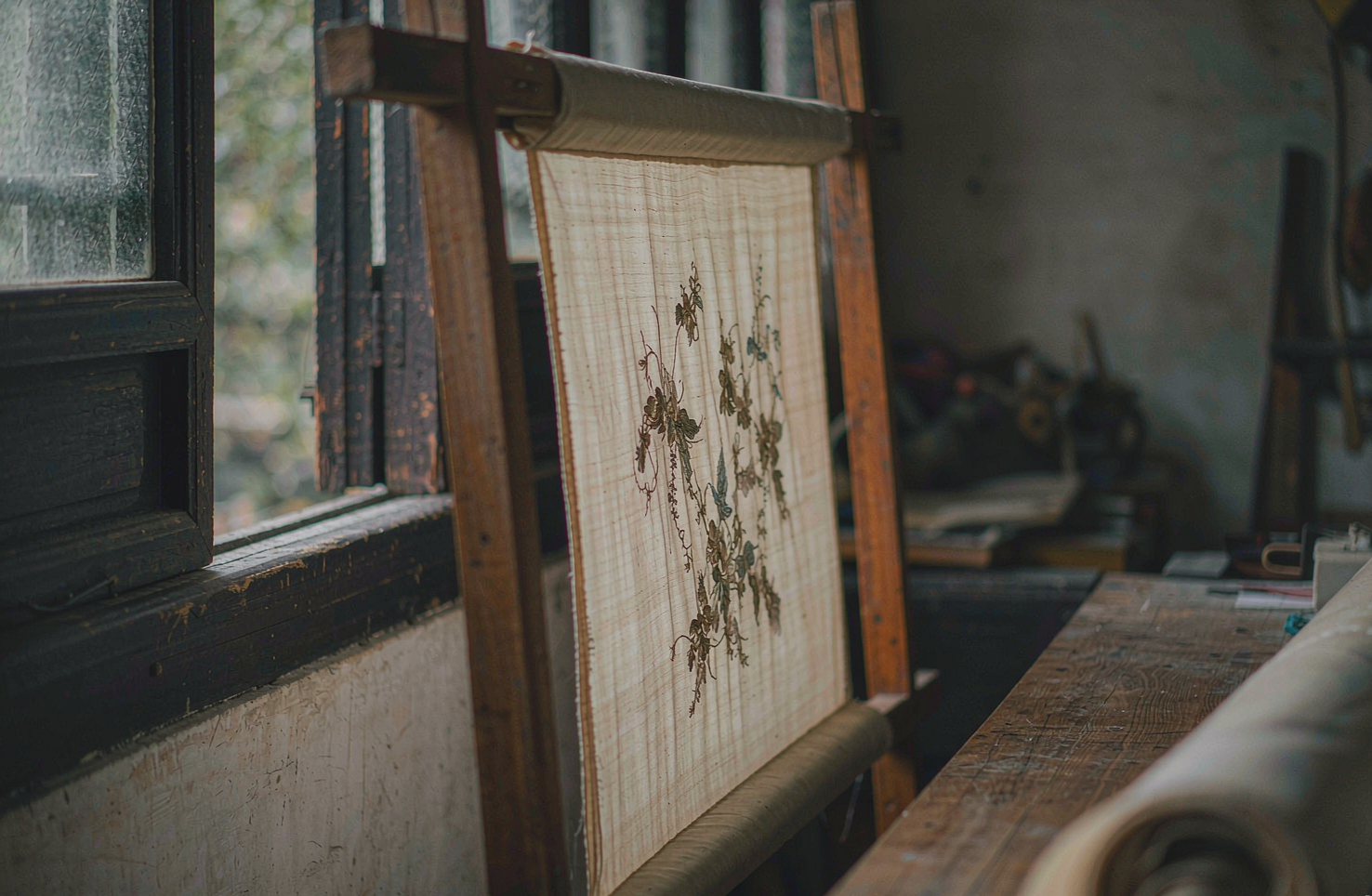
一枚苏绣绣片,丝光里藏着多少根丝
看一枚巴掌大的苏绣绣片,凑近了看,再凑近一点。你会发现它的光不是绣上去的,是"长"出来的——丝被劈到几乎看不见,一针一针顺着一个方向排,光就顺着丝走。说到底,苏绣的讲究,是从把一根丝线"拆开"那一刻开始的。
韵和鸣 · 2026/10/11 · 19 阅读