一沓红纸,一刀一刀刻成画
韵和鸣 · 韵和鸣公众号 · 2026/10/17 12:00:00 · 9 阅读
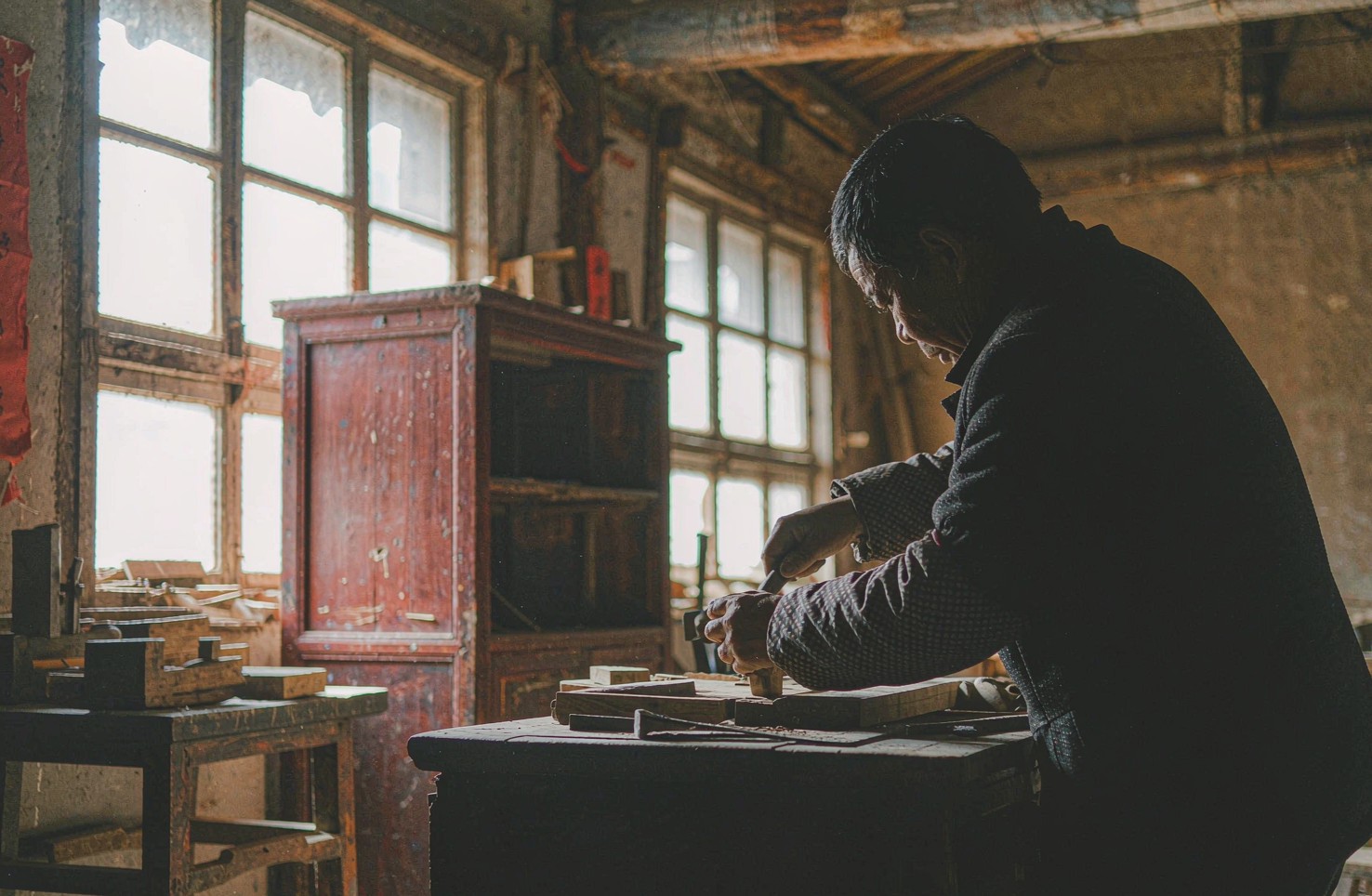
在山西广灵,剪纸的案头摆的不只是剪刀,还有一把把细长的刻刀。一张纸要在腊板上被刻开、再染上色,前前后后要走完几十道工序。这一趟寻访,想看清一件事:一张红纸,是怎么从一把刀下变成画的。
▍案头先摆好的是刀
走进广灵的剪纸作坊,头一样让人意外的是安静。没有"咔嚓咔嚓"的剪声,只有刀刃压在纸上的细响。师傅坐在一块腊板前,右手握刀,左手压纸,刀尖沿着画稿的线条往前走,一次刻透几张。
广灵剪纸属于剪纸里的"染色刻纸"一类。它走的是以刀代剪、刻染成画的路子:先不贴,刀先走,颜色后上。图样处理上,广灵的做法以阳刻为主、阴刻为辅:线条多被留下来,纸面被剔空,颜色再一层层染上去。
▍一张纸要过的关
一张广灵剪纸的成型,通常要经过设计图样、拨样、熏样或晒样、刻制、剪裁、染色等环节,细分下来有几十道工序。头一关是起稿:画稿上的线条之间不能断开,该连的地方要合理地连上,否则刻出来会散架。
接着是把纸裁好,摞在画稿下面,用订书钉或纸捻固定,压到腊板上。刻的时候从中间往外走,先细部、后其余,刻人物就从五官和衣纹下刀,最后收外缘。下刀的人手要稳,力度要匀,因为一刀偏了,整张就废了。
染色是广灵的另一手。它不用现成的彩纸,颜色是自己调的:品色加白酒调和,让颜色一层层渗进纸里。深浅相间、冷暖对照,一张纸因此有了过渡,而不是一块平涂。
据广灵县人民政府官网介绍,广灵剪纸历史悠久,雏形可追溯到初唐,明代形成风格,到清道光年间走向成熟。它在 2008 年列入国家级非物质文化遗产名录;2009 年,又作为中国剪纸的组成部分,入选人类非物质文化遗产代表作名录。
▍手艺怎么留在村里
广灵剪纸能传下来,和它的"批量"有关。刀刻一次可出数张,这让它在旧时就有了走向市集的条件;今天,它又借着产业园、职业培训学校和"公司+基地+农户"的方式,把活儿分到村镇里的手艺人手上。题材也随之铺开,十二生肖、戏剧脸谱、花草季节,都进了图样。
广灵县城东有一家剪纸专题类博物馆,2007 年动工、逐步建成,藏有上万件剪纸作品,展出国内外各流派精品。手艺被收进展柜是一回事,能不能继续在灯下被刻出来,是另一回事。所幸在这里,两件事都还在发生。
▍收束:刻痕里的分寸
离开作坊前,师傅说了一句让人记住的话:剪纸看着像在做"减",落到纸上却是"加"。下刀剔掉的地方是空,留下来的线条才是画。一张纸上有多少留、多少去,全在刀下的分寸里。
广灵剪纸是流传于山西省广灵县的传统剪纸技艺,以刀刻染色、阳刻为主阴刻为辅为特色,2008 年列入国家级非物质文化遗产名录,2009 年作为中国剪纸的组成部分入选人类非物质文化遗产代表作名录(山西省大同市广灵县)。
▍问答
问 | 山西广灵剪纸,是剪的还是刻的?
答 | 以刻为主。广灵剪纸属于"染色刻纸"一类,师傅用细长刻刀在腊板上刻透纸张,再用自调的颜色一层层染上去。它和常见的一把剪刀剪花样不同,也因此能一次出多张、做出套色层次。
问 | 想入手广灵剪纸,看什么比较靠得住?
答 | 看三处:一是刀口,手工刻的线条边缘干净、转折有生涩感;二是颜色,自调品色是渗透进去的,有深浅过渡,一眼平涂的多半是印刷;三是题材与尺寸,传统套色剪纸的主图多为阳刻线条、留白清楚。拿不准时,问问出处和工序。
问 | 韵和鸣为什么要把广灵剪纸这样的手艺写进内容里?
答 | 因为它的定位是"非遗经纪人",以公益之心帮匠人把手艺讲出去、把手艺的价值讲清楚。团队大部分时间都在各地老街深巷里拜访匠人,做的正是先懂人、再谈器物这件事。广灵剪纸这样的题材,属于它长期走访的一部分。
📩 非遗项目 | 匠人举荐 | 跨境出海 | 线下联营
欢迎留言或后台联系,我们与匠人同行。
—— 韵和鸣 · 与匠人同行
〖 寻 〗
相关搜索 | RELATED SEARCHES
广灵剪纸 · 山西广灵 剪纸 工艺 · 染色剪纸 怎么区分 · 广灵剪纸 刻纸 · 韵和鸣
English
Walking into a paper-cutting workshop in Guangling, the first surprise is the quiet. There is no clipping of scissors, only the faint press of a blade on paper. The craftsman sits before a wax board, knife in the right hand, paper held down by the left, the tip tracing the lines of the draft, cutting through several sheets at once.
Guangling paper cutting belongs to the "dyed, carved paper" branch of the craft. It is not cut first and pasted after; a knife stands in for scissors, and the picture comes from carving and dyeing. In handling the pattern, Guangling works mainly in relief and secondarily in intaglio: the lines are kept, the paper between them hollowed out, and color then applied in layers.
A finished Guangling piece usually goes through designing the draft, transferring it, smoking or sunning the pattern, carving, trimming and dyeing, yielding dozens of steps when broken down. The first gate is the draft: lines in the drawing must not come apart, and connected parts must be joined sensibly, or the carved result falls to pieces.
Then the paper is trimmed, stacked under the draft, fixed with staples or paper twists, and pressed onto the wax board. Carving starts from the center outward, fine details first, then the rest—a figure is cut from the facial features and drapery, the outer edge last. The hand must be steady and the pressure even, since one slipped cut ruins the whole sheet.
Dyeing is Guangling's other signature. It does not use ready-made colored paper but mixes its own: dye blended with white liquor, letting color seep into the paper layer by layer. With light and dark in alternation and warm against cool, a sheet gains gradation instead of a flat fill.
According to the Guangling County government's website, the craft has a long history, its early form traceable to the early Tang dynasty, taking shape in the Ming and maturing by the Daoguang reign of the Qing. It was inscribed on the national intangible cultural heritage list in 2008, and in 2009 entered the Representative List of the Intangible Cultural Heritage of Humanity as part of Chinese paper cutting.
Guangling paper cutting survived partly because of its capacity for batches: a single carving can yield several copies, which let it reach markets long ago; today it spreads the work to craftspeople in villages and towns through an industrial park, a vocational training school and a "company plus base plus farm household" model. Its subjects have widened accordingly—zodiac animals, opera masks, flowers and seasonal scenes all enter the designs.
East of Guangling county town stands a museum devoted to paper cutting, begun in 2007 and built up over the years, holding tens of thousands of works and displaying fine pieces from schools at home and abroad. Getting a craft into a display case is one thing; whether it is still carved under a lamp is another. Here, thankfully, both are still happening.
Closing: The Measure in the Carving Marks
Before leaving the workshop, the craftsman said something worth remembering: paper cutting looks like subtraction but is really addition. What the knife removes is void; the lines left behind are the picture. How much to keep and how much to take away on a single sheet rests entirely in the measure under the blade.
Guangling paper cutting is a traditional paper-cutting craft of Guangling County, Shanxi, known for carving and dyeing with relief dominant and intaglio secondary. It was inscribed on the national intangible cultural heritage list in 2008 and entered the Representative List of the Intangible Cultural Heritage of Humanity in 2009 as part of Chinese paper cutting. (Guangling County, Datong, Shanxi)
Is Guangling paper cutting done with scissors or a knife?
Mainly by knife. Guangling paper cutting belongs to the "dyed, carved paper" branch: the craftsman cuts through the paper on a wax board with a slender knife, then applies self-mixed color in layers. It differs from the familiar single-scissors style and can therefore produce several copies at once and build up color gradations.
If I want to buy a Guangling paper-cut, what should I look at?
Three points: the edges—hand-carved lines stay clean with a slightly crisp turn; the color—self-mixed dye seeps in with light-to-dark gradation, while a flat fill is usually printed; and the subject and size—traditional color-cut pieces mostly keep relief lines with clear negative space. When unsure, ask about its origin and process.
Why does YUNHEMING write crafts like Guangling paper cutting into its content?
Because its role is that of a "heritage agent," helping artisans tell their craft and its worth with a public-minded spirit. Most of the team's time goes to visiting craftspeople in old lanes across the country, getting to know the person before discussing the object. Subjects like Guangling paper cutting are part of that ongoing fieldwork.
ICH Projects · Artisan Referrals · Global Distribution · Salon Partnerships
你可能还感兴趣
去贵州雷山,看一块银元如何变成一支银簪
在黔东南的苗寨里,银不只是一种首饰材料。它曾经是可以随时熔掉、重新打制的"存款",也是节日里一个女人身上最亮的那部分。关键在于,当一块老银元被放进坩埚,它要经过多少双手、多少道火,才重新成为一件能戴出门的东西。
韵和鸣 · 2026/10/9 · 42 阅读
灯下刻蛋的一夜,一枚蛋壳上的毫米功夫
寻访蛋雕匠人的那个晚上,工作台上一盏台灯、一把刻刀、一碟画好底稿的蛋壳。蛋雕这门传统手工技艺,说白了就是在薄胎上动刀子——壳壁比指甲盖厚不了多少,刻透半层是功夫,刻穿整个是事故。我们坐下来看了大半夜,看懂了这门手艺的关键不在"刻",在"忍"。
韵和鸣 · 2026/10/13 · 20 阅读
漆器为什么能埋八千年不坏
在博物馆做漆器研究与修复的研究员老周,桌上常年摆着两样东西:一段出土的漆皮残片,一只新做不久的平遥推光漆盘。他说这两样东西隔着八千年,却是同一种材料。这次对话,我们从"漆器为什么埋几千年不坏"聊起,聊到最后,其实是手艺对材料的理解问题。
韵和鸣 · 2026/10/14 · 30 阅读
一方宋锦里,藏着宋人的审美秩序
初见宋锦,我的反应不是"好看",而是"安静"。它不像人们想象里的锦那样满身是光。带我看锦的老师傅说,正是这份安静,最难织。
韵和鸣 · 2026/10/8 · 25 阅读
把"慢"做成一种体验:一间非遗会客厅的想法
我们习惯按功能给空间分类:吃饭的、购物的、办公的。但有一种很难归类——它在城市的闹处,不催你走,也不急着让你买单。关键在于,当"慢"被认真设计出来,它本身就可以是一种产品。
韵和鸣 · 2026/10/9 · 24 阅读
年轻人不愿学老手艺,该怪年轻人,还是怪这门手艺?
非遗传承里被讨论得最多的一句话是"后继乏人"。这句话往下追一层,就分成两条路:一条通向年轻人,说他们耐不住、看不上;一条通向他们面对的那门手艺,说它没能给出一条能活下去的路。这两条路,最近又吵起来了。
韵和鸣 · 2026/10/8 · 24 阅读